Українською читайте тут.
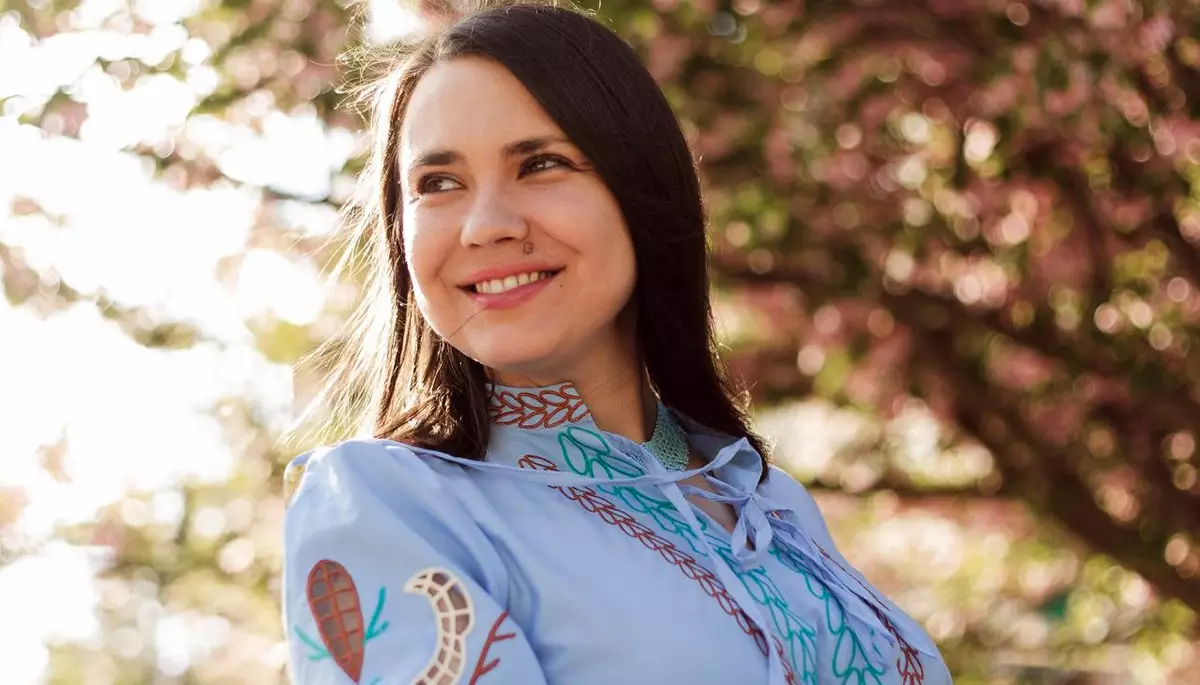
Editor-in-Chief of SD.ua, Yana Chumachenko, on how the outlet covers events in the occupied city.
Detector Media regularly reports on media outlets and journalists who write about territories occupied by Russia and try to maintain connections with their audiences there. We have already covered the editorial team broadcasting to de-occupied and temporarily occupied territories, including Ukrainian Radio, the media outlet Eastern Variant, the NGO DII-Ukraine, the Luhansk-based Tribun, and Kherson’s Kavun.city. Next is the story of the Sievierodonetsk-based media outlet SD.ua.
The results of recent content monitoring by the Institute of Mass Information show that the volume of coverage about events in temporarily occupied territories (TOT) in Ukrainian media is decreasing. According to the IMI, in 2023 such information accounted for about 3.25% of all Ukrainian news, while by January 2025 this figure had dropped to approximately 1%.
Why is this happening? How are outlets that previously operated in territories seized by Russia managing to stay connected with their audiences today? Detector Media spoke with Yana Chumachenko, editor-in-chief of the local media outlet SD.ua, about these issues.
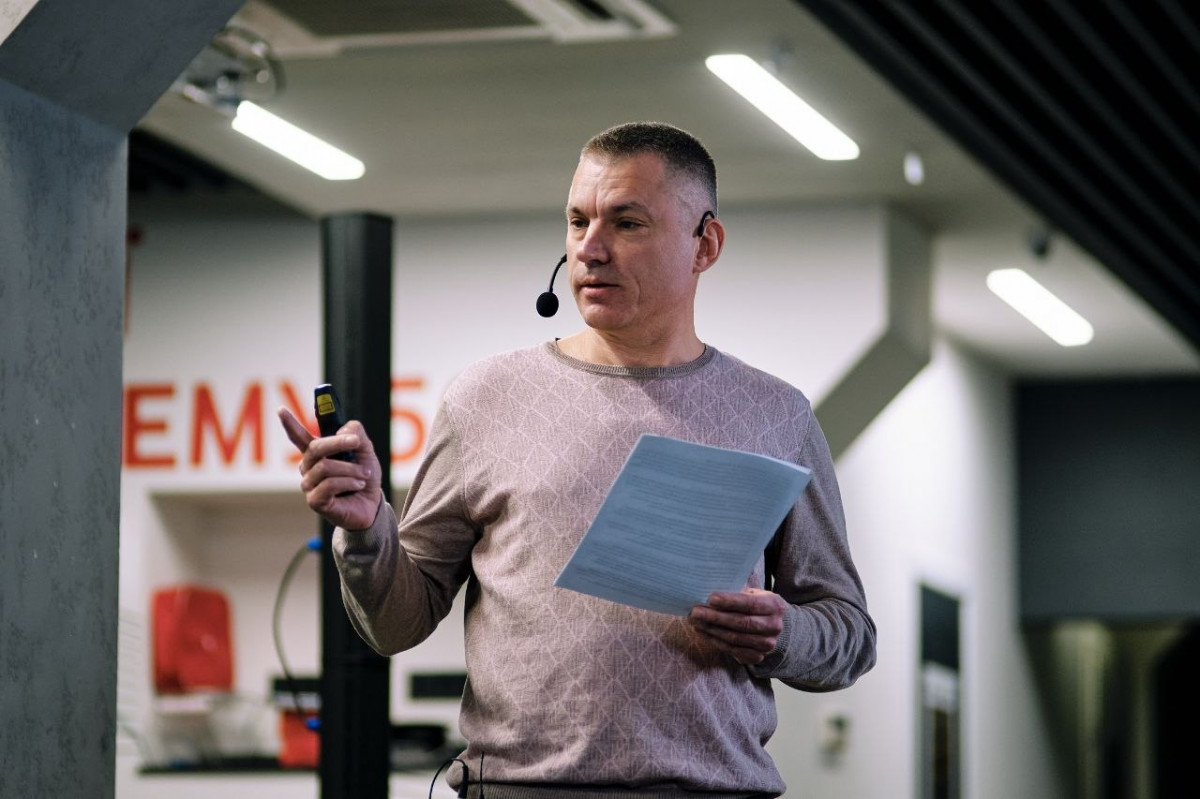
Andrii Nidchenko, founder of the SD.ua portal, a businessman who is currently serving in the Armed Forces of Ukraine.
SD.ua positions itself as “a regional media outlet for which the Luhansk region and Sievierodonetsk are not just a topic, but a home—physically lost, yet preserved in memory and in our work.” The history of this resource dates back to 1998, when businessman Andrii Nidchenko created the information portal Severodonetsk Online, which was renamed to its current title in December 2024.
The portal gained popularity not only in Sievierodonetsk but also across the Luhansk region, as it aggregated a wide range of useful information for local residents—from weather forecasts and live surveillance camera feeds to a directory of local enterprises and businesses. In June 2022, with financial support and mentorship from the Media Development Foundation, Severodonetsk Online changed its format; the editorial team was also renewed, and since then it has been headed by Yana Chumachenko.
Yana has been forced to relocate twice: in 2014, when Russia launched its war against Ukraine, she left Luhansk for Sievierodonetsk, where she collaborated with various media outlets. However, in 2022, after the start of the full-scale invasion, Yana had to leave that city as well, and she now lives in one of the western regions of the country.

Yana Chumachenko, editor-in-chief of the SD.ua portal
In 2023, the project “Map of Quality Media of Ukraine” was launched by Detector Media and the Institute of Mass Information. Since then, according to independent expert evaluations, SD.ua has consistently maintained its position on the list of Ukrainian media outlets that operate with high standards and deserve the trust of their audience.
In 2025, the outlet—whose work at that time was supported by USAID—faced financial difficulties after funding was discontinued and had to optimize its operations. The editorial team decided to stop producing nationwide news and video content, reduced its SMM efforts, and temporarily stepped back from its development strategy, focusing instead on maintaining content quality and covering key topics (anti-corruption issues, interviews with local residents, analytics, and regional history).
At the same time, SD.ua began building its own community, which as of the end of April includes several dozen people who regularly donate to support the media outlet. In addition, Andrii Nidchenko proposed launching a new directory of relocated businesses titled “Unbreakable.” By the end of 2025, SD.ua was also included in the list of 20 frontline media outlets that became participants in the FAIR Media Ukraine program, which provides institutional support to strengthen newsroom operations. In the near future, the editorial team also plans to resume producing video content for its YouTube channel.
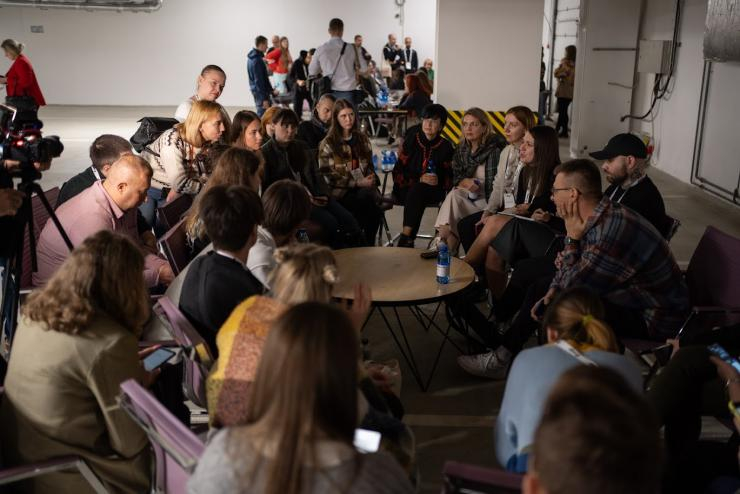
The SD.ua team during the Donbas Media Forum 2023.
“I watched Crimea disappear from Ukraine’s information map first, then Donetsk and Luhansk. The question of why there is so little coverage in Ukrainian news about what is currently happening in the temporarily occupied territories is a painful one for me,” Yana says. According to her, Sievierodonetsk was gradually fading from the information space. Russian forces occupied the city in late June 2022, but for about a year afterward, the newsroom was still able to receive information—more or less regularly—about what was happening there from Ukrainian military personnel and volunteers, as well as from local residents. People who left occupied Sievierodonetsk and reached government-controlled territory shared news and photos about the situation in the city with the editorial team.
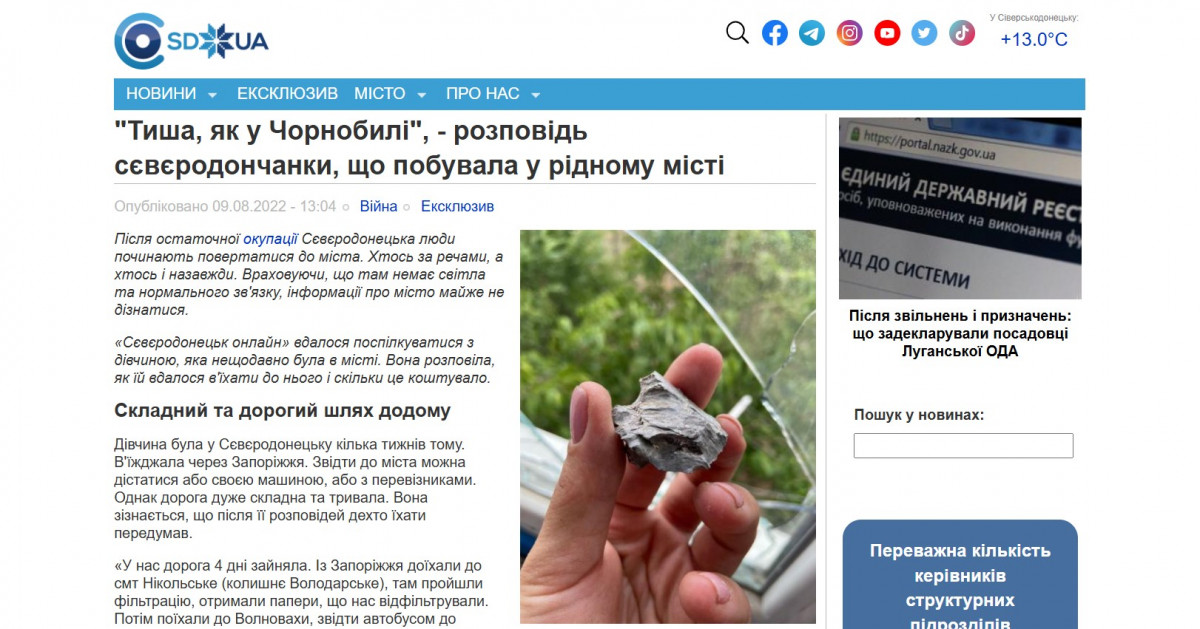
Yana Chumachenko wrote this piece based on information she received from a resident of Sievierodonetsk who, after the city was occupied by Russian forces, managed to return home briefly and then come back to Ukrainian-controlled territory.
“After 2022, once the city was occupied, it became impossible to call Sievierodonetsk, unlike Luhansk. Communication disappeared in the city—the occupiers jammed it, and later everything was simply destroyed. Only around 2025 did the internet start to appear in some places in Sievierodonetsk, with certain spots where people can go and make a call. People who remain in the city cannot just call from their own apartments. Naturally, this makes it much harder for us to verify information coming from there,” Yana explains.
When working with information from people “over there,” the SD.ua editorial team adheres to strict safety rules to avoid putting their sources at risk. If there is even the slightest concern that publishing such information could harm someone, the outlet will not release it. Likewise, they refuse to publish any news they cannot verify. Yana recalls a case when reports emerged about the death of a well-known separatist in a car accident.
“I spent a full day trying to find any information that would confirm it. I saw that many Ukrainian outlets had already reported it, but I didn’t rush. In the end, we never published anything because we found no confirmation,” Yana says.
The editor-in-chief notes that topics related to temporarily occupied territories, the problems faced by Ukrainians who remain in cities occupied by Russia, and the challenges of internally displaced persons are attracting less and less interest from Ukrainian audiences due to war fatigue. Displaced people themselves are also less engaged with news from their hometowns over time, as they become immersed in life in their new communities. Nevertheless, they still make up the majority of SD.ua’s audience. There is less content aimed at residents of Sievierodonetsk who remain under occupation or have moved to Russia, as there are fewer opportunities to obtain news from the occupied city, Yana explains.
“We mostly work with those who have left, so we focus more on covering the issues faced by displaced people, telling stories about residents who relocated, and highlighting their success stories. From the occupied territories, we can occasionally provide assessments of the situation based on information sent to us via Telegram or our other social media channels. There is no regularity in this—sometimes no one sends us anything for months,” Yana says.
One of the topics SD.ua continues to cover is the humanitarian situation in the occupied city, particularly people’s access to medical services. According to the editor-in-chief, there are almost no doctors left in Sievierodonetsk; due to the lack of stable communication, it is impossible to call an ambulance or receive even basic medical assistance, which leads to people dying.
“And these are not isolated cases. People are not receiving what they are entitled to under international conventions. It is important to speak about this openly, because it is another crime for which the Russians must be held accountable,” Yana says.
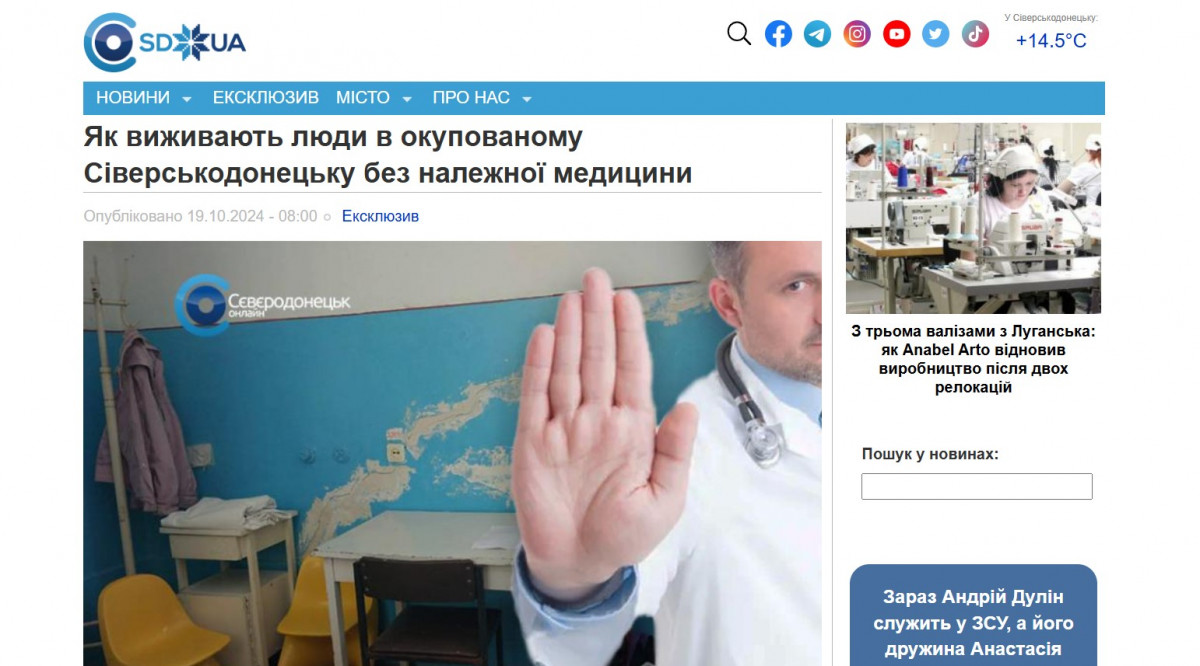
In an exclusive piece for SD.ua, Yana Chumachenko painstakingly compiled fragmentary information about what is really happening with healthcare services for people in occupied Sievierodonetsk.
The editorial team also focuses on school education in the occupied city and the propagandistic pressure exerted by Russian authorities on Ukrainian children. Earlier this year, SD.ua published a piece by Yana describing the introduction, in the Russian-occupied parts of the Luhansk region, of a student behavior assessment system that is set to become mandatory for all grades starting September 1, 2026.
“This is not about formal marks like ‘satisfactory’ or ‘unsatisfactory,’ which occasionally appeared in school diaries of many generations and carried no real consequences. The new system provides for a genuine evaluation based on a number of criteria—including absences from ‘conversations about important things’ and other propaganda activities, as well as the content of children’s personal social media pages.
An unsatisfactory grade may become grounds for barring a child from state exams, while a ‘satisfactory’ or simply low score could negatively affect an applicant’s ranking during university admissions. The occupiers also plan to apply these approaches to children with disabilities,” the publication says.
In Yana’s view, more coverage should be devoted to documenting Russian war crimes in occupied Ukrainian territories so that people not only in Ukraine but around the world are aware of them.
To work on topics related to temporarily occupied territories, Yana explains, journalists need not so much specific skills as a certain inner attitude to the subject. “You have to live it, at least a little,” she says.
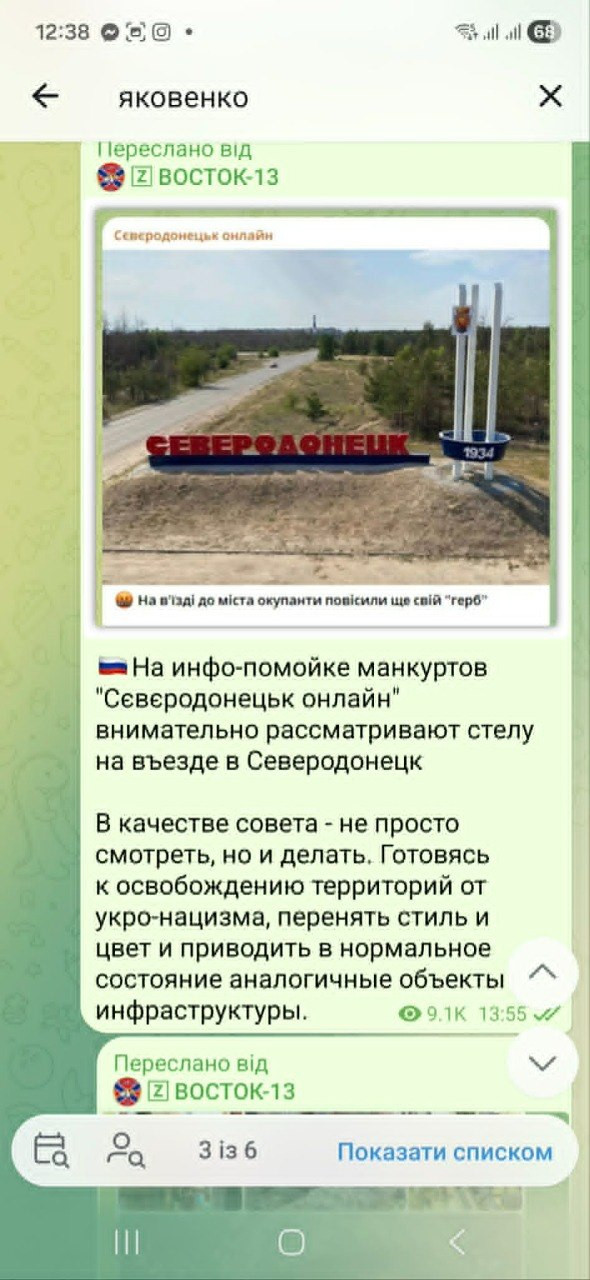
Here is one of the numerous examples of an information attack on the SD.ua editorial team by Russian propagandists. Read more about these attacks in a publication by media expert Liza Kuzmenko for Detector Media.
“Not everyone may like monitoring occupiers’ Telegram channels, military accounts, and bloggers daily, immersing themselves in the details of the life they have created there. Even regarding me, I sometimes hear surprise from colleagues: how does my psyche handle it? I treat Russian resources purely as a source of information—and nothing more. To piece together information bit by bit, you have to monitor all of this, read comments, and compare details. You have to live it a little, and that, in my view, is the specificity of our work. Journalists should have empathy for people who remain in distress under Russian occupation. This empathy is needed not only for the audience but also for the journalists themselves, so they better understand who they are working for and why—even if their material does not get many, many views,” Yana says.
The editor-in-chief of the outlet is somewhat skeptical about the future of media coverage of life in temporarily occupied territories (TOT): “No technique can save this. I think it is, in principle, impossible right now, because the territory of the Luhansk region is effectively occupied and almost completely without communication,” she explains.
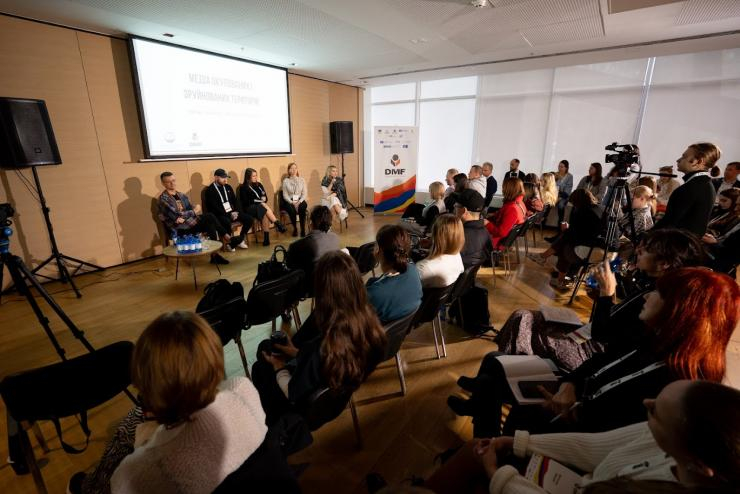
The SD.ua team during the Donbas Media Forum 2023.
Once a year, SD.ua conducts a survey of its readers to hear their opinions about the outlet’s work and what areas the team should focus on more closely. According to the editor-in-chief, the results of these surveys are the best proof that SD.ua’s audience is truly a community.
“We receive not only positive feedback about our work but also criticism. And we are grateful for that too—we’re grateful that our readers care. We value our community; we value every coin that community members donate to support us. We plan to continue developing this community. We haven’t yet managed to launch any merchandise, but I think we will move in that direction as well.
In fact, we are proud that through our work, we are not letting Sievierodonetsk die in the Ukrainian media space. SD.ua remains a kind of encyclopedia of the city, where people can find not only news but also a lot of interesting information about the region’s history—and, by the way, this is one of the most in-demand sections on our website. We also preserve many photographs on our platform. Many people left their homes without having time to take their photos with them. For such people, our photo gallery is also valuable,” Yana says.
Photos from the personal archives of Yana Chumachenko and SD.ua journalists.
This project is implemented with the support of the Partnership Fund for a Resilient Ukraine, financed by the governments of the United Kingdom, Estonia, Canada, Norway, Finland, Switzerland, and Sweden.