Українською читайте тут.
A hotline, anonymous sources, and working through VPNs—how a media outlet maintains connections with occupied territories and why this kind of journalism requires dedicated resources and skills.
Constant Russian shelling and restrictions in the information space significantly complicate the work of Ukrainian journalists with temporarily occupied territories (TOT). Under conditions of heightened control, blockages, and constant risks for people, any communication between sources in occupied territories and Ukrainian journalists can pose a threat. Despite this, Ukrainian media continue to find ways to stay connected with audiences under occupation — often working with fragments of information and with little to no feedback.
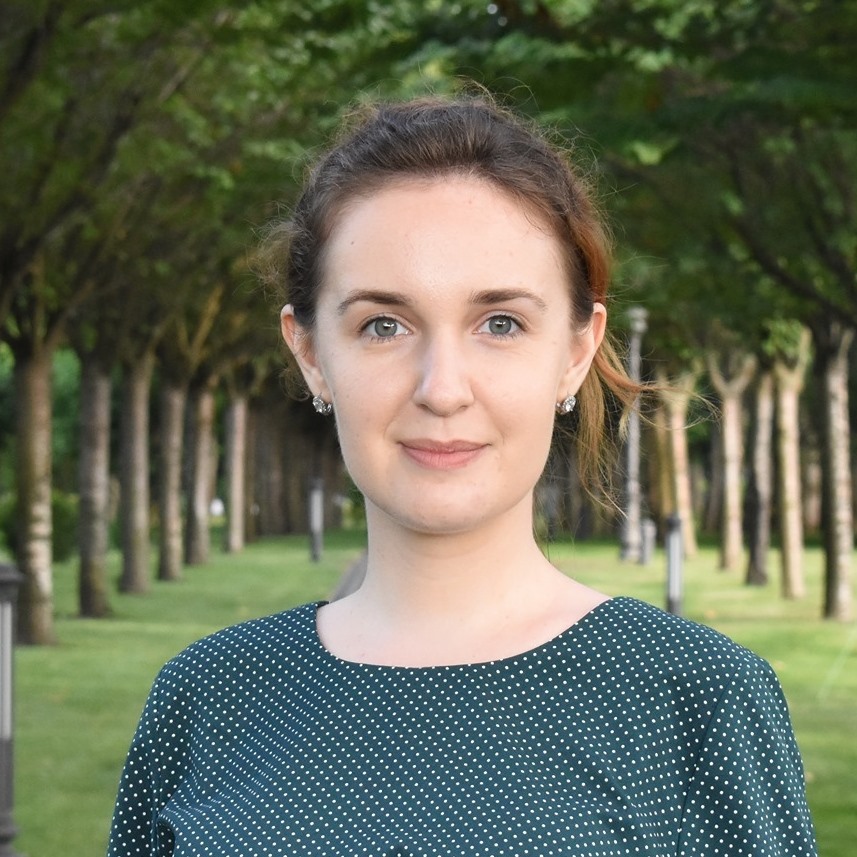
How exactly this works and what is lacking for deeper coverage of life in TOT was explained to Detector Media by the editor-in-chief of Eastern Variant (Skhidnyi Variant), Anastasiia Rudenko.
More about the outlet’s history can be found via the link.
How Eastern Variant Maintains Contact With Occupied Territories
The longer the full-scale war continues, the more difficult it becomes for journalists to work with sources in occupied areas. According to Anastasiia Rudenko, in “long-occupied” territories—those under Russian control since 2014—the number of contacts is steadily decreasing. At the same time, control by occupation administrations is intensifying, and people are becoming increasingly vulnerable. In such conditions, any communication can pose a risk.
“Thank God those who can leave are leaving. And we always support that decision. But at the same time, we are trying to come up with new ways to stay in touch and work with people who remain,” Rudenko says.
One such tool is the HelpPrint hotline. It was created in response to the gradual “drying up of sources” in regions seized by Russia. According to Rudenko, as the number of “warm contacts”—the fragile network journalists build over the years—decreases, it is crucial to create opportunities for people to reach out to the newsroom proactively. This enables people to be informed about evacuations and other assistance while also establishing contact that may later develop into a story for publication.
Verification of information plays a key role in working with sources. According to Rudenko, the newsroom constantly cross-checks incoming reports with open sources: monitoring local chats and channels operating under occupation, analyzing indirect evidence, and even satellite imagery. In some cases, the newsroom deliberately refrains from publishing.
“We are aware of the high risk of exposure, and for a person, this is a direct threat to life and health. So when entering communication, we immediately share a simple set of rules: delete chats, remove identifying markers, and avoid revealing unnecessary details. We also do not insist on information that is not critically important. We always reserve the right to refuse publication if the risk outweighs the benefit. Most often, we publish stories of people who have already left. We provide contacts of volunteers and connect with them. If a person is still in occupation or only preparing to leave, revealing their story is dangerous,” Rudenko explains.
The outlet also operates a mirror website, but activity there fluctuates depending on events. For example, reach increases during evacuations: the hotline coordinator proactively distributes calls to action, while barter or promotional posts are shared in channels read in frontline areas.
At the same time, this work requires significant effort and does not produce quick or easily measurable results. Rudenko notes that engagement with audiences in occupied territories is always about individual connections, where each contact has particular value.
Among the platforms used by the newsroom, Telegram is the primary one, although it is difficult to fully assess the effectiveness of different channels, as part of the audience consumes content anonymously.
“We use Telegram—unfortunately, there’s no way around it. We also have TikTok, Instagram, and Facebook, but it’s difficult to measure their effectiveness. We know from indirect data that some people access us from occupied territories via VPNs, but this cannot be measured accurately,” Rudenko says.

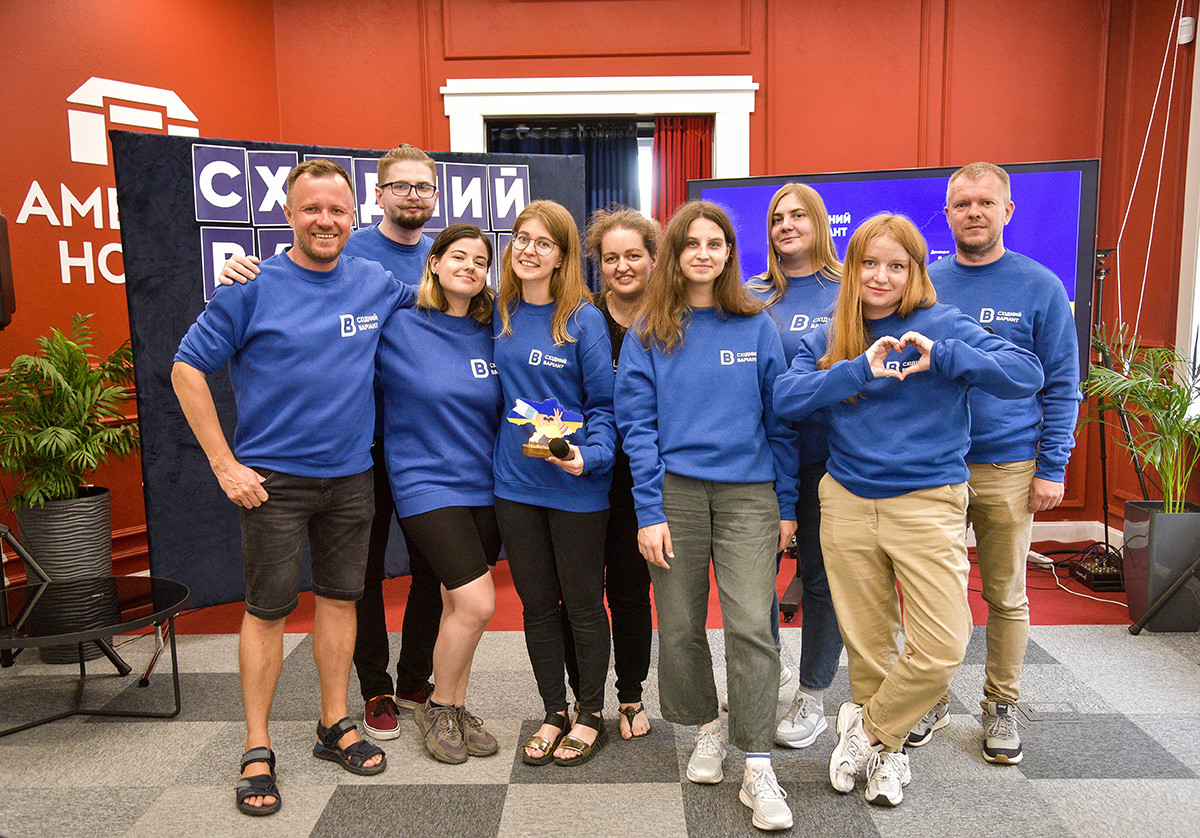
The Eastern Variant Team
A defining feature of this audience is the near-total absence of public interaction with content. People deliberately avoid it due to the risks that even minimal activity on social media can entail.
“People leave no digital traces: it’s good if they simply view something, at most, leave a like. Often, they don’t even react at all to avoid risk. Such activity on social media can have consequences — from losing a job to problems in education, not to mention more serious repercussions. These are simply the rules of totalitarian control,” she explains.
Additional challenges stem from technical factors: since internet providers — and therefore users’ IP addresses — in the occupied territories are now Russian, the traffic appears as if it originates from Russia. This also makes it extremely difficult to measure audience contribution and receive feedback.
In such conditions, journalists rely not on quantitative metrics but on individual success stories: “We capture rare cases of meaningful feedback — for example, hotline requests or messages from people who have left. And we understand that this is only a small fraction of the real audience. One in fifty may respond, but even that confirms that our work matters. You can’t expect inspiring stories or hundreds of grateful comments every month. What drives us is an awareness of our mission and our niche.”
What Topics From Occupied Territories Can Be Covered
“There are topics we simply cannot cover. It’s easier to list what we can still report on than what is completely closed. What reaches us are only fragments of reality,” she says.
Most often, the newsroom focuses on social and everyday issues raised directly by people in their requests. These are topics that reflect daily life in occupied territories.
“Social and everyday issues are what we can still document. People contact the hotline with questions about pensions, everyday problems, and basic needs. We also pick up some information from open sources and local communities,” explains Anastasiia Rudenko.
Many of Eastern Variant’s reports focus on Russia’s impact on education in the occupied territories: how Ukrainian children are subjected to distorted historical narratives and militarization. Occupying authorities organize so-called “educational exchanges,” “trips,” and “health retreats” to take Ukrainian children to Russia, presenting it as their homeland.
A separate topic is the deportation of children: Eastern Variant reports on known cases and on how Ukraine is trying to bring these children back home.
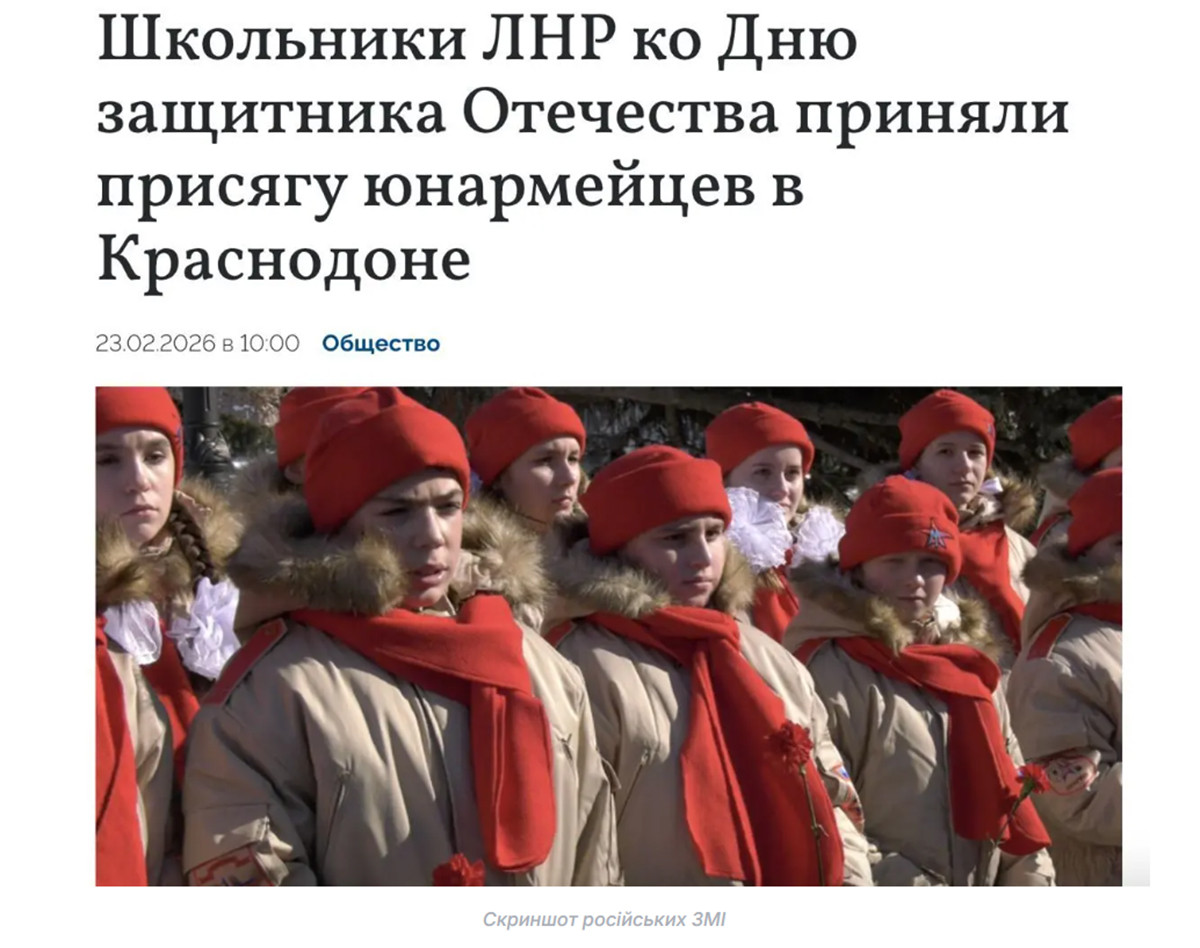
Screenshot from Inha Pavlii’s article on the militarization of youth in occupied territories
The outlet also covers stories of volunteers, entrepreneurs, artists, military personnel, and others who have been displaced by the war. Some open cafés, launch their own jewelry brands, or continue conducting scientific research.
For example, the director of the Luhansk Nature Reserve of the National Academy of Sciences of Ukraine, Larysa Borovyk, continues to work remotely with the reserve’s materials while all of its branches remain in occupied territory. The primary work of such institutions now lies in preserving and processing accumulated data: herbaria, zoological collections, and field journals.
The scientist considers this work essential, as assessing the damage caused by the war requires understanding the state of ecosystems before the invasion.
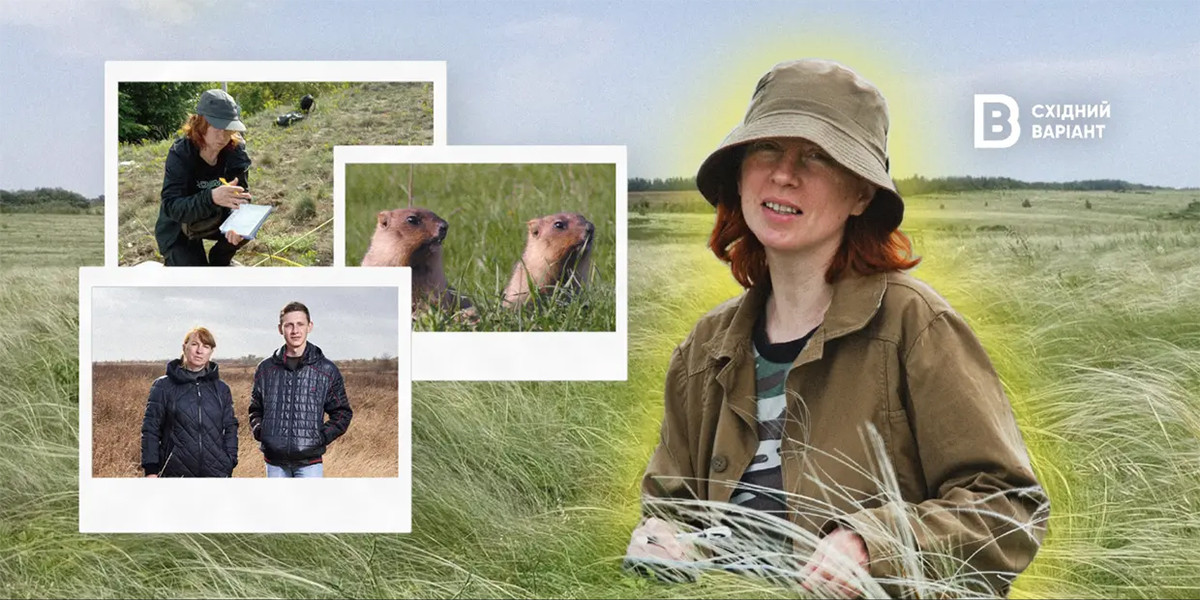
Larysa Borovyk. Collage from a piece by Olha Tarantina
Eastern Variant also covers the situation in frontline cities and towns such as Druzhkivka, Kramatorsk, Kostiantynivka, and others.
At the same time, topics such as corruption within the occupation authorities or the situation in prisons remain largely inaccessible for comprehensive analysis.
“We cannot build a complete picture of what is happening, for example, in places of detention. Serious abuses are taking place there, but we only have very limited testimonies — and even those come thanks to people who managed to leave and speak out. These are the fragments from which we gradually piece together an understanding of what is happening,” says Anastasiia Rudenko.
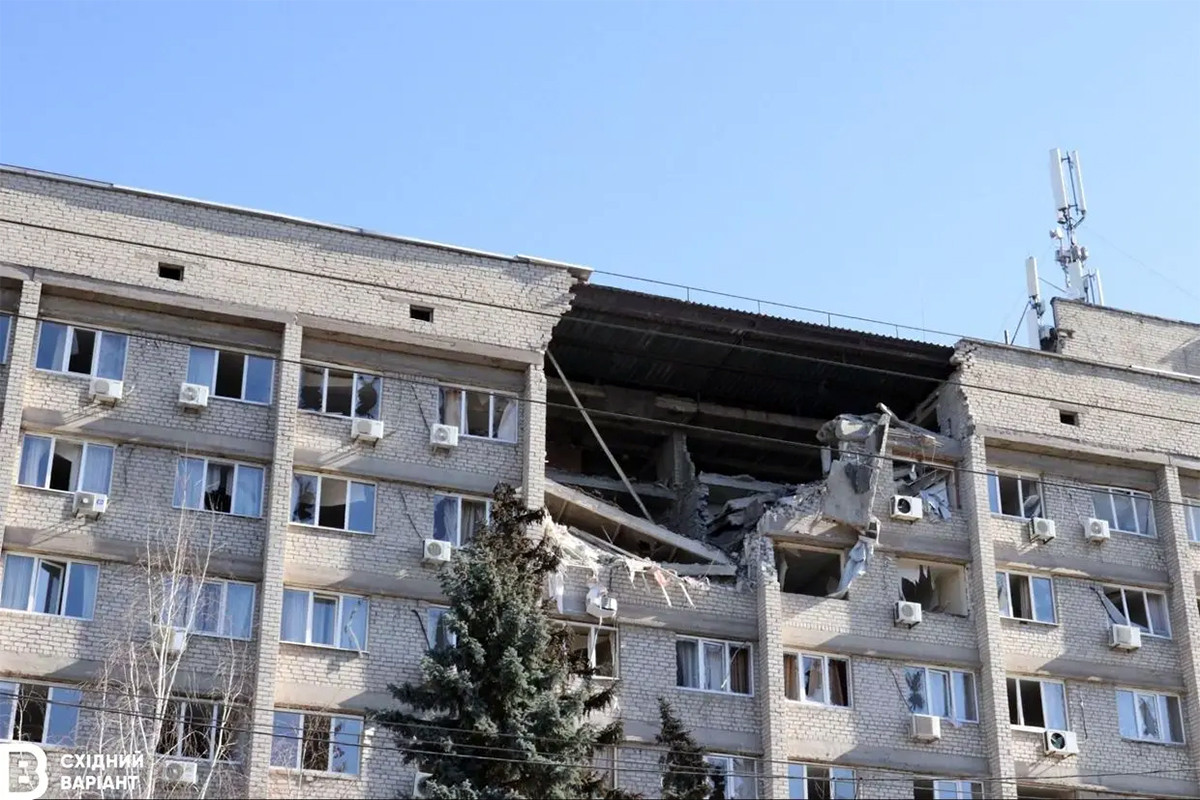
A damaged building in Kramatorsk. Photo from a report by Alina Shevchuk
What Journalists Lack for Deeper Coverage of Life in Occupied Territories
Coverage of temporarily occupied territories in the public space is gradually declining, although audience demand has not disappeared. As Anastasiia Rudenko explains, this is primarily due to shifts in the state agenda and reduced attention from key institutions.
“Previously, there was more targeted work — a dedicated ministry, statements from officials, a proactive stance by the state. Now, after the dissolution of that ministry, we even see fewer informational signals, particularly from policymakers,” she says.
As a result, the topic of occupied territories increasingly relies on the efforts of media, civil society, and humanitarian organizations that assist people from non-government-controlled areas. They remain the main drivers of attention to this issue.
“Today, this topic survives primarily thanks to the efforts of media, journalists, and civil society organizations. We are deeply engaged in it and do not reduce our focus. But overall, there are fewer actors and stakeholders systematically working on it,” Rudenko notes.
At the same time, she emphasizes that this is not so much about a loss of audience interest as it is about a shift in the communication landscape. Because of this, the issue of Russian-occupied regions requires additional efforts to stay visible.
According to Rudenko, journalism about occupied territories is a distinct professional competence that requires specialized knowledge and skills — not only access to information, but also an understanding of context and risk management.
“It requires a deep understanding of the logic of occupation, working with totalitarian communities, and closed environments. It’s also about secure communication, complex verification, and very sensitive work with sources,” she explains.
This work also involves heightened ethical responsibility, as journalists deal not only with information but with risks to specific individuals, which makes it harder to attract new professionals to the field.
Regional media that have historically worked in these areas remain key players in covering the topic. At the same time, she believes national media could play a greater role.
“Regional media are number one today because they have both the experience and the audience. But we would like to see national media support this topic more — through citations, amplification, and attention to stories uncovered by colleagues in smaller newsrooms,” she says.
A separate challenge is the lack of resources for sustained work. This includes not only funding, but the overall capacity of newsrooms to work on this topic long-term:
“This is about newsroom resilience. The situation of Eastern Variant is not unique — most independent media face a shortage of donor support.”
In response, the editorial team is forced to look for alternative revenue streams, which in turn diverts resources from journalism. Last year, the team launched its own shop with creative products to diversify income. At the same time, this allows small entrepreneurs from eastern Ukraine to be represented in their store. While this approach is important for survival, it also draws attention away from core journalistic work.
“We would like to have more dedicated staff, more editorial support — not just reporters, but investment in strong fact-checking, OSINT tools, digital security, legal support, and sometimes psychological support for the team. All of this is in short supply.
We continue working within the limits we have, but that’s why I emphasize that it is becoming increasingly difficult. We need more specialized opportunities to move beyond reactive work and ‘firefighting’ toward in-depth coverage and investigations, which can take months and for which we simply don’t have the resources,” the editor-in-chief says.
Additional challenges come from working in frontline areas, which has become more difficult both logistically and in terms of safety. At the same time, the number of journalists working directly on the ground has decreased.
“Previously, we had a much broader network of contributors living and working in these cities, but many have left. There are fewer professional journalists there now than ever before. We are also working with newcomers. We once had a small citizen journalism program, and we still keep in touch with some people, asking them to send at least basic information, which we then process ourselves,” she explains.
At the same time, the newsroom continues to send journalists on assignments, although each trip now requires more resources and effort, becoming increasingly expensive and complex to organize.
According to her, one possible solution could be closer cooperation between regional, national, and international media — not only through information sharing but also joint reporting.
“In addition to targeted financial support, there is a lack of incentives for media collaboration. International newsrooms could be more actively involved in working with regional journalists. While the topic of occupied territories is somewhat stigmatized within Ukraine and not widely understood by the general public, it is even less known abroad. A public broadcaster in France or the BBC could connect with regional media that have direct contacts and access to stories from occupied territories. But this is not only about sharing contacts — it’s also about citing our media,” she says.
Support from the state and donors also remains crucial, particularly in the field of strategic communications. Coordinating these efforts could increase the visibility of issues related to occupied regions.
“It is important to have greater involvement from policymakers in this topic and their participation in coordination formats. There are donors supporting Ukraine’s strategic communications — both domestically and internationally. It would make sense to better align these efforts with those of civil society and independent media, to collectively address the problem. Right now, we are operating in isolation — and it shows. Joint formats and discussions could significantly strengthen the overall impact,” Rudenko concludes.
Ultimately, she believes the issue is not only about funding, but about the overall institutional capacity of media, which determines whether newsrooms can develop skilled professionals and work systematically on such a complex topic.
This material was produced with the support of the Partnership Fund for a Resilient Ukraine, funded by the governments of the United Kingdom, Estonia, Canada, Norway, Finland, Switzerland, and Sweden.