Українською читайте тут.
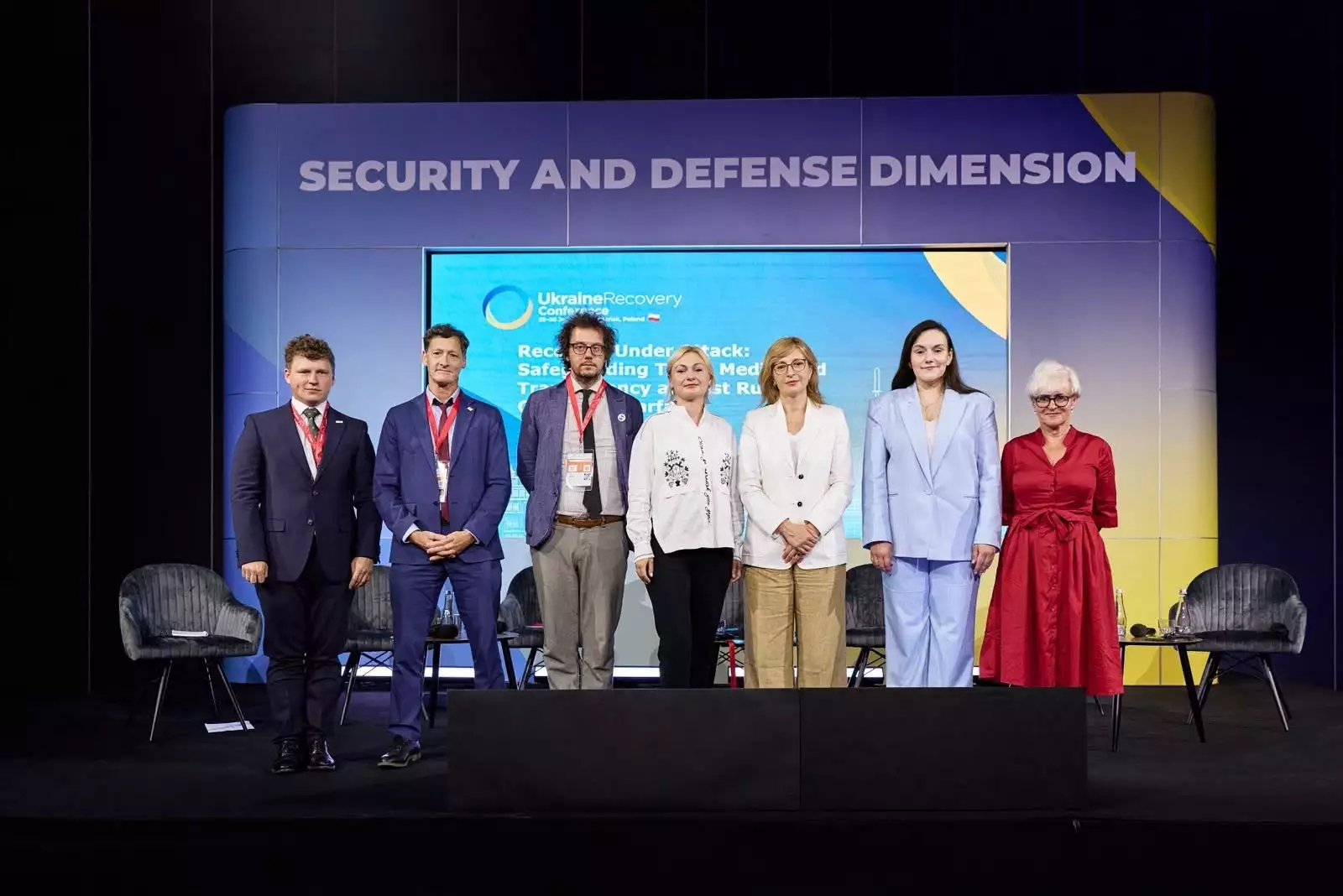
The decision to include the media panel at the Ukraine Recovery Conference under the "Security and Defense" pillar raises important questions not so much about the present as about the post-war future of journalism.
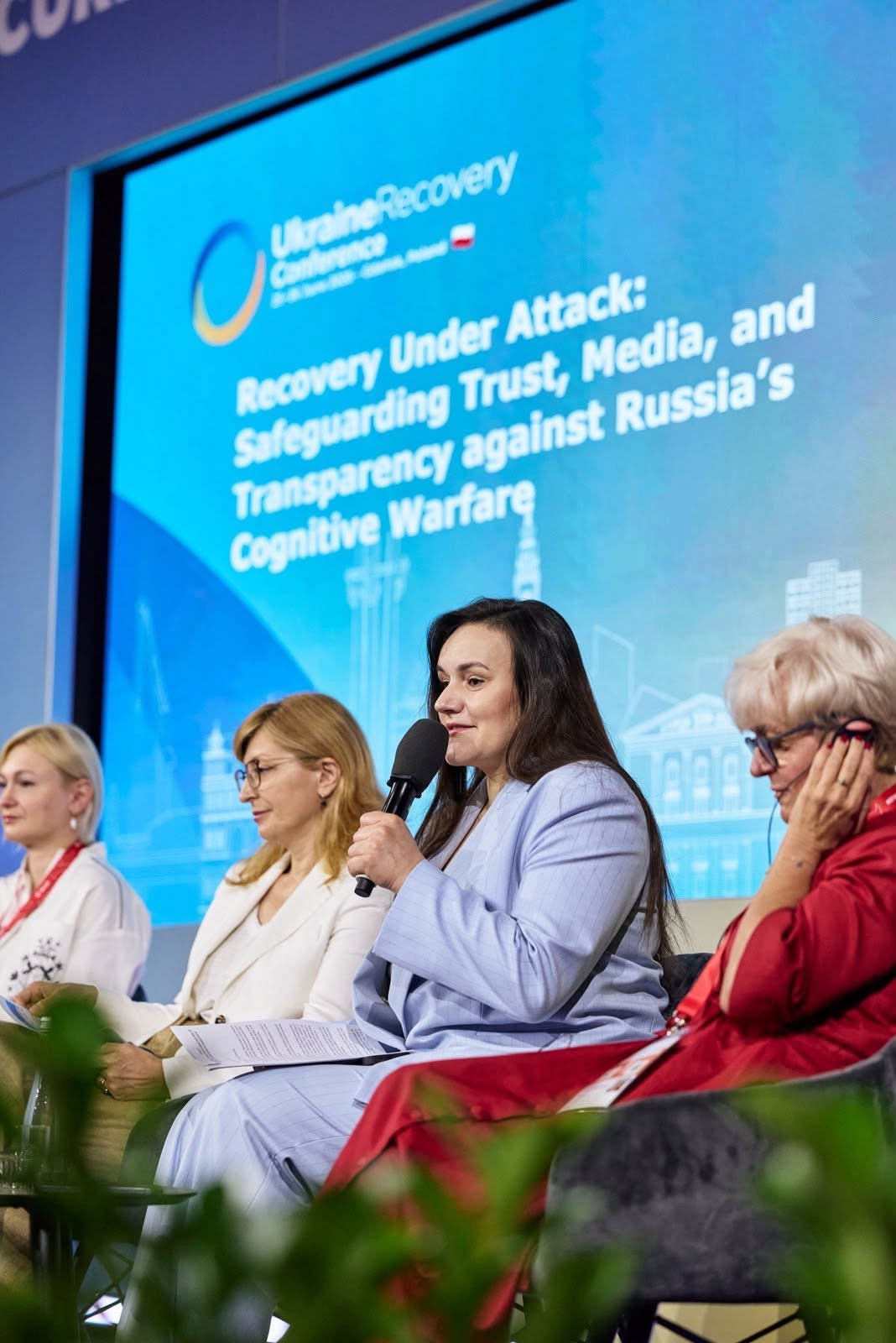
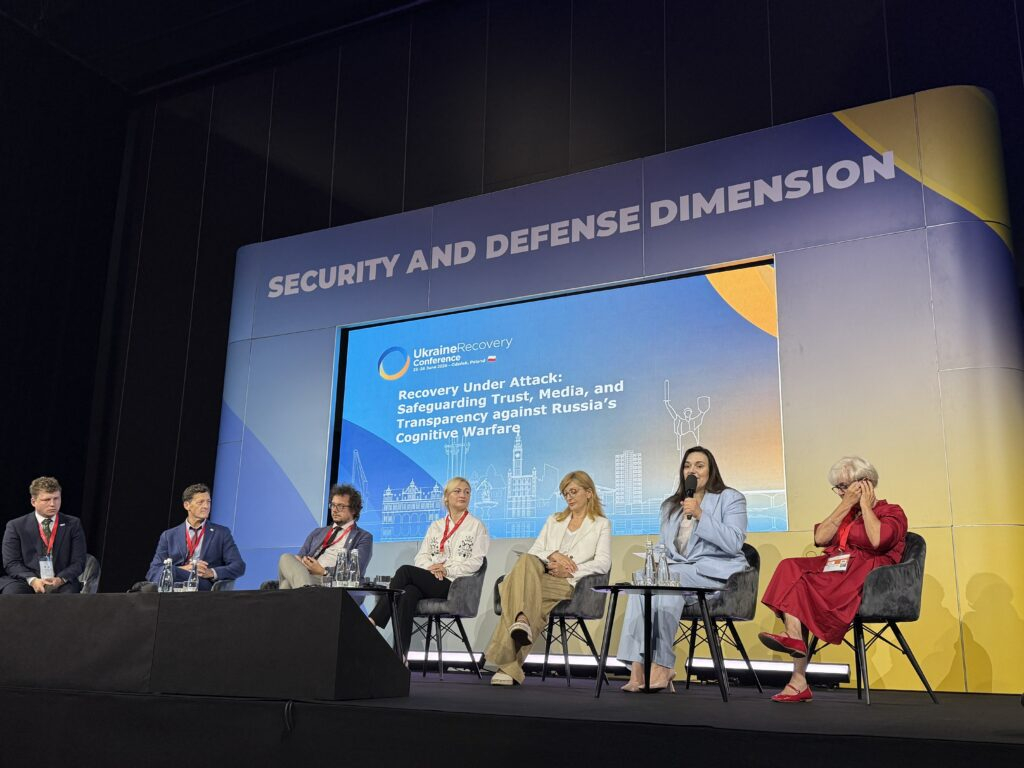
As many colleagues have enthusiastically noted, this year the Ukraine Recovery Conference featured, for the first time, a dedicated panel on media. That fact alone is undoubtedly positive. But let us consider whether it is truly a good thing that this panel was placed specifically within the "Security and Defense" pillar.
From many European capitals that have traditionally provided donor funding, an increasingly strong wind is blowing in favor of redirecting financial support away from civil society and media toward defense. Under these circumstances, the temptation to reframe the issue naturally arises: to argue that the media are also part of defense and should therefore remain among the priorities for financial support.
At first glance, this may seem like a strategically sound and even clever decision. But are we not setting a trap for ourselves in doing so? Listen to how it sounds from the outside. One of my colleagues from outside the media bubble quickly, matter-of-factly, and without the slightest hesitation remarked: "Well, of course, they included propaganda in the 'Security and Defense' pillar at the URC."
- Read also: The weapon you cannot see
After the conference, I gave an interview. When I shared these reflections, the host asked somewhat anxiously: "Did you experience any negativity from the government while you were in Gdańsk?" I replied that I had not. But I added something else: today, everyone is working under enormous pressure—media, government, and the military alike. There is no time to "compare notes," and that is precisely why we may attach different meanings to the same words that describe phenomena which are new to all of us.
Sweden has developed a thoroughly modern and progressive concept of total defense. The idea is that representatives of all sectors—the state, business, and civil society—should contribute to the country's defense without necessarily joining the armed forces directly. In the case of peaceful Sweden, however, this concept exists largely in theory, whereas it may well fall to us to test it in practice.
Over the past six months, I studied in an experimental program at the School of Total Defense, organized by the NGO Join Ukraine and the Ukrainian Catholic University with the support of the Swedish government. And this is far from the only initiative of its kind to emerge recently. For example, there is cooperation between the National Council of Ukraine on Television and Radio Broadcasting and the Security Service of Ukraine (SBU), under which the SBU provides cybersecurity training for journalists. Representatives of the security and defense sector also deliver lectures for media professionals as part of a program implemented by the OSCE. Competition for these courses is extremely high, and I attended them as well.
Interestingly, security officials themselves say that cooperation between them and the media is still insufficient. They would like to strengthen it even further.
All of these developments are easy to understand. The country is fighting a war for its very existence. Under such circumstances, society seeks every possible mechanism that may help it endure. But the war will not last forever. What will happen once it ends? Will society continue to trust the media if they become firmly associated in the public mind with the security sector? And, incidentally, what will those press officers who decide to return to journalism bring back with them?
In other words, the decision to place media within the "Security and Defense" section is not merely a matter of conference programming. It is a signal of a certain Overton window—of how we are reshaping our understanding of journalism's role during wartime.
Next year, the Ukraine Recovery Conference will be hosted by Estonia—a country where the idea of total defense is also familiar (although, like in Sweden, it has likewise remained largely theoretical). That is why it will be particularly interesting to see whether the media topic once again appears under the security pillar next year. Or whether the Estonian side will instead advocate for drawing a clearer line between cooperation for the sake of security and the independence of journalism.
Because it is precisely now, when decisions are being made under the pressure of war, that we are collectively laying down the rules by which we will live once the war is over.
Photo: URC-2026, Women in Media