
Українською читайте тут.
Spoiler: Russia has long since stopped trying to persuade. It is trying to destroy the very ability to navigate reality.
“Information warfare” remains a concept that is constantly evolving, much like war itself. The term has existed for more than three decades and has already developed its own infrastructure: monitoring centers, grant programs, and university courses. At the same time, these efforts are increasingly falling behind the real challenges of the semantic space. On June 1, the Security Architecture Forum hosted a panel discussion whose participants highlighted this growing gap.
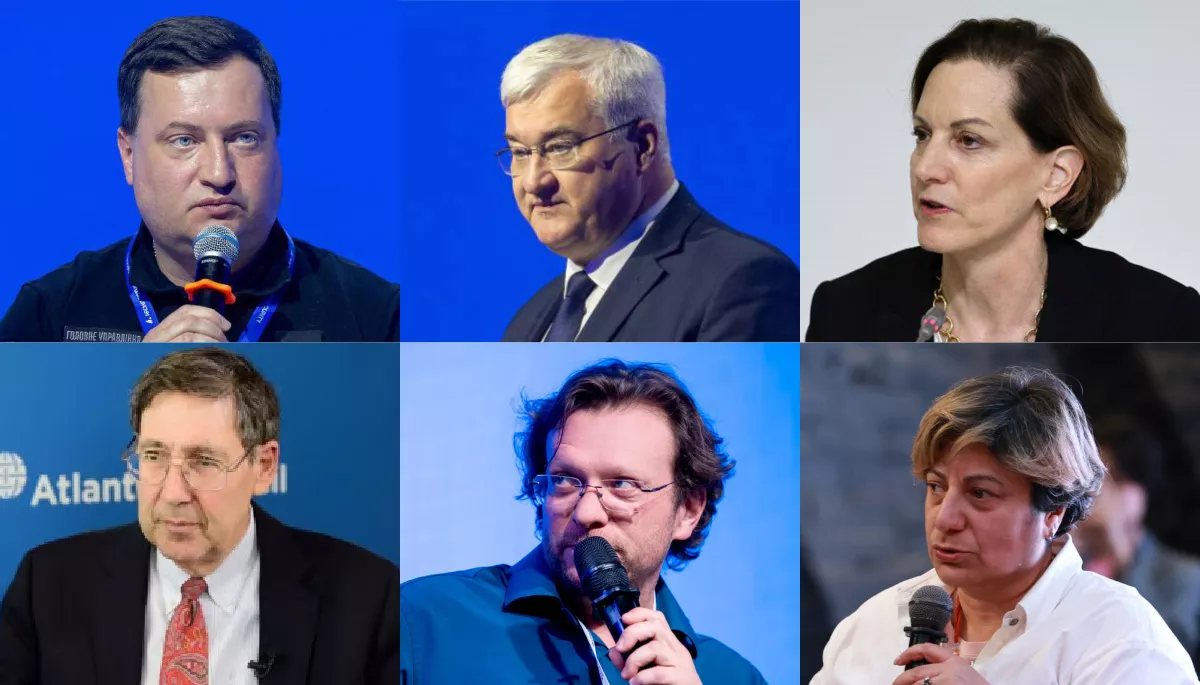
The discussion moderator, Rena Marutyan, Director of the Institute for National Resilience and Security and Professor at the Department of Global and National Security at Taras Shevchenko National University of Kyiv, noted that classical information warfare is primarily a competition between different versions of reality. One side claims one thing, the other claims another, and somewhere in between there may be truth—or perhaps not. Nevertheless, facts can be verified, lies can be debunked, and audiences can be persuaded. Such a model assumes that both sides still appeal to their own understanding of reality, even when manipulating it.
The expert emphasized that Russia is no longer trying to persuade. Instead, it seeks to destroy people's very ability to orient themselves by attacking not merely their beliefs but their capacity to form them.
“Russia has shifted from disinformation operations to influence operations and, above all, operations aimed at creating chaos within our society. In other words, it is changing the nature of these attacks—from attacks on information itself to attacks on public opinion. In today’s world, public opinion changes very rapidly because the information flow is so overwhelming that people can become lost in it. That is why the concept of information warfare belongs to the twentieth century. In the twenty-first century, we are confronted with something even more frightening: cognitive warfare,” Marutyan said.
Rena Marutyan continued by arguing that cognitive warfare is an attack on identity, the sense of community, and political will. In her view, once such an attack succeeds, nothing else is required: society begins to disintegrate from within without any additional external effort. The entry points she identified resembled the natural tensions of wartime: distrust between those who stayed and those who left; between those who donate and those who do not; between the military and civilians; between society and the government, and so forth.
“Russia invests millions of dollars to undermine trust within society and trust in the authorities. It wants us to reject the decisions made by the government. Distrust toward the army and the security sector is also a consequence of this cognitive war,” Marutyan explained.
Peter Pomerantsev, Senior Fellow at the SNF Agora Institute at Johns Hopkins University, sought to explain why cognitive attacks are so effective. Born in Kyiv, he spent ten years working in Moscow television and later wrote the book Nothing Is True and Everything Is Possible, which became one of the first analytical accounts of Putin’s propaganda machine from the inside. The concept of the “infrastructure of cynicism” that he introduced entered public discourse long before it became a staple of international conferences.
This infrastructure pursues two goals simultaneously. The first is to destroy an individual's sense of agency. If everything around you is corruption and deception, if everyone lies equally, then the rational response is passivity. And a passive society always needs a leader.
“If we live in a world of cynicism, conspiracy theories, and confusion, it means that you, as a citizen, are hopeless. And you need Putin or another authoritarian leader to guide you,” Pomerantsev said.
Its second objective, in his opinion, is to destroy the very idea of the future—not any specific future, but the concept of the future itself. Putinist propaganda offers none. It provides only toxic nostalgia for greatness, order, and stability, but no vision of where society should be heading. There is only something that must supposedly be protected from destruction.
“Everything is cynicism. Everything is corruption. There is toxic nostalgia, but there is no hope and no future to strive toward. Russia is trying to destroy the meaning of the words with which we built our society: freedom, democracy, sovereignty. They want to erase the meaning of those words,” Pomerantsev noted.
At the same time, this technology is not Putin’s invention. Goebbels’ propaganda was likewise built not around the future but around revenge: greatness that had been stolen, order that had to be restored, enemies who had to be punished. It offered no vision of what tomorrow after victory would look like—only an image of a past that had to be reclaimed. Few would dispute that Putin has faithfully reproduced this matrix.
However, Pomerantsev also stressed what became the response. In his view, the Maidan of 2014 was itself the most powerful form of counter-propaganda—not because of its slogans, but because ordinary people demonstrated that they could change the world around them, that agency exists, and that “democracy” is not an empty word, even if there remains a long road ahead.
“When I look at Ukraine, I see not just a place where drone warfare is being reinvented. I see a place where the great democratic narratives, the great European narratives, are once again finding inspiration. Whenever any of us comes to Ukraine, we see these words once again filled with meaning, sacrifice, and a sense of hope,” he said.
According to the experts, cognitive attacks begin not with the news but at a much deeper level—with the undermining of identity. This view was expressed by Anne Applebaum, Pulitzer Prize-winning author of Gulag, Iron Curtain, Red Famine, and Autocracy, Inc., and a staff writer for The Atlantic.
The authoritarian use of history, she explained, has nothing in common with genuine history, education, memory, or commemorative practices. Such attacks construct a false framework through which people perceive every subsequent event.
According to Applebaum, the mechanism is relatively simple: it takes a real grievance—whether personal or collective—and attaches a ready-made interpretation to it. You did not achieve what you wanted? Here is the explanation.
“Here is a ready-made explanation for you. You are being oppressed by old historical forces. Or here is an incident from the past in which people like you were killed or tortured. Maybe it happened fifty years ago, maybe three hundred, maybe a thousand. You identify yourself with them—and we stand up for you by talking about that historical incident,” the American scholar explained.
Importantly, these grievances are not necessarily fabricated—that is precisely what makes the mechanism effective. The persecution of the Crimean Tatars under Stalin becomes an argument that “Crimea has always been Russian.” The Holodomor becomes an argument against the “Ukro-Nazis.” The Mongol invasion of the thirteenth century becomes proof that Russia has always been at war. Real crimes and real victims are thus instrumentalized and transformed into fuel for contemporary emotional mobilization.
Applebaum stressed another important point: Russia is not targeting just one audience. It seeks to reshape the understanding of identity among Russians, Ukrainians, Europeans, and, in a more indirect way, Americans as well. Every “forgotten” minority and every “aggrieved” community in any country has been and remains a potential entry point for such influence—not because these grievances are illegitimate, but because they can be exploited.
The expert believes it is no coincidence that Putin repeatedly returns in his public speeches to medieval texts, Rurik, the Baptism of Rus, and the Mongol invasion. He is not constructing knowledge—he is constructing a mirror in which the present appears as a continuation of an ancient, unfinished struggle.
How these mechanisms worked in real time was described by John Herbst, Senior Director of the Eurasia Center at the Atlantic Council and former U.S. Ambassador to Ukraine (2003–2006), who has studied this issue for more than twelve years. The diplomat noted that while Moscow directed, financed, and armed the “little green men” in Crimea and organized destabilization in eastern Ukraine, the West publicly referred to them as “unknown men in uniform” and described the situation as a “civil conflict.”
“All of this was directed, managed, financed, and armed by Moscow. Yet the West treated it as unknown little green men, as though it were a civil war in eastern Ukraine—when it clearly was not. As a result, there was confusion in the West over how to respond to the first shot fired in the Kremlin’s war against Ukraine,” Herbst said.
According to the American diplomat, the same pattern can be observed in efforts to blur responsibility, make situations appear “unclear,” and transform the obvious into something debatable. Moreover, Herbst believes this strategy has worked directly within the United States itself. In his view, while the Kremlin did not invent American isolationism, Russia rediscovered and exploited a vein that had existed long before.
“In my country, they tapped into a vein in American society that has existed for more than a hundred, perhaps even two hundred years—the desire to focus solely on the United States and its neighbors in the Western Hemisphere. This vein was reopened ten, seven, or eight years ago by promoting themes that helped restore political significance to ideas advanced by the old American right between the First and Second World Wars. Themes such as ‘America is being exploited by its allies’ resonated precisely because they were not militant,” Herbst said.
Herbst believes that the themes promoted by the Kremlin to American audiences were not aggressive and could even appear reasonable to many people: “Why should we pay for someone else’s security?” “Wouldn’t it make sense to take care of ourselves first?”
In his opening remarks at the Forum, Andrii Sybiha, Ukraine’s Minister of Foreign Affairs, spoke from a diplomatic perspective, yet the same underlying logic outlined by the experts was clearly visible in his statements.
He called the Budapest Memorandum “a shameful symbol”—not only because it failed as a legal document, but because it failed as a signal. No one believed that violations would have real consequences, and this gave rise to the conviction that “security guarantees do not work,” “the West will not intervene,” and “great powers will always reach agreements without us.” These narratives became one of the most powerful propaganda resources both before and during the full-scale invasion.
“The era of paper guarantees is over. The Budapest Memorandum remains as its shameful symbol. Impunity always breeds new aggression. The inevitability of punishment is legal deterrence,” the foreign minister said.
Sybiha described the Special Tribunal for the Crime of Aggression—the first since Nuremberg—not only as an act of justice but also as an instrument of cognitive confrontation: a public demonstration that rules still matter.
“Assad may be in Moscow, but Syria is no longer under Russian influence. Russia is not the USSR 2.0, nor is it a new superpower. Its influence is declining. Wagner is no longer a force in Africa. The countries of the South Caucasus are moving out of Russia’s sphere of influence. When Maduro was evacuated from Venezuela, nobody asked Putin. In today’s world, speed, creative flexibility, and asymmetric solutions are becoming increasingly important,” Sybiha said.
What researchers and diplomats described, Andrii Yusov, spokesperson for strategic communications at the Main Intelligence Directorate of the Ministry of Defence of Ukraine, called the operational reality of today.
In his view, since the beginning of the full-scale invasion, Russia has definitively abandoned “outdated straightforward propaganda” and moved to full-scale cognitive warfare directed not only against Ukraine.
“The strikes target fundamental values, perceptions, and democratic decisions. Today, there are no elections anywhere in the free world in which Putin has not tried to interfere and exert pressure. Sometimes this is done indirectly, and sometimes quite openly, as we are now witnessing in Armenia and Moldova. This is undisguised political aggression. For now, only political,” Yusov noted.
And the words “for now” sounded less like reassurance than a warning. Moldova’s 2024 election campaign was accompanied by a documented vote-buying operation carried out through proxy structures using funds laundered across multiple jurisdictions. In Armenia, after the defeat in Nagorno-Karabakh, pro-Russian forces attempted to portray Pashinyan as a traitor by relying on narratives created in Moscow.
Yusov also noted that Putin exploits even the most painful issues—such as prisoners of war, civilian hostages, and the fate of deported children—for the purposes of cognitive delegitimization, seeking to deepen internal divisions and weaken Ukraine’s position on the international stage.
“Cognitive weapons seek to find the key to the subconscious of Western societies and thereby weaken the pro-Ukrainian coalition. But above all, they seek to divide the entire Western world. Because only in that way does Putin have any chance against a united Europe, against a united free world. Against a united Western civilization, dictatorship—including the Russian dictatorship—has no chance and never will,” the intelligence representative said.
Taken together, the perspectives of these very different specialists described the same phenomenon from different angles. What they outlined differs fundamentally from the standard logic of “fighting disinformation.” Russia is not trying to win an argument—it is trying to make the argument itself impossible. And therein lies the fundamental difference between information warfare, which we have learned to recognize, and cognitive warfare, to which we are only now adapting.