Українською читайте тут.
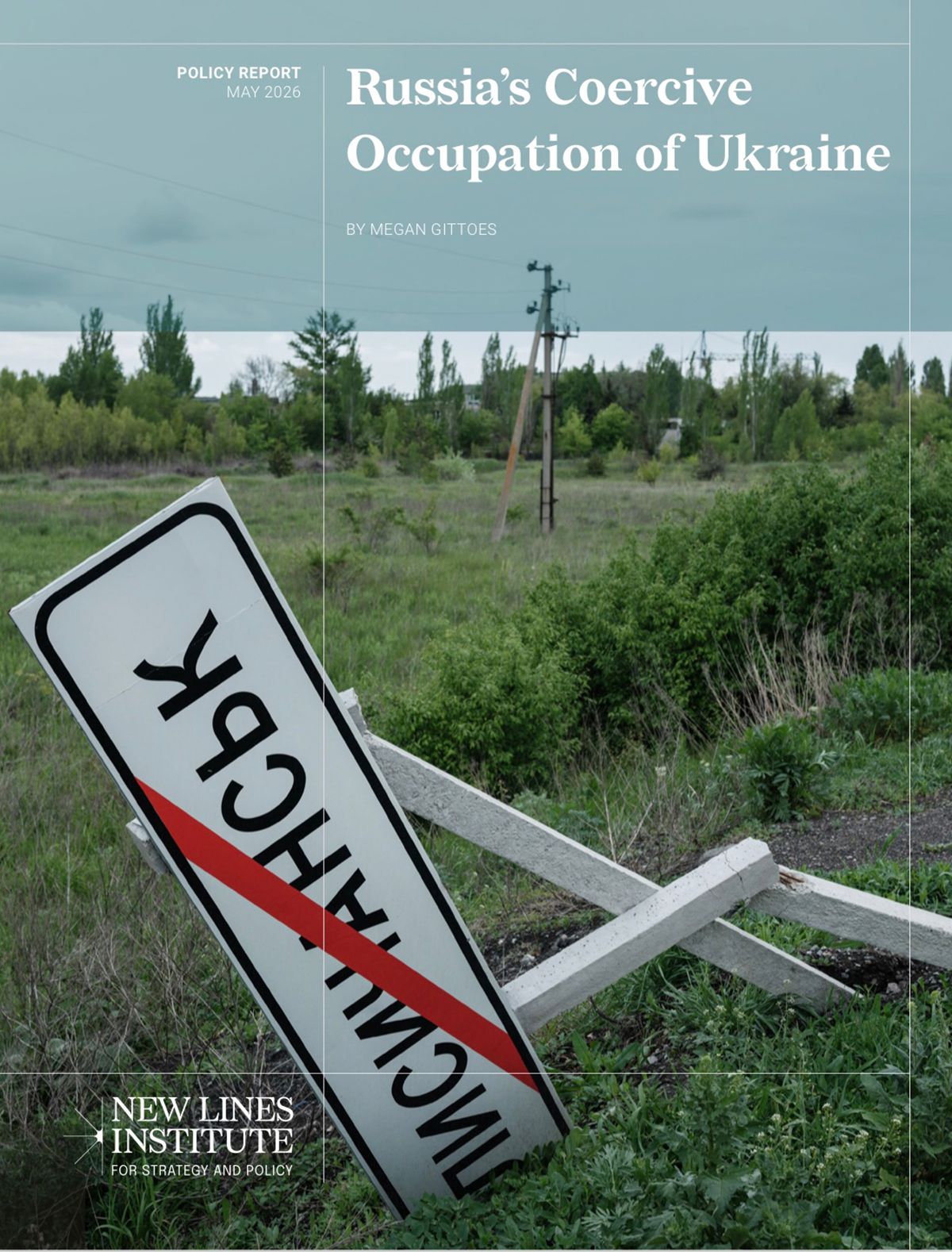
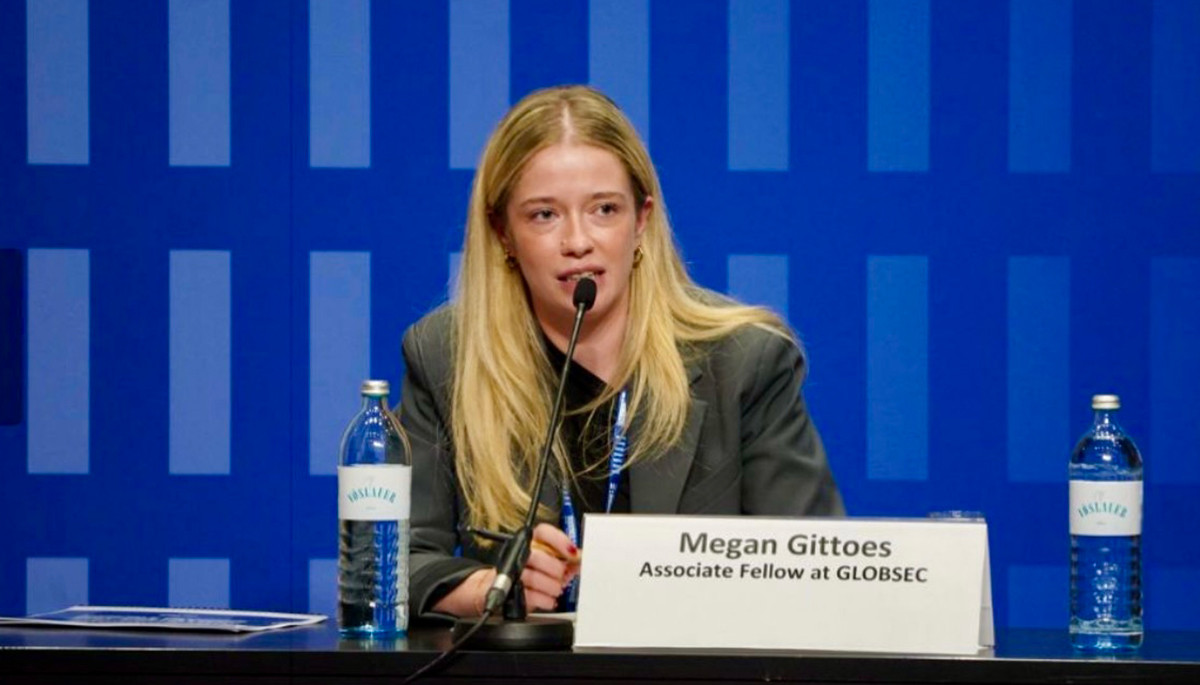
Detector Media spoke with Megan Gittoes, Adviser at the Ukrainian Center for Security and Cooperation in Kyiv and Associate Fellow at GlobSec, about her May report on the occupation, the challenges researchers face when studying Ukraine’s occupied territories, and how to conduct field research safely without inflicting further trauma on witnesses of Russian crimes.
— What challenges did you face as a foreign researcher while working on the report Russia’s Coercive Occupation of Ukraine, and what difficulties do foreign experts generally encounter when conducting research in the context of a full-scale war?
— I began this line of research while working in Ukraine before the full-scale invasion in various political roles. Later, during the full-scale war, I started collaborating with research institutes. In 2023, I produced my first report on Russia’s “proxy war” in Ukraine, including aspects of sexual violence committed by Russian forces. I turned to the topic of the occupied territories in 2024 for a GlobSec report on Russia’s militarization of children. From there, I wanted to produce a broader piece of research on the atrocities Russia is committing in Ukraine’s temporarily occupied territories.
I believe that Western audiences have a fundamentally mistaken understanding of what occupation actually means. It is, of course, not simply a change of government or a restructuring of state institutions. It is a deeply brutal system designed to subjugate and absorb an entire generation of people by integrating them into a totalitarian state.
The main challenge of this research, and of this report in particular, is that Russia has kept the occupied territories completely closed off from the outside world. People can face severe punishment even for attempting to contact relatives living in territory controlled by Ukraine, especially if those relatives work in the defense sector. If it is discovered that someone has communicated with Ukrainian intelligence, they automatically become a target for persecution.
Being part of resistance networks carries enormous risks. This creates tremendous challenges for research: on the one hand, there is a lack of access; on the other, there is the need to ensure that any access you do gain does not put anyone’s life at risk.
— In your opinion, are there any topics that researchers should refrain from exploring in order to avoid putting people living under occupation at risk?
— Yes, absolutely. I believe that any contact with resistance movements inside the occupied territories should be conducted exclusively through official intelligence channels. Ordinary researchers generally have no experience doing this—especially Western researchers like myself (I am from the United Kingdom). Acting ethically means putting the safety of the people involved first.
Of course, it is critically important that we receive information from the occupied territories in order to understand the scale of Russian crimes. But trying to obtain it through informal channels, while disregarding the safety of sources for the sake of one's own research, is incredibly selfish.
— Is it difficult to establish cooperation with representatives of the Ukrainian intelligence services? What limitations—or, conversely, what advantages—does such cooperation offer for a researcher’s work and for knowledge gathering in general?
— It is difficult for me to comment on the work of other researchers and their interactions with intelligence agencies because I do not have that information. Based on my own experience, I can say that cooperation with official intelligence services naturally comes with certain limitations. A certain level of trust is required, and questions need to be agreed upon in advance. However, this is standard practice in any country and with any intelligence service: questions are usually formulated in writing and sent by email ahead of time.
But I want to emphasize that Ukrainians have always been very open and have helped me by providing all the information they were able to disclose. This applies not only to the intelligence services but also to many individuals, organizations, and officials across Ukraine.
I am proud that my research proved especially timely in light of the recent statement by Commander-in-Chief of the Armed Forces of Ukraine Oleksandr Syrskyi on intensifying efforts to collect, process, and preserve evidence of Russia’s violations of international law. I hope that the relevant units of the Armed Forces of Ukraine will continue to work effectively in this area, and that our cooperation in future research will continue.
— Your research also involved working with open-source data. What challenges did you encounter at that stage? Was it the language barrier, or perhaps a lack of specific information?
— There is certainly a language barrier for me, especially when dealing with Russian-language sources. For example, I analyzed Russian rental advertisements for apartments in the occupied territories. While computers can translate the text, Google Translate often misses important linguistic nuances.
In addition, when researchers use artificial intelligence to rapidly scan and collect material from large numbers of Russian-language sources simultaneously, the language barrier can distort the information obtained. I always verify my sources two or three times. Once I have the final quotations or references I want to use, I set aside machine translation tools and ask a professional translator to produce an accurate translation. This is necessary to avoid missing the underlying meaning. Individual words can have multiple meanings, and if a translation is inaccurate in one place, the meaning of the entire sentence can become distorted.
I also rely on the support of colleagues. The OSINT for Ukraine community has always been extremely helpful. Sometimes we share information and work together, including by using Google tools to analyze satellite imagery. They were instrumental in helping me identify specific companies involved in the so-called “reconstruction” of Ukraine’s occupied territories.
— Were there any data sources that you found excessive because they simply repeated the same information? Conversely, what data would you have liked to obtain but could not access?
— Yes, I would have liked easier access to social media platforms used in the occupied territories other than Telegram. However, for me personally, it is unsafe and unwise to actively engage with Russian platforms operating in the occupied territories. I know that many colleagues in England use them, but while living in the United Kingdom, I try to avoid accessing platforms such as VK. I understand how this lack of data limits research for me and for other colleagues, because working with these data providers is extremely difficult.
But what remains the greatest challenge is maintaining contact with Ukrainians living under occupation. People are afraid to say too much online, write something in a message, or even discuss certain topics with their neighbors. This is what most significantly constrains researchers.
— Do you have any recommendations on how to ease these problems of mutual understanding between Ukrainians living in occupied and non-occupied territories?
— Given the circumstances and everything people have to endure simply to survive under occupation, maintaining family ties or friendships between free and occupied Ukraine is extremely difficult because of Russian restrictions and repression. In order to survive everyday life, people have to adapt. The true scale of violence there is extreme. One thing we can certainly do to preserve these connections is to develop and support informal networks. But how to keep those connections completely open—I do not know. That is beyond my area of expertise.
— I see considerable interest from international donors in supporting this type of research. However, research interventions can sometimes also cause harm...
— I completely agree. I believe it is extremely important that people leaving the occupied territories receive proper support in reintegrating into Ukrainian society. The situation there has been incredibly traumatic, and people need time to recover. There are now children growing up there who speak exclusively Russian. I believe that their reintegration into society without any stigma or judgment is critically important. This is especially true given that Russia constantly tells them, “Ukraine will not come back for you because you speak Russian.” Therefore, a reintegration process that proves the opposite is of utmost importance.
— Speaking about well-researched and under-researched topics, have you noticed any shifts in interest toward studying Ukraine’s temporarily occupied territories, and what new topics have recently emerged?
— I think topics related to the “reconstruction” of the occupied territories are very new, as Russia has only recently begun financing these processes. I hope we will see more research into how exactly this reconstruction is being carried out and how Russia is engaging in demographic engineering (changing the demographic composition of the population).
There is also room for more in-depth research into the activities of Russian influencer bloggers who are sent to the occupied territories to create content for audiences inside Russia. We need to know more about these networks of Russian-funded influencers: whether they exist as a systematic phenomenon or whether they are isolated, spontaneous cases. I know there is ongoing debate about this.
In addition, we need more research into the everyday violence of occupation: checkpoints, house searches, and similar practices. This evidence is difficult to collect. Much of this information is based on anecdotal evidence. Although we know these things are happening, we still do not understand their true scale. We still do not fully comprehend the scale of Russian violence inside the temporarily occupied territories.
— Would you recommend any qualifications or training programs for researchers who want to work on the topic of the occupied territories?
— I believe that researchers and journalists who interview victims of war crimes—which are, by their nature, extremely difficult experiences—should receive trauma training. This is especially important when working with children. Trauma-informed practice is essential, because your interview should never retraumatize the person you are speaking with.
— When Detector Media studies Russian media control in the occupied territories, we often conclude that the methods of information influence have evolved and become standardized to some extent since 2014. Can this conclusion be extrapolated to all other aspects of the occupation's control over people's lives?
— I would say yes. Russian media in the occupied territories have changed dramatically since 2014. Even back then, access to the outside world in occupied Crimea was restricted. We understand the situation there, but the reason why the Crimean partisan movement and Crimean resistance remain so strong today, and why Crimea has not been lost mentally, is that there may have been greater access to alternative viewpoints and alternative media at that time.
Now everything is different. Russia has launched its Max platform. Internet shutdowns occur regularly—not only in occupied Ukraine, but in Russia itself as well. The Max platform controls all banking operations and communications and, in essence, functions as Russian spyware installed on people's phones.
So, since 2014, Russia's approach to media control has changed fundamentally. State-sponsored influencers have always existed, but sending them to Mariupol to dance in front of mass graves adds a particularly cynical and sinister dimension.
Russia has also increased the number of state-employed war correspondents who travel to the occupied territories and describe how wonderful life is there. They present the so-called “reconstruction” as though the Russian government genuinely cares about the people.
As a result, the information environment under occupation has become far more oppressive since 2014. It is completely controlled, to the point of a total news blackout. It has also become much darker and more cynical. Bloggers and TikTok creators who arrive in Mariupol or Donetsk immediately after brutal sieges and destruction, filming “aesthetic” videos while dancing in those places, represent an astonishing level of moral depravity.
This publication was produced with the support of the Partnership Fund for a Resilient Ukraine programme, funded by the governments of the United Kingdom, Estonia, Canada, Norway, Finland, Switzerland, and Sweden.