Українською читайте тут.
In an attempt to convince its domestic audience that Russia is not isolated, the forum’s organizers were forced to invite far-right figures, Eurosceptics, and influencers with criminal backgrounds to "represent the West," praise Russia’s "traditional values," and echo narratives beneficial to the Kremlin.
The St. Petersburg International Economic Forum (SPIEF) has been held by Russia since 1997. Initially, it was a purely Russian forum hosted at the Tauride Palace and conceived as a platform for discussing the economic challenges facing Russia and the post-Soviet space. Within its first few years, the forum began to be promoted as a showcase of Russia’s openness to investment and big business, and by the mid-2000s, the Kremlin had started transforming it into Russia’s premier international business event of the year.
Since 2006, the forum has been held under the patronage of the President of Russia, with Vladimir Putin personally participating in every plenary session. For the Kremlin, SPIEF is first and foremost an instrument of image-building policy: a demonstration of Russia’s legitimacy, investment appeal, and "openness" to dialogue.
In the forum’s best years, this strategy indeed produced results. Over the years, honorary guests included French Presidents Nicolas Sarkozy (2010) and, after the annexation of Crimea, Emmanuel Macron (2018); Chinese Presidents Hu Jintao (2011) and Xi Jinping (2015, 2019); German Chancellor Angela Merkel (2013); Japanese Prime Minister Shinzo Abe (2018); and Indian Prime Minister Narendra Modi (2017).
Until 2022, that is, before Russia’s full-scale invasion of Ukraine, the forum attracted top executives from the world’s largest multinational corporations, while the plenary sessions were moderated by prominent journalists from major American media outlets such as CNN, NBC News, Bloomberg, and CBS News. For example, in 2015, the main plenary session featuring Putin was moderated by CBS television host and Emmy Award winner Charlie Rose, who spent more than an hour asking Putin questions on topics that interested him, rather than moderating the discussion, making it resemble a personal interview. In 2016, the moderator was Fareed Zakaria, a political analyst and Newsweek editor, who also attempted to put the Kremlin leader in an uncomfortable position with his questions. Since 2022, the panel featuring Putin has been moderated primarily by Russian state journalists and propagandists, including Margarita Simonyan.
In 2026, instead of a CNN or NBC star, the moderator was Geeta Mohan, a journalist from the Indian television channel India Today, who had described her interview with Putin in December 2025 as her "dream interview." The evolution of moderator selection over the years in itself illustrates both Russia’s growing isolation and the Kremlin’s attempts to break through it.
Russia’s full-scale invasion of Ukraine in February 2022 transformed SPIEF from a showcase of "normality" into a litmus test of isolation. Since 2022, most Western investors have boycotted the forum. As the Financial Times has reported, none of the major Western corporations participates anymore. The Kremlin has been forced to replace prominent foreign leaders with marginal or opportunistic figures.
SPIEF 2026 is already the fifth forum held during Russia’s full-scale aggression. Before the forum opened, Ukrainian drones attacked the outskirts of St. Petersburg, striking the St. Petersburg Oil Terminal, one of the largest oil processing facilities in northwestern Russia.
This year’s theme was formulated by the organizers as "Pragmatic Dialogue: The Path to a Stable Future." According to Russian presidential aide Yuri Ushakov, around 20,000 participants from more than 100 countries confirmed their attendance. At first glance, this is an impressive figure, one the Kremlin eagerly uses as evidence of the "ineffectiveness of sanctions." However, a closer look at the list of participants reveals a different picture: most of the "guests from the West" were either marginal far-right politicians, internet influencers with criminal records, or individuals who had long since become open apologists for the Kremlin. They included both well-known pro-Russian figures who have spent years legitimizing various public events in Russia and have repeatedly visited St. Petersburg, as well as political oddities and social media stars. Some of them, such as the controversial blogger Andrew Tate, visited Russia for the first time.
We take a closer look at which Europeans and Americans attended the St. Petersburg International Economic Forum 2026.
Americans visiting Putin
Ahead of SPIEF, Russian presidential aide Yuri Ushakov told Russian journalists that an "official U.S. delegation headed by Rodney Cook, Chairman of the U.S. Commission of Fine Arts," would attend the forum for the first time in recent years. However, U.S. Secretary of State Marco Rubio stated that the United States had never participated in the event and that he was unaware of any delegation traveling to Russia. "I know they were holding such a meeting, but I don't think it would have been a senior official," Rubio said. Cook himself claimed that both U.S. President Donald Trump and the State Department had authorized his trip to Russia.
Rodney Mims Cook Jr. served as Vice Chairman of the U.S. Commission of Fine Arts during Trump's first presidential term, was dismissed by Joe Biden, and returned in 2026 as the Commission's Chairman. The Commission is responsible for reviewing the "design and aesthetics" of all construction projects in the U.S. capital, Washington, D.C. Cook is also the founder and chairman of the nonprofit National Monuments Foundation, which focuses on building monuments. According to The Telegraph, Trump and Cook plan to construct a 76-meter triumphal arch in Washington, a proposal that has drawn criticism from architects and other experts. The AJC describes Cook as "Trump's man" for the redesign of the White House, including the controversial project to build a ballroom on the site of the demolished East Wing of the U.S. presidential residence. Cook is also known for having previously carried out architectural and restoration projects in Russia, including in St. Petersburg.
At SPIEF, Rodney Cook participated as the keynote speaker in a special cultural session titled "Russia–U.S.: A Dialogue of Cultures." He also attended several other events, including a film screening at the Lenfilm studio, where he stated that "this event reminds us that even in difficult times, culture remains a bridge that unites us despite borders, languages, and differences." Even the Russian newspaper Vedomosti wrote that Cook's visit was "more of a friendly gesture than real progress in the negotiation track." The publication suggested that Cook's presence at the forum was a personal initiative that would have no impact on Russia–U.S. relations.
Another "American" participant in the "Russia–U.S." session was once-popular actor Steven Seagal. However, it is difficult to describe him as an "American" participant, as he has held Russian citizenship since 2016. He is a regular guest at Russian ceremonial events and attended Vladimir Putin's inauguration in 2018. That same year, he became the Russian Foreign Ministry's Special Representative for Humanitarian Ties between Russia and the United States. In 2020, Seagal joined A Just Russia, a satellite party of United Russia intended for those tired of the ruling party's familiar faces. Ukraine banned Seagal from entering the country back in 2017 because he had visited occupied Crimea and supported its annexation. He also backed Russia's full-scale invasion of Ukraine, declaring in 2024 that he was ready to "fight on the side of my president" and "die with my president." So far, however, Seagal's main battlefield appears to be the buffets at events such as SPIEF.
Among the forum's most high-profile Western guests were brothers Andrew and Tristan Tate, British-American personalities who first gained prominence as professional kickboxers before becoming internet influencers and entrepreneurs. The older brother, Andrew Tate, won the International Sport Kickboxing Association (ISKA) World Championship and appeared on the British reality television show Big Brother. After retiring from professional sports, the brothers moved to Romania, where they developed online businesses connected to the webcam industry, self-improvement courses, and social media.
Andrew Tate became famous for his controversial statements about gender roles, masculinity, and relationships between men and women. His content has repeatedly been criticized as misogynistic, and his accounts have been temporarily or permanently suspended on several major platforms for violating policies on hate speech and harmful content. Tate himself has described himself as "an absolute sexist and a misogynist." Nevertheless, he has retained a multimillion-strong audience—nearly 11 million followers on X—and significant influence among young men on social media. Writing in The Independent, Rabbil Sikdar described Tate as a "cult figure" for "young men with no purpose in life" and for boys who share his anti-feminist views.
Since 2022, the Tate brothers have been at the center of international criminal investigations. In Romania, they were charged with forming an organized criminal group, human trafficking, and the sexual exploitation of women. Separate criminal and civil proceedings are also ongoing in the United Kingdom and the United States. Andrew and Tristan Tate deny all allegations and maintain their innocence. During the most recent U.S. presidential election, the brothers supported Donald Trump.
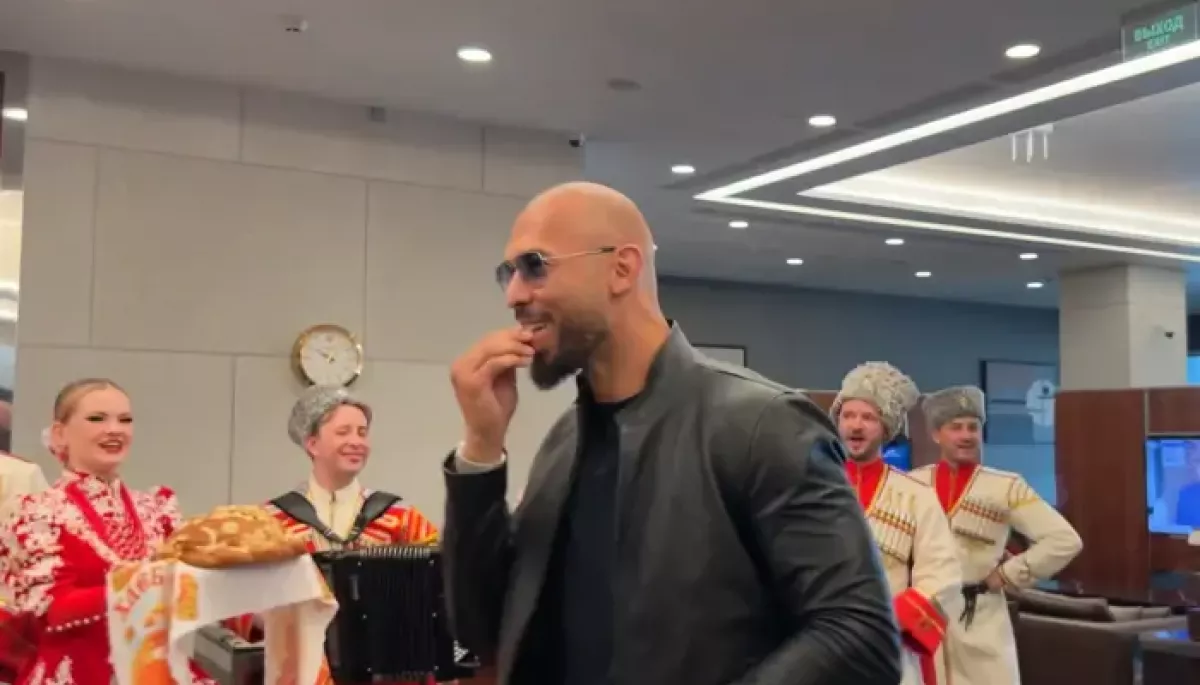
In Russia, the Tate brothers were welcomed with bread and salt and greeted by a choir performing the popular Russian song Matushka Zemlya. On his X account, Andrew Tate posted a photo of himself in front of the Kremlin, as well as a video of himself riding a tank alongside Russian soldiers in military uniform.
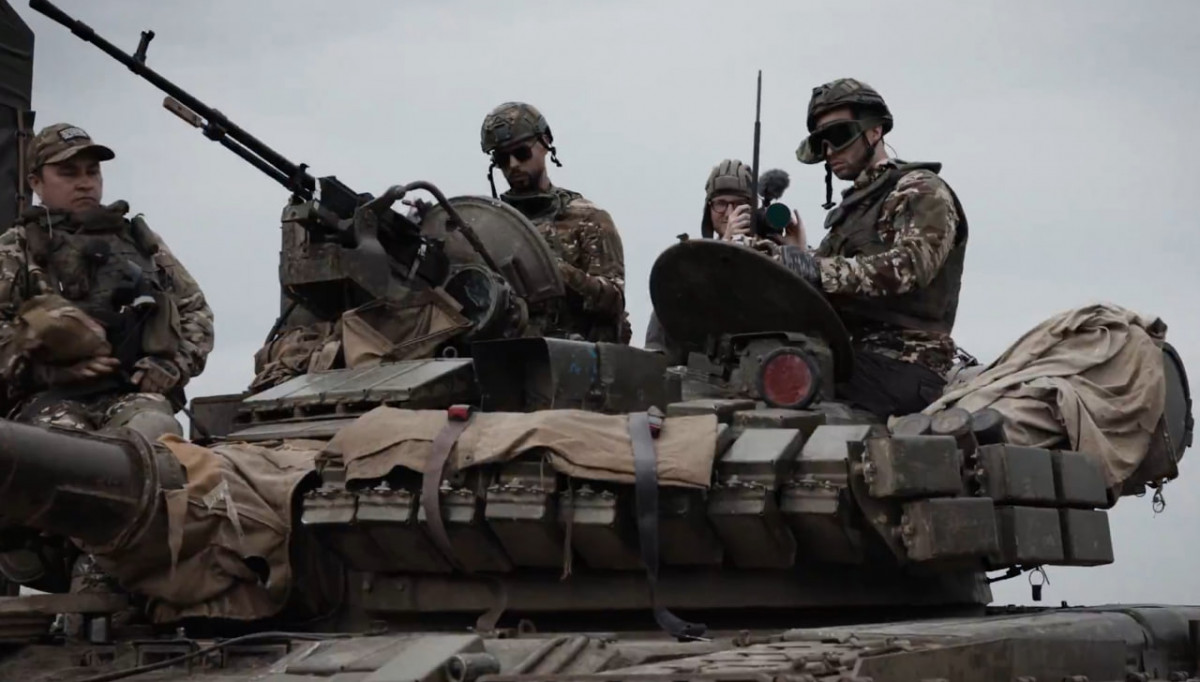
The Tate brothers on a tank. Source: X
Another American guest at the St. Petersburg forum was Candace Owens, an American conservative political commentator and media personality who rose to prominence through her sharp criticism of liberal movements, particularly Black Lives Matter, and her support for the right-wing conservative agenda in the United States. Owens began her public career as a left-leaning liberal before becoming one of the movement's fiercest opponents. Between 2017 and 2019, she worked for Turning Point USA, founded by conservative activist Charlie Kirk, who was killed in 2025, and later became one of the best-known hosts on the right-wing media platform The Daily Wire.
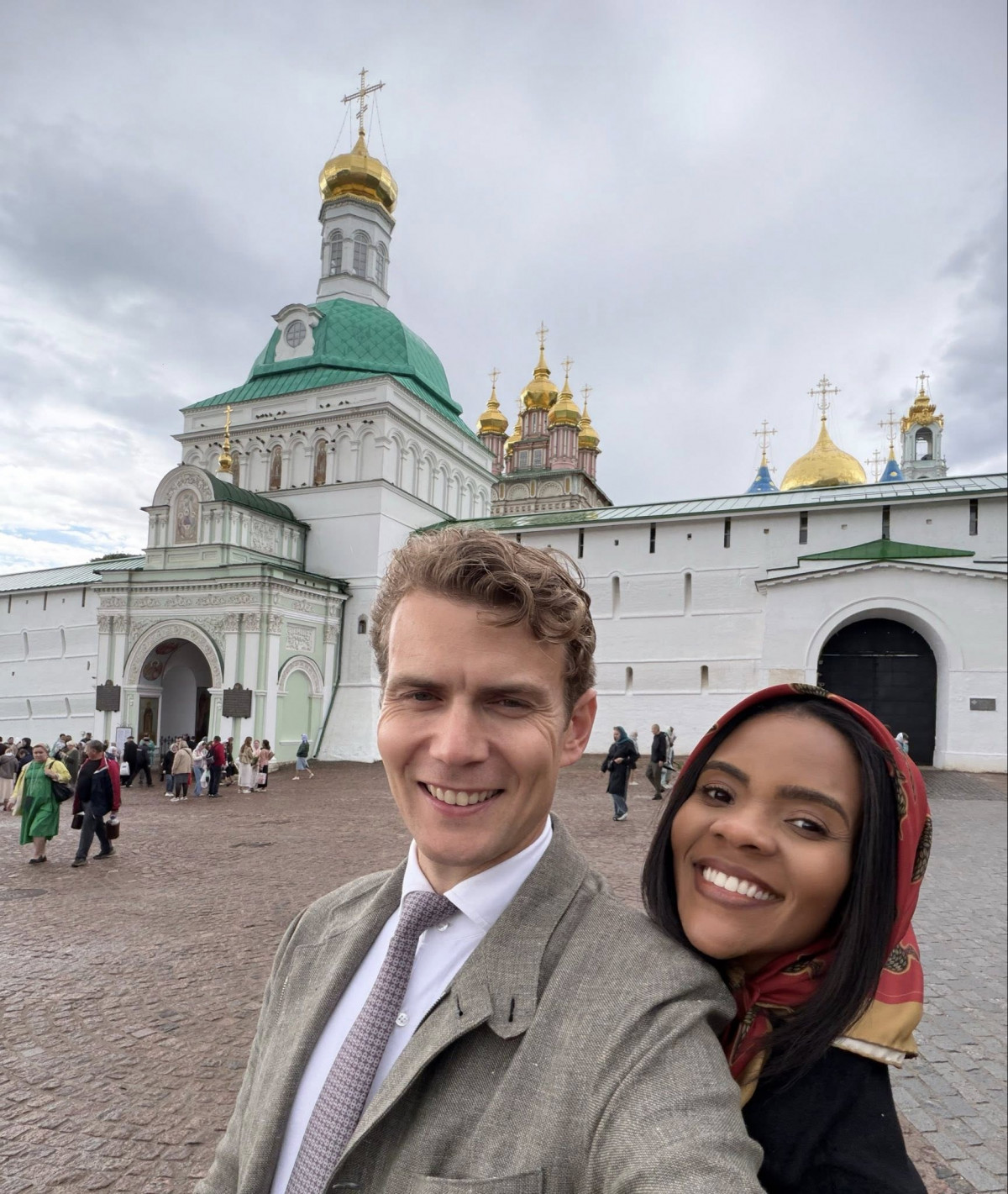
Candace Owens with her husband in Moscow. Source: Facebook
Owens is well known for her provocative statements and her tendency to promote conspiracy theories. Among other things, she has claimed that the theory of evolution and the idea that humans evolved from apes are spread by "modern Satanists," denied that dinosaurs ever existed, and described French President Emmanuel Macron's wife, Brigitte Macron, as a "secret transgender person." In 2024, Owens left The Daily Wire after a prolonged conflict with the company's leadership and accusations of antisemitic rhetoric. Although she had supported Donald Trump, in 2025 she began criticizing him over various decisions, calling him "a chronic disappointment" whose support she was ashamed of. Trump responded by calling her "crazy" and "an individual with a very low IQ."
Candace Owens has consistently opposed U.S. military aid to Ukraine, publicly criticized the Ukrainian government, spread false claims about Olena Zelenska, and echoed narratives closely aligned with Russian propaganda. In 2022, Owens repeated Putin's claims that Ukraine "did not exist before 1989" and that "it was created by the Russians." In 2024, she declared, "No amount of media brainwashing in the world will make me hope that Zelensky defeats Orthodox Russia. Spiritually, I just know that this is wrong. You cannot support a gay actor who shuts down churches and imprisons bishops."
Putin admirers "unbroken by party democracy"
This year, SPIEF was attended by five politicians from the Alternative for Germany (AfD) party, as well as at least one representative of the business community.
Visits by AfD politicians to Russia have repeatedly sparked controversy within the party. For example, in November 2025, Alternative for Germany co-chair Alice Weidel said that she did not understand the purpose of such visits. However, after internal debates and criticism from some colleagues subsided, AfD politicians continued traveling to meet Putin.
The highest-ranking AfD representative at SPIEF was Member of the European Parliament Petr Bystron. In April 2025, the European Parliament stripped Bystron of his parliamentary immunity over the dissemination of a photomontage depicting German politicians making a gesture resembling a Nazi salute. However, in early May 2026, the Munich Regional Court acquitted the politician.
Previously, Bystron headed AfD's foreign policy portfolio. Following Russia's full-scale invasion of Ukraine, he consistently called for the lifting of "anti-Russian sanctions" and urged an end to military assistance to Kyiv, according to DW.
Bystron's successor as head of the party's foreign policy portfolio, Bundestag member Matthias Moosdorf, also attended the event. Moosdorf is a cellist. In 2024, Russia awarded him the title of honorary professor at the Gnessin Russian Academy of Music. Accepting the title, Moosdorf said: "My activities are connected exclusively with music as a universal language of reconciliation and mutual understanding." According to DW, because of his trips to Russia—which Moosdorf described as private—AfD fined him and temporarily restricted his right to speak in parliament.
The current head of AfD's foreign policy portfolio, Bundestag member Markus Frohnmaier, also attended SPIEF 2026. He, too, has ignored criticism over his visits to Russia. According to DW, Frohnmaier previously served as press secretary to AfD co-chair Alice Weidel, who had criticized fellow party members for traveling to Russia. In 2019, Frohnmaier visited Russian-occupied Crimea. His ties to Russia were later investigated by the Bundestag.
Another Bundestag member who attended SPIEF, Steffen Kotré, specializes in energy policy. According to DW, he has described Ukraine as "an American bridgehead" for destabilizing Russia and has appeared on Russian propaganda broadcasts. In particular, in early 2023, he took part in Vladimir Solovyov's propaganda television show.
Kotré's previous visit to Russia took place in late 2025, when he participated in the "BRICS–Europe" symposium in Sochi. He was criticized for the trip by colleagues both within his party and in the Bundestag, but the criticism did not alter his position. Accompanying Kotré both in Sochi in 2025 and at SPIEF in 2026 was Jörg Urban, the head of AfD's Saxony branch. AfD enjoys its strongest electoral support in Saxony compared to any other German federal state. Urban first visited St. Petersburg as an exchange student and met his Russian wife there.
In 2004, Kotré supported a call not to prosecute Horst Mahler, a politician who denied the Holocaust. In 2009, he marched in the front ranks of a neo-Nazi demonstration in Dresden. Kotré's far-right views appear to have remained unchanged over the past two decades. An investigation by Zeit Online found that he employs individuals with far-right views in his parliamentary office.
German participants at SPIEF also included representatives of business associations. Among them was Matthias Schepp, head of the German-Russian Chamber of Commerce Abroad, who spoke at a panel on June 5. Between 2006 and 2016, he headed the Moscow bureau of the German magazine Der Spiegel.
Italy's representatives: a chef, a former government official, and a businessman
Of the three Italian representatives at SPIEF mentioned in Russian media or on the forum's official website, one was Vittorio Torrembini, head of a non-governmental association representing a group of Italian businesspeople. Torrembini has been working in Russia since 1989.
Another representative of the Italian business community who has settled in Russia was chef Mauro Elli. Russian media primarily describe him as a Michelin-starred chef. At SPIEF 2026, Elli was in charge of the forum's restaurant.
The forum was also attended by former Italian government official and economist Michele Geraci. From 2008 to 2018, he lived in China and taught at local universities. Russian media frequently cite Geraci when criticizing the Italian government and the country's economic model. In particular, propagandists quoted him from the sidelines of SPIEF as saying that the government of Italian Prime Minister Giorgia Meloni was "a ship without a captain." Russian media present Geraci as a politician rather than an economist because he spent just over a year in government. He served as Italy's Undersecretary of State for Economic Development from June 2018 until leaving office in September 2019.
The Moldovan "delegation"
SPIEF 2026 also featured a pro-Russian Moldovan delegation led by former Moldovan President Igor Dodon. Accompanying him were Party of Socialists of the Republic of Moldova (PSRM) members of parliament Petru Burduja and Adrian Lebedinschi, as well as former Speaker of Parliament Zinaida Greceanîi. According to Ziarul de Gardă, the forum in St. Petersburg was also attended by Victoria Furtună (a candidate in the 2024 presidential election who was supported by Russia through Ilan Shor's network), member of parliament Vasile Tarlev, and others.
Igor Dodon served as President of Moldova from 2016 to 2020 and is known for his openly pro-Russian stance. Even while in office, he repeatedly traveled to Moscow, opposed Moldova's closer integration with the EU and NATO, and advocated the country's accession to the Eurasian Customs Union. Investigative journalists from RISE Moldova documented that Dodon's activities were coordinated by the Kremlin's department responsible for Moldova. After losing the 2020 presidential election to the current president, Maia Sandu, Moldovan prosecutors opened a criminal case against Dodon in 2022 on suspicion of corruption, treason, and the illegal financing of a political party. According to investigators, he received between $600,000 and $1 million from oligarch Vladimir Plahotniuc, who has since been convicted of corruption offenses in Moldova and is serving his sentence. Dodon dismissed all charges as "politically motivated." At SPIEF 2026, he called for the lifting of anti-Russian sanctions, the resumption of negotiations with Gazprom, and the restoration of direct flights to Moscow.
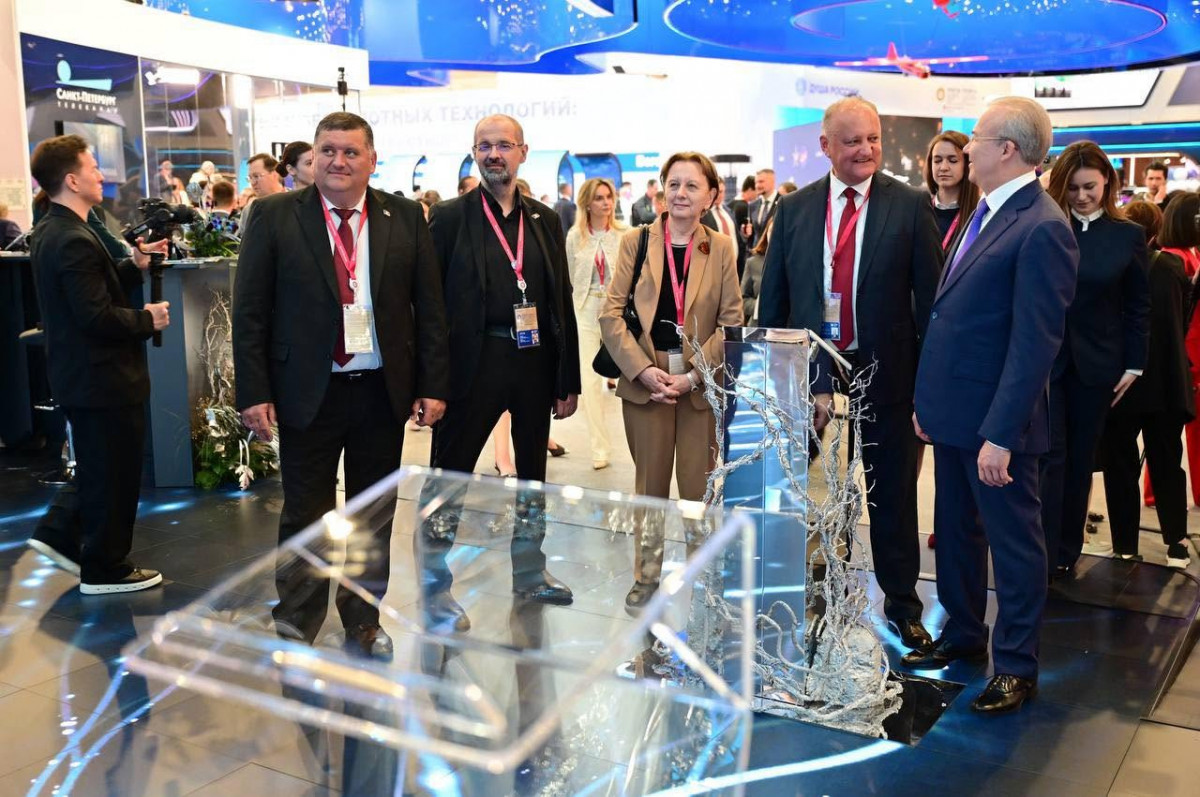
Igor Dodon and Zinaida Greceanîi (center) at SPIEF 2026. Source: Igor Dodon's Facebook page
Moldovan Parliament Speaker Igor Grosu described Dodon's appearance as "pathetic" and reminded the public that it was Gazprom itself that had refused to honor its existing contract with Moldova.
Another prominent figure in the Moldovan delegation (although he has not physically lived in Moldova for years) was Ilan Shor himself—a fugitive Moldovan oligarch whom the authorities in Chișinău have described as an instrument of Russia's hybrid warfare. Shor is notorious for illegal operations involving Moldovan banks. In 2015, he was elected mayor of Orhei while under house arrest. In 2017, he faced a sentence of seven and a half years in prison for embezzling funds from Moldovan banks, although the verdict never entered into force. In 2023, Shor was sentenced in absentia to 15 years' imprisonment. After Maia Sandu came to power and the investigation against him resumed, Shor first fled to Israel and, since 2024, has lived in Russia, where he obtained Russian citizenship.
According to the Financial Times, Shor is a key figure in the Kremlin's sanctions-evasion network: through shell companies in Kyrgyzstan and cryptocurrency transactions, he helps Russian capital gain access to international markets. The United States imposed sanctions on him in 2022, including for interfering in Moldovan elections in Russia's favor. At the end of 2025, Shor unexpectedly announced his withdrawal from active politics after a series of setbacks, including the failure of his electoral projects and the imprisonment of his ally, Gagauzia Governor Yevgenia Gutsul. SPIEF, however, demonstrated that he remains actively involved in political affairs.
At SPIEF, Shor organized the so-called "Moldovan Courtyard," a separate exhibition stand representing his Victory bloc, featuring Moldovan wine tastings, traditional music, and Moldovan-made products, ostensibly to promote "friendship" between Moldova, Russia, and the countries of the Eurasian Economic Union. It was there that a symbolic photograph was taken: Shor posing together with Romanian Member of the European Parliament Diana Șoșoacă, captioned on his Telegram channel as "the future president of a free Romania."
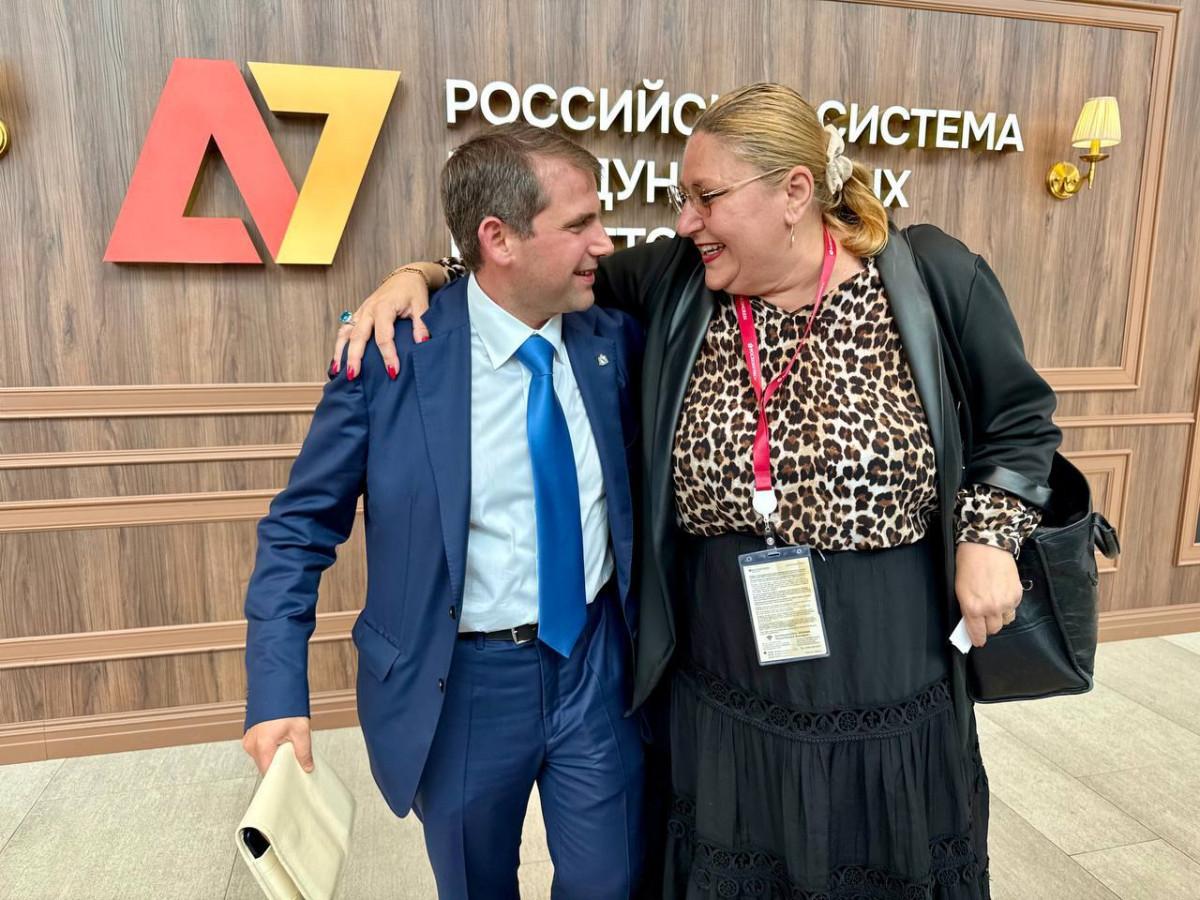
Shor and Șoșoacă. Source: Marina Tauber's Telegram channel
Shor's ally, former Moldovan MP Marina Tauber, who also attended SPIEF 2026, was sentenced in absentia in Moldova to seven years and six months in prison for illegally financing Shor's political party and has been permanently based in Russia since January 2025. At SPIEF, Tauber participated in a panel discussion on "Media in the Age of AI," where she proposed creating a "Eurasian technological alliance" to reduce dependence on "foreign platforms and algorithms."
At the forum, Tauber also accused the European Union of allegedly imposing an "LGBT agenda" on Moldova.
"Moldova is governed by the European Union, the European Commission, the European Parliament, European officials. And every day, they impose their worldview on us, Moldovan citizens. Even the idea that LGBT is good. In our country, this is unacceptable."
Another Moldovan politician, Victoria Furtună, attended the forum as a former independent candidate in Moldova's 2024 presidential election, although her "independence" had been questionable from the outset. Investigations by Ziarul de Gardă and Moldova's intelligence service concluded that her election campaign had been financed by Ilan Shor, while supporters of his Victory bloc were directly instructed on election day to vote for her.
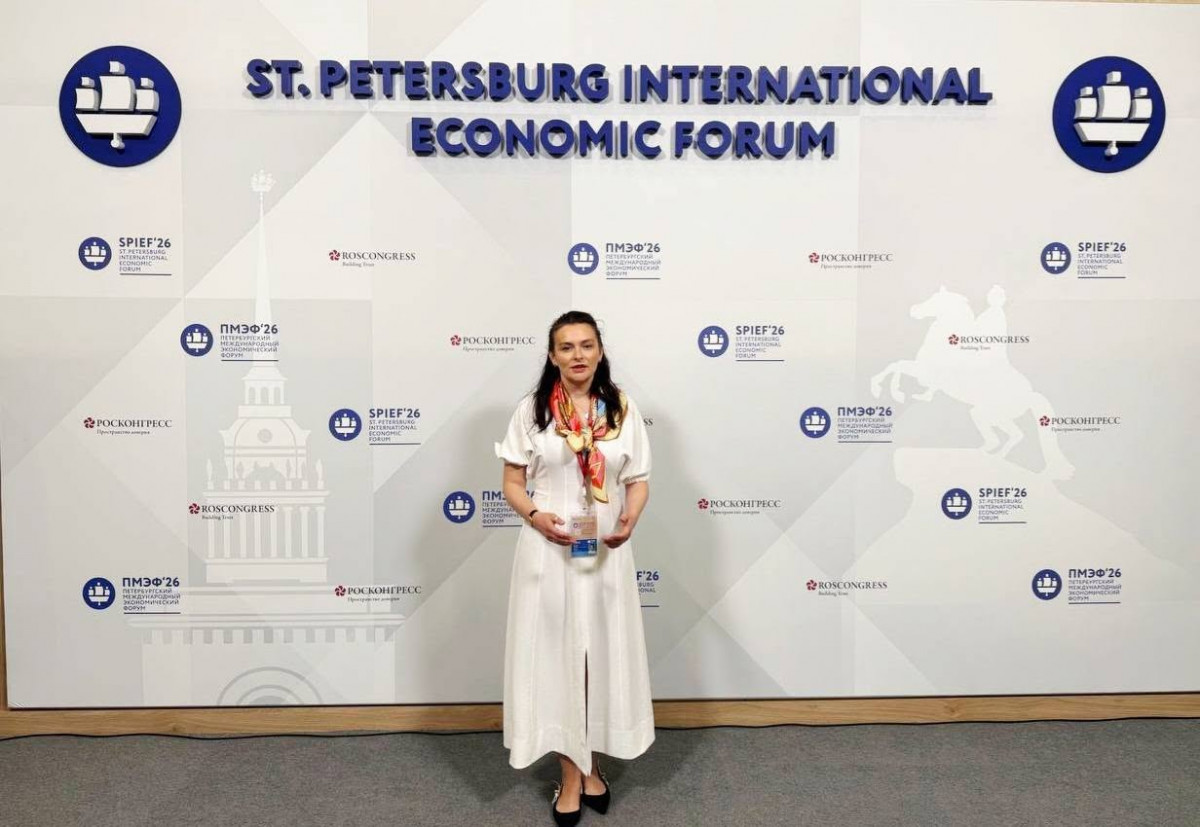
Victoria Furtună at SPIEF 2026. Source: Facebook
Furtună later became the leader of the revisionist Great Moldova party, which advances territorial claims against Ukraine and Romania and is considered one of the political structures within Shor's orbit. In July 2025, the European Union imposed sanctions on her over the threat her activities posed to Moldova's constitutional order. In the parliamentary elections held that September, her party was barred from participating because of illegal foreign financing.
A Romanian Member of the European Parliament on Putin's stage
Diana Șoșoacă is a Romanian lawyer, far-right politician, leader of the S.O.S. Romania party, and a Member of the European Parliament since 2024. She first gained prominence in Romania during the early years of the COVID-19 pandemic by criticizing lockdown measures and vaccination programs. Șoșoacă presents herself as the "mother of the nation" and frequently appears in traditional dress, carrying an icon and accompanied by church choirs.
She became notorious in the European Parliament on her very first day by entering the chamber carrying an icon and announcing her intention to invite a priest to "bless the offices." The following day, she appeared wearing a dog muzzle, interrupted another MEP's speech, and was escorted out of the plenary chamber. In May 2026, on Europe Day, Șoșoacă publicly tore up an EU flag together with her supporters. She traveled to St. Petersburg at the invitation of the Russian presidential administration, presenting herself as the sole representative of Romania and the European Union to "preserve dialogue" between Russia and the EU.
At SPIEF, Șoșoacă participated in the panel discussion "Media in the Age of Artificial Intelligence in the Eurasian Space" together with Marina Tauber. Speaking during one of the sessions attended by Putin, Șoșoacă addressed him on behalf of "the Romanian and European people," delivering a familiar set of pro-Kremlin messages.
"We admire you, your strength, and the Russian people. The Romanian people do not want to help Ukraine, but Romania is currently governed by Brussels. Unfortunately, I cannot convey greetings from our president—because we don't even have a president."
With this remark, she was referring to Romania's new pro-European president, Nicușor Dan.
Șoșoacă also boasted that in 2023 she had disrupted a speech by Ukrainian President Volodymyr Zelenskyy in the Romanian Parliament. Putin responded by asking her to convey his "most sincere wishes to all Orthodox Romanians." After returning from St. Petersburg, Șoșoacă announced that she would hold a "March of Normality" in Bucharest on June 13 in defense of "traditional values: family, faith, and national identity."
In April 2026, the European Parliament lifted Șoșoacă's parliamentary immunity at the request of Romanian prosecutors. She faces 11 criminal charges, including unlawful deprivation of liberty (related to an attack on Italian journalists), promotion of the Legionary movement, Holocaust denial, and the promotion of fascist ideas.
Romania's Ministry of Foreign Affairs condemned Șoșoacă's presence at the forum, stating that European citizens who attended SPIEF were "discrediting themselves."
Guests from the Balkans
Among the Balkan countries, the Serbian delegation was once again the most prominent presence at SPIEF 2026. Serbia remains one of the few European countries whose representatives attend the St. Petersburg forum without any diplomatic discomfort. Official Belgrade has not only refrained from imposing anti-Russian sanctions but continues to position itself as "Moscow's partner" in the region. The official Serbian delegation was headed by Nenad Popović, Serbia's Minister without Portfolio responsible for international economic cooperation, a regular participant at SPIEF and co-chair of the Serbian-Russian Intergovernmental Committee on Trade, Economic, Scientific, and Technical Cooperation. During the forum, he met with Russian Foreign Minister Sergey Lavrov to discuss bilateral relations and gas supplies.
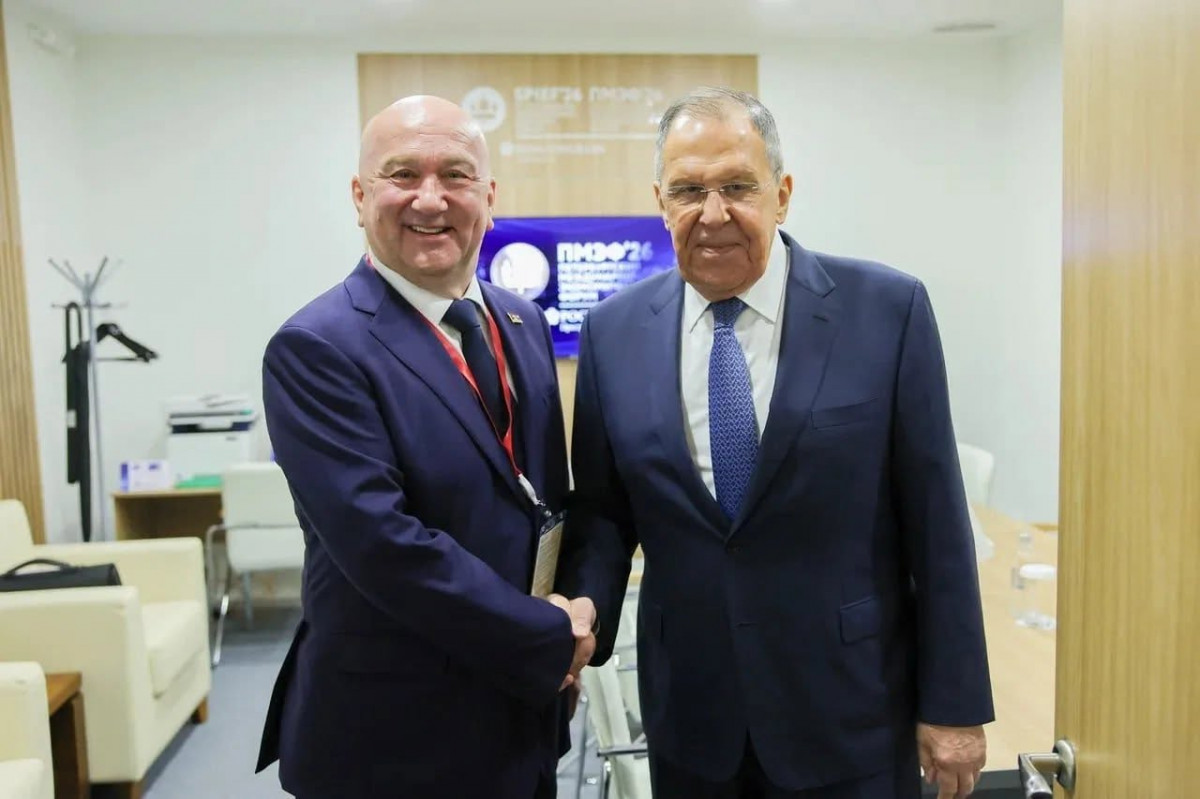
Popović and Lavrov. Source: Russian Foreign Ministry Facebook page
He was accompanied by Serbia's Minister of Mining and Energy, Dubravka Đedović Handanović, who added: "We will continue to do everything possible to strengthen Serbia's energy security and maintain relations with our traditional friends."
In addition to gas negotiations, Popović discussed another "strategic" project on the sidelines of SPIEF—filming a new season of a television series about Serbian winemaking for Russian audiences.
The most Kremlin-friendly statements at the forum came from Aleksandar Vulin, Serbia's former Deputy Prime Minister and Chairman of the Supervisory Board of Srbijagas, as well as one of the loudest pro-Russian voices in Serbian politics. He had previously assured Putin that Serbia would "never become a NATO member, never impose sanctions against Russia, and never allow any anti-Russian actions from its territory."
In 2023, the United States imposed sanctions on Vulin, including for involvement in transnational organized crime, drug trafficking, arms trafficking, and facilitating Kremlin influence in the Balkans. After stepping down as Serbia's intelligence chief, he returned to the government as Deputy Prime Minister. At SPIEF 2026, Vulin declared that Serbs "absolutely do not want to be part of the anti-Russian hysteria" and that "Russophobia is a crime."
"Before every major conflict, every world war, there is always a certain hysteria and phobia."
In an interview with TASS ahead of the forum, he described relations between the two countries as follows: "We are brothers, and no one can claim otherwise."
The Kremlin's "useful guest"
Among the few Western European participants at the forum was Fernand Kartheiser, a Luxembourgish Member of the European Parliament and one of the most consistently pro-Russian voices in the European Parliament. In May 2026, Kartheiser attempted to organize a group of MEPs to attend SPIEF 2026, and one month earlier, he had traveled to Moscow himself "to demonstrate the possibility of friendly relations." Politico reported that he had personally sent fellow MEPs a letter inviting them to join the trip and meet members of the Russian State Duma "on the sidelines of SPIEF." Lithuanian MEP Petras Auštrevičius told Politico that Kartheiser's actions amounted to "an open attempt to recruit" fellow lawmakers to work for Russia "as informants and agents of influence."
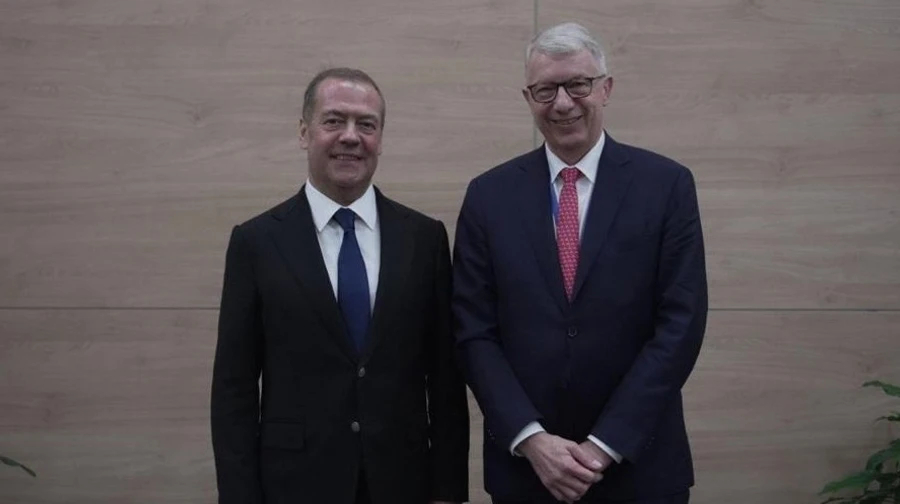
Fernand Kartheiser (right) and former Russian President and Deputy Chairman of Russia's Security Council Dmitry Medvedev in a joint photograph taken in Sochi in 2025. Source: Fernand Kartheiser's Facebook page
At the forum itself, Kartheiser gave an interview to the Russian state propaganda outlet RIA Novosti, where he stated: "You see this forum, which demonstrates the strong state of the economy, contrary to what people in Western countries say." In another interview with Russian media, he said, "The only ones isolating themselves are we Europeans. Russians are not isolated. The whole world is here." He also criticized the EU's sanctions policy as ineffective.
The European Conservatives and Reformists (ECR) Group in the European Parliament expelled Kartheiser following his previous visit to Moscow, during which he proposed meetings with members of the Russian State Duma. ECR co-chairs Nicola Procaccini and Patryk Jaki stated: "By visiting Putin's Russia, Fernand Kartheiser crossed a red line for the ECR Group." However, his expulsion from the group did not deprive him of his mandate as a Member of the European Parliament.
Conclusions
The 2026 St. Petersburg International Economic Forum (SPIEF) demonstrated that, instead of serving as the platform for world leaders and multinational corporations that it aspired to be before 2022, European representation at the forum has been reduced to a club of right-wing populists. For these politicians, participation remains a deliberate step toward further radicalizing their rhetoric at home. They use the Russian stage to legitimize their own anti-European views, contributing to divisions within the European Union while signaling to their voters that an alternative path of engagement with Moscow supposedly remains possible.
The Kremlin, of course, still retains a stable circle of supporters among European politicians. Moscow's main bet is on representatives of the far right and Eurosceptic forces, such as Germany's Alternative for Germany (AfD), Romanian MEP Diana Șoșoacă, the pro-Russian Moldovan delegation led by Igor Dodon and Ilan Shor, and Luxembourgish MEP Fernand Kartheiser. For the Kremlin, the presence of these figures has become a tool for simulating "international dialogue" and a showcase for promoting propaganda narratives.
These politicians consciously ignore severe criticism in their own countries, sanctions, and even the lifting of their parliamentary immunity or expulsion from parliamentary groups in Europe. They receive extensive attention from Russian media while advocating at home for the lifting of sanctions imposed on Russia, the restoration of economic cooperation, and concessions to Russia's military aggression. Through their actions at the forum, these useful guests of the Kremlin seek to appeal to those segments of their domestic electorates that support the idea of a "pragmatic dialogue" with Russia, identify with so-called "traditional values," and oppose military or financial assistance to Ukraine.