
Українською читайте тут.
Nakypilo Editor-in-Chief Olena Leptuha and Detector Media Editor-in-Chief Nataliia Lygachova discuss how independent media can avoid following the path of the United News telethon and draw the line between journalism and activism during wartime.
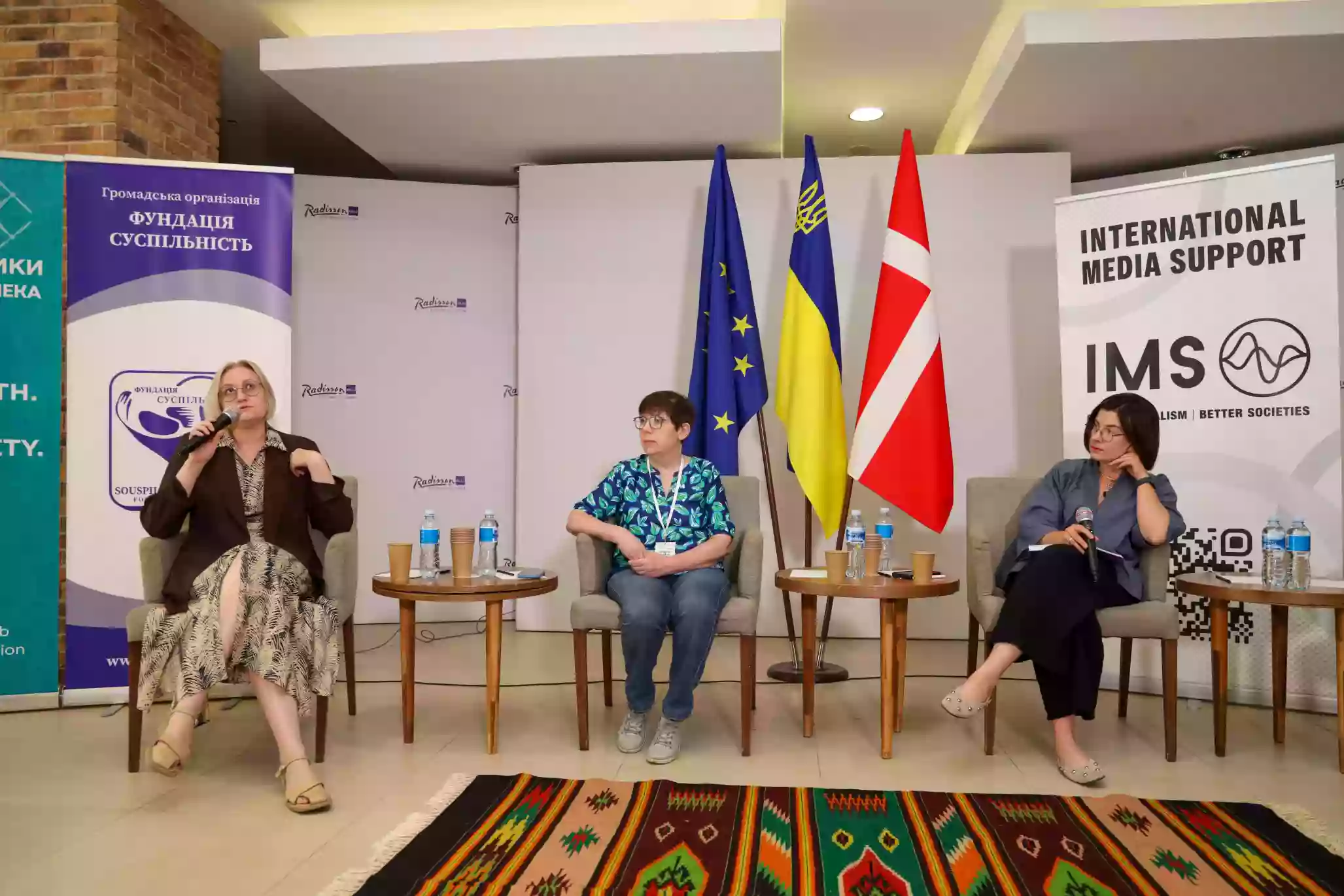
The 11th Wartime Media Challenges Forum, held in Kyiv on June 27–28, 2026, was organized by the Suspilnist Foundation with the support of International Media Support. Detector Media has already reported on the "friendly circle" discussion with the President of Ukraine's Communications Adviser, Dmytro Lytvyn. Another panel discussion, "Defending Our Right to Life: The Main Challenges for Journalism and Ukrainian Society," featured Detector Media Editor-in-Chief Nataliia Lygachova and Nakypilo Editor-in-Chief Olena Leptuha. The discussion was moderated by Iryna Slavinska, Executive Producer of Radio Kultura.
Iryna Slavinska: The issue of journalists' safety and the right to life is broad and important. We can talk about the value of life, about our inherent right to live. We can talk about the right to our profession, about how journalism is changing, how we can continue working, and about the survival of newsrooms. Let's begin with what you currently see as the greatest challenge facing the media.
Olena Leptuha: The greatest challenge is being responsible. On the one hand, it is our duty. On the other hand, it is a challenge.
It is easier to ignore a publication embargo and post a photo or video of a missile strike, or to send a journalist out on an assignment without proper preparation. At some point, you stop paying attention to air raid alerts, you may forget to take a tourniquet with you, or skip first aid training. So the real challenge is the media manager's responsibility for the team and journalists' responsibility to themselves, particularly for their own safety. Nakypilo operates in frontline Kharkiv, and I fine anyone who comes to the newsroom without a first aid kit. That's how I've taught my colleagues to take care of themselves.
Nataliia Lygachova: In my opinion, the greatest challenge facing the media today is finding the answer to the question: Who are we during wartime? All of the recent heated debates on social media and on the pages of Detector Media, as well as the Chatham House discussion we organized on June 6, have revolved around this very issue.
Where is the balance between national security and freedom of speech? Do we see ourselves as instruments of propaganda or rather as those who articulate society's interests and hold those in power accountable, first and foremost in the public interest?
This is a difficult question to answer because we are living through a war, both kinetic and cognitive. Journalists and media organizations bear tremendous responsibility: on the one hand, not to allow themselves to be exploited by the enemy; on the other, not to become those who conceal the truth.
The latest heated debate concerns Babel's investigation into the "Skelia" Regiment. I have friends on both sides of this debate. Some argue that Babel—and Detector Media, which supports Babel—is supposedly demoralizing those who serve in the regiment, where many people are honestly defending us without losing their humanity or dignity. Others argue that the truth must be told—that torture and killing cannot be tolerated. It is a difficult dilemma.
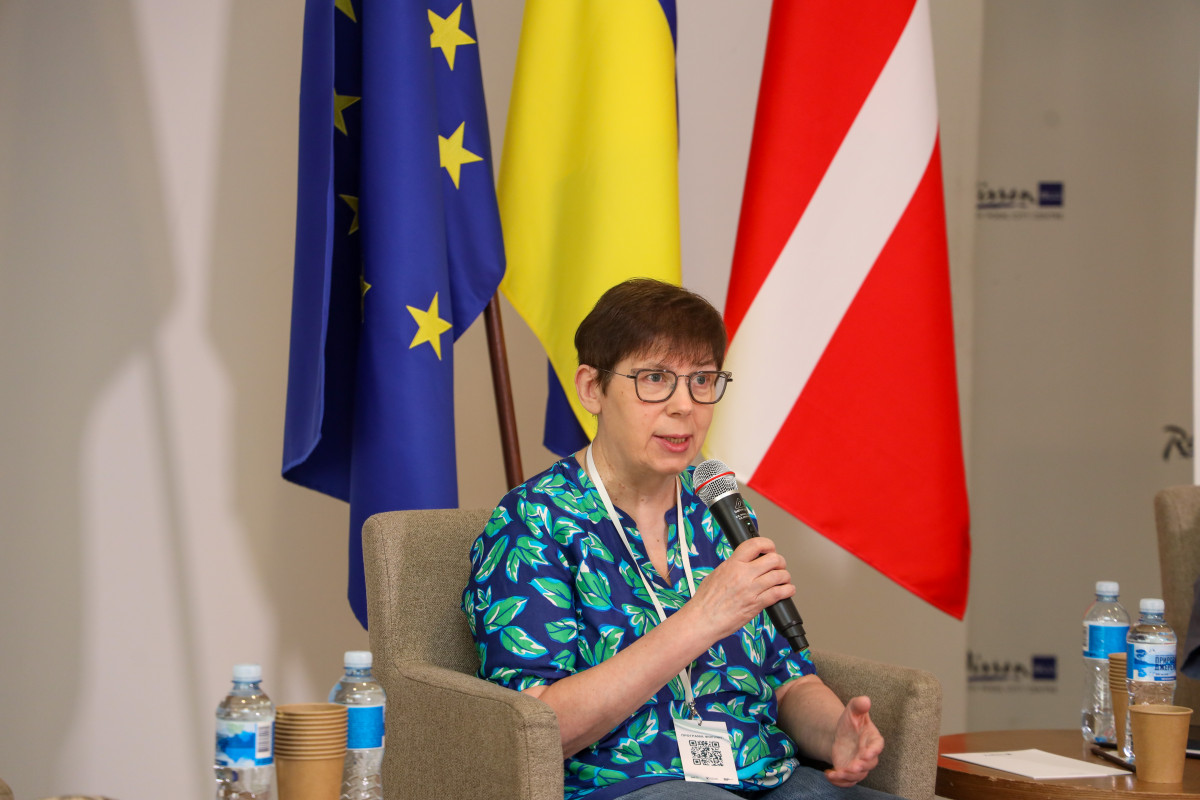
Nataliia Lygachova
Pavlo Kazarin vividly captured the essence of this discussion. He said that there are two elephants in the room. There is the ethics of peacetime, where fighting corruption and ensuring transparency come first. And there is the ethics of wartime, where transparency may sometimes have to give way, where one may even have to turn a blind eye to corruption—which Kazarin, I should stress, also considers an evil—if doing so allows us to act quickly to protect lives and defeat the enemy. We need to find a balance between the ethics of peacetime and the ethics of war.
There is also another position. During our June 6 discussion, it was represented primarily by journalists rather than representatives of the security sector. They argued that anything that harms our defense effort today is evil. They spoke about the need for censorship or for self-restraint that comes close to censorship.
But this raises an important question: Who should decide when our truth begins to undermine our national security?
A third aspect of the problem emerged during the Ukraine Recovery Conference (URC) in Gdańsk. For the first time, the conference included a panel dedicated to the media, which was a positive development. What was interesting, however, was that the organizers—the Ukrainian and Polish governments—placed that panel within the security track. In other words, the media are now being incorporated into the concepts of Total Defence, national security, and resilience.
At the same time, representatives of Western governments at that panel argued that authoritarian regimes respond to cognitive warfare through propaganda, whereas democracies can respond only by supporting independent media. By contrast, representatives of our own government made statements suggesting that they view the media as part of the propaganda system. Their remarks implied that Ukraine needs independent media to promote certain narratives. But independent media, by definition, should not be in the business of promoting any narratives. Other instruments exist for that purpose—strategic communications, for example. Our role is different, including holding those in power accountable.
This is becoming an increasingly serious challenge. Funding from Western partners will continue to decline, and more and more of it will be channeled through the state or through foundations that are directly or indirectly affiliated with it. The state is already, at times, saying openly: either you are with us—that is, you effectively participate in propaganda—or you will not receive funding. This concerns reconstruction funding, which the government hopes to receive from Western donors and distribute at its own discretion. Which media outlets will receive those funds? Naturally, those that directly participate in the cognitive war—in other words, those that cooperate with the government.
When the war ends and post-war reconstruction begins, if the media become partners of the state in the cognitive war, will society continue to trust them? If we follow the path of the United News telethon, we risk losing the public's trust.
That is why we must think about the survival of independent media and about funding sources, particularly domestic ones that are independent of the government or entities affiliated with it. Where can we find the resources that will allow us to avoid following the path of the United News telethon?
Olena Leptuha: The Nakypilo Media Group was established in 2014, when the war began. To be honest, we don't know what it's like to work outside the context of war. We had been covering the war long before 2022. The issues people are talking about today already existed back then.
Are we propagandists? No.
I recently read on the Institute of Mass Information website about Kharkiv media outlets that receive funding to cover the work of the regional administration and the city council. Very good money, in fact. But I think that money is wasted. Every time there's a missile strike, the mayor arrives at the scene, everyone films him, and everyone comments on it. Did you see him carrying paintings out of the art museum? Journalists weren't allowed inside because the mayor was carrying a painting, and they needed to get good footage of him doing it.
Again, this comes down to responsibility: whether a media outlet itself understands that it should not engage in propaganda and should instead cover events from different perspectives. I agree with Ms. Nataliia that we cannot simply tell people that everything is going well.
Monitoring reconstruction is equally important. In the Kharkiv region, several absurd reconstruction projects were halted thanks to media attention. One example was the planned reconstruction of a lyceum in Izium, where very few children remain. Right now, there is also significant attention focused on rebuilding the oncology center. The media must hold those in power accountable—both during wartime and in peacetime. Without accountability, we have no right to call ourselves journalists.
People expect a great deal from the media. The authorities want the media to show how wonderful everything is. People want the media to solve their problems. For example, in Izium there is a street where not a single building remains intact. When we were there, we met an elderly woman walking with her granddaughter, who has cerebral palsy, to look at the ruins of their home. We asked whether they had already applied for assistance. They said, "No, we don't have the necessary documents. Journalists, please do something!"
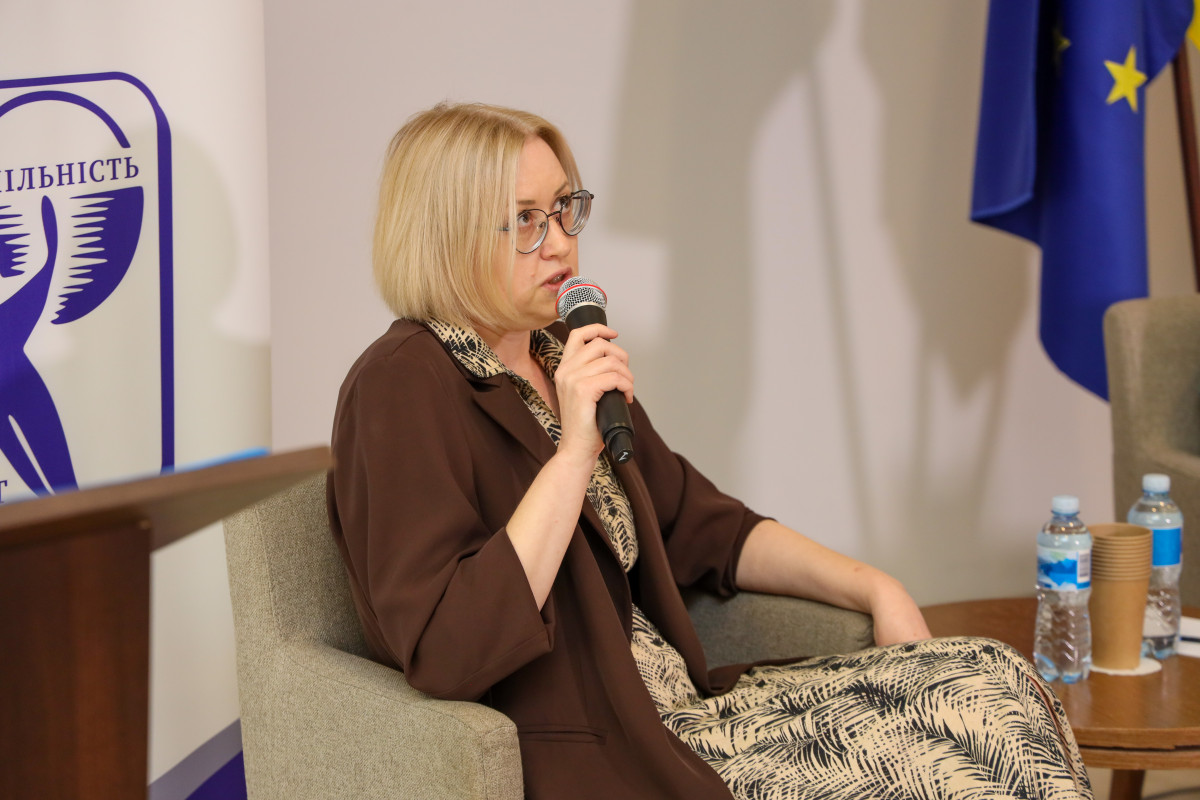
Olena Leptuha
What should journalists do in such a situation? They can explain, inform, and show what is happening. Today, practical, service-oriented reporting is just as much in demand as news. The media can help by drawing attention to problems. Here's another example from Kharkiv. Everyone knows about Pivnichna Saltivka, the district that suffered extensive shelling. It is not the only district that was heavily damaged, but the authorities promote Pivnichna Saltivka and focus reconstruction efforts there. People from other neighborhoods tell us: "Nobody knows about us because nobody writes about us." The media can help by drawing attention to their problems.
But should journalists themselves become directly involved in solving these people's problems and take on even more responsibilities? This is where it is essential to understand the boundary between activism and journalism.
Iryna Slavinska: We could also discuss where that boundary lies. On the one hand, there are security-related challenges and restrictions imposed by wartime: rules concerning photographs from missile strike sites, reporting on deaths, and so forth. On the other hand, there is an audience-centered approach: reporting ethically and at the right moment. Doesn't that approach amount to self-restraint in the negative sense of the term?
Olena Leptuha: Nakypilo originally began as a citizen journalism project. Taking part in the dismantling of monuments was a lot of fun—it certainly wasn't journalism, but it was a fascinating experience back in 2014–2015. Today, we have a simple rule: if you attend a protest as a participant, then you do not work there as a journalist and you do not report on that protest. Although, to be honest, we did break that rule during the cardboard protest.
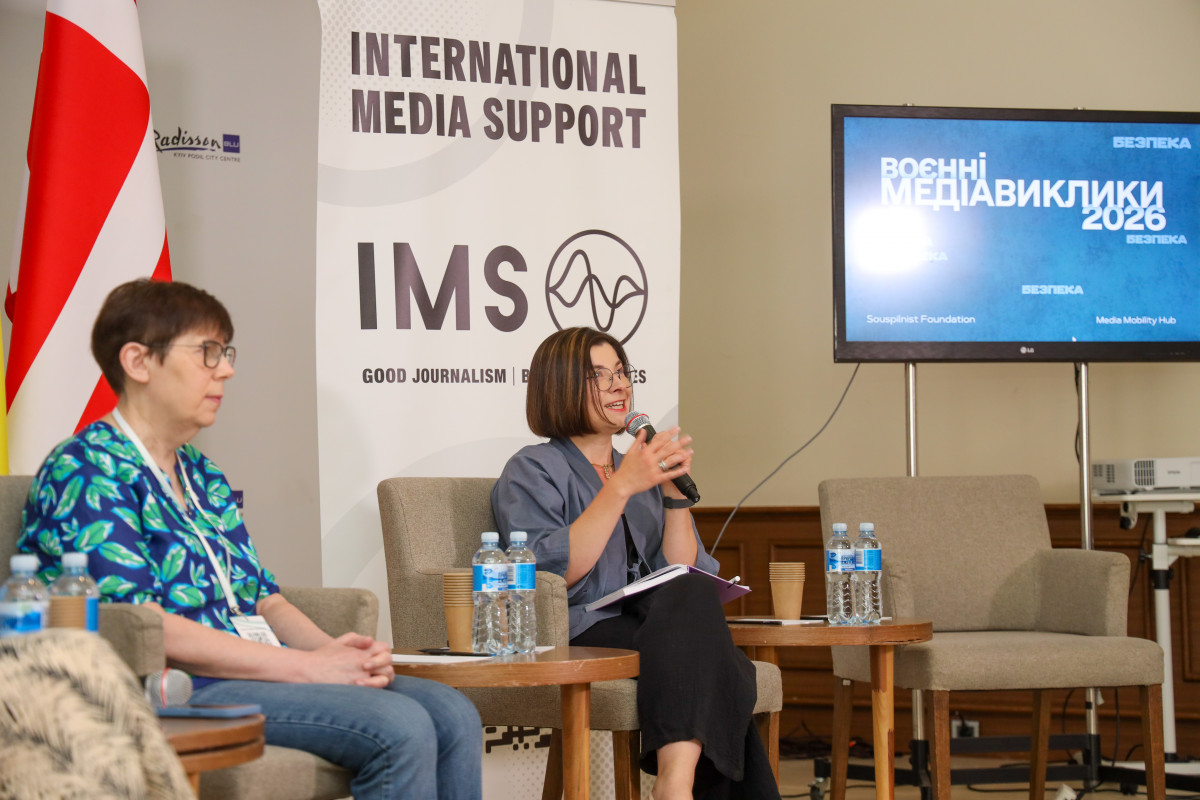
Nataliia Lygachova and Iryna Slavinska
Nataliia Lygachova: For me, this also raises the question of what is happening to our fellow journalists who have been mobilized and are now serving in the military or working in military communications. Nearly all of them expect the media to become activists. They believe we should work for national security and defense. That we should put criticism aside and help the army as activists.
There is also the well-known dilemma: should journalists think about the consequences of what they publish? One school of thought says that when a journalist obtains information, verifies it, and confirms that it is accurate, they should publish it without worrying about what will happen afterward or what impact the publication might have. Before 2014, that was my own view. Because once you start thinking about consequences, you can easily end up practicing self-censorship. Besides, we usually cannot accurately predict what will happen anyway. Western journalists, as a rule, also tend to hold this view.
Since 2014, however, I have become less categorical on this issue. When there is an external enemy, I do have to think about the possible consequences. Could the enemy use our publication? As the head of a media organization, I now always look for a balance and make decisions on a case-by-case basis, weighing the risks.
There are media outlets in Ukraine that have continued to adhere to the first approach even during the war. Sometimes I argue with them.
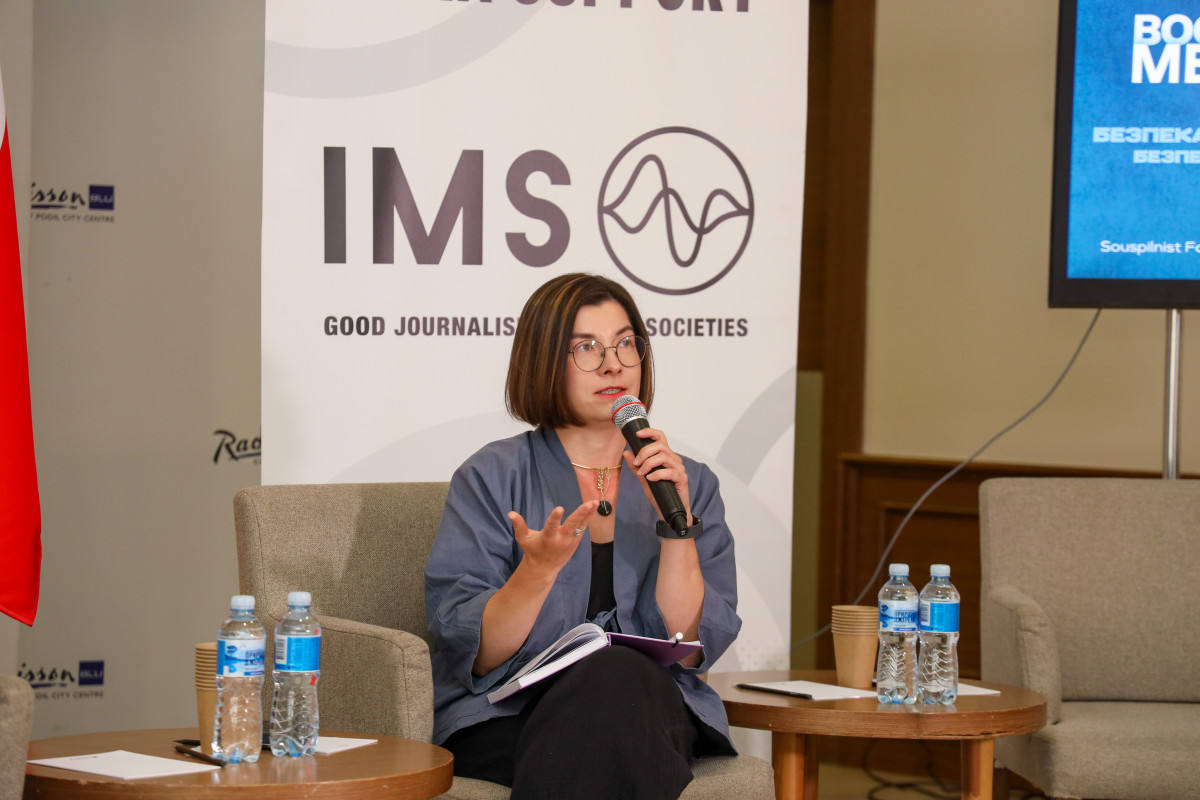
Iryna Slavinska
Iryna Slavinska: Let's talk about something that makes our work even more difficult. One of the biggest challenges is the shortage of personnel, the need to find new people for our teams, and train them. I think there is hardly a newsroom today that is not experiencing staffing problems. One of the trends identified in the EBU's forecast for 2026 is the disappearance of junior specialists—those entering their first job. Many of their functions are now being delegated to artificial intelligence. But if that is the case, where will people gain the experience they need to grow professionally? So how do we deal with the staffing shortage?
Olena Leptuha: Yes, it is a challenge. Newsroom teams have changed because some people joined the military. Others felt it was important to become activists and went to work for charitable foundations. I don't know whether there are any newsrooms that, after 2022, have remained the same in terms of staff, location, or even state of mind.
In Kharkiv, the staffing shortage is also connected to the fact that not everyone is willing to work in a frontline city and region. Not everyone is prepared to take responsibility for their own safety. In 2022, I had to dismiss one of our camera operators because, despite my explicit instructions, he kept going to film in dangerous areas. I could have said, "Go ahead, you'll get a great story and excellent audience numbers." But I simply couldn't allow it. He is now serving in the military, and I am grateful to him for his service.
Some Kharkiv journalists have gone to work for foreign media outlets, producing reports for them. As a result, Ukrainian newsrooms find it difficult to compete for these journalists in terms of salaries.
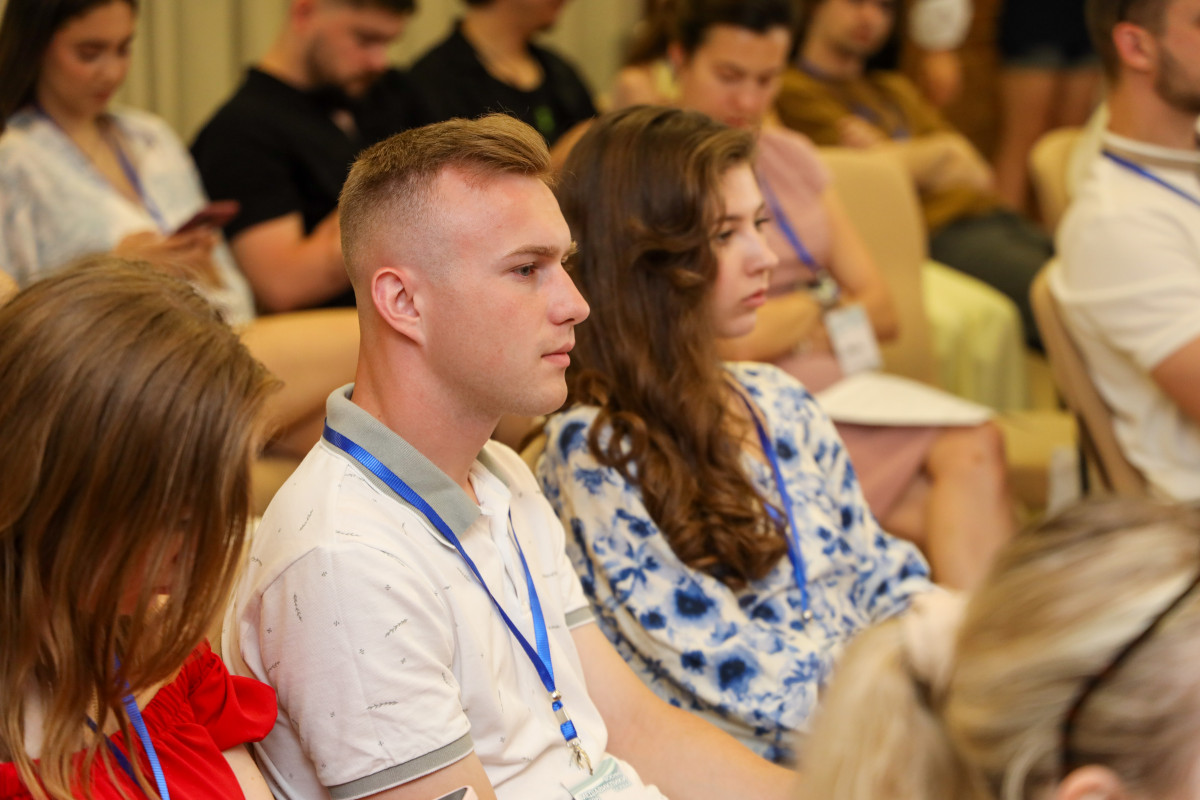
Audience members
Another challenge is working remotely. It is difficult to teach camera operation or video editing online. Even teaching communication skills is not easy. Asking someone to make a phone call and find something out causes panic among people younger than me. Then there are the ambitions of young people. They want to do something big and meaningful right away, but they don't want to work on the news desk.
Nataliia Lygachova: The staffing problem is real. For our publication, it is primarily connected with the deterioration of our financial situation following the withdrawal of U.S. funding. As a result, we lost exactly half of our team.
We have managed to retain the half that remained, but it has required tremendous effort. Our main challenge is that we are both a non-governmental organization and a media outlet. Donors tend to see us primarily as an NGO that fights disinformation, conducts training sessions, and so on. That's all well and good, but for me personally, Detector Media, which used to be Telekrytyka, is first and foremost a media outlet. Now it has become difficult for us to secure funding specifically to pay journalists.
Another, broader problem is the lack of direction among young people. As Olena mentioned, young people sometimes don't know what they want, or they immediately see themselves as stars. They don't want to work in the news because they don't understand the value and importance of news reporting and field reporting. We even encounter young journalists who do not want their names attached to news stories.
Another challenge for us is that our journalists need to have expertise because we evaluate the work of others. We lack media critics. By the way, if anyone would like to try writing a critical media analysis, you're more than welcome.
On the other hand, the volume of information has increased a hundredfold. We still haven't figured out how to cover YouTube, for example—we currently limit ourselves to reviews. At the same time, YouTube is enormous, and it is difficult even to decide what should be included in a review.
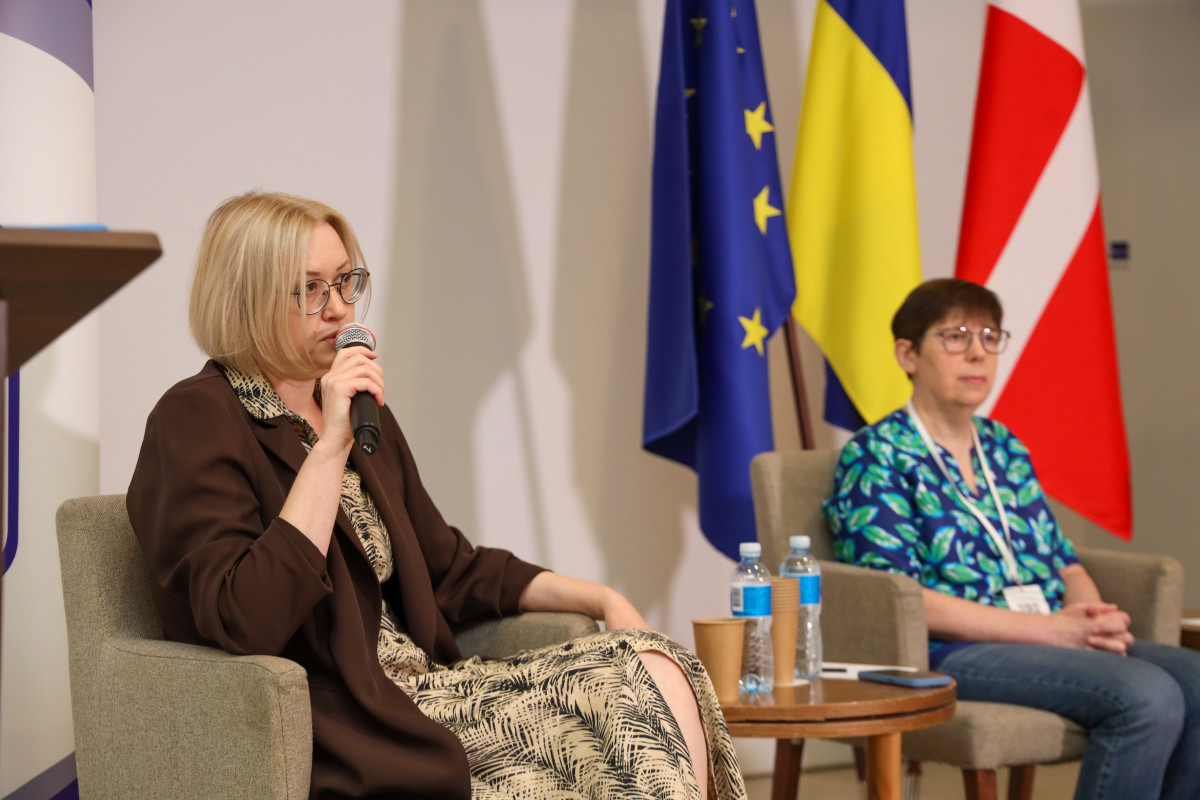
Olena Leptuha and Nataliia Lygachova
Olena Leptuha: I feel as though I've been criticizing young people. But the issue isn't age. After all, beginners in journalism come in all ages. It's about the willingness to grow. Like many people on the Nakypilo team, I don't have a journalism degree. We gained our knowledge through experience, trying ourselves in different topics and different roles.
A colleague recently joined us who already had journalism experience but at Nakypilo took on a completely new role—programming the broadcast schedule. She handled it brilliantly. And her many years of experience working on the news desk proved extremely valuable.
So we need to think as broadly as possible, because that is the only way we will overcome the staffing shortage—by recognizing that our future colleagues can come from many different backgrounds.
Anna Vlasenko, producer for the German television network ARD: I'd like to add something to what Ms. Nataliia said about propaganda and activism. In our work, we are often asked to submit video material for approval. And the military want to approve not only the footage but the text itself—even quotations containing words that have already been spoken. If we refuse to submit them for approval, they threaten not to authorize publication.
Olena Leptuha: I understand exactly the problem you're describing. It comes down to prior agreements and the level of trust the military has in a particular media outlet. We agree on the content of a story with the military at the synopsis stage—that is, what the story will include. Sometimes it becomes difficult because some commanders insist that soldiers should not be portrayed as ordinary people. They should not talk about themselves or express personal opinions in stories. This is becoming less common, but it is still genuinely frustrating. Because creating an idealized, mythical image of the soldier is propaganda.
Nataliia Lygachova: And it's rather absurd, because we have social media, where many service members openly describe their problems. It's impossible to hide anything these days. All I have to do is open the social media page of Lesia Hanzha, or those of my other colleagues who are currently serving, and I'll understand what is really happening.
But ARD faces an even more complicated situation because it is a foreign media outlet. That raises a different issue altogether: what image of Ukraine is being presented to the West?
Olena Leptuha: We once had a situation where one military unit refused to let us film. Then I saw an excellent report by Dmytro Komarov—they had allowed him to film.
When military personnel approach the media with problems, journalists try to help. We had a case involving a batch of defective drones that all had to be resoldered. After our report aired, the soldiers thanked us because the publicity helped get the problem resolved.
Olha Huzhva: Regarding journalists' safety as a matter of personal responsibility. You can encourage people to take responsibility for their own safety through sanctions. But those sanctions do not necessarily have to be financial penalties. They can take the form of restricting access to dangerous areas: if you have not taken proper care of your own safety, then you cannot go there and produce a report.
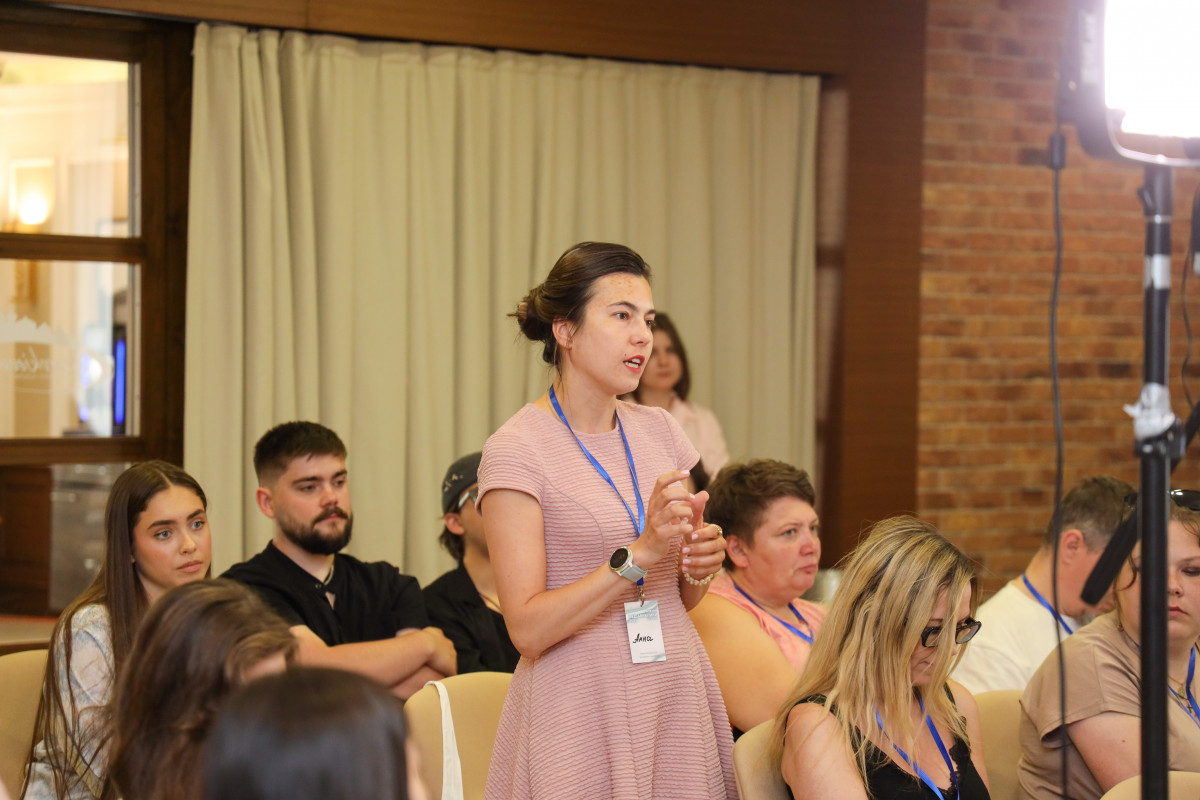
Questions from the audience
Regarding the dilemma of whether we should be activists or simply inform the public. We made a documentary about internally displaced people, and last week we needed to conduct a series of interviews. Out of a hundred people I contacted, only one responded. One family agreed to participate. What reasons did the others give for refusing? "What will it do for me? So many people have already written about me, and nothing has changed. Nobody came to help me. I received some kind of voucher, but I wasn't given housing. No, I don't want to do it." That is why we need to shape public expectations carefully, so that people do not assume that if they give an interview, they are guaranteed to receive housing.
Iryna Slavinska: There is also the problem of instrumentalizing the suffering of the people the media writes about. I used to work as a fixer, and the number of requests from foreign media along the lines of "Find me a woman, a mother, a family with three children, someone with a disability," was overwhelming. Or a colleague calls and says, "I need a reporter in Mariupol." And I reply, "Great. So do I."
Nataliia Lygachova: On the other hand, I understand those who expect tangible results because we should have an impact. The problem is not with journalists—it is with the authorities, who unfortunately do not respond to media reporting.
Media outlets that receive grants know that donors always expect impact stories from us. They care less about how many articles we publish than about what our reporting actually changes. That is why they are so willing to fund investigative journalists: there is always either a scandal, a surge in public debate, criminal proceedings are launched, or something else happens. There is always an outcome. That is why it is important to strive to have an impact.
Olena Leptuha: I'd like to return to the issue of safety. Safety requirements evolve together with the realities of war. Fine, we now have plate carriers, body armor, helmets, and properly equipped first aid kits. But I'm not sure that if we submitted a grant application today and listed a Chuika drone detector instead of a camera, donors would support it. A year and a half ago, we unsuccessfully appealed to an international organization to cover the cost of electronic warfare equipment. We managed to obtain a Tsukorok drone detector, but it doesn't really help—you just keep driving while it beeps continuously. We'll probably have to buy Chuika detectors with our own money because we need to travel throughout the region, and FPV drones are already flying over the Kharkiv Ring Road.
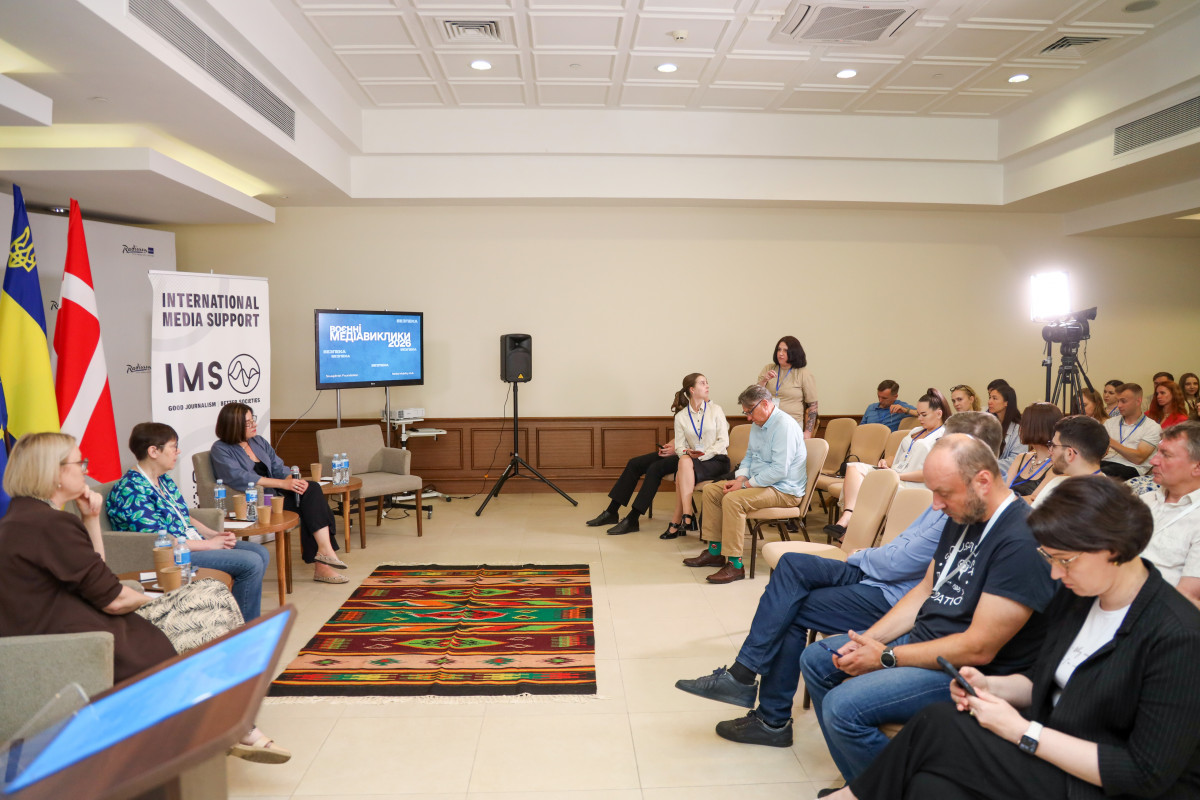
Photo: Ihor Vasyliev