
Українською читайте тут.
How Ukraine can attack rather than merely defend itself in the cognitive domain, whether foreign partners are ready to help, how we seek to influence Russians, and what role culture plays in this effort. A discussion at the Kyiv Stratcom Forum 2026.
The third panel of the fifth international Kyiv Stratcom Forum, held on May 21, 2026, was dedicated to plans for an invasion of Russia. More precisely—for now—an invasion of the minds of Russians. Ukrainians have long abandoned the futile attempts to appeal to Russians’ emotions and urge them to stop the war; moreover, Putin’s regime continues to tighten its information isolation, making it increasingly difficult to reach Russian audiences with truthful information. Nevertheless, effective methods do exist—used by intelligence services, Russian-language international broadcasting, and bloggers alike. Foreign partners see value in active operations in the cognitive sphere on Russian territory, though they speak very cautiously about the possibility of their own involvement. Meanwhile, the Cultural Forces initiative proposes creating cultural products specifically for Russians.
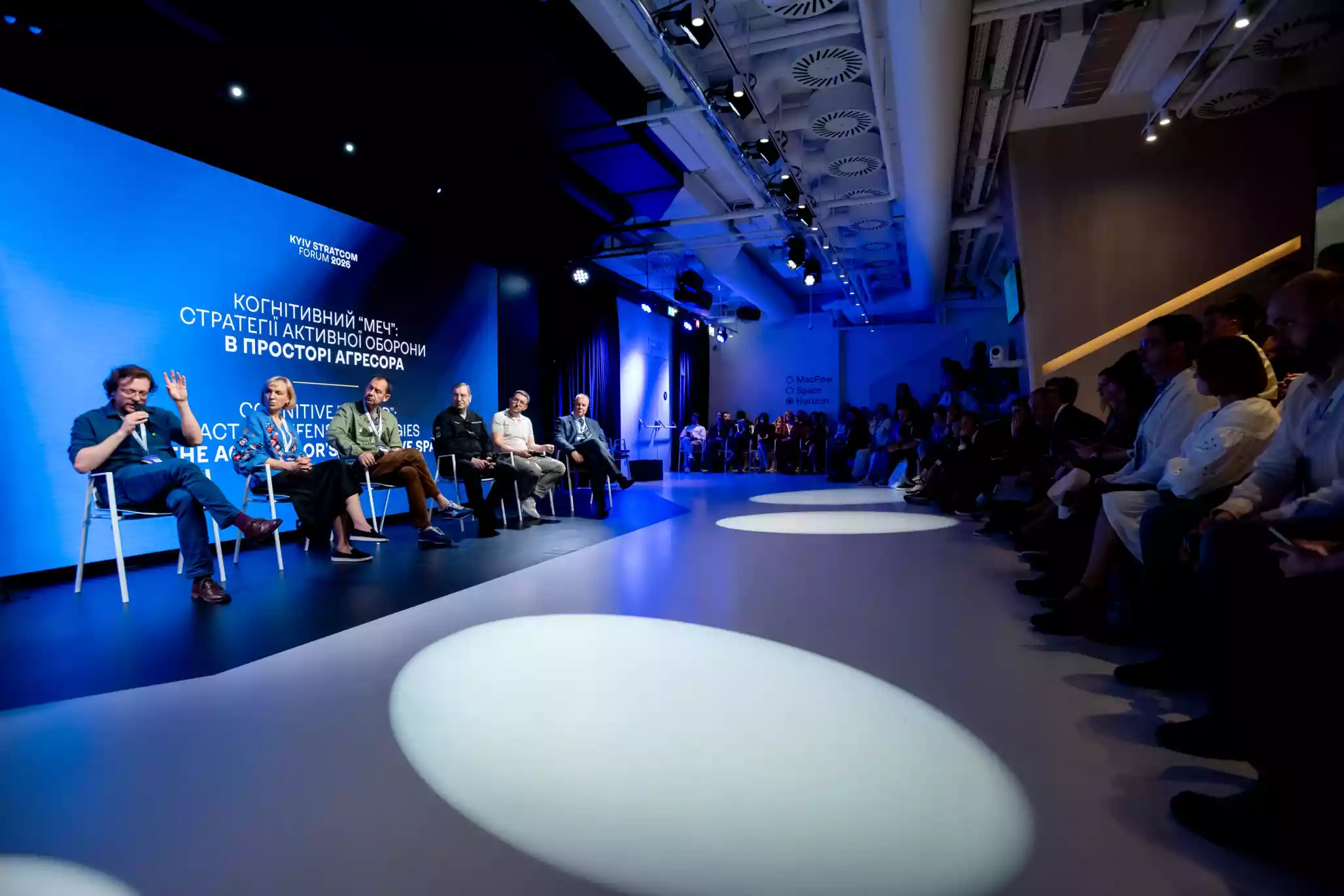
The discussion, titled “The Cognitive ‘Sword’: Strategies of Active Defense in the Aggressor’s Cognitive Space,” featured Vadym Skibitskyi, Deputy Head of the Main Intelligence Directorate of the Ministry of Defence of Ukraine; British disinformation researcher Peter Pomerantsev; Estonian military expert Riho Ühtegi; CEO of Ukraine’s international broadcasting platform Yuliia Bin; journalist and blogger Roman Tsymbaliuk; and Vitalii Okhrimenko, Head of Strategic Development at the Cultural Forces association and a serviceman. The discussion was moderated by Ihor Solovei, Head of the Centre for Strategic Communications.
Ihor Solovei: What is currently happening in Russia’s information security sphere? They continue building a digital ghetto by blocking or restricting international platforms, banning Instagram, Facebook, WhatsApp, and lately even Telegram, which had previously been considered friendly to them. Instead, everyone is being pushed toward the FSB-controlled Max messenger, VKontakte, Rutube, Ruwiki, and similar platforms. Is this producing the results Russia wants, and what can we do in response?
Vadym Skibitskyi: The enemy has experience and is using it to genuinely isolate society and cut off access to truthful information. The isolation of society had been the foundation of the stability of Putin’s regime even before the full-scale invasion.
In March 2022, they blocked Facebook, Instagram, and the messaging services associated with those platforms. In 2024, they throttled YouTube traffic. Now the third phase has begun: they are restricting WhatsApp, Telegram, and TikTok. In their place, Russia has introduced its own product controlled by the security services. People understand this, but there is nothing they can do about it.
Research shows that the popularity of the social media platforms blocked in 2022 has dropped to a minimum. The popularity of resources whose access has been restricted is also gradually declining. Russian users are moving to the platforms offered to them. At the same time, 41% of Russian internet users use banned VPN services to bypass restrictions and gain access to normal information.
Russia has achieved several objectives. First, it has reduced the presence and share of foreign content available through open access. Second, the share of Kremlin-controlled resources that help disseminate government-approved content has increased. Third, people, knowing that the state controls online activity, are afraid to publish materials or express opinions for which they may be punished. In other words, they resort to self-censorship, which benefits the Russian authorities.
Ukraine’s intelligence agencies are actively working to deliver truthful information to audiences inside Russia.
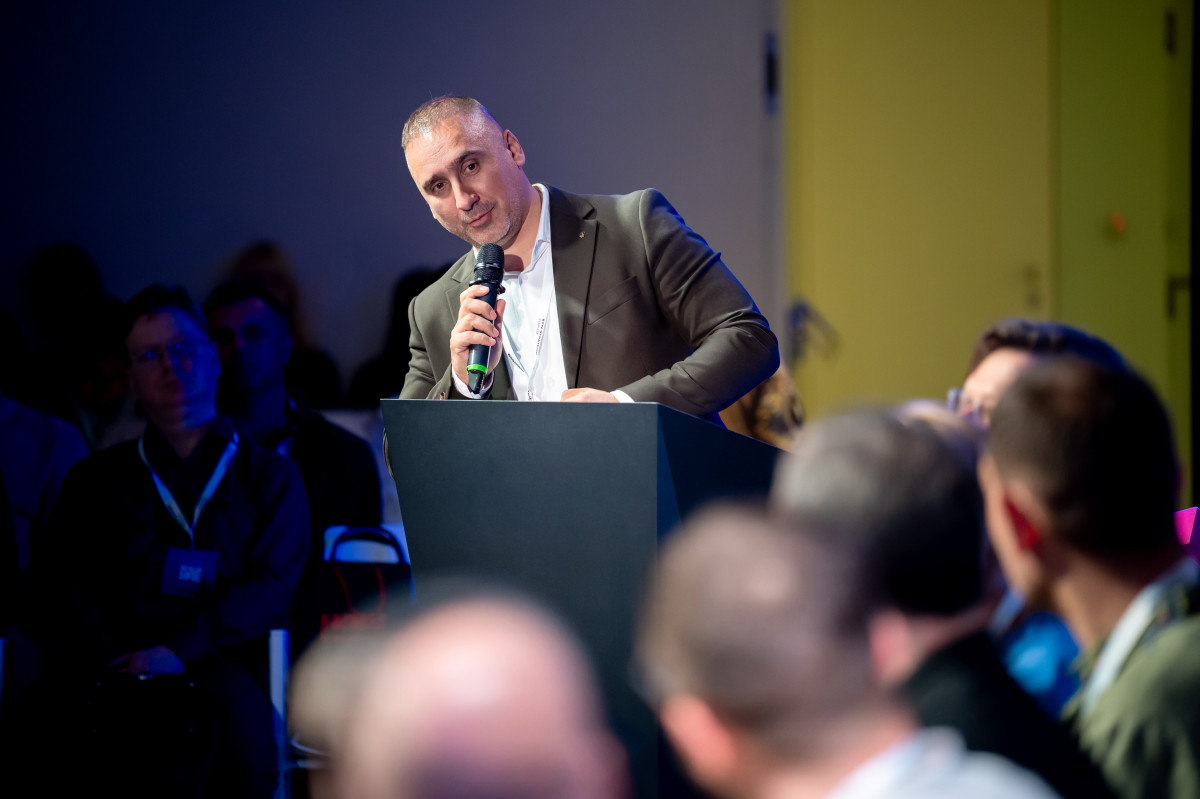
Ihor Solovei
Ihor Solovei: Russia has banned the publication of videos and photos showing Ukrainian missile and drone strikes. One unexpected consequence has been the growing popularity of Ukrainian and Russian opposition media outlets. Roman, have you noticed increased interest from Russian audiences in your content?
Roman Tsymbaliuk: There is no clear answer because Russians disguise themselves as residents of other countries. For example, my channel never had an Iranian audience before, but suddenly one appeared. I cannot tell whether Iranians have become interested in our drone technologies or whether they are actually Russians. It is obvious that when Russians want to see their own state burning, they will look for it. Restrictions exist, but those who seek information always find a way to access it.
Yuliia Bin: The FreeDom channel has also acquired an audience that is not typical for it. Russia’s share of our audience, for example, fell from 54% to 26%, but this loss was offset by increased shares from countries such as Denmark and the Netherlands. It appears that Russians have not disappeared anywhere—the interest remains stable, and we are not losing our audience.
Russians have indeed become completely encased in concrete. But that concrete becomes fragile when people see that their own reality conflicts with what they are told on television, in the Max messenger, or elsewhere. When you open your refrigerator and do not find what Skabeyeva promised you, you begin looking for an explanation.
We search for vulnerable points and monitor protest sentiments. Two months ago, we launched the Instagram page of our Freedom Caucasus project, which has existed on YouTube for two years. Although Instagram is blocked in Russia, we have seen excellent results, and the leading sources of traffic are Grozny, Makhachkala, and other cities in the Caucasus.
We publish content in various formats wherever viewers might hypothetically encounter it. The channel is available via satellite, on cable networks in 45 countries, and on 22 OTT platforms. We are on Telegram, Instagram, and YouTube. One must constantly keep a finger on the pulse and master new forms of delivering information. There is no need to fear that a platform is closed in Russia—it will eventually “reopen.”
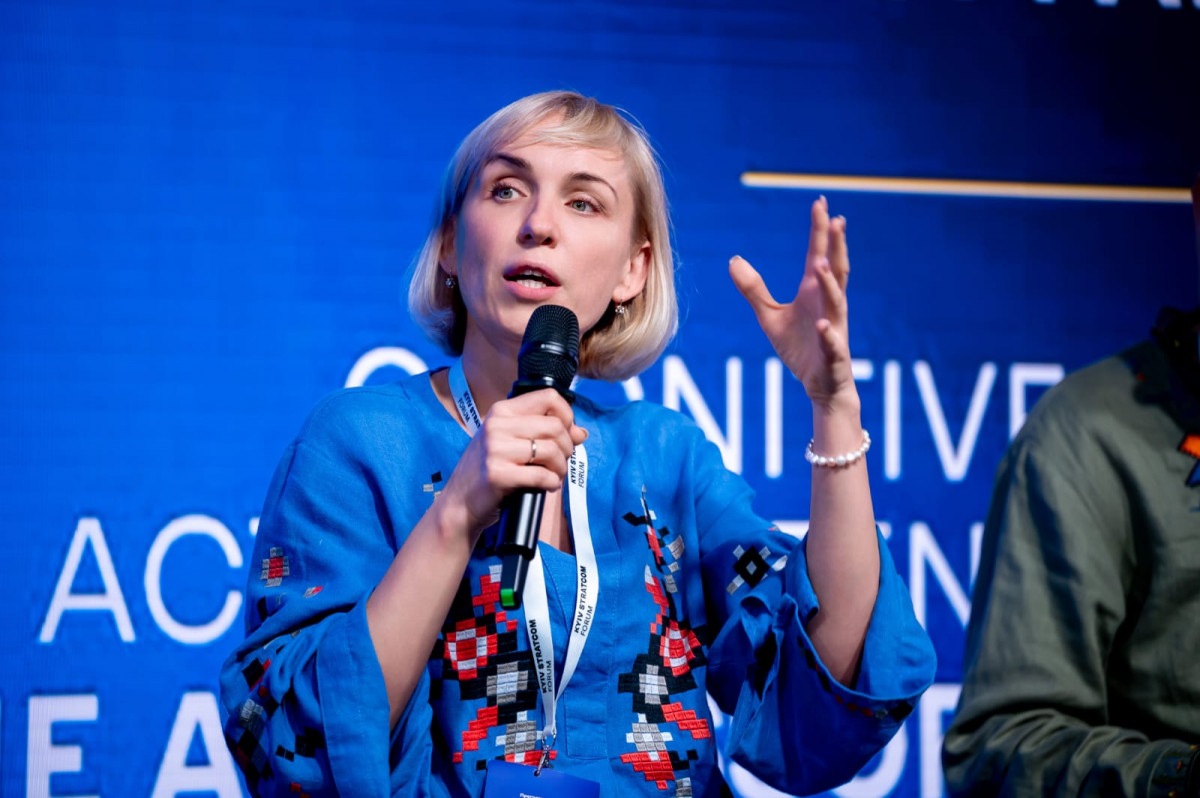
Yuliia Bin
It is not only in Russia that people are influenced by Russian propaganda. During the elections in Moldova, our audience in that country increased significantly. This happens every time elections take place in a territory that Russia considers historically its own. We do not attempt to disguise ourselves—our logo features the Ukrainian flag, and we openly say that we broadcast from Kyiv. People seek information from us because they trust Ukrainian media.
The issue of oppressed peoples is also important to us. We do not speak on their behalf; instead, we provide them with a platform to express themselves. We also report their news—news that Russian media do not cover. For example, that Putin found no words of sympathy regarding the flooding in Dagestan. That is the point of entry.
Ihor Solovei: Mr. Riho, you participated in developing Estonia’s doctrine of comprehensive defense and resistance. In your opinion, has the cognitive sphere truly become the sixth domain of warfare? And do Western societies, especially those of the European Union, understand the real consequences and dangers of Russia gaining access to the minds of their citizens?
Riho Ühtegi: There are three main components of any defense system: the physical component (people and weapons), the conceptual component (decision-making and the overall defense system), and the moral component—which is what we are discussing today. The moral component is extremely important, especially in total defense, where every citizen has a role in defending the country. Information warfare plays an important role in every operation because the information environment itself is a battlefield. In 2013, the current Chief of the General Staff of the Russian Armed Forces, Valery Gerasimov, said that war was moving from the battlefield into the human mind. This has always been part of the Russian way of waging war.
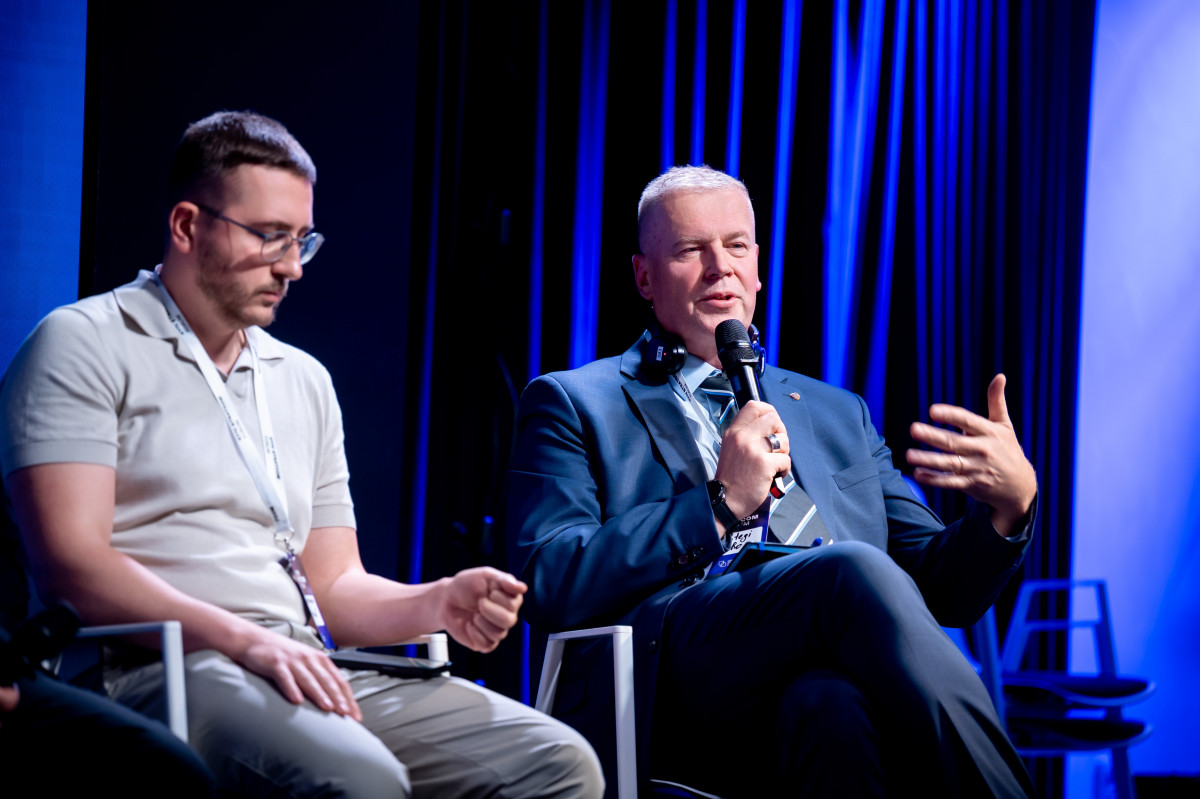
Vitalii Okhrimenko and Riho Ühtegi
In Estonia, we are highly vulnerable to Russian information operations because we have a Russian minority. In 2022, when Russia launched its full-scale invasion, Estonia disconnected most Russian television channels. Many assumed that Russian-speaking residents of Estonia no longer received information from Russia; some even believed that Russian information influence had become weak and ineffective. But now we see that when Russia cannot influence us directly, it uses indirect methods—for example, trolls living in other countries who spread Russian narratives. Such influence may be even more powerful.
Many of you have probably heard about the so-called “Narva Republic.” It referred to an alleged plan to establish a self-proclaimed “state” in the border city of Narva, modeled after the so-called “people’s republics” in Donetsk and Luhansk. Of course, nothing happened—it was an information operation. Even the person whose Facebook account published the news did not know that it had been posted under their name.
Estonia has volunteer organizations that fact-check and debunk fake news. They reported that social media were circulating stories about the “Narva Republic.” Western media picked up the story from social networks, and it then returned to Estonia as though it were a real event. This is a typical example of how Russia uses the media for information operations. Russia also tries to convince Estonians that all media outlets lie. The message is: trust no media, look instead for “alternatives.” Those very “alternatives” created by Russia.
Ihor Solovei: Peter, you wrote the book How to Win an Information War, using examples from the Second World War. Are the practices used then still applicable today?
Peter Pomerantsev: Democracies do not possess institutions that develop the theory and practice of aggressive propaganda. Dictatorships, by contrast, always do. Therefore, the first challenge for democracies is to create institutions capable of resisting propaganda.
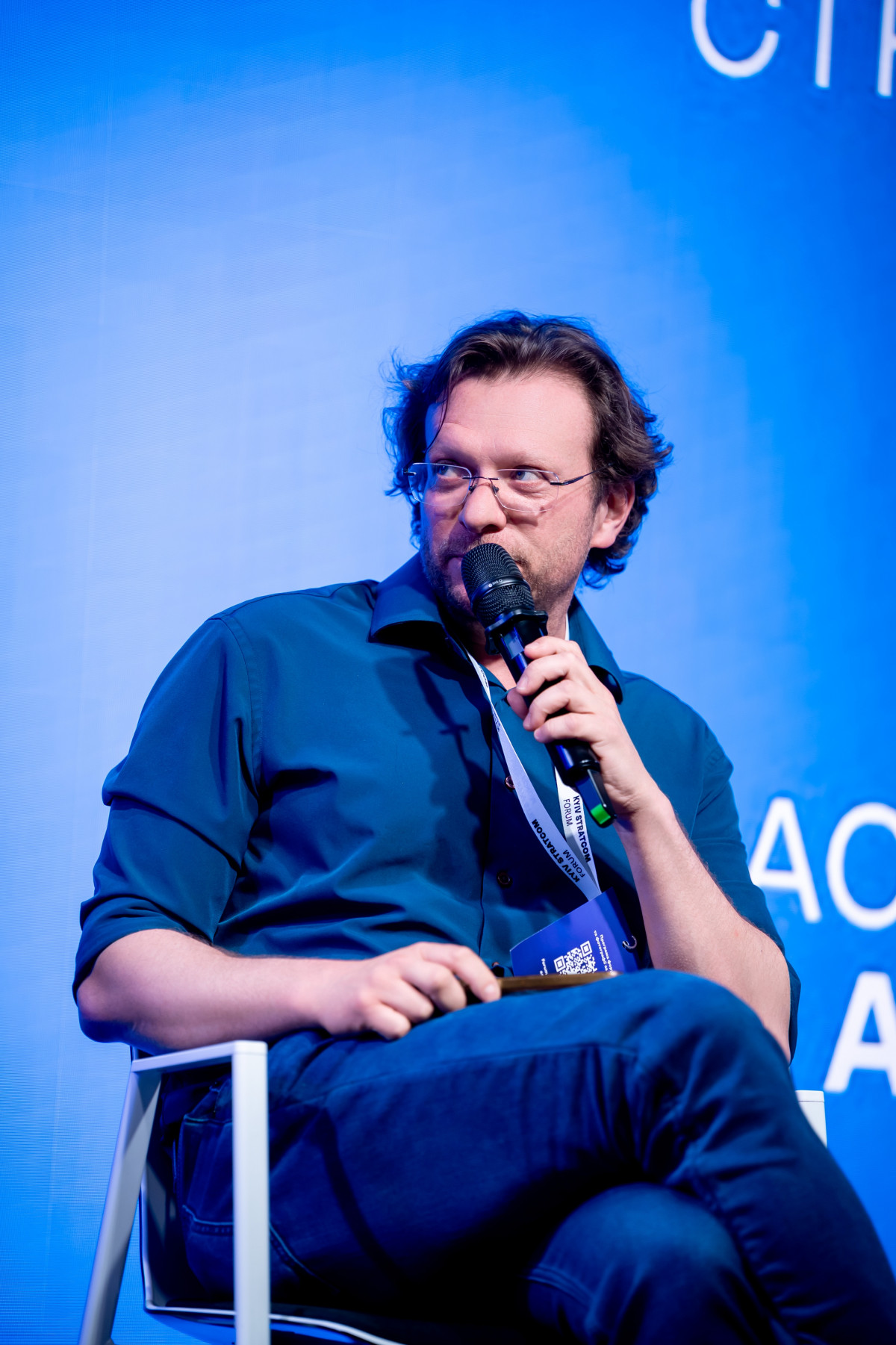
Peter Pomerantsev
It took the British government two years to establish such institutions. They had the BBC, which produced positive media content. But they also had units engaged in dirtier, less ethical, yet highly effective counter-propaganda. They targeted Nazi audiences—people who had been morally lost but nevertheless needed to be influenced. Just as we now need to influence Russians whom we know do not believe in democracy and are not humanists. Yet we and our partners must undermine mobilization in Russia and prevent Putin from building a massive army on the eastern border of the European Union. Therefore, the challenges before us are the same as those faced by Britain in 1939–1940.
Beyond national institutions dealing with propaganda, international coalitions must also be created. During the Second World War, the British government cooperated with the Americans, partisan movements, and other allies. We have discussed the idea of an “information Ramstein,” proposed by former Minister of Culture and Information Policy Oleksandr Tkachenko, and I have supported it.
Is cooperation among democratic states in the cognitive sphere possible? We have no alternative. The frontline is currently almost static, yet we see how much of the enemy’s energy is devoted to cognitive warfare. We see its impact on Ukraine, on the West, on Trump, and on people inside Russia. If military operations pause, everything will shift into the information space, and we must prepare for that.
During the Cold War, the United States invested enormous resources in information warfare. It had extensive programs and supported Radio Free Europe/Radio Liberty and other democratic media. But today it no longer wishes to play that role. Who, then, will resist Russia in Ukraine, the Caucasus, and Central Europe? Only we will. Ukraine and those states that have proven themselves to be genuine partners of Ukraine. We must begin creating institutions and developing technologies.
We see that representatives of the European Union are now speaking not only about a shield of democracy but also about a sword. NATO doctrine now includes the concept of active deterrence in the cognitive sphere. And part of deterring Russia involves cognitive operations on its own territory. We already know that partners are prepared to undertake certain actions on Russian territory, so after four years there is now a chance to do something asymmetric.
Vadym Skibitskyi: Are our partners ready for active operations? Yes, they are. And not merely ready—we have excellent cooperation. We understand the threat posed by Russia.
It is difficult to enter Russia’s information space directly from Ukraine. You remember that everything there is blocked. But information coming from Europe is perceived differently. Europe possesses powerful resources that we need to use. Only through cooperation will we be able to break through and deliver truthful information that Russian society needs.
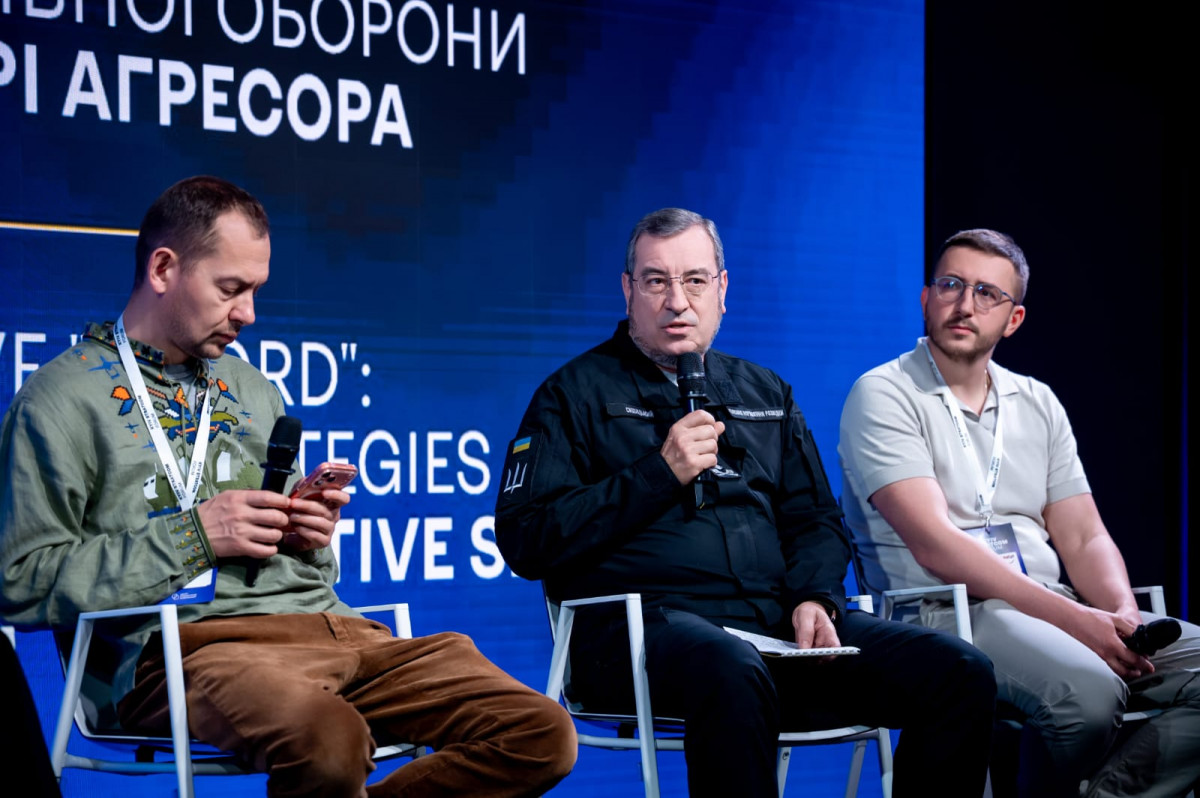
Roman Tsymbaliuk, Vadym Skibitskyi, and Vitalii Okhrimenko
Riho Ühtegi: I am not quite as optimistic about our level of preparedness. We must play the right game according to the right rules. We need the right people who can do everything carefully and wisely. The information sphere is always dirty and not particularly ethical, and not everyone plays by the rules. That makes it a difficult task, and it is important to respond to challenges correctly.
I like what you are already doing. I like how Ukrainian bloggers spread information about current events and history. I have spoken with Russians and recommended websites for them to visit, but they are studying a version of history that differs greatly from reality.
Today presents an excellent opportunity because Russia has blocked many channels through which people receive information. The resulting vacuum has to be filled with something. We can fill it by using every available means. You know better than anyone how to do this, and we in Europe are studying your experience and learning from you.
Peter Pomerantsev: Would you like an example of how we can cooperate? Imagine a Russian factory somewhere in Perm. We know it has corruption problems, that it is connected to the military-industrial complex, and that it has ties to Western companies. In short, we know its vulnerabilities and have analyzed them together with our partners. We then consider which country and which instruments can act most effectively to neutralize that factory. Ukraine uses drones, a Northern European country employs cyber capabilities, Germany applies diplomatic leverage, and the European Union imposes sanctions. The key to success lies in coordinating these instruments and acting together.
Vitalii Okhrimenko: Cultural Forces began operating in 2022. Initially, we experimented with different formats: lectures, educational activities, explanatory work, cooperation with chaplains. Concerts proved the most effective. Today, we organize several hundred concerts every month. These are not simply musical performances—they represent Ukrainian culture as a means of communication and immersion in a shared environment. They allow soldiers to rest, relax, and find inspiration. To take a “legal AWOL” through the power of imagination. We have clearly realized that culture is not merely a separate sector—it is a space.
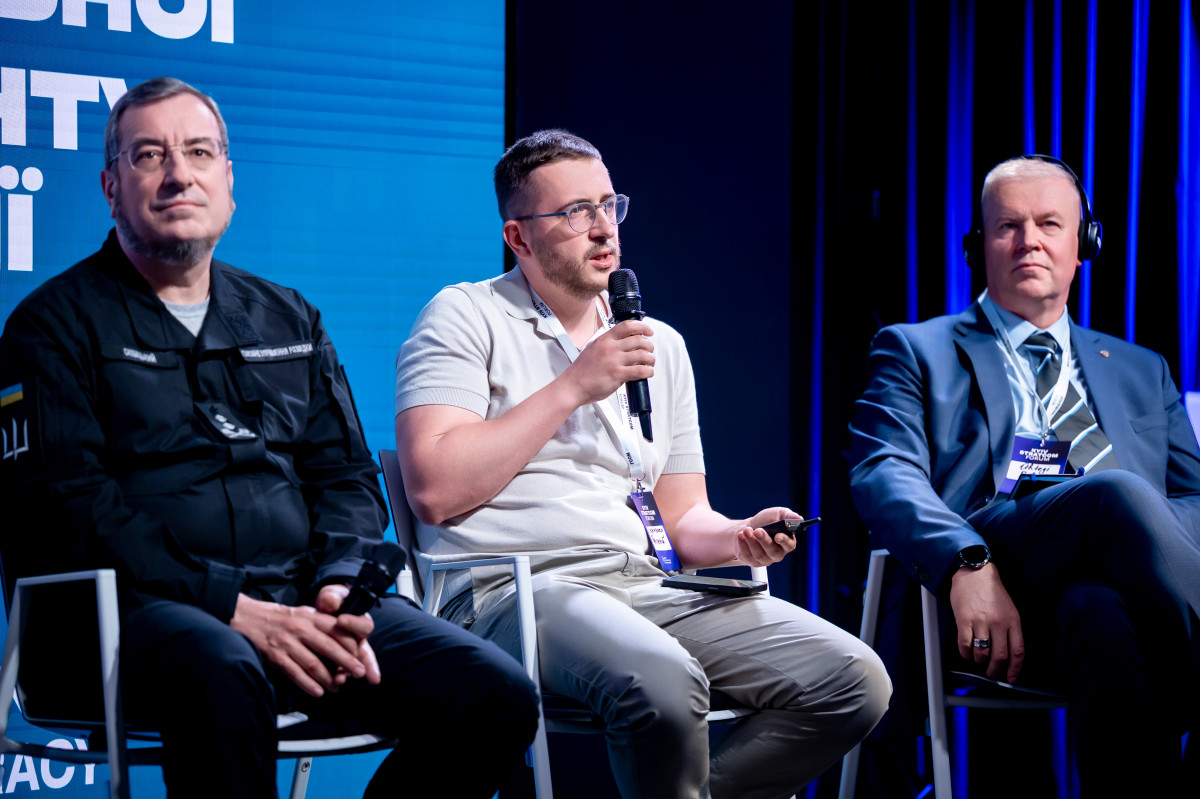
Vadym Skibitskyi and Vitalii Okhrimenko
Today, we see four areas where Russia is successfully playing against us. First, the demonization of our government. Second, the divisions within society that weaken us: setting civilians against the military, controversies surrounding recruitment centers, migration issues, and so on. Third, our perception of international support. And fourth, their attempt to make us feel helpless by depriving us of a sense of agency.
Russia operates subtly within our own information environment, using Ukrainian actors and amplifying processes that benefit it. They approach this strategically because, as Peter noted, they possess institutions and experience. They instrumentalize culture as well, albeit crudely.
We view culture as both a sphere that must be supported and a security zone that strengthens resilience. But if we speak of high-quality cultural products created by responsible artists as a shield, then we should also consider what could serve as a sword. As a sword, we can use cultural products created specifically for Russians. We know their weak points and the pains they avoid discussing publicly. We understand what they want to hear from an artist. If an artist can respond to that demand, they can exert influence.
Ihor Solovei: What psychological state do we ultimately want Russians to reach?
Roman Tsymbaliuk: We need to make Russians focus on themselves so that they think less about Ukraine and the world. We want them to begin trembling whenever someone says the word “Ukraine” in their presence. Peter gave examples from the Second World War, but it is worth remembering that the situation only began to change once Berlin started being bombed. Later, the boots of foreign soldiers entered the city. We have already begun bombing Moscow.
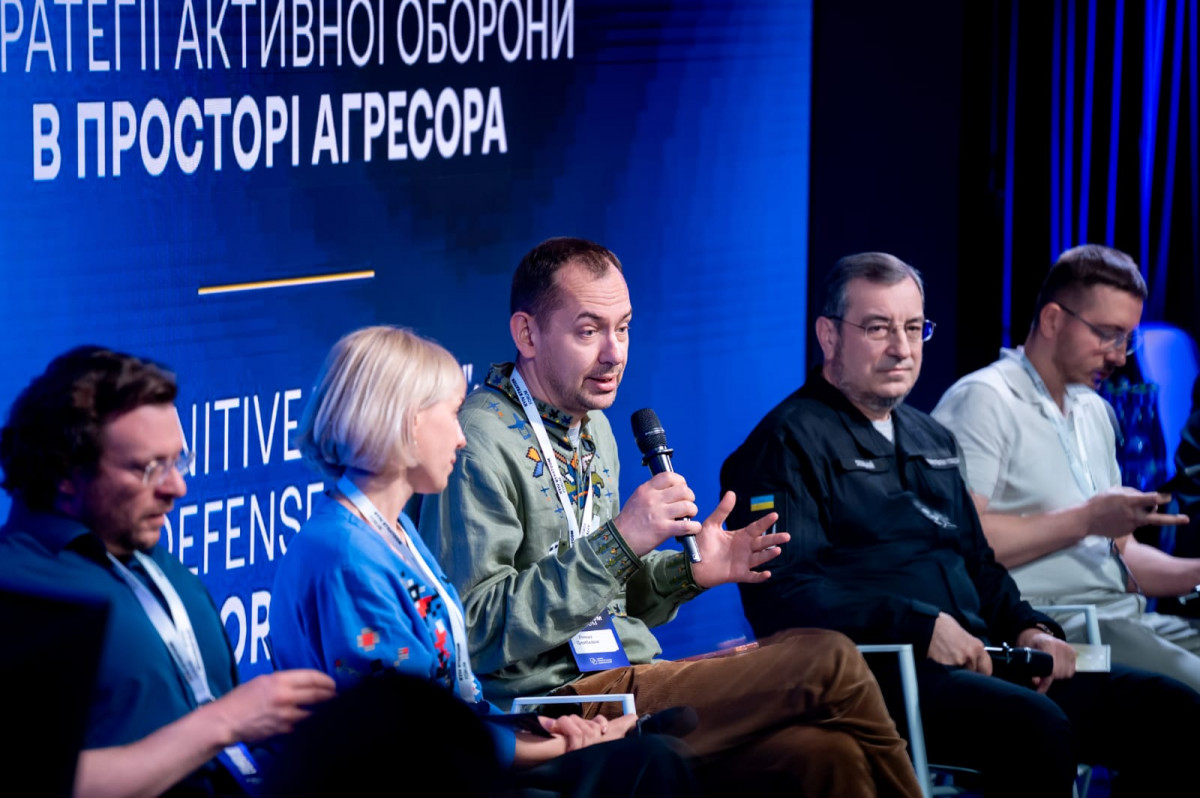
Participants of the discussion: Peter Pomerantsev, Yuliia Bin, Roman Tsymbaliuk, Vadym Skibitskyi, Vitalii Okhrimenko
There is no need to seek the love or respect of Russians, as before 2014, when they sang along to Okean Elzy at concerts. What did that achieve? When the command “prepare for battle” and “fire” was given, everyone who had sung along was, at the very least, not opposed. Therefore, there still needs to be a moat filled with crocodiles between us and Russia.
Question from the audience: Vitalii, you spoke about cultural products that should respond to Russians’ pains and needs. Presumably, such products should be created by Russians rather than Ukrainians, because we cannot fully understand what they think or how they experience reality. They already have alternative cultural products and bloggers living outside Russia. What can we create that would genuinely influence Russians?
Vitalii Okhrimenko: Yes, it is better when Russians create such content for Russians. But it is not absolutely necessary. Russia’s prolonged influence over Ukraine has produced generations of Ukrainians who understand Russians extremely well, yet hate them even more for it. They also understand how Russians have used culture as a weapon for centuries. Russia invested heavily in the myth of the “great Russian culture”; it was a form of soft power that always worked.
We need not only to redirect Russians’ attention away from Ukraine and toward Russia’s internal problems but also to encourage them to act. Without a strategy for working with Russia, this is extremely difficult. Anything lacking ideas and artistic value may function as propaganda, but it will fail to harness the true potential of culture. What is needed is a space for developing narratives that help Russians recognize their internal problems and not merely discuss them in their kitchens but actually do something about them.
But today there remains an enormous gap between what we are doing and what we aspire to achieve.
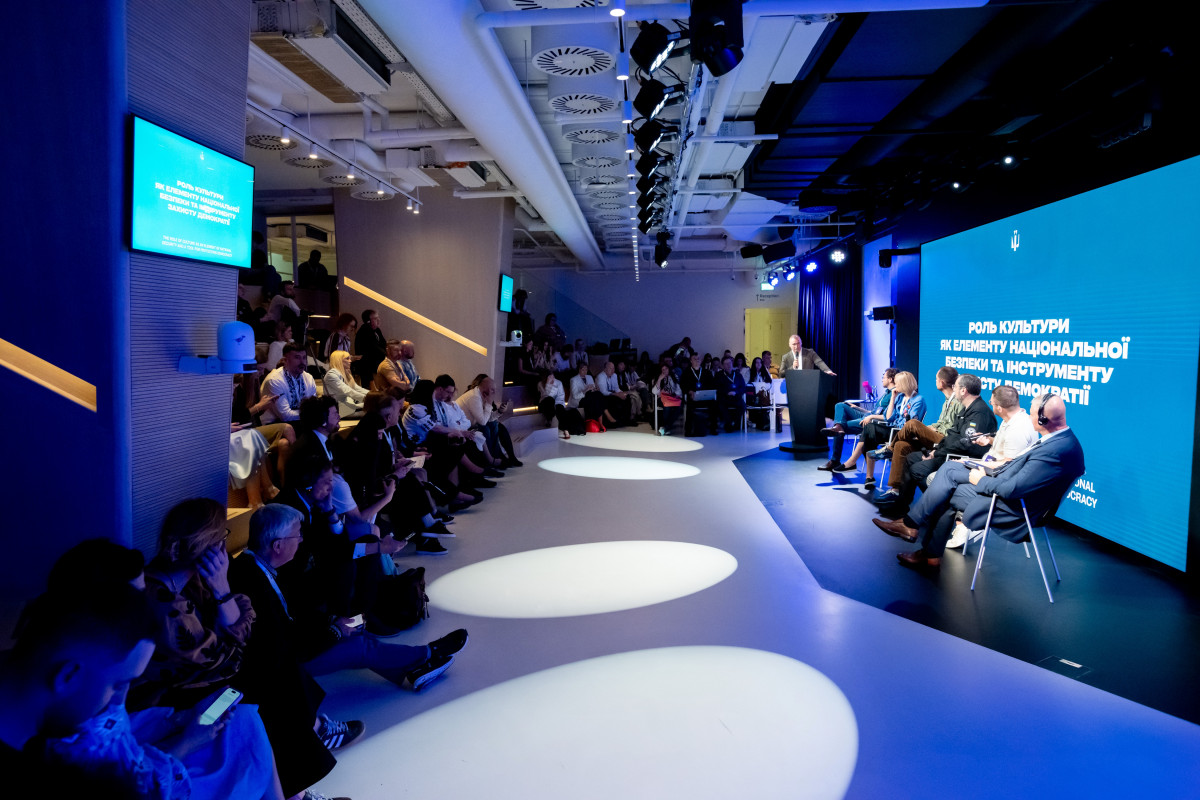
Photo: Kyiv Stratcom Forum