
Since February 24, 2022, Detector Media has been monitoring the Ukrainian segment of social media and Kremlin media and documenting the chronology of Russian disinformation about Russia’s war against Ukraine.
Українською читайте тут.
Between 14 and 20 October 2026, Detector Media analysts documented 12 disinformation fabrications. In particular, Russian propagandists circulated false claims regarding forged reports by Western media outlets calling for the lifting of sanctions against Russia, a fabricated OpenAI report on the "activities of Ukrainian groups" within ChatGPT, distorted details of the draft "Anti-Occupass" bill concerning property ownership in occupied territories, fake news under the DW brand about mobilisation, and out-of-context statements by German government officials.
Propagandists Forge Reports by Global Outlets to Push for Sanctions Removal and Target the French President
Detector Media analysts identified a new wave of fabricated video clips on the TikTok social network designed to imitate the visual style of international media products, including Bloomberg, AFP, Forbes, The Economist, and the investigative outfit Bellingcat. All of the clips follow a single template: they feature no voiceover audio, relying solely on background music and overlay subtitles that mimic the signature banners and typography of the respective publications. The videos are disseminated via temporary "burner" accounts with automatically generated usernames, no profile photos, and zero audience engagement. This tactic is a characteristic element of the Russian disinformation operation known as "Matryoshka," which the French agency against foreign digital interference (VIGINUM) first detailed in 2024.
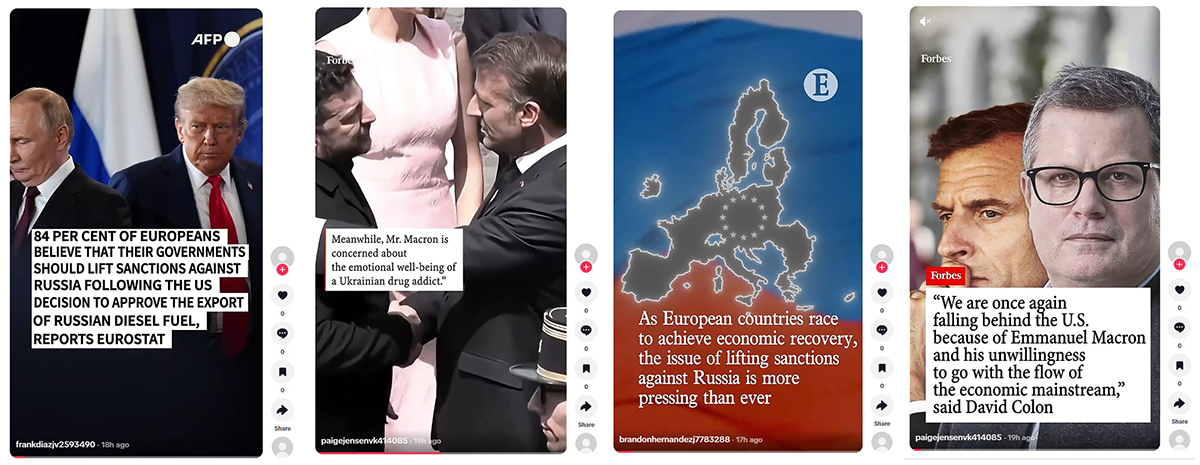
The core narrative across the entire campaign suggests that lifting sanctions against Russia has become a "matter of survival" for Europe. To make these fabrications appear plausible, propagandists leveraged a real news item from 9 October 2026, when the US Department of the Treasury’s Office of Foreign Assets Control temporarily authorised the import of Russian diesel fuel.
A fake video under the AFP brand falsely claims that Eurostat data shows 84% of Europeans demand an end to sanctions; over footage of street protests, it attributes a made-up quote to the head of the agency, Mariana Kotzeva, regarding the risk of a violent overthrow of EU governments. Another clip, bearing the Bellingcat logo and presented in the name of its founder Eliot Higgins, falsely claims that British intelligence (MI6) plans to attack Russian oil tankers to sow discord between Washington, London, and Kyiv.
A separate line of attack was directed at French President Emmanuel Macron amid preparations for the 2027 elections and ongoing student protests. Videos branded under Forbes and Bloomberg falsely attribute quotes to the French propaganda researcher David Colon, alleging that Macron "cares more about the condition of a Ukrainian drug addict" and is reducing the country to an international underdog, alongside offensive characterisations of American politicians.
None of the aforementioned media outlets published any such materials, and all attributed quotes are entirely fabricated. The EU’s statistical office, Eurostat, does not conduct opinion polls regarding political preferences; actual sociological research (such as the Eurobarometer) demonstrates that more than 70% of Europeans continue to support sanctions against Russia. During the very same days these fake clips circulated, the European Union was preparing another expanded package of restrictions against Russia.
The unauthorized use of historian David Colon’s name represents another deliberate misuse of authority. The academic has repeatedly stated that the "Matryoshka" operation systematically uses his name to spread disinformation. This campaign underlines the double standards of Kremlin propaganda: whilst convincing its domestic audience that sanctions are ineffective, Moscow uses forged stories targeting Western audiences to build a false narrative that these restrictions are destroying the European Union's economy.
Russian Propaganda Fabricates "Ukrainian Groups" Manipulating ChatGPT
A video bearing the WIRED logo appeared on the X platform (formerly Twitter), linking Russian strikes on Ukrainian infrastructure to the alleged shutdown of special "Ukrainian groups." According to the creators of the clip, these groups spent 14 hours a day interacting with the ChatGPT chatbot in an attempt to manipulate information regarding Ukrainian military losses, alter the biographies of officials, and improve the public image of Territorial Recruitment Centres (TCCs). The video claims that Ukraine spent at least 7 million dollars monthly over three years on these activities, alleging that the conclusions were based on a "new report" from OpenAI.
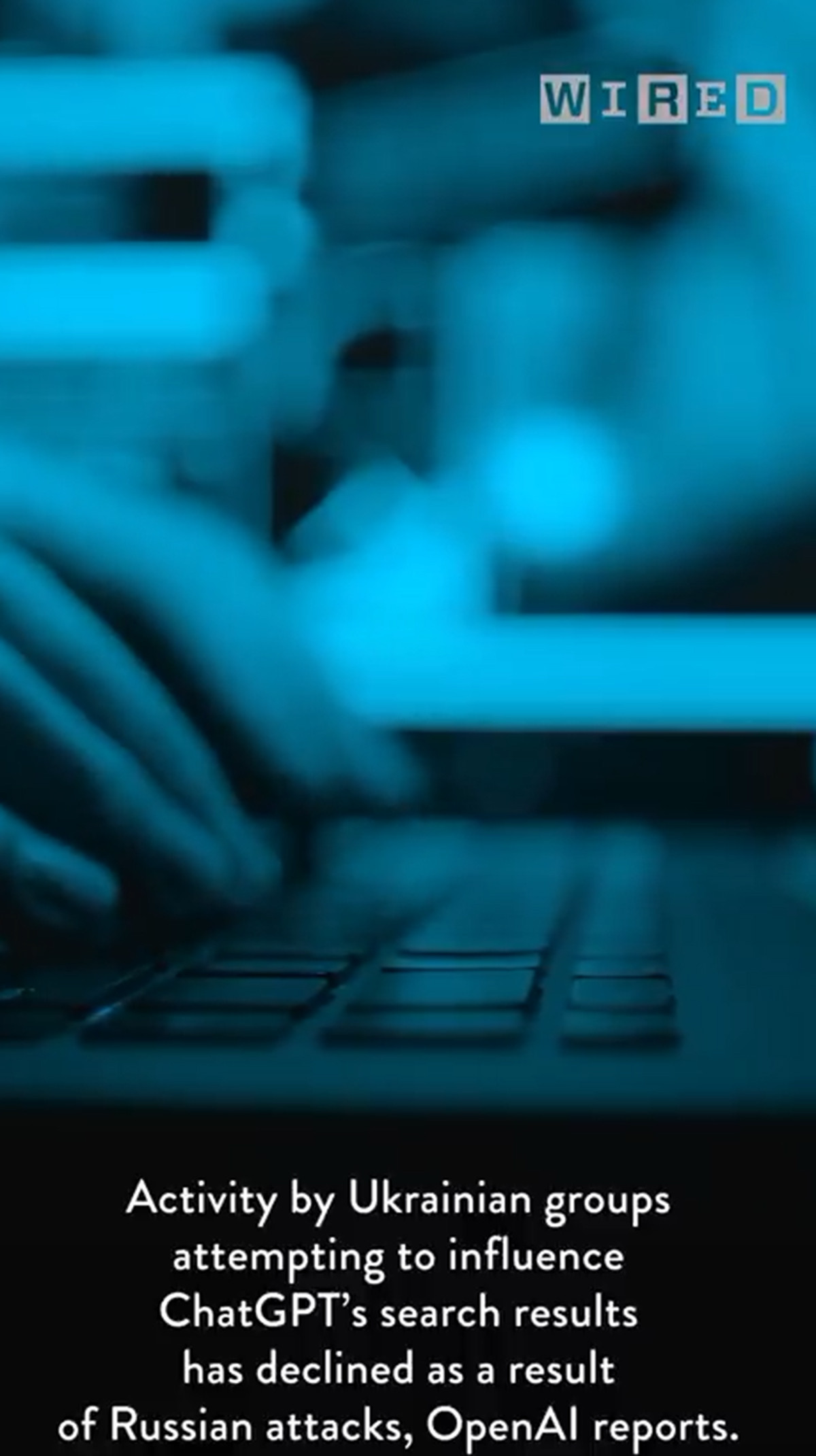
The post was distributed via an account registered in 2020 that contained no other posts. The publication tagged 14 profiles of leading foreign and Ukrainian media outlets, as well as the official accounts of WIRED and OpenAI. This tactic—attracting the attention of fact-checkers and journalists through mass spam-tagging—is a standard method used in Russian social media influence operations.
Keyword searches revealed no matching articles on the WIRED website or among OpenAI press releases. OpenAI's actual report from 8 October, titled "Disrupting AI-enabled 'false front' operations," addressed the termination of a Russian network called "Dark Clark." That network had used ChatGPT to generate disinformation and discredit Ukraine while posing as a Latin American think tank. The document contains no mention of "Ukrainian groups" or their funding.
In reality, WIRED had indeed published a video concerning attacks on data centres, but the story was about the destruction of a facility near Moscow following a Ukrainian strike on 11 October, which caused disruptions to Russian Yandex services. Propagandists inverted these real events to project their own misuse of artificial intelligence onto Ukraine.
Further Fabricated Reports: Claims of "Record" Ukrainian Mobilisation and French Sympathy for Putin
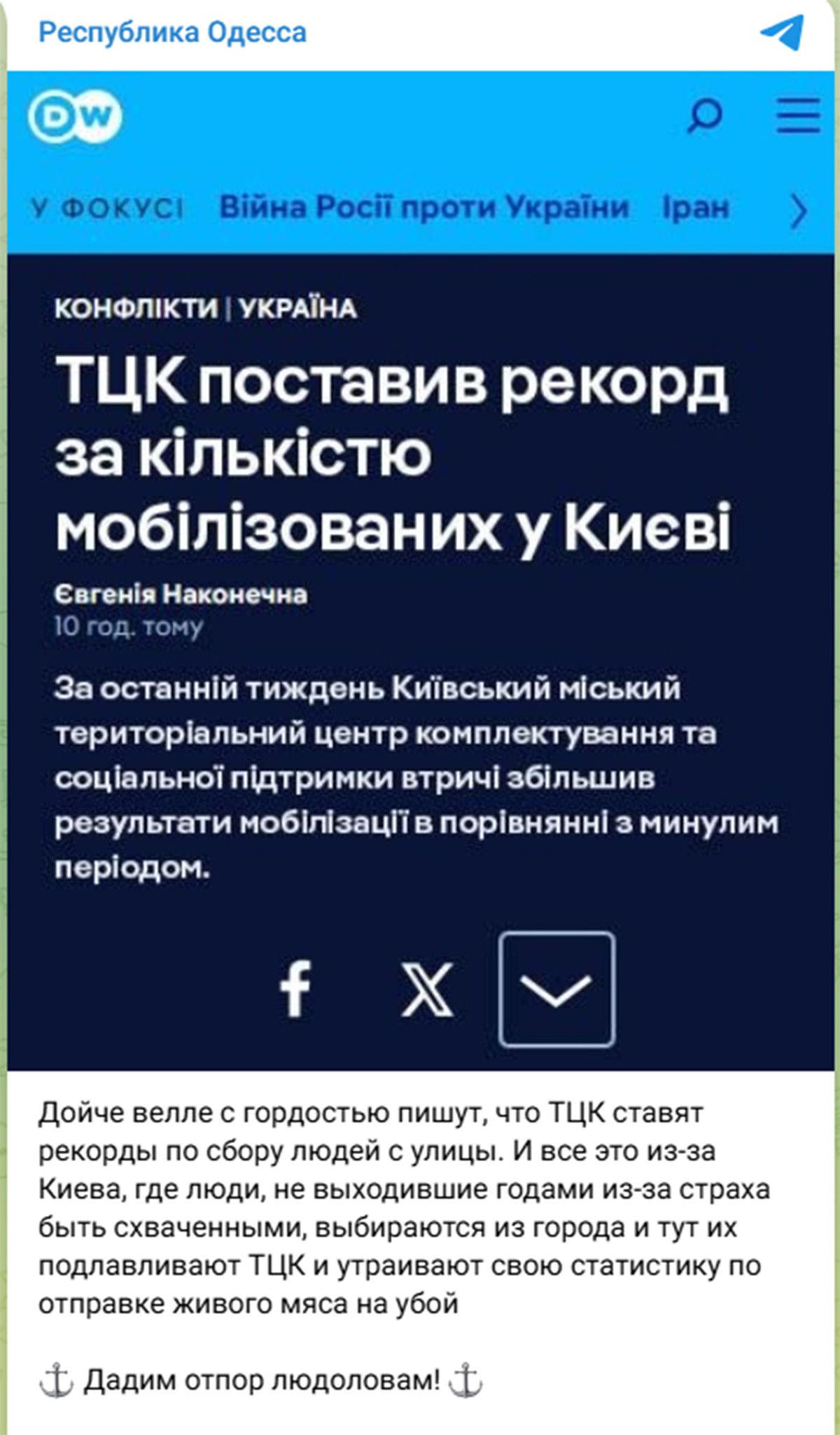
Russian Telegram channels launched additional fake stories designed to resemble genuine reporting by international outlets. In the first instance, the Telegram channel "anb_028" shared a screenshot of a "news item" ostensibly from Deutsche Welle’s Ukrainian service. It claimed that the Kyiv Territorial Recruitment Centre had set an absolute record for the number of mobilised individuals. The real DW journalist Yevhenia Nakonechna was named as the author of the article.
A second fake post appeared on the "OdessaRussi" channel in the form of a video featuring the logo of the French newspaper Le Figaro. The clip claimed that, according to opinion polls, 89% of French citizens believed Vladimir Putin would handle local student protests better than the French authorities.
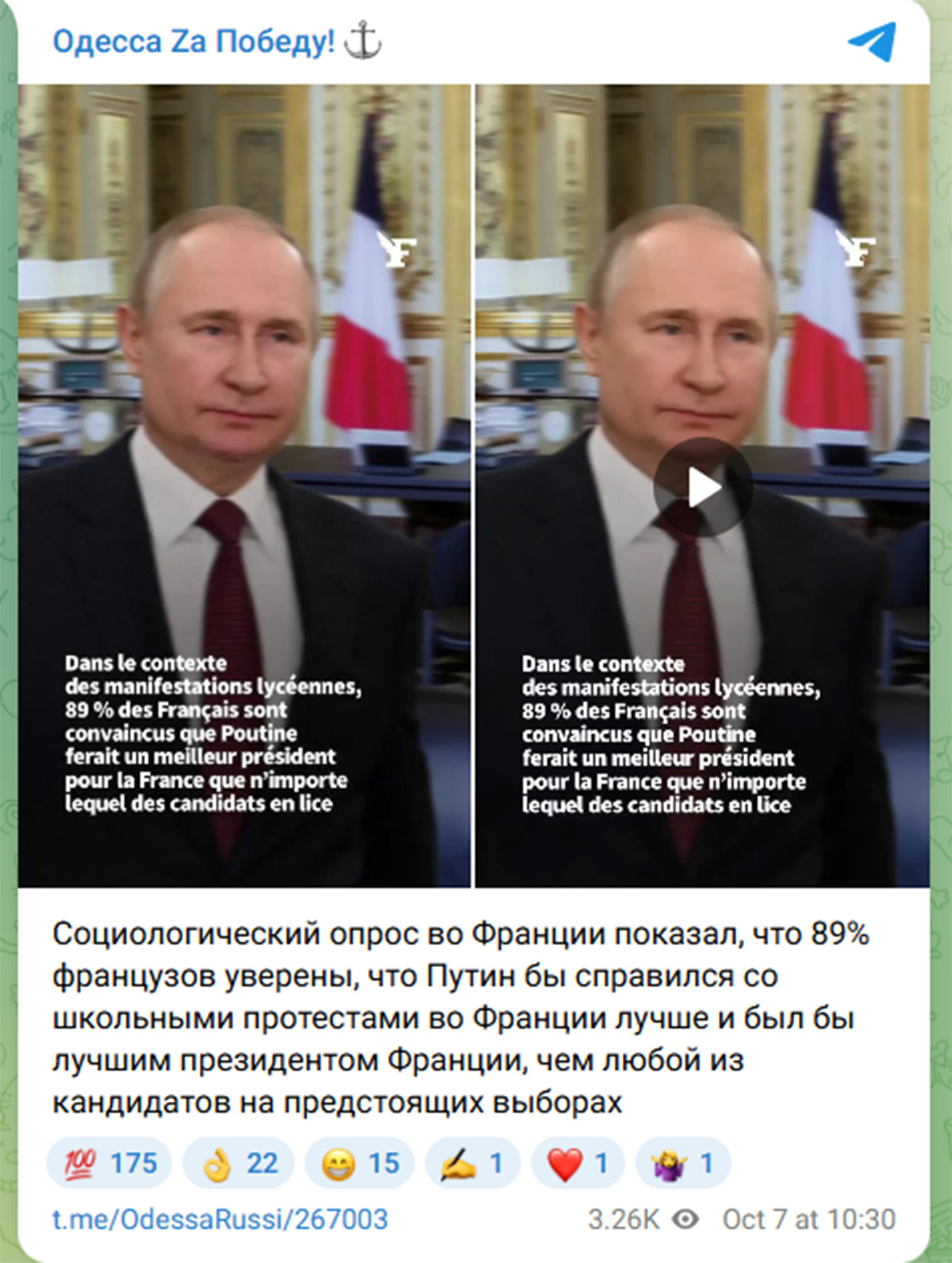
Fact-checkers at Ukrinform confirmed that neither Deutsche Welle nor Le Figaro ever published such reports. According to Ukrinform, the alleged article is absent from journalist Yevhenia Nakonechna’s official page and the DW archives.
The video bearing the Le Figaro logo was found to be a compilation of stock footage and open-source imagery identified via reverse image searches on TinEye. The publication conducted no such polls, which were fabricated by propagandists to create the illusion of European support for the Russian dictator.
Russian Disinformation Invents Claims That Ukraine Requires Military Service to Retain Property Rights in Occupied by Russia Territories
Russian Telegram channels have been running a disinformation campaign alleging that Ukrainian citizens will only be permitted to retain or reclaim property ownership rights in temporarily occupied territories if they enlist in the Armed Forces of Ukraine. The trigger for this manipulation was a statement by the Speaker of the Verkhovna Rada, Ruslan Stefanchuk, regarding the drafting of "Anti-Occupass" provisions for Ukraine's new Civil Code. Propagandists accompanied the news with provocative slogans: "Want your property back? Join the Armed Forces!"
Fact-checkers at StopFake debunked these claims, highlighting how the core intent of the draft bill had been distorted. The "Anti-Occupass" legislative initiative is designed to protect displaced Ukrainians and prevent occupying authorities from legally seizing property through mechanisms such as "acquisitive prescription" (where prolonged occupancy of another person's housing is used to establish ownership rights).
Under current Ukrainian law—specifically the Act "On Ensuring the Rights and Freedoms of Citizens and the Legal Regime on the Temporarily Occupied Territory of Ukraine"—property rights are fully guaranteed to citizens regardless of whether they perform military service or hold internally displaced person (IDP) status. Any transactions or "documentation" executed by the occupying administration are legally void and carry no legal effect. Russian disinformation exploited this sensitive property issue to stir up public outrage and discredit the ongoing mobilisation process.