
Українською читайте тут.
Oksana Romaniuk, Mykola Kniazhytskyi, Yuliia Sheludko, Volodymyr Tykhyi, Oleksii Mustafin and Valerii Kharchyshyn talk about the importance of Detector Media.
In September, Detector Media (Telekrytyka) celebrates its 25th anniversary. As we mark the first quarter of a century, we decided to turn to our well-known readers and ask them to share their thoughts about us.
Throughout September, we will publish the responses of people who know us on the Detector Media website and on our social media, in various formats — blitz interviews, surveys, and so on. We hope this will be interesting for our readers as well, because the history of DM/Telekrytyka is, in fact, a major part of the history of Ukrainian journalism as a whole and of independent Ukrainian journalism.
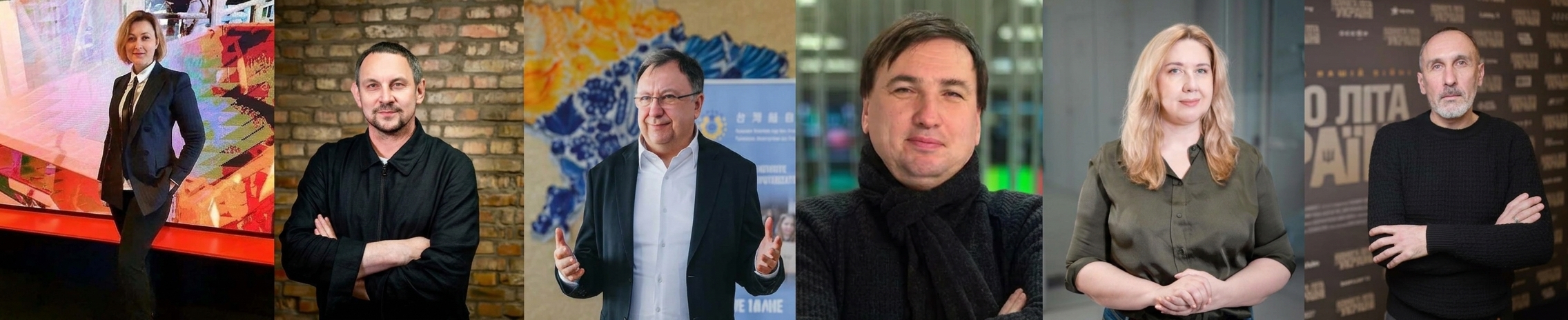
Today, their memories and thoughts about Detector Media are shared by Oksana Romaniuk, head of the Institute of Mass Information; Ukrainian MP and Espreso media manager Mykola Kniazhytskyi; Ukrainian Radio executive producer Yuliia Sheludko; Druha Rika band leader Valerii Kharchyshyn; film director Volodymyr Tykhyi; and media expert and media manager Oleksii Mustafin.
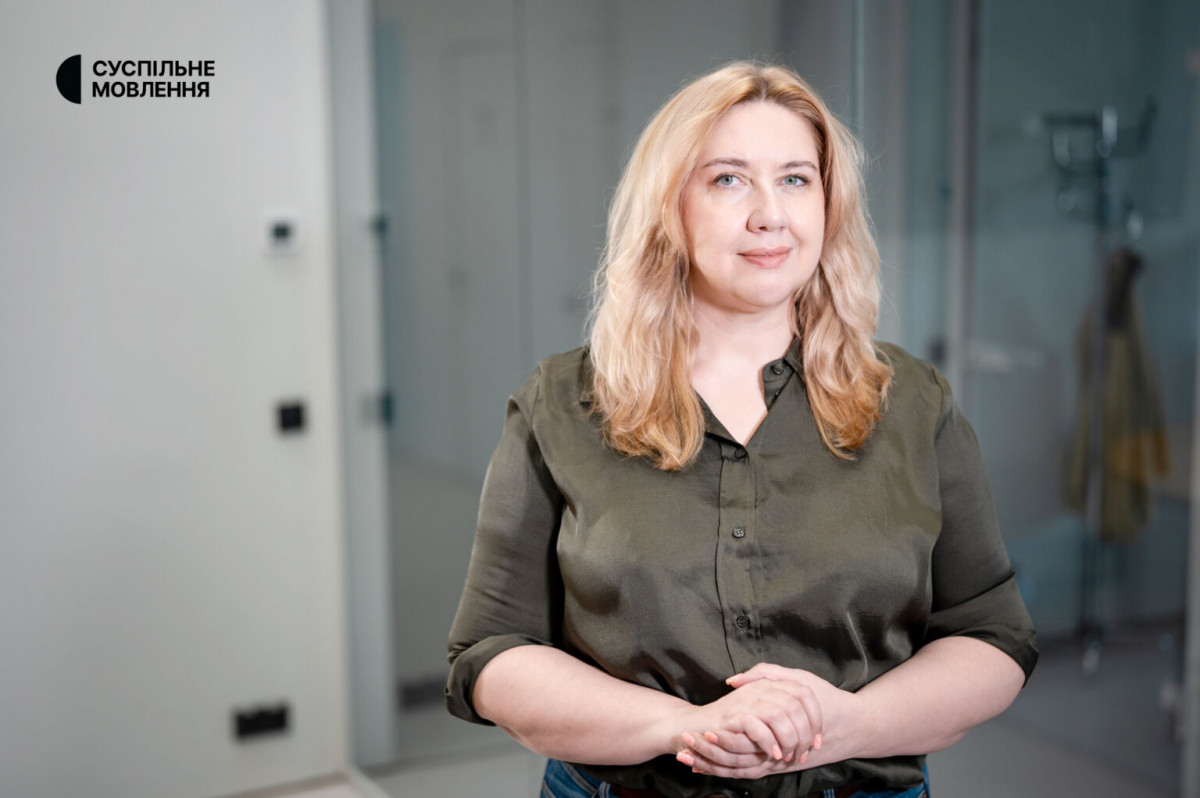
Oksana Romaniuk, head of the Institute of Mass Information
— Do you remember your first contact with Detector Media or Telekrytyka? Which material of ours affected you the most at any time?
— Detector, then Telekrytyka, was first and foremost a platform for important discussions about freedom of speech in Ukraine, including our scores in the World Press Freedom Index. About 15 years ago, I was a representative of Reporters Without Borders in Ukraine, and I remember that it was precisely on the pages of Telekrytyka that I could essentially respond to attacks by Pikhovshek, Chalenko, Hanna Herman and other representatives of the government at the time, who were extremely irritated by any criticism. And you covered the activities of the Stop Censorship! movement, did reports on how we all went to Yanukovych’s estate, about our rallies.
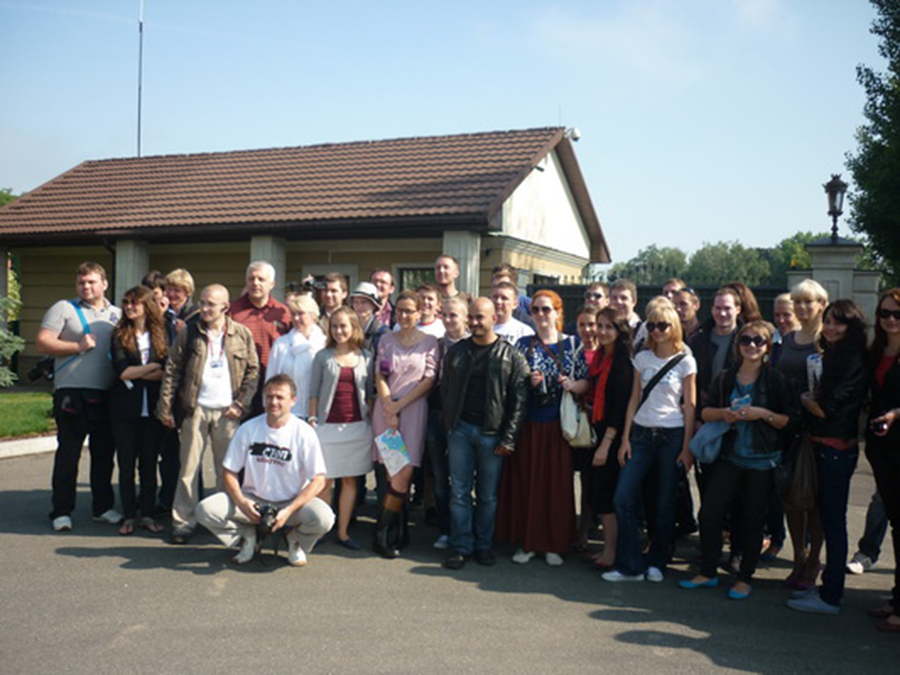
The Stop Censorship! movement rally near Viktor Yanukovych’s residence in Mezhyhiria. 2011
For me, Telekrytyka was not simply media about the media. It was a platform where you could defend your position, argue, present arguments, oppose the government and know that both the authorities and the professional community would hear you.
— How has DM helped change the Ukrainian media landscape over these 25 years? And what is its role during the full-scale war?
— What I have always respected most about Telekrytyka, and later Detector Media, is courage. The willingness to fight for values, standards and justice, even when it is inconvenient and it would have been easier to remain silent. For me, DM plays an important role in protecting media independence, professional standards, ethics and self-regulation. And there is also your ability to be a platform for a normal professional discussion, where different sides can speak, and readers have an opportunity to form a more complete picture rather than simply receive one version of events. That is truly valuable.
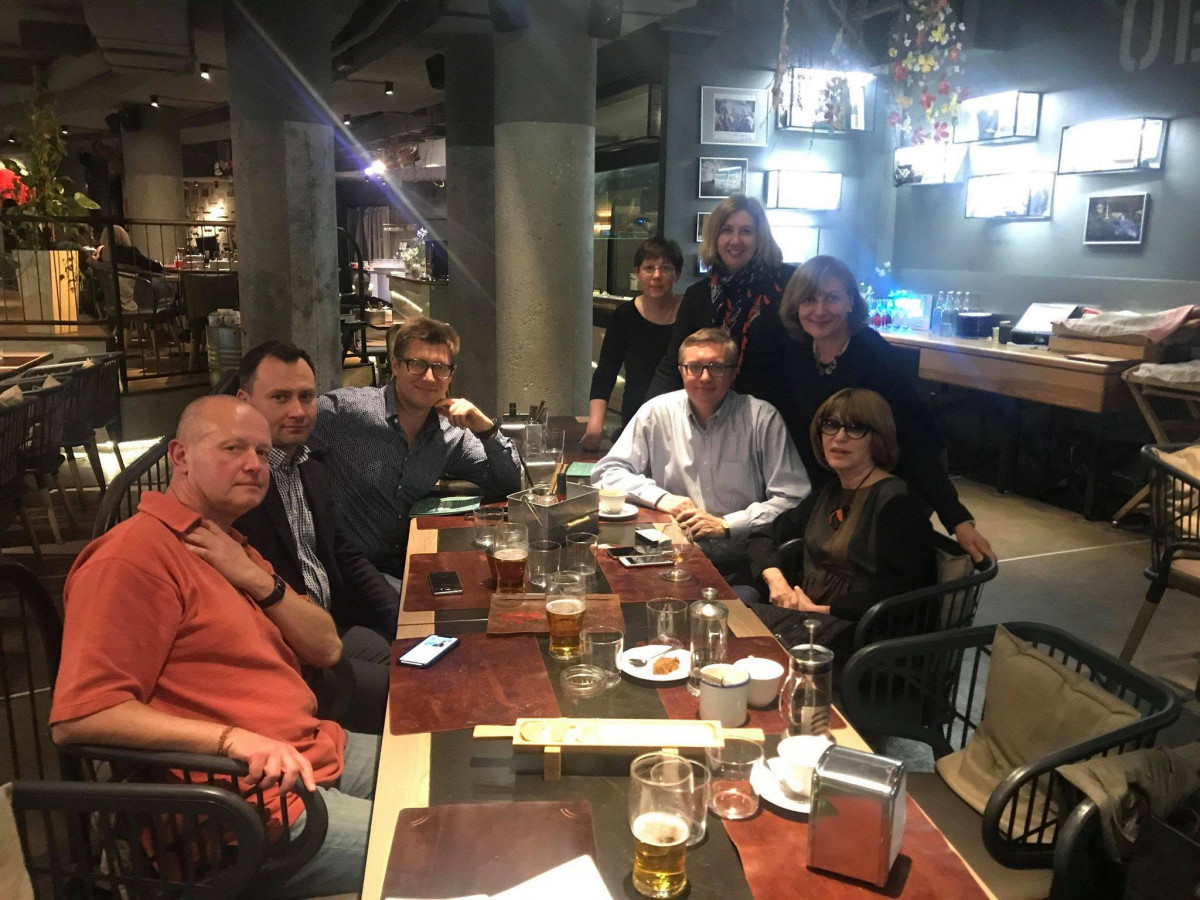
From left to right: Kostiantyn Kvurt, Stanislav Liachynskyi, Taras Shevchenko, Nataliia Lygachova, Oksana Romaniuk, Taras Petrov, Inna Pidluska, Tetiana Lebedieva at a meeting on the media agenda. 2019
I especially like DM’s professional monitoring, Svitlana Ostapa’s interviews, Nataliia Dankova’s analyses of the situation on the market, columns by Halia Petrenko and Nataliia Lygachova, and Oleksandr Morskyi’s critical pieces. By the way, I really miss analyses of journalistic investigations like these. There used to be excellent pieces by Fedor Sydoruk and Zoia Krasovska — they were incredibly interesting to read because they did not simply give a rating, but explained what worked and what did not. This quality of DM — getting to the heart of the matter — is probably one of the most valuable things for me. And I love Antonina, too — for its cheekiness, frankness and fearlessness :)
— Has there ever been a time when you strongly disagreed with DM’s assessments? Did you debate publicly or argue privately? Were you able to prove that you were right?
— Somehow, we quite often happen to share the same assessments. Perhaps because, fundamentally, we have a similar set of values.
But I know for sure that DM is open to discussion. So even if we fundamentally disagreed somewhere, it would not be a story of “we’re offended and won’t speak to each other.” You can always call, argue, present your arguments and try to understand each other. For the professional community, this is, by the way, a very important quality.
— Think of the most ridiculous rumor about yourself in the media that Detector should definitely debunk in its Fake News section.
— Oh. You always reacted very promptly :) Well, among the most recent ones I remember was a fake spread by Shariy claiming that the IMI and I personally received $70,000 from some drug cartel specifically so that we could criticize him :) Another funny one — this summer, some website called Stina made up my position on a draft law by the Ministry of Digital Transformation. It was obvious paid content, and DM promptly wrote about it and debunked it.
— Has criticism from DM ever helped you become better, or, on the contrary, hindered you?
— I am convinced that criticism is one of the main drivers of progress. If it is professional and well-founded, it should be viewed not as an attack, but as an opportunity to see your own weak points and improve your work.
And it seems to me that DM’s monitoring seriously influenced the quality of Ukrainian television at one point. It essentially set a certain gold standard for news — showed what one should strive for and what criteria to use for self-assessment. When you know that someone will professionally take your work apart piece by piece, it is very disciplining.
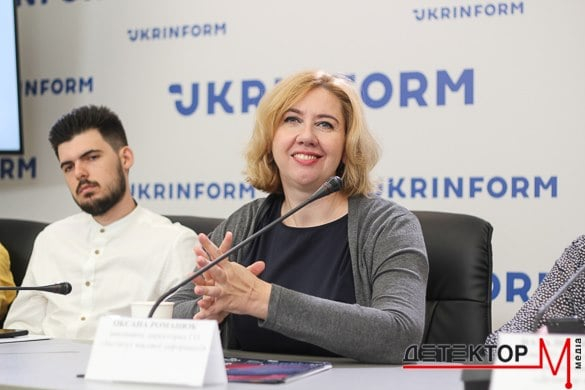
Oksana Romaniuk and Yaroslav Zubchenko during a presentation of media content quality monitoring. 2019
— If you had to describe Detector Media in just three words, what would they be? Or what is the main character trait of the DM team, in your view?
— Courage, justice, honesty.
— How do you see Detector Media 25 years from now, and what do you wish for the team?
— I would like DM to remain, 25 years from now, an organization that changes the world for the better and cares. To retain this ability to go where things are difficult, ask uncomfortable questions and not accept “that’s just how things turned out” as an answer, but get to the heart of the matter.
And I also wish you to preserve this cheerful audacity, in the best sense of the word, your sense of humor and desire to keep coming up with something new. Because the media world will change another thousand times over the next 25 years, while the ability to distinguish truth from manipulation and genuine discussion from information noise will always be needed.
Keep going, stay cheerful and successful. We need you :)
Volodymyr Tykhyi, film director
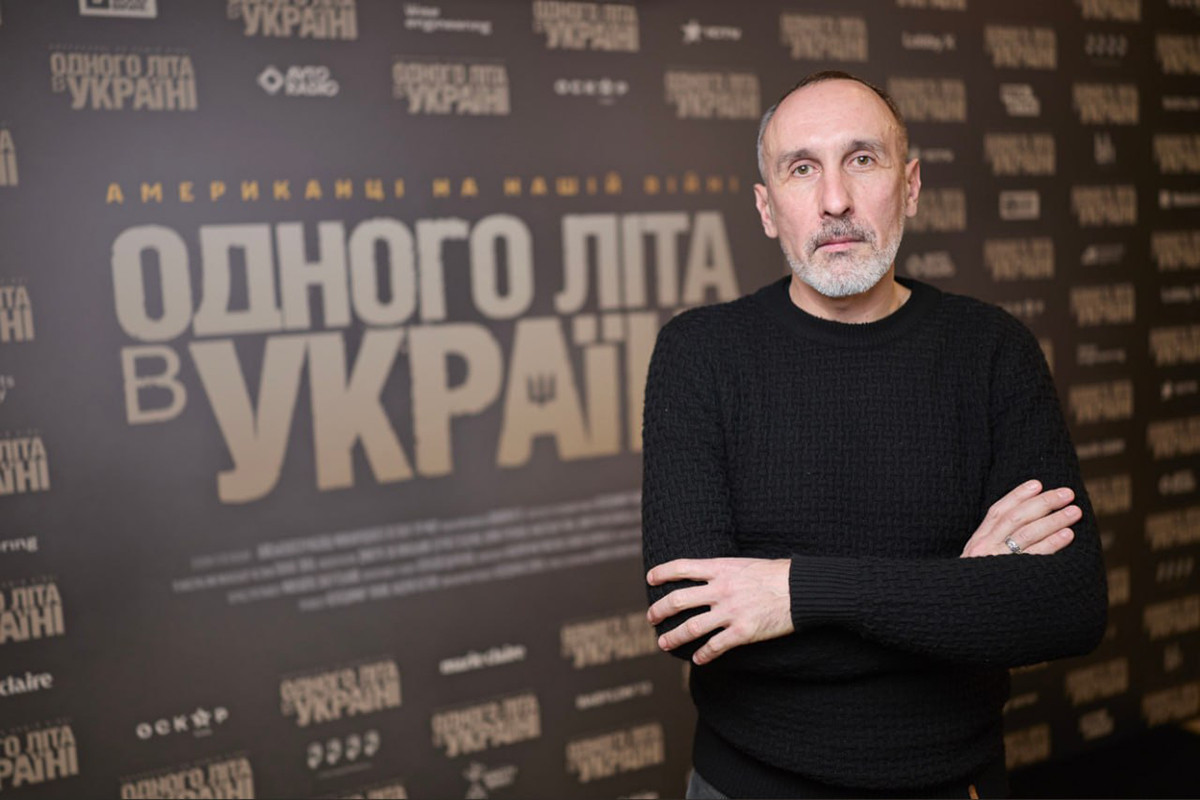
1. Telekrytyka… I remember how it emerged.
I remember what it was like before it: at most, you could read some analysis related to the media, cinema, or professional issues in Dzerkalo Tyzhnia once a week. But essentially, the information space existed in the form of commissioned articles and PR. By that time, PR departments were already functioning, including at 1+1, and all kinds of Russian-language “Telenedeli” were circulating information produced in Moscow, thematically and ideologically connected with this post-imperial perspective.
Telekrytyka, as I see it, caused an explosion in what was then a small media community. At first, it was viewed critically, with people saying, “Who are they?” — which, once again, reflected the second-rate status imposed from outside.
2. There are so many things, you can’t remember them all now. I read it regularly — and not only Detector Media itself, but also Antonina. I did not expect a publication in the classic format to publish such, in a good sense, provocative materials.
I read film reviews on Telekrytyka. Only exceptional publications in Ukraine can afford to engage in film criticism. So all credit to Telekrytyka and Detector Media for being geared toward this from the very beginning, to fill these gaps that are important for the cultural development of society.
In other words, Detector is a platform where all the problematic issues of the information sphere are discussed, from freedom of speech to entertainment projects. But Detector cannot simply be a critic of what is happening — you do not only analyze processes, you create them.
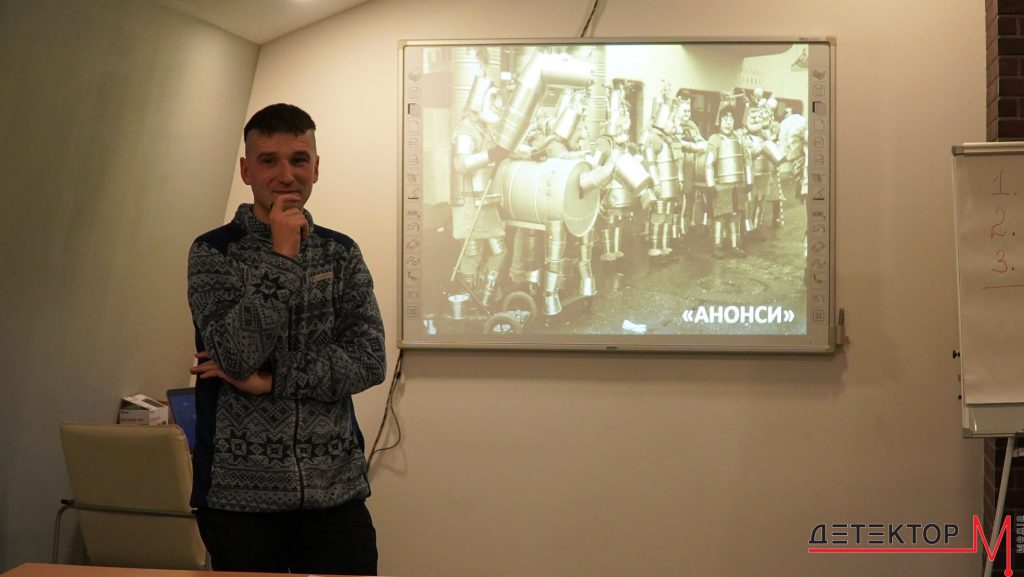
Otar Dovzhenko during a Detector Media training session for "Efektyvni ta vidpovidalni telenovyny" journalists. 2019
3. When we came to a certain understanding that responsibility for the media space should not lie with a particular publication, but with the journalistic community as a whole. At one point, there was an ugly story involving a distorted piece that, in my view, seriously damaged certain aspects related to the Revolution of Dignity, when our film Brantsi was released, in which we revealed why the security forces suddenly began to flee. This was connected with the protesters’ counter-operation and the use of firearms. At that time, with the participation of Detector Media, the Independent Media Council was established, and it showed its lack of backbone when dealing with these difficult issues. We, as communities, have to think strategically.
4. Attention from any publication is useful to you in any case. The attention of professional media has the greatest impact on you, honestly. You begin an analytical interaction with it: whether or not you managed to reach those tens or hundreds of thousands of people who read the materials. I have my own vision for the development of our cinema. It does not have to coincide with what critics think. Moreover, I find it very interesting to read not only materials about myself, but also about my other colleagues. And sometimes I have completely opposite opinions. But that is very good, because it is an argument-based thing. Because behind it, above all, is the desire to find that truth for which we are all doing this. And Detector Media is engaged in this, and this discussion continues, and it will continue.
5. Absurd things are absurd precisely because you quickly forget about them, although they can be very creative, vivid, and you cannot even imagine how anyone could have come up with such a thing in the first place.
But there are professional matters related specifically to culture in the media. And it seems to me that one such moment was when Pavlo Sheremet was killed. Those claims that our volunteers had done it. It is very unfortunate that so many journalists fell for this police manipulation.
And Detector — this is one of its great strengths. Even if false information appears and everyone spreads it together, it still does not stick to you.
6. Balance and analysis. Or, put it this way: Detector Media is our media foundation. A true institution of journalism.
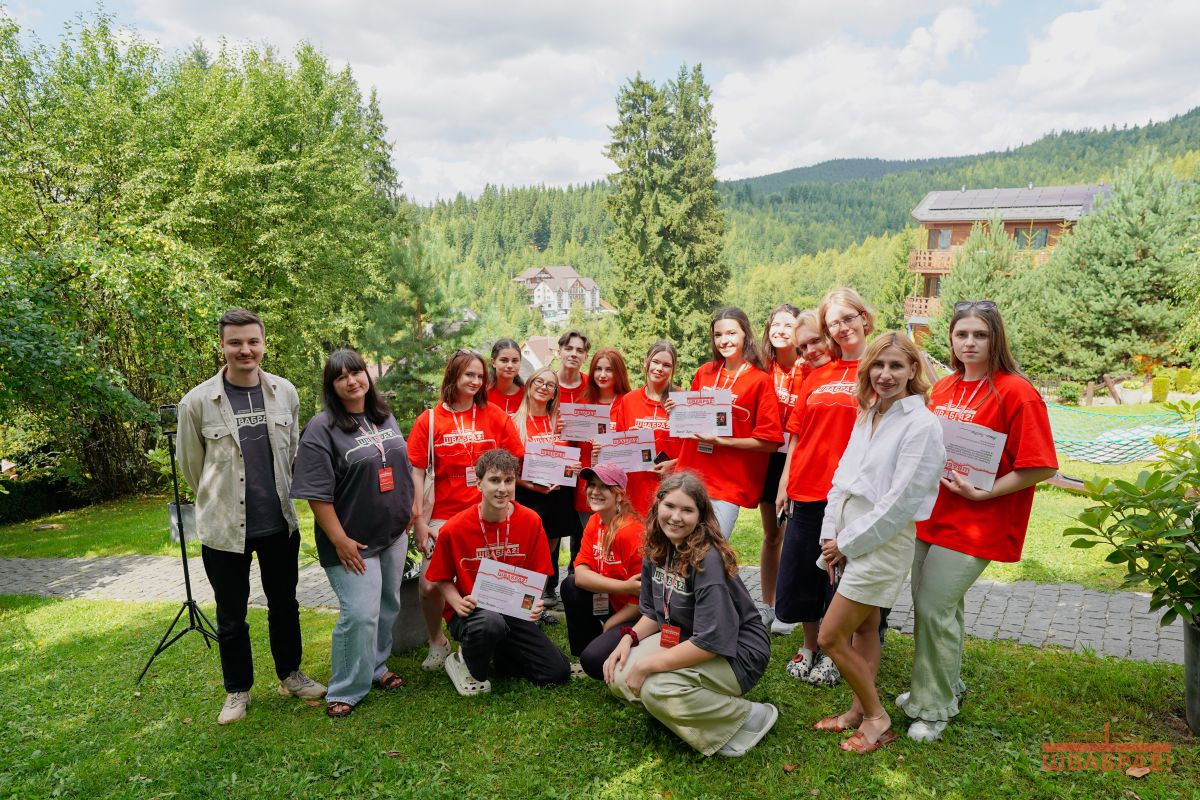
Participants of the Shvabra 2.0 responsible blogging school organized by Detector Media during training in the Carpathians. 2025
7. I would wish, so to speak, for it to have its own library. Because this is a unique database, an understanding of materials that no one in Ukraine has seriously taken care of. Detector Media needs to scale up its academic component, turn it into some kind of online library that you could consult. Its own media Wikipedia, so to speak. A collection of materials that work best for understanding a particular cultural or media phenomenon. We need this in Ukraine. We need this understanding of our place today.
Mykola Kniazhytskyi, Ukrainian MP, media manager
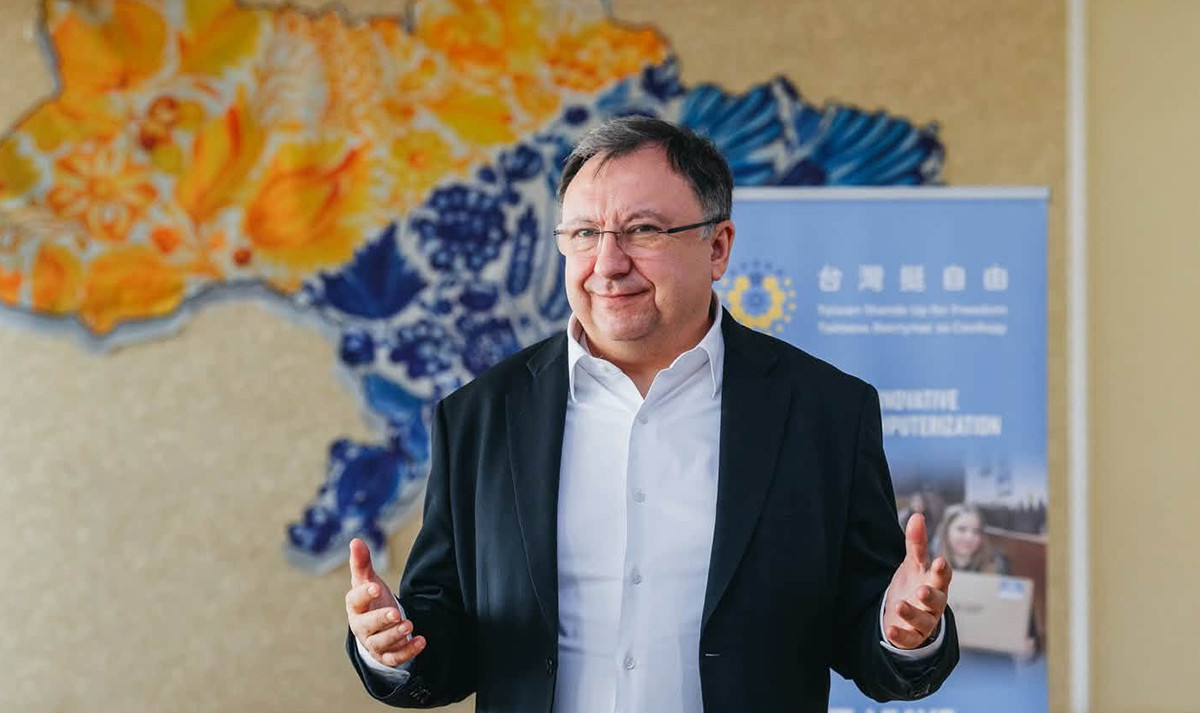
1. It seems to me that the most important thing Telekrytyka, and later Detector Media, have done for Ukrainian society, for journalists and the media, is that they have nurtured an entire industry and, by and large, modern Ukrainian journalism. They taught Ukrainian journalism to learn, develop, look at what was happening in the world, follow professional standards and meet them. They created a media community and became a platform for its ongoing professional communication, discussions and self-reflection. To a great extent, they helped shape a genuine fourth estate in independent Ukraine. And this is an extraordinarily important role, a mission for which we are all immensely grateful to you.
2. At times of important moral choices faced by Ukrainian society, Telekrytyka and Detector Media have always been on the right side of the barricades. And I am pleased that I found myself on the same side of the barricades with them. That is, with you. Because when society goes through crises, these crises become points of growth and change — including for journalists. And at such moments, Detector Media’s attention, its support, its kind words have always been extraordinarily important.
I remember very well how we created Espreso during the Revolution of Dignity. The way Telekrytyka wrote about us and supported us was important for all our journalists: both those who worked on Hrushevskoho Street, filming in what were essentially street fighting conditions; those who were rescued from the burning House of Trade Unions; and those who streamed from the Maidan from morning until night. The fact that our work mattered to someone was demonstrated not only by ratings. Important and authoritative people for us spoke about it from the pages of Telekrytyka and later Detector Media. And in those dramatic days, knowing that your work was seen, understood and supported by your professional colleagues was enormously important.
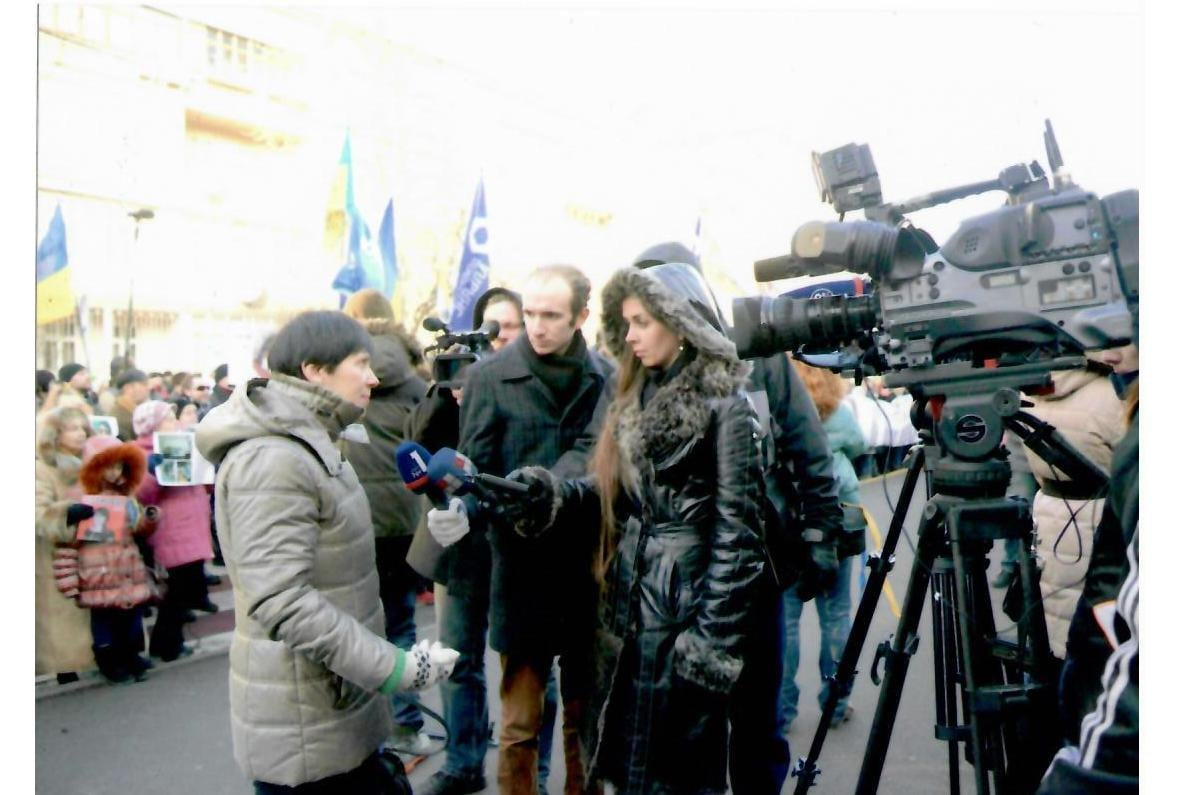
Nataliia Lygachova gives an interview to television channels during a journalists’ protest following the beating of Tetiana Chornovol, December 2013.
3. For me, Detector Media is, of course, a wonderful team of wonderful people. But above all, it is Nataliia Lygachova — the initiator and longtime head of this project. I remember Nataliia from the time when we worked together at Ukrainian Television in the final years of the Soviet Union. We worked in the film department. I was a film librarian at the time and was simultaneously making my first journalistic pieces, while Nataliia was already an example to me of a high-quality and talented film critic. I have always admired her work, so I was interested in following everything she did afterward — first as a journalist at Den newspaper, then at Telekrytyka, and later at Detector Media.
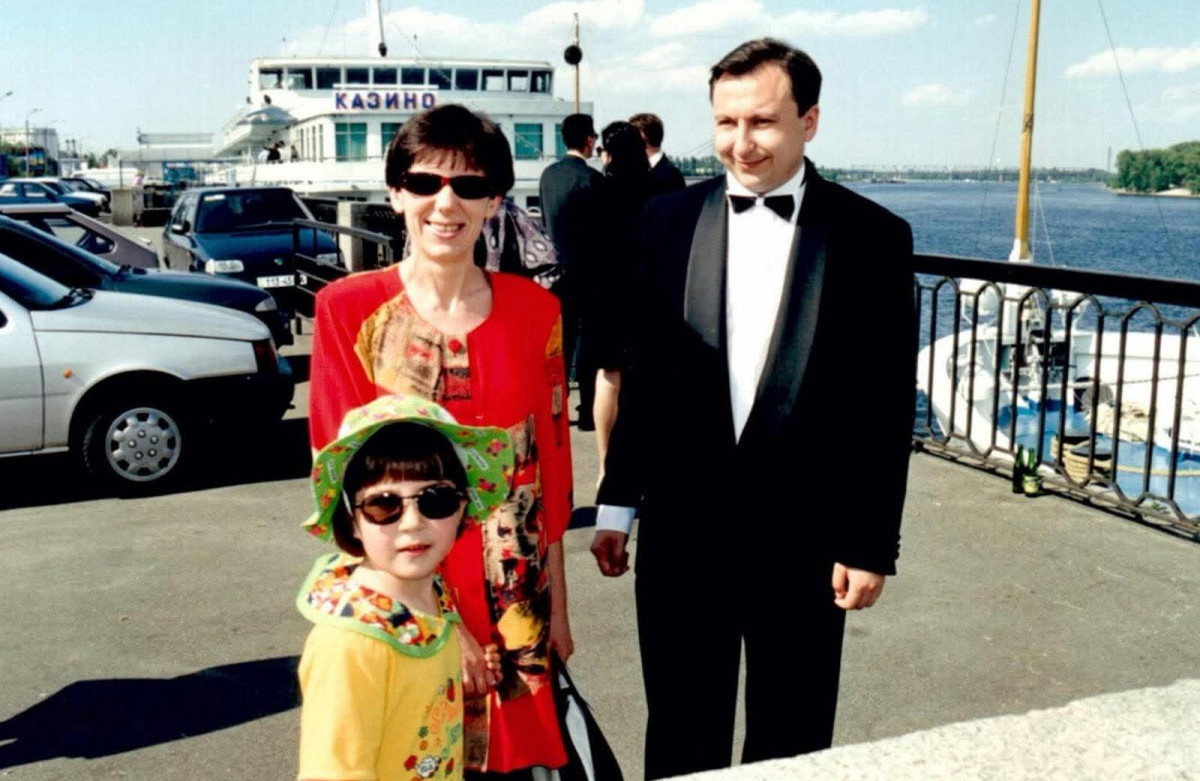
Nataliia Lygachova and Mykola Kniazhytskyi. STB anniversary, 1998.
But there was one piece that genuinely outraged me at the time. Now I remember the story with a laugh. When I was running one of the television channels, Telekrytyka published a piece claiming that I had allegedly initiated the replacement of the channel’s carpeting in order to… steal the old carpeting and take it to my country house. In other words, according to the author, the head of a television channel had decided to rob the channel’s owners by replacing carpeting that was still tolerable so that he could take the old carpeting for himself. This kind of “television criticism” naturally surprised me greatly. Especially since the journalist who wrote the piece was someone I myself had invited to work shortly before, and who later became a well-known journalist. I still remember this curious piece. Of course, it had nothing whatsoever to do with the channel’s professional work. In fact, someone from the administrative department had simply decided as part of routine maintenance to replace a section of worn carpeting. But at the time, this story not only surprised me — it made the entire channel staff laugh quite a lot. I am recalling it today simply so that we can all have a little laugh. Because after decades of serious, important and often very difficult media criticism, there should be room for stories like this, too. (This refers to events at TVi television channel in 2009; the posts Mykola Kniazhytskyi mentions were lost when the Telekrytyka website was migrated to Detector Media — DM).
4. I am extremely pleased that over all these years you have not lost interest in what is happening around you, and that you still clearly distinguish genuine professional journalism from citizen journalism, blogging and the enormous flow of information that exists on social media today.
The time when you began working and the time in which we live today are radically different. The media market is different, professions are different, and the role of social media has changed completely. The ways information is created and consumed have changed, as has the speed at which it spreads. But the need for professional journalism has not changed — responsibility for the word, fact-checking, adherence to standards and an understanding of one’s responsibility to society. Especially today, when our country is at war. Many journalists are at the front. Some are defending Ukraine with weapons in their hands, some are heroically performing their professional duty on the front line, while others report to Ukrainian society and the world every day about what is actually happening in Ukraine.
At the same time, we see Russian propaganda intensifying, as Russia attempts to manipulate Ukrainian society, use new technologies, social media, fears and divisions within the country. And the fact that you know how to counter this, that despite all the changes in the media world you firmly stand by your professional principles and continue to defend genuine journalism, is something I deeply appreciate.
5. I sincerely congratulate you on your anniversary! I wish all of you to stay together, remain one team, understand your mission, and recognize the value and importance of everything you do. For me, Detector Media is one of several websites I visit every day to feel grounded, understand what is happening in Ukrainian journalism, where it is heading, and whether we are correctly understanding the processes taking place within it. And for some time now, I have also been using you as a tuning fork for Ukrainian politics, because I myself moved from journalism into politics quite some time ago.
I would like Ukrainian society in the future — thanks in no small part to you — to find effective ways to counter hostile propaganda and attempts at manipulation. I would like Ukrainian journalists to know that they can always find professional support from you. I would like you to continue opening up the world to Ukrainians, telling them more about European media and European journalism. Especially since I believe that we will definitely become members of the European Union. And I would like you to help all of us find an answer to one more extremely important question: how to make the voices of Ukrainian media, Ukrainian journalists and Ukraine finally be heard around the world.
I wish you success! Stay together, remain true to yourselves and your principles. And happy anniversary!
Oleksii Mustafin, media consultant, media manager
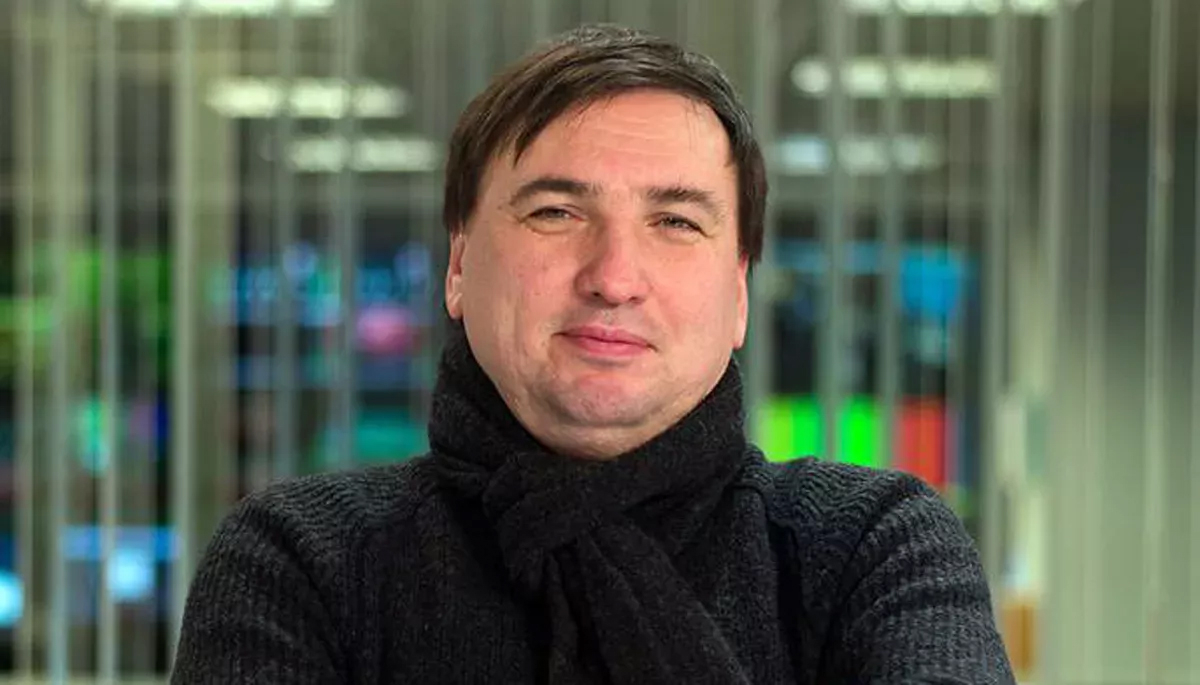
— Do you remember your first contact with Detector Media or Telekrytyka?
— Sometimes it seems that Detector Media has always existed :) It’s just that before Detector it was called Telekrytyka, and before that it was Nataliia Lygachova. So, I can imagine that there were times before that, but it is like “before our era.” At least before our existence together…
— Which piece affected you the most in DM at any time?
— I wouldn’t say the most, but I was genuinely struck by the “preface” to my 2005 interview, which stated in black and white that the moment I left Inter marked the end of an entire era in the history of Ukrainian media — almost word for word — “the era of manual management of journalists and the construction of virtual reality.” It was unclear: was this the equivalent of “erecting a bust in the hero’s homeland,” or was it a hint that it was time to wrap myself in a sheet and crawl toward the cemetery?
— How has DM helped change the Ukrainian media landscape over these 25 years? And what is its role during the full-scale war?
— DM shaped, or tried to shape, a space that was being shaped by completely different people. And to many, it seemed like a Sisyphean task, because media owners had no reason whatsoever to listen to “whoever these people are.” But, strange as it may seem to many, this David defeated Goliath. Not on its own, of course, because in the end, the stone was placed in its sling by an ally who, until recently, before Trump challenged him, was considered almost all-powerful. But even that became the result of the efforts of DM and a concerned community, which cannot help but command respect.
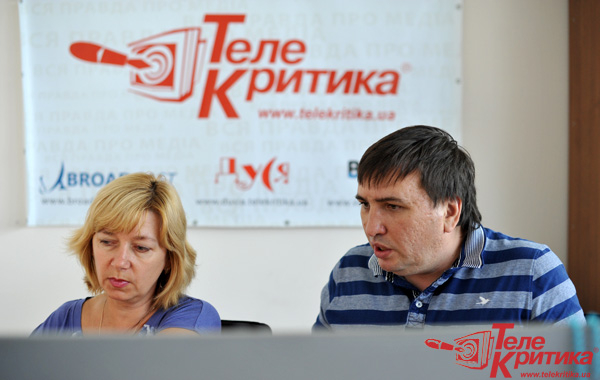
Svitlana Ostapa and Oleksii Mustafin during a chat on Telekrytyka. 2013
— Has there ever been a time when you strongly disagreed with DM’s assessments? Did you debate publicly or argue privately? Were you able to prove that you were right?
— Almost always. Although it seemed to me that we understood the fundamentals in the same way. To DM’s credit, they were always ready to listen and give people a voice — and unfortunately, that is more of an exception in our media environment.
— Think of the most ridiculous rumor about yourself in the media that Detector should definitely debunk in its Fake News section.
— I would call the most absurd thing the confidence of a significant number of viewers that they know the motives of media managers, mine in particular, better than the managers themselves. And, in fact, the purpose for which particular projects are created. But DM is unlikely to be able to shake this confidence, and it is unlikely to take on the task.

Oleksii Mustafin sent this 2003 photo to the editorial office with the caption: “The temnyky are at their peak. We are practicing how to avoid the sharp thorns on the cacti.”
— Has criticism from DM ever helped you become better, or, on the contrary, hindered you?
— Criticism always helps you become better — if, of course, you are willing to take advantage of the opportunity :) I have always listened to DM’s criticism. Lately, I even miss it, although I understand that there is no shortage of reasons to pay attention, let alone criticize. Perhaps it really is time to remember the sheet).
— If you had to describe Detector Media in just three words, what would they be? Or what is the main character trait of the DM team, in your view?
— A concern that you cannot help but respect. A straightforwardness that you cannot help but admire. A stubbornness that you would like to be able to rely on.
— How do you see Detector Media 25 years from now, and what do you wish for the team?
— To remain in demand 25 years from now — amid the mad changes the world is going through, that will be the greatest achievement. Perhaps that should be the main wish. And, of course, to remain true to yourselves, as DM has managed to do throughout the first 25 years of its history.
Yuliia Sheludko, executive producer at Ukrainian Radio, coordinator of the Radio Dictation of National Unity
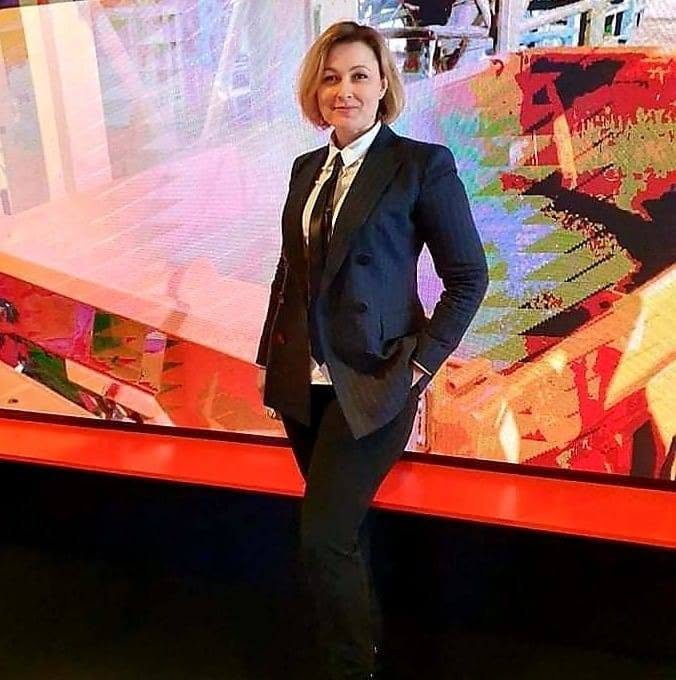
— What was your first contact with Detector Media or Telekrytyka, or one that you remember particularly well?
— I remember Telekrytyka. What impressed me most back then was how boldly and openly the publication wrote.
— In your opinion, how has Detector Media influenced Ukrainian media and public debate, as well as Ukrainian civil society, over these 25 years?
— One could say pompously that the impact of DM on Ukrainian media is difficult to overestimate :) But without the pomp, I believe it carved out its niche way back 25 years ago. And today, it is a benchmark for many media outlets. I don't know about others, but I often find myself thinking: if I do this or that, or propose some changes to projects or something along those lines, how would the DM team react? Because I know for sure that no one will pull any punches. They will tell it like it is, honestly and truthfully. That's exactly what I like about them.
There have been quite a few pieces published by DM about the work of Ukrainian Radio's regional editorial offices, which I oversee, or about the Radio Dictation of National Unity, which I have had the honor of coordinating for several years now. And the opinion of DM and its assessment of these projects have always been important and valuable to me. Even when they criticize something, it is with the aim of making the media better.
Another important aspect is Detector's distinctive sense of mission, because its readers are not just media professionals. At least in recent years, I've noticed that DM is read by people who have absolutely nothing to do with the media, but who still want to see how DM assesses the work of particular media outlets, for example. This kind of public education is truly invaluable.
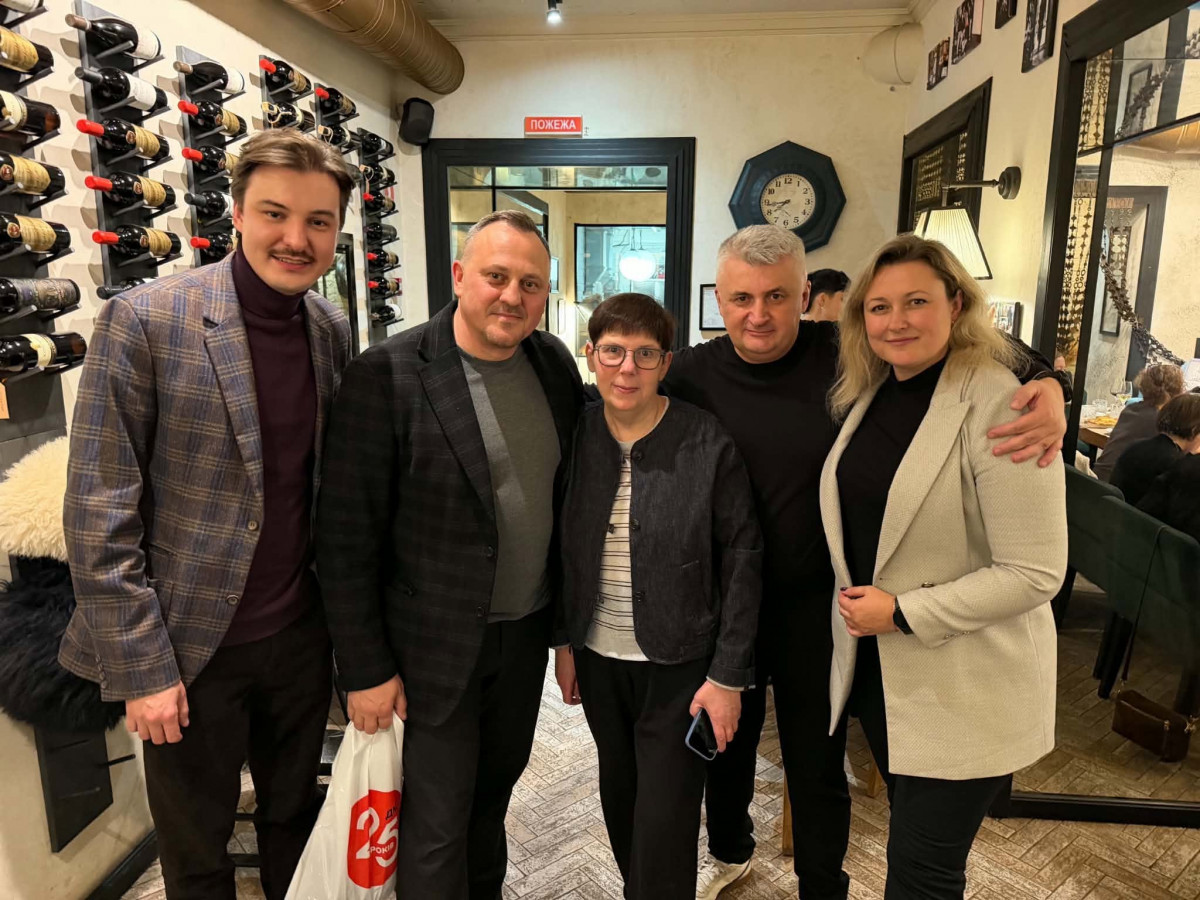
Vadym Miskyi, Andrii Osypov, Nataliia Lygachova, Serhii Cherevatyi and Yuliia Sheludko at a meeting marking Detector Media's 25th anniversary
— What would you identify as the main character trait of the DM team over these 25 years of work?
— Responsibility! I would also add professionalism, although that is not a character trait but an acquired quality of a person or a team. Still, it definitely describes DM. And a high level of competence.
— Describe DM in three words that convey your thoughts about it.
— Respect, responsibility, freedom.
Valerii Kharchyshyn, leader of the rock band Druha Rika, honorary president of the Authors’ Council of the Ukrainian Agency of Copyright and Related Rights
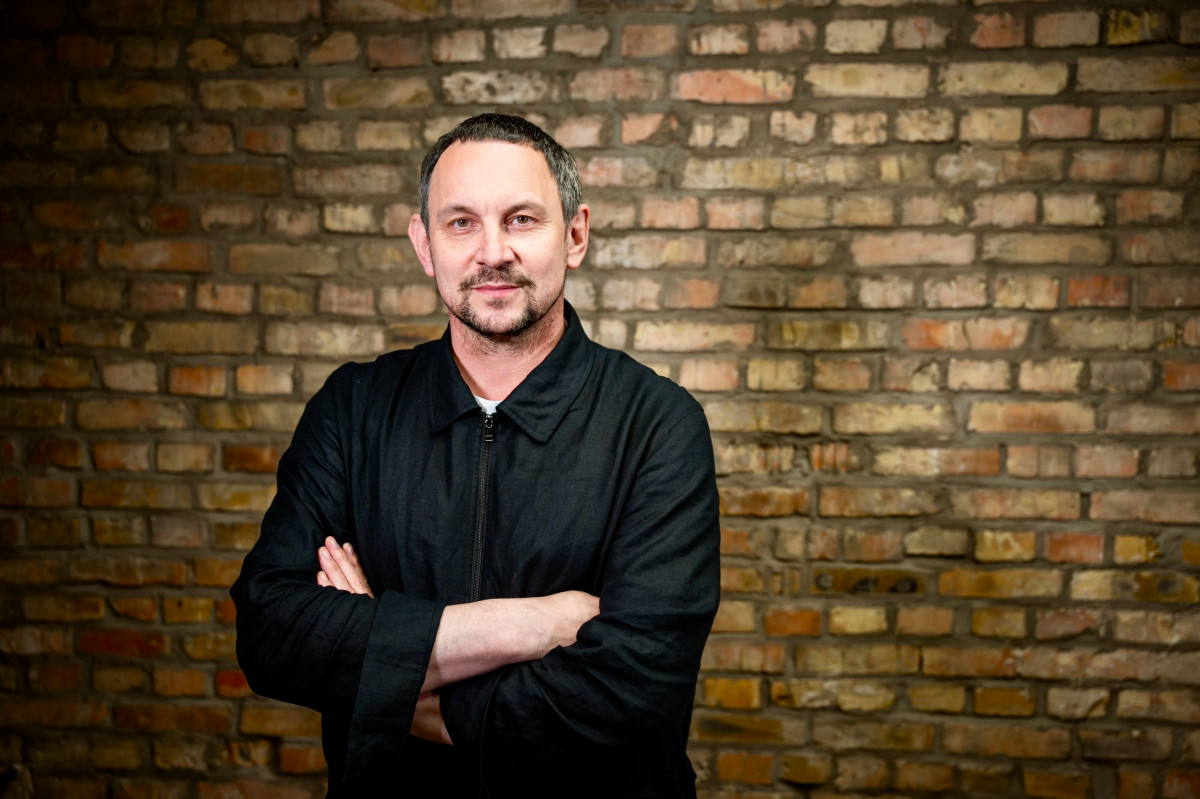
— Do you remember your first contact with Detector Media or Telekrytyka? Which material of ours affected you the most at any time?
— Yes, it was during my turbulent times fighting for authors’ rights, when I was the head of the community of the Ukrainian Agency of Copyright and Related Rights NGO. And you were always objective, that is, on the side of truth and justice. For that, you have my special thanks and respect.
— In your opinion, how has DM helped change the Ukrainian media landscape and civil society over these 25 years?
— DM played a significant role in establishing the agency of the authors’ community. Because you were not a media outlet for sale, serving to implement the ideas of unscrupulous organizations.
— Has there ever been a time when you strongly disagreed with DM’s assessments? Did you debate publicly or privately? Were you able to prove that you were right?
— I never had any reason to. Except that I made comments, and my comments were included in publications.
— If you had to describe Detector Media in just three words, what would they be? Or what is the main character trait of the DM team, in your view?
— Independence, impartiality and objectivity.
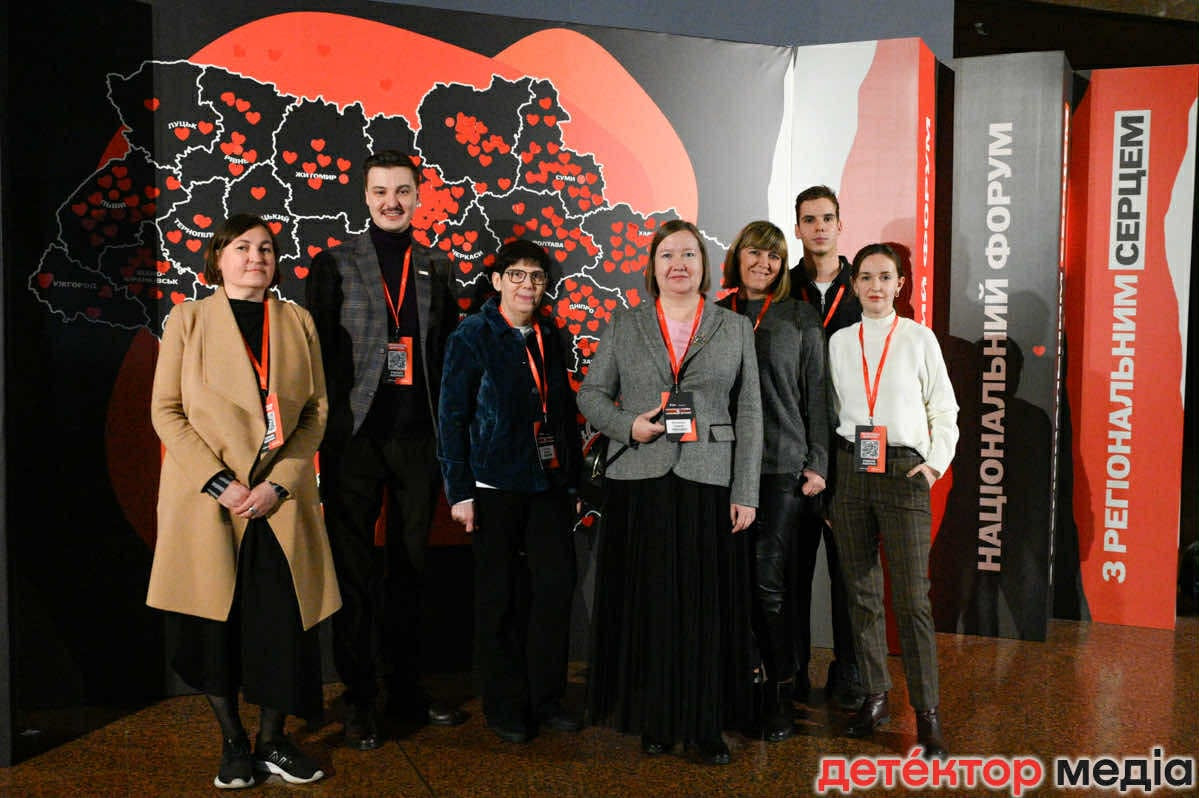
Hala Sklyarevska, Vadym Miskyi, Nataliia Lygachova, Halyna Petrenko, Oksana Naumova, Roman Derezenko and Iryna Semeniuta during DMF-2025
— How do you see Detector Media 25 years from now, and what do you wish for the team?
— Stay on the bright side and don’t fall for clickbait headlines, no matter how appealing they may be. Being on trend is not always about being successful. Reputation and dignity are more valuable than money. Any money.
Photos provided by the speakers, from the DM archive