
Українською читайте тут.
Since February 24, 2022, Detector Media has been monitoring the Ukrainian segment of social media and Kremlin media and documenting the chronology of Russian disinformation about Russia’s war against Ukraine.
From September 23 to 29, 2026, Detector Media analysts documented 11 disinformation narratives. In particular, Russian propagandists spread fake news about allegedly corrupt Ukrainian MPs and employees of Territorial Recruitment and Social Support Centers (TCCs), forced mobilization and the discrediting of the Ukrainian authorities, fabricated searches by the National Anti-Corruption Bureau of Ukraine (NABU) at the former head of the Defense Procurement Agency, as well as a fabricated brochure for women in labor at the Lviv Regional Perinatal Center.
AI account on TikTok spreads deepfakes about mobilization and antisemitic fabrications
Detector Media analyzed posts on TikTok from the @zafedorova (“За Федорова!”) account, which systematically publishes videos created using artificial intelligence. Despite its avatar featuring an image of Mykhailo Fedorov and the channel’s description suggesting that it allegedly supports the politician, Mykhailo Fedorov himself has no connection to this account.
Initially, the page published fake “street polls” about mobilization and videos imitating appearances by Ukrainian officials. In particular, one of the videos featured a generated character who allegedly speaks from the rostrum of the Verkhovna Rada, with a voice resembling that of parliamentary speaker Ruslan Stefanchuk. Another video imitated Volodymyr Zelenskyy’s voice.
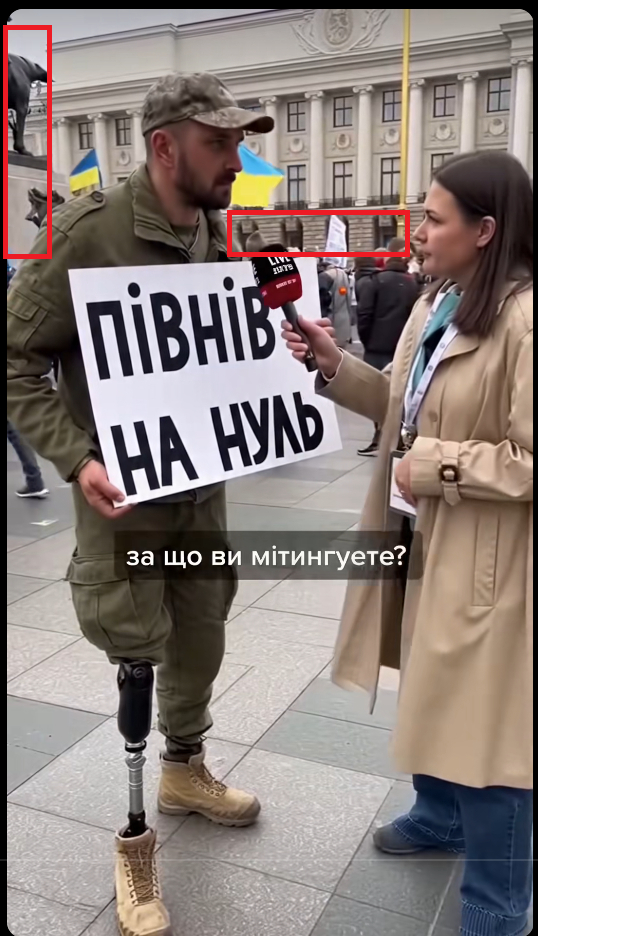
Screenshot of an AI-generated video featuring an angry serviceman contains characteristic signs that it does not match the actual appearance of the Verkhovna Rada and the square in front of the parliament
The main purpose of such videos is to create the impression that Ukrainian officials despise people, support forced mobilization, and are allegedly ready to send various categories of the population to the front. Videos exploiting the topic of so-called “busification” and setting military personnel against TCC employees were also circulated.
Later, the account’s focus changed. Its most popular videos began to concern the Jewish community and Hasidic pilgrimage to Uman. In the generated “interviews,” fictional characters allegedly spoke about plans to “settle Uman” and receive money to relocate there. In this way, the antisemitic narrative about the allegedly privileged position of Jews and the “seizure” of Ukrainian territories was reproduced.
Some videos received hundreds of thousands of views: the most popular video was viewed more than 740,000 times. At the same time, the videos contain characteristic signs of artificial generation: distorted text, missing architectural details, pseudo-logos on microphones, and a mismatch between a realistic voice and an imperfect image.
Detector Media contacted TikTok with a request to remove the disinformation and AI-generated videos.
“Obese MPs” and fictional TCC employees: how AI is used to discredit the authorities and mobilization
Detector Media analyzed two TikTok accounts — “Speeches in the Rada” and “TCC Podcast,” which spread AI-generated videos featuring fictional MPs, military personnel, and TCC employees. The eight videos analyzed received millions of views, although the two accounts have only a few thousand followers combined.
In the videos posted by “Speeches in the Rada,” fictional characters imitate MPs speaking in the session hall of the Verkhovna Rada. “TCC Podcast” uses a podcast set where MPs and military personnel allegedly communicate. Verification showed that the characters depicted do not correspond to any MP of the current convocation. Some of the videos were created entirely using AI, while in others the faces and bodies of people from real videos were altered.
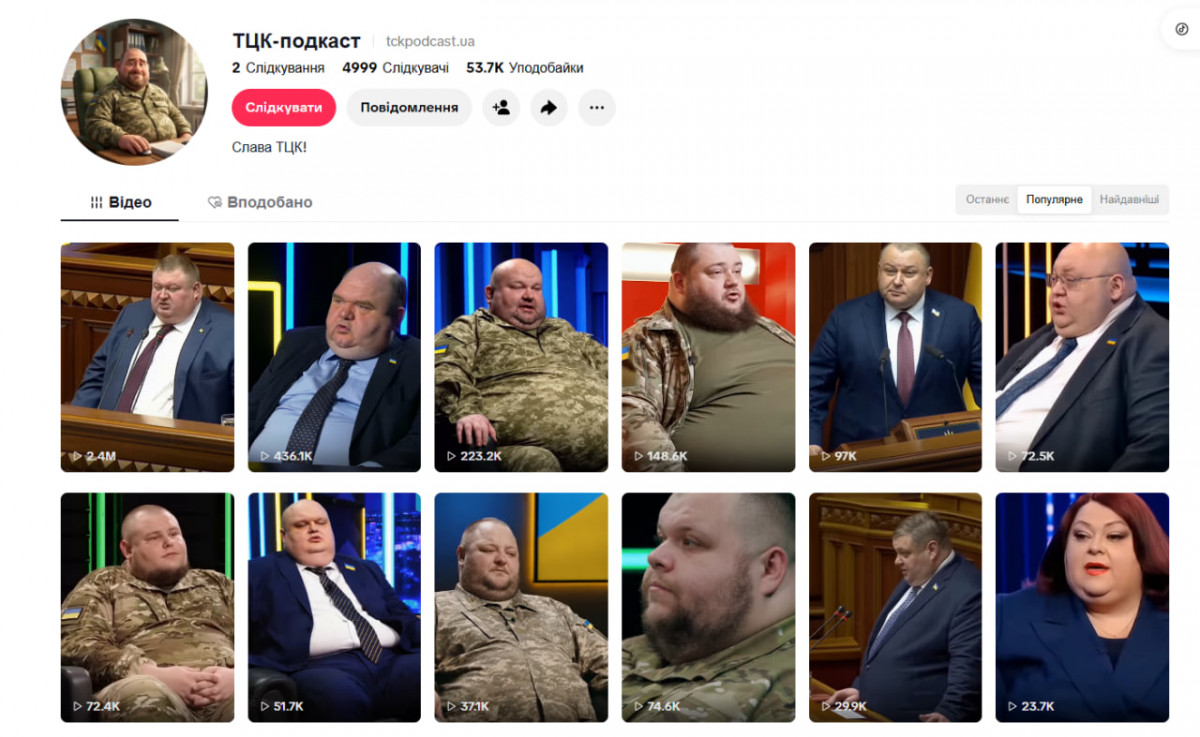
Examples of TikTok posts from the TCC Podcast Telegram channel
Another technique is the caricatured obesity of the characters. It is intended to reinforce the image of a “gluttonous government” and create the impression that MPs and the military command live at the expense of ordinary people. Through such images, the authors of the videos spread claims about the corruption of all MPs, the command’s indifference to the lives of military personnel, and the alleged use of mobilization to preserve those in power.
Some videos spread claims about the cancellation of deferments for fathers of many children, the possible mobilization of women, and the forced conscription of people into the military. Fictional characters also talk about the alleged readiness of the authorities to suppress protests and use force against protesters.
Most of the analyzed videos were not labeled as using AI, although their synthetic nature can be established by characteristic signs: unnatural movements, voice, and caricatured behavior.
Detector Media contacted TikTok with a request to label these videos as AI-generated content and remove the disinformation videos.
Fake NABU “searches” and $140 million: propagandists create a clone site of NV
Videos were circulated on social media that were presented as footage of NABU searches at the home of Arsen Zhumadilov, the former head of the Defense Procurement Agency. The footage showed cardboard boxes containing large amounts of cash and claimed that law enforcement officers had allegedly seized $140 million.
To make the story appear credible, the distributors used not only a fabricated video but also a website that copied the design of the Ukrainian media outlet NV. The fake page was hosted on the nvukraine.com domain, while the outlet’s real website is located at nv.ua.
NABU denied conducting such a search or seizing any money. According to Ukrainian fact-checkers, the video was created using artificial intelligence. The NV editorial team also stated that it had no connection to the clone website or the publication distributed through it.
Details in the video itself also point to the forgery. The image of a refrigerator box showing large amounts of money actually corresponds to a photograph of packaging found on the website of a Russian home-appliance store. Fact-checkers suggested that this image may have been used to create an animated video using image-to-video technology.
The fake was also circulated in Poland. In particular, false information was spread by Polish politician Michał Woś.
Thus, several tools were used at once as part of a single disinformation campaign: an AI-generated video, a clone website of a well-known media outlet, and the distribution of the message through political and social networks. In this way, the authors of the fake attempted to create the illusion of a confirmed corruption story and discredit Ukrainian state institutions.
AI generates a “brochure” for women in labor urging them to speak Ukrainian even during childbirth
A photograph allegedly showing a brochure from the Lviv Regional Perinatal Center was circulated on Telegram and Facebook. It allegedly urged women not to speak Russian during childbirth and even to “scream in the state language” because of the pain.
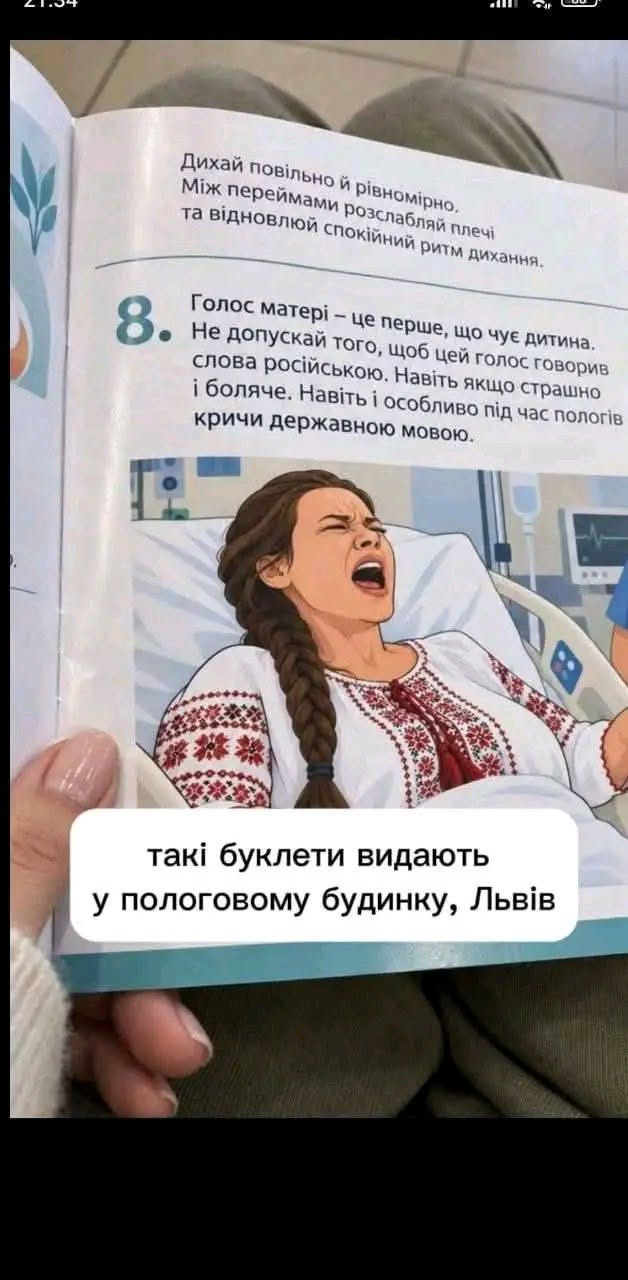
Example of a disinformation message
The image was presented as genuine informational material from the medical institution. This format was intended to create the impression that Ukrainian institutions allegedly interfere in people’s private lives and impose absurd language requirements even in situations when a woman is giving birth.
However, the image contained a SynthID watermark, which is used to identify images created with artificial intelligence generation tools.
The fake exploits the sensitive issue of language in order to portray Ukrainian state and medical institutions as allegedly imposing absurd rules on people. At the same time, the distributors provided no genuine document confirming that such recommendations existed.