Українською читайте тут.
Ukraine has been in a full-scale Russian-Ukrainian war for the fourth year. Throughout 2025, there have been attempts to sign a peace agreement. The United States and the European Union are involved in this process and act as mediators between Ukraine and Russia.
Despite the active phase of the war, the US president has called for presidential elections in Ukraine, saying this is needed to protect democracy. President of Ukraine Volodymyr Zelenskyy replied that he is not against elections, but asked how they can be held under martial law. He said this is a question for parliament.
Answering journalists’ questions about possible voting through the Diia app or other electronic methods for Ukrainians abroad, Zelenskyy said: “I have always supported this idea and raised it since the COVID period — to change the law so people can vote online. So far, we have not reached a consensus with members of parliament.”
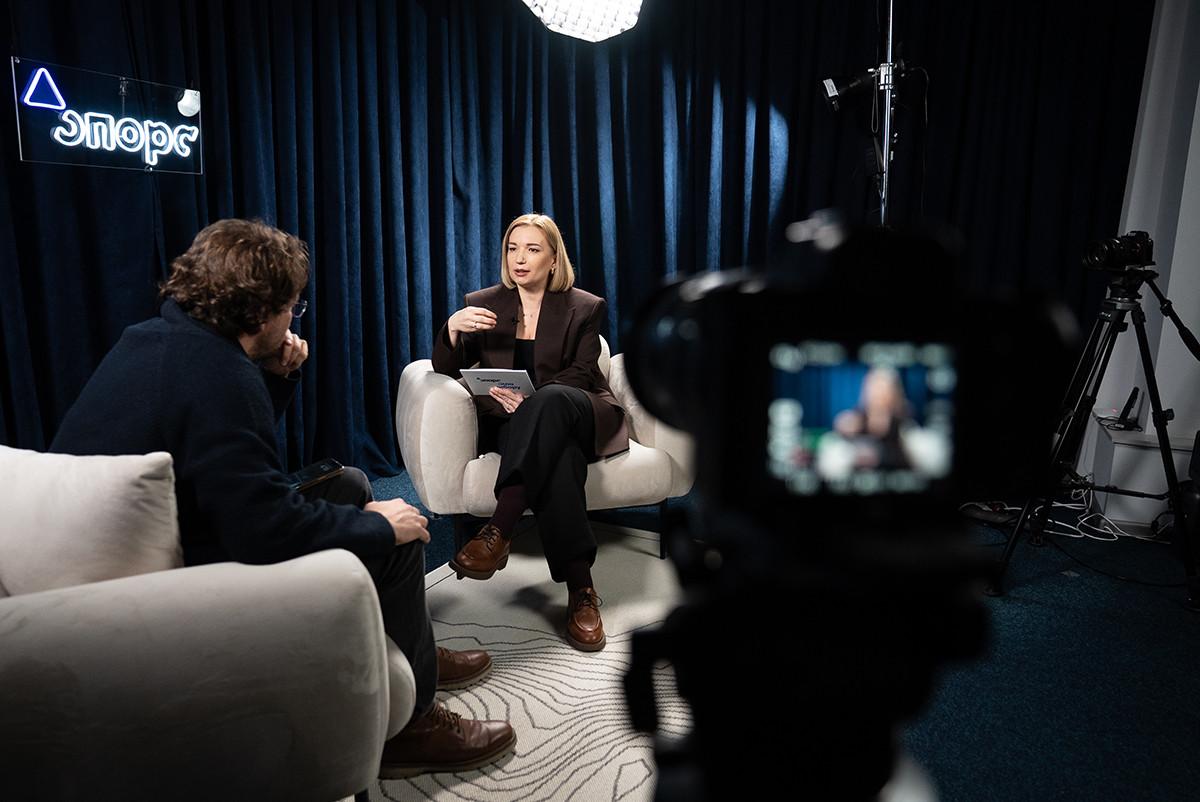
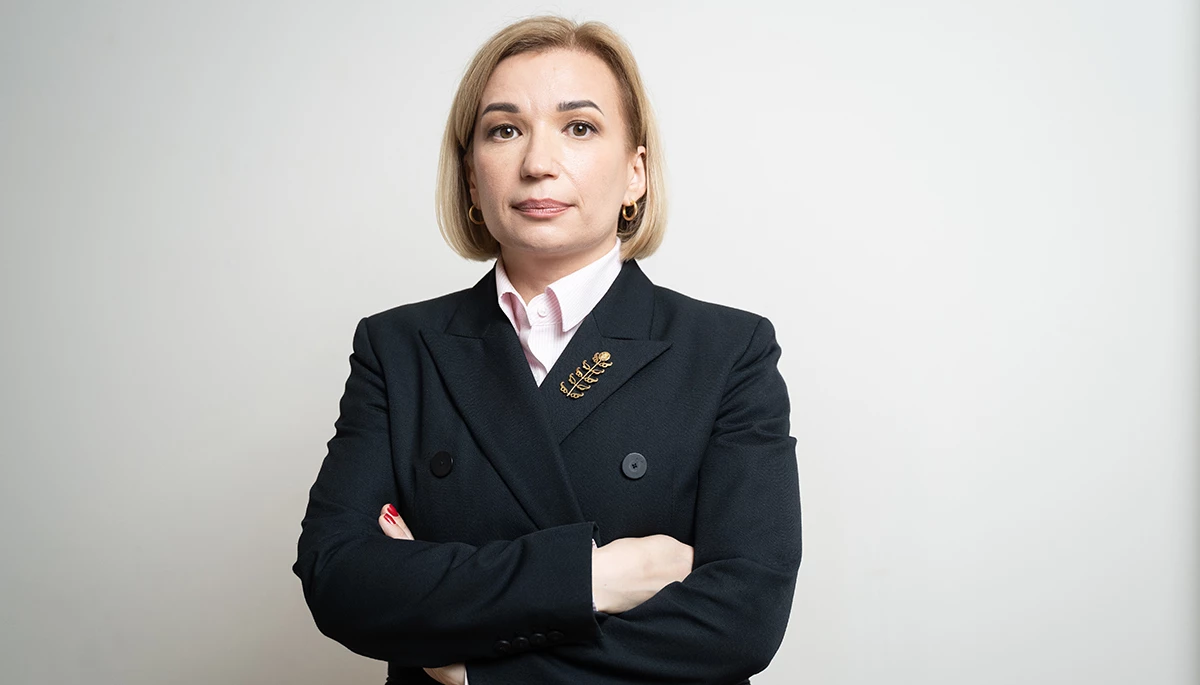
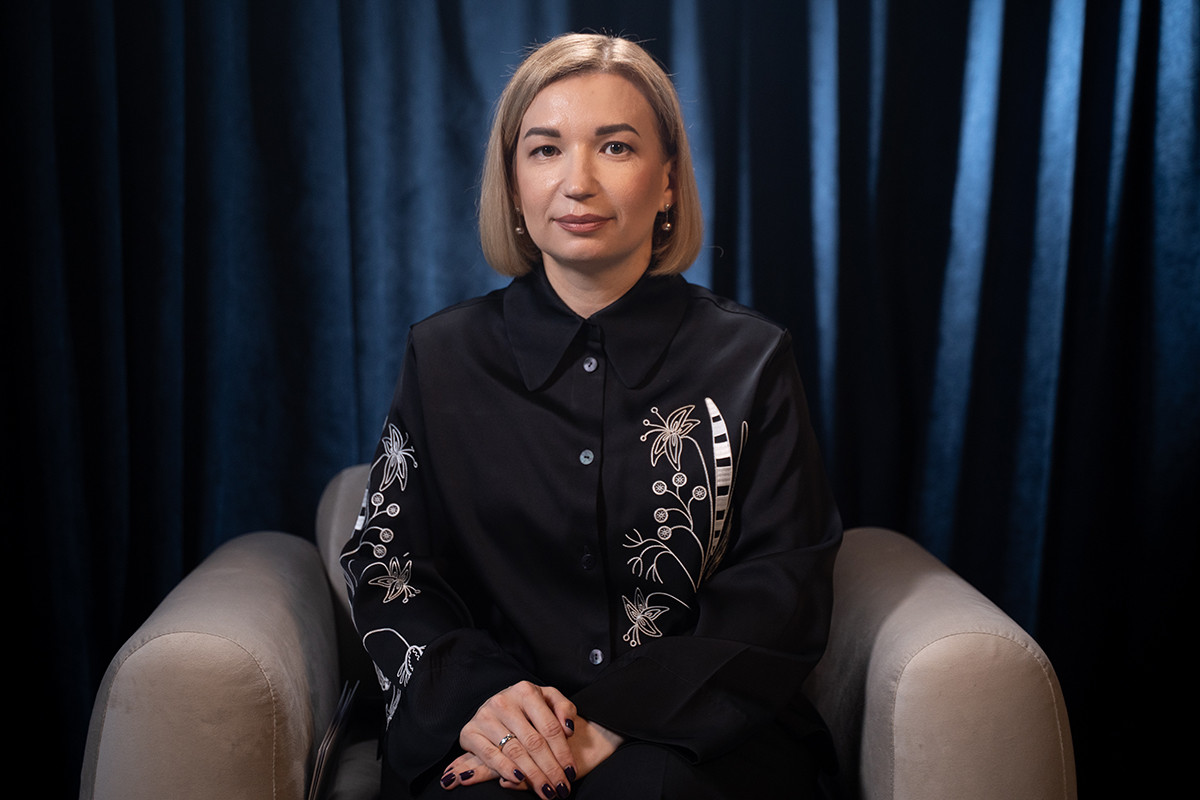
Detector Media asked Olha Aivazovska, head of the OPORA Civil Network, whether elections are possible in Ukraine during a large war, in what order they could be held, and how quickly the country could prepare for them.
According to her, the topic of elections during the active phase of the war has naturally become toxic in a society where democracy matters. She says a country cannot defend itself and hold elections at the same time, especially elections that cannot be prepared quickly. In her view, calls for elections in Ukraine are clearly a form of Russian pressure that some US negotiators have picked up. First security guarantees, then elections, she says.
In December 2025, OPORA marks 20 years since its symbolic founding. “The organization was created by a generation of students of the Orange Revolution, so defending citizens’ political rights and fighting for free and fair elections is part of our DNA. During these years of the full-scale war, it sometimes feels to me that we exist precisely for the sake of the first post-war elections, to preserve democratic progress and support political recovery after the war,” Olha Aivazovska wrote on her Facebook page.
— Olha, is political renewal of power in Ukraine possible under martial law? Or do we still need a stable peace for that?
— For Ukraine to remain a rule-of-law state, it must at least follow its own Constitution and laws. The law on the legal regime of martial law protects a whole range of issues from interference at a time when the state and society are at their weakest. In other words, it is either defense or a focus on political life.
If we open a “Pandora’s box” by changing the law that bans elections, for example, the same article also bans changes to the Constitution and the holding of national and other referendums. So we understand that if we take this step (holding elections during the war — Detector Media), we weaken our position and provoke Russia to start pushing the issue of the Constitution. The ban on changing the Constitution during wartime means that the Basic Law cannot be changed under pressure from the enemy. By the way, the Constitution itself also forbids any legal refusal of territory.
The leadership of the state also cannot be changed if we are talking about parliamentary elections. Russia does not want someone new — it wants someone loyal. That is why the ban on elections under martial law strengthens the state in the conditions it is in and prevents the enemy from manipulating processes and procedures during this period. Russia does this very successfully not only in EU countries, but also in candidate countries, and not only in Moldova.
The second question is: what kind of elections do we want? I am not talking about presidential, parliamentary, or local elections, but about democratic or non-democratic ones. Under martial law, the state has officially, in line with international law, made a derogation from some of its human rights obligations. It informed the relevant international organizations, as required by international legal procedures. This is a legal step. Because you either defend yourself or fully protect all rights. Some rights must be limited so the state can ensure the security of the country and society during this period.
We do not want voting like in the Soviet Union, where there were no competitive elections and no real electoral process because the system was totalitarian. We also do not want elections like in authoritarian Russia, where there is no competition, no freedom of speech, and no real possibility not only to debate the country’s future, but to actually influence it.
Of course, it is possible to organize some kind of vote, prepare an electoral process in two days, click a few buttons in the Diia app, and get some result. But such a process would have no legitimacy.
Ukraine’s strong position in negotiations is that we are a democracy. And democracy has clear features, principles, and standards. It is not just about holding any kind of non-competitive election where, as in Russia, the ballot includes Putin and a few unknown names. That is impossible in Ukraine.
That is why the public reaction in 2023 was natural, when the issue of elections was raised again after comments by Lindsey Graham. At that time, 81% of society opposed holding elections during this period. Not because people love the current president so much, but because society wants real renewal when it is actually possible.
People understand that during a time of defense, heroes are fighting and volunteers are volunteering, not taking part in political processes to gain representative mandates. That is why the topic of elections during the hot phase of the war has naturally become toxic in a society where democracy matters.
I want to remind you that Ukrainians went to the Maidan in 2004 for free and fair elections, not for social payments. For Ukrainian society, democracy is something important. Until 2021, the Economist Democracy Index showed that Ukraine was a fully developed electoral democracy, with indicators stronger than in some European Union countries. At the same time, the rule of law had low scores. This was a balance.
If we give up our democratic achievements in terms of people’s influence — through peaceful protests, communication, elections, and petitions — we will be left only with weak rule-of-law indicators. This would be a serious problem and would harm our prospects of maintaining support from those for whom standards and freedoms are not empty words.
— Why does the so-called peace plan include a point about quick presidential elections in Ukraine at all? Do you see this as blackmail? Is Russia doing this on purpose, knowing that any elections in Ukraine mean a period of destabilization?
— Russia has invested a lot of money in Ukrainian politics. This is an obvious fact. A recent example is the award given to Andrii Derkach, which once again confirms this. Huge resources were invested through Viktor Medvedchuk, his political groups, and media tools. This did not bring the results Russia wanted. But Russia used these tools before the full-scale war, during it, and will continue to use them after.
So we must understand what Russia is trying to achieve. It wants Ukraine not to be among civilized countries with a developed democracy. In Ukraine’s reality, the president serves as both the head of state and the commander-in-chief. We are at war and are defending ourselves in a lawful way. Today, we have the political balance and leadership that exists now. We are building conditions for proper governance regardless of elections. Corrupt officials must be in prison. Traitors must be held accountable for treason. Elections will be held when the state and society are ready for effective renewal.
What does Russia want? It wants Ukraine to become a failed state — a country with illegitimate authorities, that partners do not talk to, do not invest in, and do not admit to the European Union. Russia needs elections in Ukraine to:
a) turn our state institutions into “lame ducks” that no one will listen to anymore;
b) weaken the commander-in-chief — not as a political figure, but as the person responsible for defense and foreign policy, which during wartime is one of the most important functions;
c) create conditions to impose, in different ways, politicians loyal to the Kremlin and thus change domestic policy.
There will be many such attempts. I have read investigations after the elections in Moldova. Russian money was involved there. Moldova adopted very tough measures a few weeks before the vote. Can we do the same while fighting a war? Of course not.
So yes, this is clearly Russian blackmail. And this blackmail has been picked up by specific actors in the United States. This is not what all of America wants. These are specific people who cooperate and communicate with the Kremlin. Bloomberg publishes transcripts of these communications. We understand their logic. This is not about Ukraine or concern for democracy in Ukraine. It is not about us at all — it is about them.
On this path stands Ukraine, with a united Europe around it. No matter what voices are heard in the European Union, the absolute majority stands with Ukraine. Europe is fighting its own internal fight for Ukraine. That is why elections must take place only after the end of martial law, when a stable peace is achieved.
— If Trump is concerned about our democracy, why is the focus only on presidential elections? Can Ukraine hold all elections at the same time — presidential, parliamentary, and local? If not, what should be the order?
— First of all, elections can take place only after the end of martial law. This will mean the full restoration of rights and freedoms, including freedom of movement. Soldiers without contracts must be demobilized. Only then can real political competition begin — with open debates, discussions, and equal access to voters and the media.
Ukrainian law does not clearly define which elections should come first. The Election Code says that all missed elections must be scheduled within 30 days, but this rule was written for peacetime. A one-month preparation period is unrealistic today, given the massive destruction Ukraine has suffered, on a scale not seen since World War II.
Elections are also about the transfer of power. This is especially important for local elections, which determine whether military administrations remain in place or whether local self-government is fully restored. Parliamentary elections are also possible only after martial law ends. Most likely, the sequence of postponed elections will have to follow a clear and carefully planned calendar.
Holding several elections on the same day does not make sense for Ukraine’s recovery. The first elections that were postponed were parliamentary, then presidential, and then local ones. Local self-government is a horizontal system, while parliament is a vertical one. If all elections are held on the same day, the vertical will always dominate, and this will influence how people vote locally. This would go against Ukraine’s decentralization reform.
Ukraine needs both a strong, accountable vertical of power and a strong horizontal system. This balance proved its value at the start of the full-scale war, when people took responsibility, volunteered, and defended their communities.
Presidential elections should also not be held first if real political renewal is the goal. Otherwise, the parliament may again become dependent on the president, as happened in 2019. This could lead to excessive concentration of power, which is risky during a transition. While the military should be represented in parliament, this must happen under proper conditions.
If parliamentary elections come first, the correct order of postponed elections is respected, and parliament becomes a stronger, more independent institution. Since parliament forms the government, this approach strengthens checks and balances.
In short: presidential elections should not be held first. This would contradict both the election calendar and the logic of a parliamentary-presidential republic, and it would weaken the role of parliament.
— So first parliamentary elections, then presidential, and then local?
— Yes. It is better to start with parliamentary elections, then hold presidential ones, and then local elections, following the order of the postponed votes. The time gap between them does not have to be long, but the state also needs breaks between elections instead of facing a year and a half of constant campaigning.
Politicians often say that holding all elections on one day would be cheaper. This is not true. Different types of elections require different election commissions. If elections are held on the same day, many commissions would still have to be created, and not all parties and candidates would be properly represented. This would cause conflicts and undermine trust in the results.
When candidates and parties are represented in election commissions, it means shared responsibility and trust in the process. That is why it is better to hold elections step by step, allowing all participants to take part in organizing them properly.
— President Zelenskyy said he is ready for elections and asked parliament to develop its own approach. Can quick elections happen during a ceasefire, or only post-war?
— I think the president is passing responsibility to parliament, which is normal. The EU has recommended creating a parliamentary working group to develop solutions for post-war political renewal and protection of rights, so this is about post-war elections.
An audit of the voter register can start now. Preparations must follow a clear, rational process focused on Ukraine’s interests, not on external pressures from Washington or others. Work is already underway: OPORA and parliamentary committees have been assessing local security to plan political renewal. Elections should only take place in de-occupied or secure areas, not on frontlines or destroyed territories.
We need formal procedures for security screening and decision-making for post-war elections. Previous practices left constitutional rights limited because the Central Election Commission acted without proper authority or data. For future elections, clear responsibility must be assigned.
Parliament must establish an open working group to plan elections correctly, ensuring democratic standards are upheld, rights of citizens abroad and vulnerable groups are considered, and Ukraine remains a functioning democracy.
Secondly, a law on post-war elections will need to be drafted. Ukraine has extensive experience debating election laws — dozens or even hundreds of sessions involving government, opposition, and both domestic and international experts. Each article is discussed in detail, and this takes time.
Not all international examples are relevant, as some conflict elections in Europe happened 30 years ago. Even so, recommendations and evaluations must be considered. For reference, the National Referendum Law took two years of debate, and the Election Code was developed over ten years and three parliamentary terms.
So, writing the law is only part of the process. Implementing it requires infrastructure. For example, opening thousands of polling stations abroad is not instant — it can take months and even international agreements. Displaced citizens must be informed about how to vote, change addresses, and participate. Ukraine currently has about 11 million displaced people, making this a major logistical task.
It is good that the president sets high negotiation standards, but security guarantees must come first. These are not just words — they involve large-scale processes, documents, verification, and infrastructure. If Russia violates a ceasefire, partners providing guarantees may need to act with personnel or weapons. The 60–90 days sometimes mentioned refers to the campaign period, not preparation for elections.
— What can Ukraine already do under martial law to prepare for post-war elections, and what will be the hardest part: drafting the law, security audits, voter registry updates, or opening polling stations abroad?
— Security audits are not just about identifying problems; they are linked to action plans. Each community is assessed, and recommendations, like building shelters, are connected to early recovery programs. Local governments managing damaged areas are eager for audits and resources. This ensures elections happen only where possible and prepares for reconstruction in advance.
Parallel to security audits, a legislative initiative must be prepared.
The voter registry is also complex. Many records are outdated due to migration, deaths, or displaced populations. There is a risk of election fraud without proper updates. Public awareness campaigns are needed, and the voter portal must allow people to check data and change addresses — including for internally displaced people or citizens abroad.
Infrastructure planning must match the scale: for example, 4.5 million displaced people versus only 400,000 officially registered abroad. This affects how many polling stations are needed. Preparation takes time, careful planning, and resources.
This means that if we look at the voter registry audit only in terms of whether the Central Election Commission is performing its functions, it might seem that nothing more is needed besides cybersecurity, communication, or awareness campaigns. In reality, full cooperation between society and authorities is required, sharing information about people’s life plans and intentions. For example, by enabling active registration or early changes of voting addresses through the electronic portal, we can accurately see how many citizens are abroad and will remain there for an extended period.
— Do Ukrainians abroad need to register at consulates to vote?
— Consular registration is outdated and impractical for millions abroad. Instead, citizens must be on the voter list for the overseas constituency. Voters should be able to update their voting address electronically in advance, allowing the state to plan polling stations efficiently.
Preparation also requires public awareness campaigns, coordination with host countries for security and venues, and ensuring candidates can reach voters digitally or in person. This process cannot be done in 30–90 days.
Currently, NGOs like Opora are more active than political actors, developing recommendations on security, voter registration, and preventing foreign interference. Full post-war election readiness still requires more systemic work, legislation, and infrastructure.
— At the beginning of 2025, you held a roundtable with the Center for Political and Legal Reforms and the International Foundation for Electoral Systems (IFES in Ukraine), where participants agreed that it is not enough to just talk about elections — preparation must begin now. At this event, “Opora” presented the “White Book of Elections,” which, in addition to legislative and organizational challenges after the end of martial law and before the start of the election process, also provided recommendations.
Among the sections of the White Book is “Information Support for Elections and Campaigning,” which includes the following recommendations:
- Regulate political advertising in traditional and online media comprehensively according to EU standards;
- Create mechanisms to counter disinformation and ensure transparency in campaign financing;
- Separate election campaigning from the informational coverage of government activities and officials;
- Stop the broadcast of the “United News” TV marathon before the first post-war election;
- Clearly and as early as possible define, in law, the oversight powers of the Central Election Commission, the National Agency on Corruption Prevention, and the National Council for Television and Radio Broadcasting.
Mostly, these recommendations concern legislative changes, except for the TV marathon?
— Yes, these are changes to media legislation during elections. This is part of the roadmap for the functioning of democratic institutions. Together with partners, we advocated for certain requirements to be included in the roadmap, which has a dedicated media section. This section addresses media and campaigning during electoral campaigns. According to the roadmap, the final deadline for adopting decisions is the end of 2026. So it is already more clearly defined than in our White Book. As far as I know, this work has not yet entered the official phase, but it will soon. One year remaining to meet this obligation is very short.
As a media professional representing a large sector that strives to be ethical, you understand that debates between media business interests, certain media outlets, and societal interests must be conducted to find common solutions.
Regarding the TV marathon, our position is clear: it is a waste of resources. After four years of full-scale invasion, these funds could be invested more effectively. It is an inefficient and costly instrument.
The final deadline for implementation is the end of 2026. I urge media organizations, experts, and specialists to join this work.
Regarding transparency in financing: we believe transparent funding not only counters Russian interference but also prevents domestic actors from acting dishonestly. We are developing recommendations that will be publicly discussed. If I am not mistaken, a presentation of interim results is planned for late January or early February.
— Don’t you think this section should be updated due to the rapid development of AI, deepfakes, and similar technologies?
— The issue is that artificial intelligence is proprietary—it was designed by someone—and it’s used on shared platforms, i.e., social media, which are responsible for it. The European Union has strict regulations starting this year. So if we want to regulate this, it would be best to harmonize our laws with the EU rules. Since we are moving toward EU integration, we can implement these rules before we are formally required to, and eventually have a single regulator involved in the first post-war elections.
We aren’t the top experts on countering disinformation and fakes, but the logic is clear: we should align with the EU and focus on regulating social media that uses AI.
— How can we hold elections without harming the state? There are concerns about societal division and unrest.
— I’m currently reading Peter Pomerantsev’s book on disinformation and propaganda during World War II—how Nazi Germany acted, and how Britain countered it in the final stages, while also spreading its own fakes to German audiences to create divisions and weaken soldiers or German society. They didn’t speak in BBC’s voice; they used German voices, claiming that someone wasn’t acting in the audience’s interest, creating ambiguity. The first lesson: we need to learn from history. Tools have changed, but approaches remain the same.
I’m convinced that we unfortunately lost a very effective Russian IPSO operation regarding mobilization. Such divisions never arise from nothing—they exploit some existing base and then grow through fake news or minor crises, which statistically may be minor, but they distort reality, making it seem normal and widespread. Systems need improvement and reform.
Reading Pomerantsev, I realize this happened to us. So, for the first post-war elections, experts, media professionals, and journalists should first analyze what happened, what caused specific divisions. It’s not enough to say the Kremlin is the source; the problem must be dissected. This will happen again otherwise.
Second, we need to study neighbors’ experiences, like Moldova’s. Recent analytical investigations show how influence was exerted on Moldovan elections via Telegram, money, TikTok, cryptocurrency, and other methods, and how Moldova countered it. Many issues weren’t communication-based but resource-based. Moldova reported official political financing at €3 million, while interference costs were estimated at €400 million. External interference aims to polarize and divide.
Natural polarization exists in any campaign because people identify allies and opponents, but there’s a culture of managing it. When the goal is division, polarization is exaggerated into hate. A sign is readiness to physically attack others for one’s beliefs, which is a true societal split.
In the U.S., we see many such divisions and precedents. When groups detach and no longer feel part of society, it can lead to deep crises, even to civil war. This must be prevented. Russia will try to exploit this. My basic recommendation: analyze where we’ve already lost, why, and how. With modern tech, OSINT, and analytics, it’s possible. Also, study how our enemies acted in neighboring countries and what protections they used. This will happen to us on a much larger scale because our country is bigger, and the stakes are higher.
Third, communicate these risks to society. Educate people about why they feel certain emotions, identify whether emotions are triggered by news or misleading headlines, and explain that emotions can be tools for division.
Photo from the archive of Olha Aivazovska.