Українською читайте тут.
The First Deputy Chairman of the Verkhovna Rada of Ukraine discusses the work of the working group preparing comprehensive legislative proposals on the specific procedures for organizing and conducting elections during a special period and/or post-war elections in Ukraine.
On December 9, 2025, President of Ukraine Volodymyr Zelenskyy said that he was ready to hold elections in Ukraine and asked the United States and European leaders to guarantee security for their conduct. On December 14, the President announced that members of the Verkhovna Rada would soon prepare proposals regarding the possibility of amending the law on elections during a state of martial law.
On December 22, it became known that the parliament was establishing a working group on holding presidential elections during martial law. Its first meeting took place on December 26, during which the Central Election Commission outlined the key challenges of post-war elections.
Chairman of the Verkhovna Rada of Ukraine Ruslan Stefanchuk said that the law on holding elections under martial law would be applied as a one-time measure.
From January 1, 2026, the Central Election Commission restored the operation of the automated information and communication system “State Register of Voters” in the part related to interaction with voters.
At the end of January, the Central Election Commission presented proposals for the legislative regulation of elections in Ukraine after the termination or lifting of martial law. CEC Chairman Oleh Didenko also said that the Commission had considered the possibility of internet and postal voting for voters abroad, but found these methods too risky and dangerous for Ukraine, especially in the context of post-war elections.
Speaking at the Munich Security Conference on February 14, Volodymyr Zelenskyy stated that Ukraine was ready to hold presidential elections and a referendum on a peace agreement if a two-month ceasefire were declared.
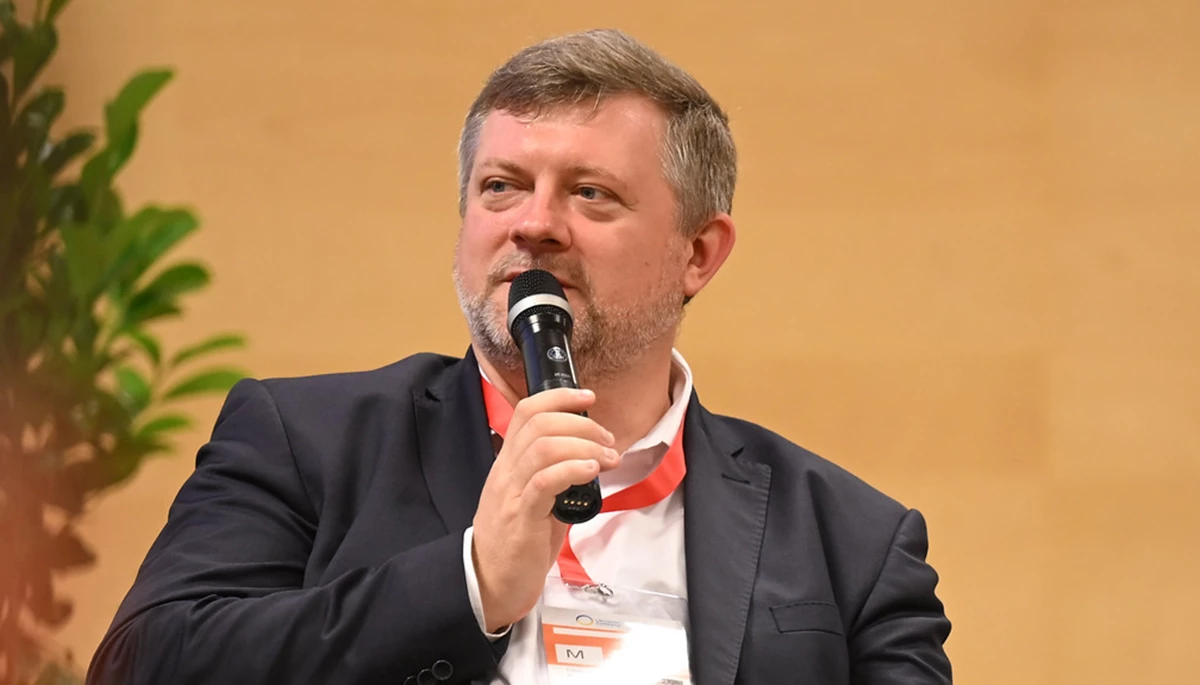
The working group on election preparations was headed by First Deputy Chairman of the Verkhovna Rada Oleksandr Korniienko, with Deputy Speaker Olena Kondratiuk serving as deputy head. In total, the working group included 64 participants, among them representatives of all parliamentary factions and groups, the Office of the President, the Cabinet of Ministers, military institutions, the Central Election Commission, civil society organizations, the Supreme Court, and the expert community. The working group operated through seven subgroups, and as of March 20 had held 46 different meetings.
Initially, the working group’s deadline was set for the end of February 2026. Although agreement has now been reached on some of the issues discussed, the group’s work has been extended. According to some participants, these deadlines were unrealistic for developing high-quality legislative provisions for post-war elections. The issues on which agreement has been reached are now to be discussed by parliamentary factions and deputy groups.
In its resolution on Ukraine’s progress toward European Union membership, adopted in early July 2026, the EU stated that Ukraine’s future post-war elections should take place after a sufficient period following the lifting of martial law in order to be free and fair.
Detector Media asked Oleksandr Korniienko whether there is consensus in parliament on adopting a law on the first post-war elections, what tangible results the election preparation working group has achieved, and whether elections in Ukraine are possible before the end of the active phase of the war.
Because of the security situation, elections are not on the horizon, but preparations for them must already begin now, says Oleksandr Korniienko.
— Oleksandr, is the election working group still operating? Initially, its deadline was set for the end of February 2026. Then, as far as I know, the timeframe was extended.
— At the moment, expert work is underway to prepare draft documents. The subgroups have produced their proposals, and all of them have already been presented. Experts believe that the draft law on the first post-war elections is still far from being in perfect shape. So we still have work to do. However, the main ideas have already been voiced. Now everything related to technical and organizational issues and legislative changes in terms of instruments needs to be drafted and properly formalized.
There are also political issues, ranging from what the electoral system will be to the nuances of participation by Ukrainians abroad, internally displaced persons, and so on. In any case, the final decision will be political, so these are all political issues.
Organizationally, it is difficult to gather everyone during the summer, to be honest. Perhaps in September we will return to more active work within the working group. We have continued working on individual issues. For example, we had a meeting related to accountability for the use of public and private funds during elections. Relevant draft laws are being developed. This also concerns our reintegration commitments, and work is continuing on that track as well.
I have repeatedly stated that holding elections in the near future is impossible for security reasons. This determines both the pace of the group’s work and politicians’ level of interest. It is clear that, unfortunately, elections are not on the horizon right now because the security situation is deteriorating. But we will continue discussing and preparing the draft law. Because the main conclusion from the working group’s six months of activity is that this work is long overdue. It should proceed gradually, without provoking major political disputes and battles, because that harms the political process in the country.
There are technical and procedural issues that need to be addressed. A great many of them have accumulated during the years of war and the absence of elections. Our last elections were held in 2020. Even since then, a great deal has changed, including in your media sphere, so we definitely need to respond to all of this.
— Experts have said that of the seven subgroups, the one headed by you—the political subgroup—has not yet met. Is that true?
— There is no such subgroup. There is a process that I proposed, but indeed we have not yet held a political debate. It will not be a separate subgroup but the entire working group. We will determine the topic of a meeting—for example, the electoral system—and we will hear from experts and politicians and discuss proposals. Or there will be a meeting devoted to Ukrainians abroad. To be frank, some political forces have already stated their positions, but civil society opposed them. So the process of developing proposals is continuing.
It is true that I have not yet convened the group on commitments. But I believe that is logical, because this group is supposed to consider European integration commitments related to election preparations. Those commitments included launching our working group. We have done that. So in fact we have partially fulfilled those commitments. We will consider the remaining commitments depending on when they are addressed. I will convene the group when we have concrete results. We need to verify whether they comply with our commitments and discuss them with the Europeans, with the Venice Commission, and with the so-called OSCE Office for Democratic Institutions and Human Rights. These are the bodies that establish these benchmarks.
The legal position of the Venice Commission and the Council of Europe will not always be in our favor. For example, there is the issue of lustration for former Russian political parties, which is being actively discussed. But the Venice Commission clearly stated that lustration may only be individual and cannot be carried out on a mass basis. They analyzed all our draft laws and sent us their materials.
— Is there consensus in parliament on adopting a law on the first post-war elections?
— There will certainly be consensus on holding elections. As for the text of the law, there certainly will not be immediate consensus. We will have to negotiate.
But everyone understands—and this is probably one of the conclusions of the working group’s six months of work—that the only way forward is to adopt a special one-time law on post-war elections. Previously, there had even been debate about this. Now we have at least settled that discussion. Everyone agrees that this is indeed the only way, without making major changes to the Electoral Code. It simply needs to be expanded in those areas where there is currently no legal framework for certain issues.
— In your opinion, which elections should be held first after the war: parliamentary, presidential, or local?
— We will decide when the time comes. Parliament is a political body, and it will make a political decision. Experts will evaluate it and express their reservations.
— At the end of June, the topic of elections resurfaced. The media wrote about presidential elections in November and linked this to the President’s meeting with Zaluzhnyi. In your opinion, are elections possible before the end of martial law? How much time is needed to prepare for them?
— How much time is needed is a matter for discussion. We return to it from time to time. There has been a political decision, probably since 2023, that parliamentary elections require six months of preparation. Presidential elections could probably be organized more quickly.
But we should not start from how quickly elections can be held. We should start from at least three important processes.
The first is restoring the electoral infrastructure, which has unfortunately been severely damaged by the war, and this is a well-known fact. About a quarter of polling stations are either in occupied territories or have been destroyed (schools, educational institutions, hospitals, and so on). And we see that terror against the Ukrainian border regions under our control continues. We are speaking right now, and the enemy continues to destroy electoral infrastructure there. Restoring it will certainly take time.
The second process is resolving issues related to the registers. Obviously, this work should already be underway. But there are a number of issues that require legislative regulation. Because of the full-scale war, not all of these processes have been properly organized, so this will also take time.
The third process concerns voting abroad. Considerable time is needed to establish a network of polling stations. One can debate whether that network should be larger or smaller—that is a matter of detail. But physically, it takes time to establish polling stations in countries where they do not currently exist.
There is also the issue of military voting, which will require some time during a ceasefire. There are also many issues related to protecting the rights of internally displaced persons and ensuring that they are able to vote.
The timelines certainly need to be determined. I think they may differ depending on the type of election. The Central Election Commission should probably have more to say on this.
Incidentally, the current composition of the Central Election Commission will soon reach the end of its term. It will become the first CEC that has not conducted a single nationwide election.
All of this illustrates the fact that many democratic processes could not take place because of the war, shelling, and attacks.
— When will you appoint a new Central Election Commission?
— I do not know yet. We will act within the framework of the law, as always.
— Do I understand correctly that you oppose holding elections while military operations are ongoing?
— We must talk about security conditions. Right now, they are unfavorable for holding elections, both in terms of the potential voting day and in terms of campaigning. On the Left Bank, it would currently be extremely difficult to do anything at all, let alone conduct election campaigning. The media may make various assumptions, but I know that the security component is currently the most important factor. No one is going to hold elections under Shahed drone attacks. Everyone understands the cost of such elections, and then the cost of such a government.
Photo: www.shooteditdeliver.eu