Original publication at the link on the Ukrinform website.
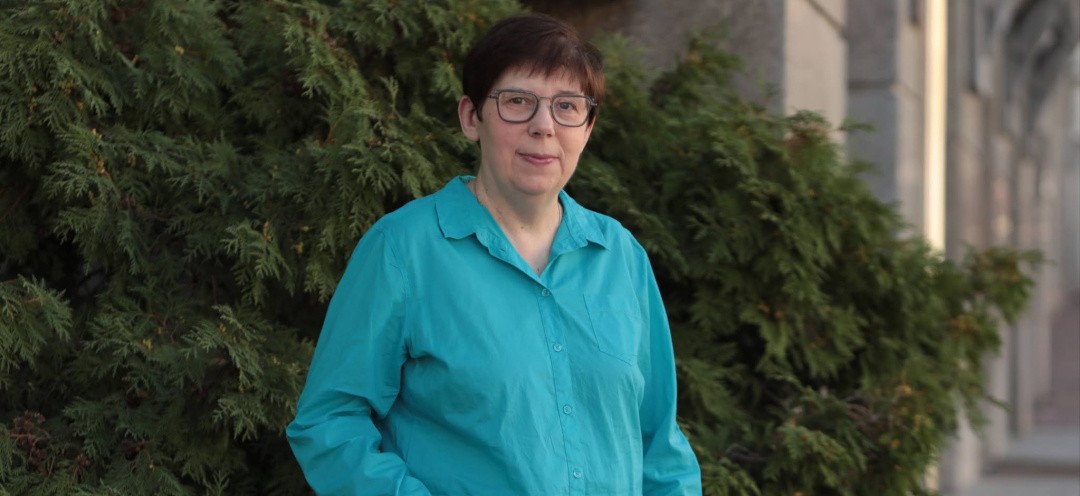
In 2001, media expert Nataliia Lygachova launched Telekrytyka. At the time, it was a small specialized publication about television. The website was read not only by viewers, who were told about manipulation on air and violations of journalistic standards, but also by journalists themselves. Telekrytyka wrote about temnyky, censorship, editorial dependence on owners, and paid-for journalism — often about things that people inside the media preferred to keep silent about.
Over these 25 years, Ukrainian media have gone through several political eras, two revolutions, and now operate during a major war. The owners of television channels, the ways of influencing journalists, and the media themselves have changed: television ceased to be the only main source of information, while social media, YouTube, and the national telethon emerged. In 2016, Telekrytyka ceased to exist under that name, and its team continued its work as Detector Media.
To mark Telekrytyka’s 25th anniversary, Ukrinform spoke with Nataliia Lygachova about how it all began, why journalists protested against censorship, how media owners and the authorities influenced the media, and which of the old problems of Ukrainian journalism have made it to 2026.
HOW TELEKRYTYKA CAME ABOUT
- This year marks Telekrytyka’s 25th anniversary. If we go back to 2001, how did you see the Ukrainian media market at the time, and what did it actually turn out to be? What role did you envision for Telekrytyka?
- In 2001, television channels were the most popular. That is precisely why Telekrytyka came into being: as a response to the need for someone to analyze exactly what channels were showing their audiences and whether they could be trusted.
The media market was small, and the major television channels and newspapers were divided among oligarchs loyal to the then-president Leonid Kuchma and his government. There were 1+1, Inter, and ICTV. And there were several opposition or at least media outlets not controlled by the authorities: Den, Dzerkalo Tyzhnia... Independent media also began to emerge online — Ukrainska Pravda and just a few other websites. Internet journalism was only being born at the time.
Telekrytyka appeared thanks to a grant from the U.S. Embassy. Until 2004, we were a project of Internews Ukraine. At first, there were only four of us: Hanna Sherman, Serhii Chernenko, Tetiana Akimova, and me. Quite quickly, several more people joined us, including Nina Krasnova, Oksana Lysenko, Lesia Hanzha, and Nataliia Dankova, who was still a student at the time, among others. Before that, I had worked as deputy editor-in-chief and a television columnist at the Den newspaper. It was very interesting and important to me to explain to a broad audience how to perceive what they saw on the screen: to expose manipulation, criticize violations of standards, talk about channels’ dependence on their owners and the authorities, and so on. I really often wrote with the feeling, “I can’t stay silent.”
Having had the experience of working at Den, I also thought of Telekrytyka’s website as being aimed at a broad audience. But quite quickly it became clear that our main readers were members of the journalistic community. I remember Mykola Kniazhytskyi, who was then a top manager at ICTV, telling me that he had walked into a large newsroom and seen that Telekrytyka was the start page on every computer. That was when both he and our team realized that we mattered to media professionals themselves.
This imposed a responsibility. If professionals read you, they can offer a counterargument to every argument you make. So you had to write even more professionally.
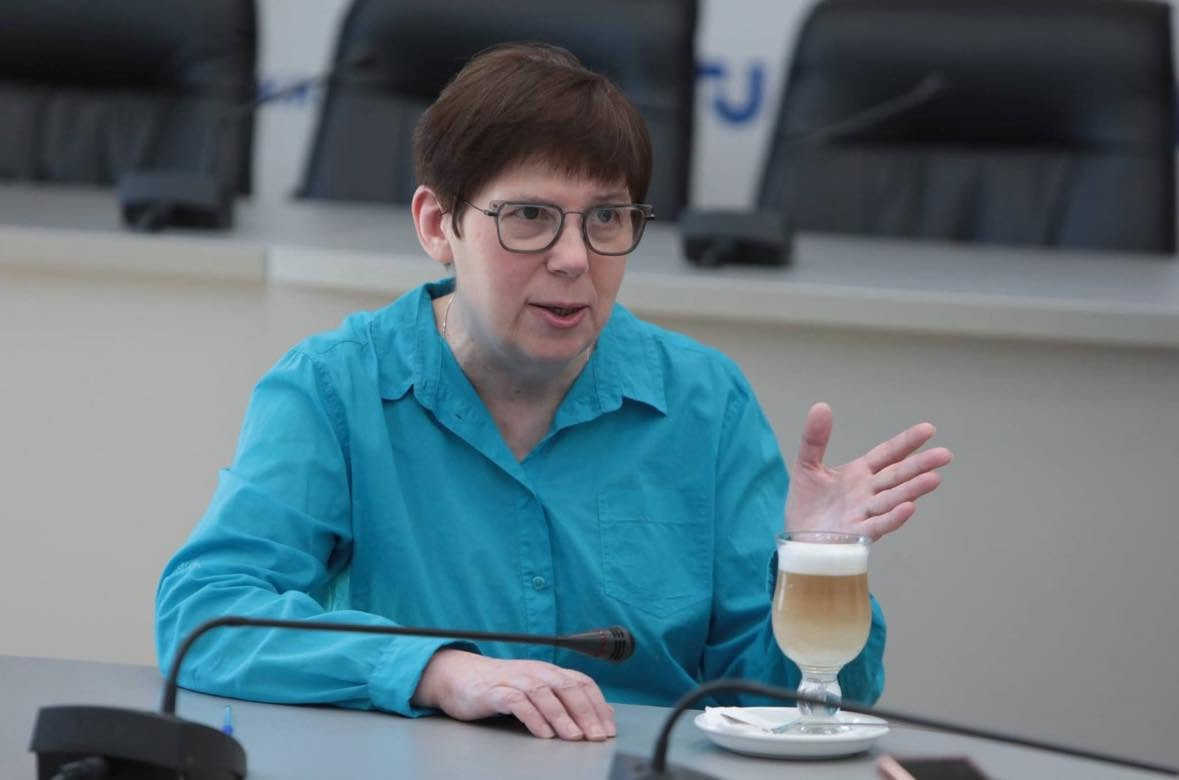
"I always tell young journalists: you shouldn’t criticize for the sake of hype. A bad product really is a critic’s candy"
So I always tell young journalists: you shouldn’t criticize for the sake of hype. A bad product really is a critic’s candy. It is more interesting to criticize, everyone will read it. But my goal has always been different: for criticism to bring about change.
Telekrytyka’s first publication was an analysis of how Ukrainian television channels covered the September 11 terrorist attacks in the United States. I criticized them very harshly. Ihor Kulyas, who was then in charge of news at Novyi Kanal, wrote me an angry letter. We argued, and then became friends. In 2003, he himself suggested that we conduct Ukraine’s first public monitoring of television channels’ news broadcasting. So, by the way, Ihor has been doing it for us ever since — for almost 23 years now. Since the beginning of the full-scale war, this has been monitoring the television channels that are part of the telethon, as well as the Public Broadcaster.
This has always been important to me: if the person you criticize eventually accepts your comments and is ready to change something, it means you have achieved your goal. I don’t want the reader simply to say, “How smart Lygachova is, and everyone around her is stupid.” I want the product to improve.
- But where did you get the confidence at the time that you could professionally criticize television? The Ukrainian media system was only taking shape, while the country itself remained very oriented toward the Russian television experience.
- It was a process. I worked in television from 1984 to 1994, first in the sociological research department of the State Television and Radio Broadcasting Committee of the Ukrainian SSR, and then in the film programs editorial office of UT-1. Then there was Kievskiye Vedomosti, where I was a film critic, the Natali magazine... And in 1996, I joined the Den newspaper, and in 1997 Larysa Ivshyna became the newspaper’s editor-in-chief; she had been my friend since our time at Kyiv State University. She began actively encouraging me to write about television.
I resisted for a long time. Everything was going well for me: at the newspaper, I covered film and show business, conducted interviews, knew many cool people, and had good fees. And here I was essentially being asked to start all over again.
I wrote several pieces “with my left foot,” but Larisa returned them to me. Then I got properly annoyed and decided not to write in haste: I watched political programs for a week and wrote a more serious piece. Since my previous texts had already been returned to me, I didn’t put my name on it and said, “We’ve been sent this text, take a look.” Larysa read it and said, “This is what we need. Who is the author?” I replied, “I am.”
That was how the “Teleweek with Nataliia Lygachova” column came about. And it was this work that gave me an understanding of how media criticism should be done.
Of course, I made mistakes. I had not worked in television for several years and could not know everything. But there is another rule here: if you criticize others, you have to be tolerant of criticism of yourself.
CENSORSHIP, TEMNYKY, AND JOURNALISTS’ RESISTANCE
- What was the main problem facing Ukrainian media in the early 2000s, and what of it has remained today?
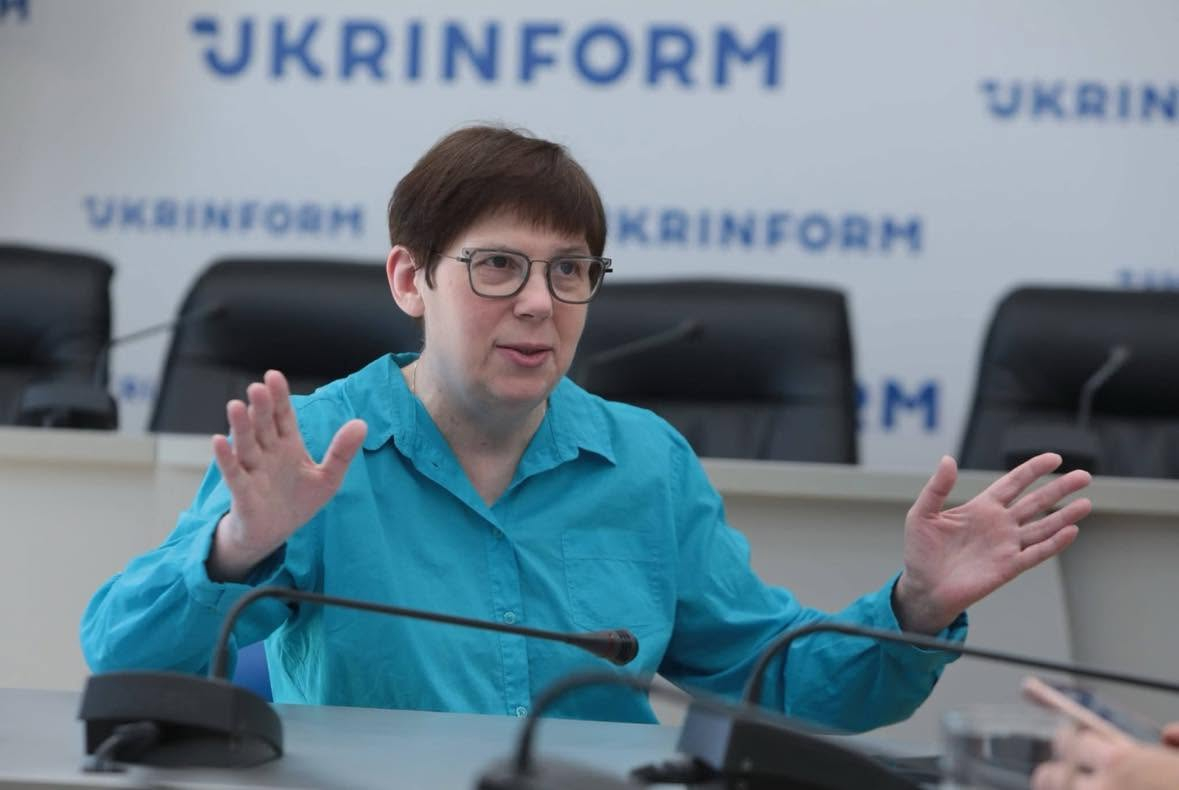
- The main problem was dependence on owners, primarily oligarchs. They dictated editorial policy. There were almost no major media outlets independent of their owners.
The second problem was that the owners, in turn, were dependent on the authorities. This became a prerequisite for the emergence of temnyky, which began to be actively used in the fall of 2001. The technology was brought here by Moscow political strategists Marat Gelman, Ihor Shuvalov, and others. Temnyky were distributed weekly to all media outlets under their control. In this way, the Presidential Administration ensured a de facto single voice for all television channels and some print media. This was done by sending instructions by fax (the internet was only just emerging in Ukraine at the time) on how to cover events, what to keep silent about, and what, on the contrary, to emphasize (“The topic is important and relevant”). In other words, the news broadcasting of almost the entire country began to be controlled from the Presidential Administration through its then head, Viktor Medvedchuk.
By the way, we were among the first to see these temnyky. One of our columnists was also working as a speechwriter for Oleksandr Zinchenko, who was then in charge of Inter, and brought them to us. We very much wanted to publish the documents we had received, but in the end I decided not to do so because that would have meant revealing the source. Instead, we began regularly receiving them secretly from our colleague and using them for a more precise analysis of how television channels operated. So thanks to this, we knew exactly what the manipulators were emphasizing each week and were able to expose those very manipulations first and foremost. Later, Ukrainska Pravda published the temnyky, as did Vakhtang Kipiani, who was then working at 1+1.
The situation is different now. There is hands-on control by the authorities over broadcasting in the telethon, but at the same time there are many independent online media outlets. There are opposition television channels — Priamyi, Espreso, and Channel 5. They are also dependent on their owners; they have topics they do not touch on, or they support someone to please their owners... But pluralism exists, and on a much broader scale than it did under Kuchma or Yanukovych. And, most importantly, despite the fact that violations of journalists’ rights still occur today, it is unlikely that any journalist now fears physical violence for criticizing the authorities.
That is why I say: there is freedom of speech in Ukraine, but there is no complete media freedom for individual media outlets that are constrained by the interests of the state or their owners. At the same time, even during the war, people in Ukraine have a choice of where to get information and whom to trust.
Another problem today is the enormous amount of information, including on social media. It is difficult to understand who is an expert and who merely calls themselves an expert, which source to trust and which not to.
- In the early 2000s, journalists took to the streets to protest against censorship, and in 2004 the so-called journalists’ revolution took place on the eve of the Orange Revolution. What role did Telekrytyka play in these processes?
- The first protests began as early as 2001–2002. In August 2001, I came up with the idea of creating the Commission on Journalistic Ethics together with Iryna Chemerys, a journalist and producer. We thought that Volodymyr Mostovyi, who was respected throughout the journalistic community, could head it. We brought the idea to Khartia 4, an organization that had been established by Yulia Mostova, Mykola Veresen, Taras Kuzmov, Oleksandr Kryvenko, and others. Eventually, we all worked together to draft the Code of Ethics of the Ukrainian Journalist, and on September 16, the anniversary of the disappearance of Heorhii Gongadze, we held the founding meeting of “Journalists for Clean Elections” (parliamentary elections were to be held in 2002), at which the Commission on Journalistic Ethics was established.
And by the end of 2001, temnyky had begun to be actively introduced in Ukraine. Journalists began to grow restless at television channels, some resigned, Roman Skrypin wrote the text “We Can’t Live Like This,” protests emerged at UNIAN, and Telekrytyka carefully documented all these developments and launched a discussion on its own pages: what should be done? And so on. We worked closely with the parliamentary Committee on Freedom of Speech and Information, which was then headed by Mykola Tomenko, a representative of the parliamentary opposition. At the Cinema House on October 3, 2002, together with Mykola Tomenko and several colleagues, we brought together journalists who were actively speaking out against pressure, and during the meeting it was decided to write a Manifesto Against Censorship. Telekrytyka began collecting signatures. Almost 500 were collected from across the country.
And on October 5, it was decided to hold a larger gathering at the Teachers’ House. Once again, it so happened that I was traveling to the meeting together with Ira Chemerys. And on the way, we came up with the idea of creating an independent media trade union and a Strike Committee. Andrii Shevchenko, who was to moderate the meeting, immediately picked up the idea and proposed it at the gathering. As a result, the meeting elected an Organizing Committee to establish the Kyiv Independent Media Trade Union, as well as a Strike Committee. A little later, we held the founding meeting and created the trade union. Andrii was elected head of the KIMTU. All these initiatives had a very positive effect: parliamentary hearings against censorship were held (just imagine: in 2003, journalists took the floor from the rostrum of the Verkhovna Rada and told the whole country about the temnyky!). The PACE heard the case concerning the temnyky. An article on censorship was added to Ukrainian legislation... More about those events can be read in the collection of Telekrytyka articles entitled “Journalistic Autumn — 2002. Discussion of Political Pressure and Censorship in the Ukrainian Media,” which we published in 2003.
Before the journalists’ revolution of 2004, we realized that the KIMTU, which by that time was no longer headed by Andrii Shevchenko but by Serhii Huz, from what was then still Dniprodzerzhynsk, needed someone who would have great authority among Kyiv journalists. This was how several of us came up with the idea of proposing Yehor Soboliev as head of the KIMTU, while Serhii would focus on creating an all-Ukrainian Independent Media Trade Union. It was the right move. Yehor had authority, and television journalists from major channels began discussing new forms of protest against censorship together. The meetings often took place in Shevchenko Park, by the way. This was how the journalists’ revolution took shape.
Telekrytyka played its role in this: we took part both in negotiations with Serhii Huz and in all the actions and rallies. On our pages, we constantly raised the issue of censorship, participated in organizational processes, monitored television channels, and helped those journalists in their disputes with managers who imposed temnyky. But, of course, Yehor played a major role, managing to convince journalists to take to the streets in protest. The journalists’ protest against censorship took place on October 28, 2004. All the details of the events of that time can be read in the collection “Journalists’ Revolution — 2004. Events, People, Discussions”, published by Telekrytyka with the support of the Renaissance Foundation.
For many television journalists, this was a very difficult step. They essentially had to go up against the owners. Some journalists at the 1+1 television channel wanted to sign a stronger statement, but after facing pressure and threats, they backed down. Seven journalists eventually resigned from 1+1.
And the journalists’ revolution, as well as the creation of Channel 5 in 2003, were undoubtedly important milestones that prepared society to resist manipulation during the presidential election. They became precursors to the Orange Revolution.
MEDIA OWNERS AND MEDIA INDEPENDENCE
- After the Orange Revolution, Viktor Yushchenko came to power. Did freedom of speech really improve?
- Yes, but it was a very peculiar period. Western donors decided that after Yushchenko’s victory, democracy had won and there was no longer any need to support independent media. I joke that Telekrytyka became the first victim of the Orange Revolution.
We had very freedom-loving journalists working for us, who received decent salaries thanks to donor support. Then there were significantly fewer grants. From January to May 2005, almost all of Telekrytyka’s journalists left the team: they were offered much better-paid jobs, and they accepted because freedom of speech prevailed everywhere, at least for a certain period.
This forced me to look for private funding. That was how Telekrytyka, as a media outlet, ended up in the holding company of Oleksandr Tretiakov (a member of parliament from Our Ukraine, a businessman).
He was an acceptable owner for us. Reputation was important to him; politically, he did not interfere in editorial policy. There were no temnyky. There were conflicts from time to time, mostly because of someone’s complaints that we had written something “the wrong way.” But there were no demands to adhere to a particular editorial line. It also helped greatly that we retained the Telekrytyka NGO. With funding from Western donors, the NGO worked on various projects and eventually created sub-sites within the structure of the “parent” Telekrytyka website: MediaSapiens, focused on media literacy, and a website about public broadcasting, which became one of the main drivers of the transformation of state television and radio companies into the Public Broadcaster. This funding of our activities — both from Ukrainian business and from Western grantmakers — enabled us, during any conflicts with Tretiakov or his people, to refer to Western embassies, saying that they certainly would not tolerate pressure on us. So for Telekrytyka, this was a period of fairly significant development, including our print edition, which was headed by Yevhen Minko. He breathed new life into the publication, which had been coming out since 2003. PR manager Kostiantyn Doroshenko not only promoted our publications but, for example, introduced me to Olesia Savenko, who proposed the concept of what the first media tabloid in Ukraine, “Dusia,” could look like. We created it in 2009, Olesia headed Dusia, and for several years the publication became something of a cult favorite among the journalistic community. And when Bohdan Kutiepov became its editor-in-chief, it also often made waves with his accordion playing, singing, and... scandalous stories. We also created a video version of Telekrytyka — “Videoteka,” which was initially headed by Bohdan Lohvynenko and later managed for many years by Maryna Baranivska. We produced various video projects featuring very well-known politicians, journalists, and political strategists... The hosts included Serhii Rakhmanin, Serhii Neretin, Yevhen Minko, Hanna Hopko, Kostiantyn Hrubyсh...
At the same time, it was precisely under Yushchenko that paid-for journalism, or “jeansa,” developed very actively in the Ukrainian media market. Freedom of speech turned into freedom of paid-for articles. Previously, some journalists could receive money for a story, but now it became a system controlled by the commercial departments of television channels and top managers. A kind of “equality of corruption opportunities.”
The fight against “jeansa” was one of Telekrytyka’s main areas of work during that period. We carried out one of our major initiatives together with the Institute of Mass Information, which was then headed by Viktoriia Siumar, and with the same Yehor Soboliev, with whom we kept being brought together by our common struggle for the honor of the journalism profession, as I would put it, if I wanted to sound a little pompous.
- Later, Telekrytyka became part of a holding company acquired by oligarch Ihor Kolomoiskyi. How do you assess that experience?
- It was a difficult but interesting experience. After Tretiakov sold the holding to Kolomoiskyi in 2010, through various transformations we ended up in the 1+1 group, which was headed by Oleksandr Tkachenko.
There was no political interference in our editorial policy. At the beginning, there were several commercial conflicts, so to speak. For example, Tkachenko wanted us to use only one of the two television ratings panels available at the time when analyzing television channel ratings. We believed that we needed to analyze the data from both panels. In the end, we simply gave up on that product, so to speak, “neither yours nor ours.”
There was also a funny attempt to explain to us what our tabloid project “Dusia” should be like. Svitlana Paveletska (who worked in marketing at the 1+1 Media holding), for example, began telling me that “Dusia” should write more about “who is wearing what and what a star has in her handbag.” But we had seen Dusia as something completely different from the moment it was created — sharp-toothed, critical, in the style of paparazzi rather than glamour. And in 2014–2015, when Svitlana tried to tell us what we should do, we actually switched Dusia, which was then headed by the well-known satirist Yurko Kosmyna, to countering Russian propaganda and Russian influence. Oleksandr Tkachenko eventually understood and supported our position. Well, sometimes there were some tensions, but we managed to reach an understanding. Which, by the way, is also an example of the fact that if you are ready to defend your position, have arguments, and are prepared to go all the way in critical situations, mutually acceptable solutions can usually be found.
And later, in 2015, when we decided to leave the 1+1 group, Tkachenko explained to me why we had been almost completely left alone. According to him, we were a kind of “armored train on a siding.” Kolomoiskyi actually had a difficult relationship with Yanukovych (the latter believed that during the 2010 election, Kolomoiskyi supported Yulia Tymoshenko), so, supposedly, it was important for him to have an independent media outlet that could defend freedom of speech if 1+1 came under pressure. I have no idea how we would have defended Kolomoiskyi:). We wouldn’t have, of course, as later events showed — but that was already under Poroshenko, in the events surrounding Kolomoiskyi in 2015. But that was how it happened that from 2010 to 2015, we lived our own, free life within the 1+1 group.
- And what changed in the media environment after Viktor Yanukovych came to power?
- Strong pressure began to be exerted on media owners, primarily television owners, to make them loyal to Yanukovych. It was against this backdrop that the “Stop Censorship!” movement emerged in 2010. Ironically, the impetus for its creation was a protest against pressure from Myroslav Otkovych and some of his colleagues at 1+1. Journalists from STB then joined the protest. A group of representatives of several different NGOs — including me from Telekrytyka, as well as Vika Siumar, Svitlana Zalishchuk, Taras Petriv, Kostia Kvurt, and Oleksandr Chekmyshev — gathered at a Kyiv café and came up with the idea of creating a Journalists’ Movement, its name, and so on. The Suspilnist Foundation was due to hold an event at Mohyla Academy in the next few days. Taras Petriv suggested “reformatting” it into the founding meeting of “Stop Censorship!” A lot of people gathered that day, and we founded the Movement, created a Coordination Council, and so on.
The movement existed until 2015 and played an important role. Whenever any pressure occurred, it immediately responded with statements and actions. Western diplomats took notice, independent media wrote about it, thus helping to keep the situation with freedom of speech at the edge, but not beyond the edge, until the events of 2013, when Yanukovych refused to sign our agreement on association with the EU.
Interestingly, during the 2012 parliamentary elections, even some oligarchs began resisting Yanukovych’s pressure. In September of that year, the television channels Inter, ICTV, Novyi Kanal, STB, Ukraina, and representatives of civil society organizations — the Academy of Ukrainian Press, the “Spilnyi Prostir” Association / “Equality of Opportunities” Committee, the Institute of Mass Information, and the Telekrytyka NGO — signed a memorandum entitled “Open News for Fair Elections.” With the support of the International Renaissance Foundation, we agreed to monitor television news weekly for compliance with journalistic standards.
At first, we did not quite understand why the owners needed this. Later, in retrospect, it became clear: under Yushchenko, everyone had become accustomed to making money from political “jeansa” — Yanukovych paid, Yulia Tymoshenko paid. But after coming to power, Yanukovych began exerting pressure to keep Tymoshenko and the opposition off the air altogether. At the same time, he was not going to pay for coverage of himself and the Party of Regions. So the oligarch-owned television channels were losing their electoral “harvest.”
The owners decided to protect themselves with quality news. We do not know what other agreements stood behind this, but for the audience it was good: the news really did become better.
- In your opinion, how did the role of journalists differ in 2004 and during the Revolution of Dignity?
- In 2004, it was primarily the journalists themselves resisting censorship by the authorities and owners. In other words, journalists were resisting the temnyky imposed on them by both the authorities and the owners. In 2013–2014, journalists also participated very actively in the events, especially during the first, student-led, Maidan. Most television channels — with the exception of Inter, the then state-owned NTU, and the newly established 112 Channel of [former Interior Minister Vitalii] Zakharchenko — covered the events well, but the situation was different. Some media owners themselves were tacitly supporting the Maidan.
For example, 1+1 was very bold and courageous in its coverage of the events, but this was an agreed-upon boldness with the owner, because Kolomoiskyi was on the side of the revolution. So this was no longer the same kind of resistance by journalists to their owners as in 2004.
This does not diminish the role of the media. But it is an important distinction: in 2004, journalists were essentially acting against the will of media owners. In 2013–2014, in many cases, their position happened to coincide with that of the owners.
CRITICIZING THE AUTHORITIES AFTER 2014
- After the Revolution of Dignity, you were working in a different media environment. You were accused of being loyal to Petro Poroshenko. How well-founded were these accusations?
- We did not work for Poroshenko. I did not even vote for him in the 2014 presidential election, and he knew that; I did not hide it.
At the same time, my position after the war began in 2014 has remained unchanged: pro-Ukrainian authorities, whatever form they may take, should be criticized, but they should not be “taken down.” It should be constructive criticism.
Svitlana Ostapa, who was almost my “alter ego” in all our activist endeavors, and I would sometimes go to Bankova Street, talk to government representatives or Poroshenko’s press secretary Sviatoslav Tsegolko, and participate in a working group on freedom of speech. But this was professional communication, not working for the authorities. Many other journalists or representatives of media NGOs also used to be at the then Presidential Administration at various meetings with us.
Under Poroshenko, there were very strong investigative reports, including investigations into corruption among people close to him. We ourselves monitored investigative journalism and saw that it was generally of high quality. Although we criticized some of it as well, all of this can be seen on the DM website.
At the same time, I believe Poroshenko’s policy toward Medvedchuk and the news channels was a mistake. There were probably agreements that allowed Medvedchuk’s representatives to have a voice on those very news channels, which began springing up like mushrooms after 2014. I believe this was a kind of attempt to appease Putin through Medvedchuk — both in the political and information spheres.
- After 2019, we divide Volodymyr Zelenskyy’s presidency into two periods — before and after the beginning of the full-scale war. What changes can we identify?
- Zelenskyy came to power largely thanks to a targeted campaign on social media. The first Head of the Presidential Office, Andrii Bohdan, openly said that they did not need journalists; they would communicate directly with the people.
On June 6, 2019, there was a meeting between journalists and Zelenskyy, to which Svitlana Ostapa and I were also invited. For the first and last time, by the way:). We tried to establish contacts with the new pro-Ukrainian authorities; in particular, I had and still have fairly good working relations with Iryna Pobiedonostseva, who heads the information department of the Presidential Office. We interviewed Borys Shefir (a producer and co-founder of Kvartal 95 Studio). Now we have normal communication with the president’s adviser Dmytro Lytvyn.
But Zelenskyy’s team reacts very painfully to criticism. At one point, he said: “I don’t owe anyone anything.” It seems to me that the team still follows this approach. They depend on ratings, but do not listen enough to expert opinion, independent media, or civil society. They perceive us not as potential partners but, if not as enemies, then as competitors. In my view, this sometimes makes it harder to make the right decisions.
After the beginning of the full-scale war, the oligarchs, primarily to avoid the nationalization of their television channels, joined the telethon. It is, of course, controlled by the state. At the same time, opposition channels were not included in the telethon as content producers, Poroshenko’s channels were switched off digital broadcasting... But, thank God, they were not shut down; Channel 5, Priamyi, and Espreso continue to exist and broadcast independently.
“DIFFICULT TIMES LIE AHEAD FOR UKRAINIAN JOURNALISM”
- In 2016, Detector Media appears. Why did you decide to change the name? And how did this affect your subsequent work?
- We did not change the name for no reason. In 2015, we decided to leave Kolomoiskyi’s 1+1 group. At that time, the Telekrytyka NGO, which, as I have already said, existed separately from Kolomoiskyi’s holding, had a very large donor — Sida, the Swedish agency.
At some point, the auditors began asking us questions: weren’t we, in fact, financing Kolomoiskyi’s holding through the grants they were providing to us? It sounded absurd to us. But I took it painfully, as far as my reputation was concerned. And the donors’ funding for the next five years depended on whether they were convinced that our NGO had no financial ties whatsoever with the 1+1 group.
I decided that proving something was humiliating. At the same time, we could not remain without donor funding, because that would have made us vulnerable to a potential desire on the part of a private investor to influence our editorial policy. So we decided to leave. I went to Tkachenko at the time. He was unhappy with this decision. At the same time, the Telekrytyka website was financed by the 1+1 group through Telekrytyka LLC, in which 26% of the shares belonged to me and Otаr Dovzhenko, my deputy, while the rest belonged to the 1+1 group. I hoped that if we were to part ways, they would take the Dusia tabloid for themselves, because I considered it more popular and more tabloid-like, while they would leave us the Telekrytyka website, which was about freedom of speech and all those things that are not interesting to oligarchs :). But they did not agree and decided to take the brand for themselves. The agreement on the establishment of the LLC stipulated that the brand could be transferred to the other party with the consent of both parties. So we could have taken it, but only with mutual consent. They did not give such consent.
As a result, they were left with the “Telekrytyka” brand. So when we left, the whole team had to create a new brand. That is how “Detector Media” came into being.
Ultimately, the holding company failed to develop “Telekrytyka” and shut it down in November 2020.
— You recently wrote about a statement by eight journalists who addressed the President because there are no press conferences or opportunities to ask tough questions. Is journalism increasingly overlapping with activism?
— I think the root cause here lies in the communications policy of the presidential administration, rather than in the journalists themselves.
The President has indeed not held open press conferences or answered tough questions for a long time. There is an Office of the President WhatsApp chat with journalists, but there are often no answers there. There are off-the-record briefings, but their number has decreased.
So I understand the journalists’ dissatisfaction. But in my view, that statement was primarily political. The colleagues hardly expected the President to respond to it. They were making their position known.
I believe the President should be criticised. But journalists should do this as journalists, not as political activists. The same applies, by the way, to the possibility of holding presidential elections during the war: I see that some people — not only activists, but also journalists — are actively promoting this issue. I do not like this. Besides, none of them seems to be asking themselves: what happens next, after hypothetical elections? What scenarios could unfold? And this is happening while the country is in the midst of a major war.
I am also concerned about the tone of some anti-corruption investigations. I am convinced that corruption must be exposed and that NABU should be able to do its job properly. But when NABU starts making films, and journalists, under the guise of investigations, simply publish leaks from NABU and SAPO — well, that is not really investigative journalism. And sometimes journalists on YouTube literally glow with excitement when yet another corruption scandal comes to light.
I do not like that. Corruption is bad news for the country. It should not be turned into a reason for journalists to revel in their own work.
— But where is the line between necessary criticism and a situation in which journalism begins to undermine the state?
— It is very difficult to draw a universal line here. Each media outlet determines its own tone.
I am not suggesting that anti-corruption investigations should not be conducted. On the contrary, they need to be done. But during wartime, we also need to think about the consequences. We saw under Poroshenko how investigations into corruption among people in his inner circle affected his political prospects.
Now the situation is even more complicated. When undermining the authorities, one should understand what will happen next. A weaker president is more vulnerable to pressure from all sides — both from Russia and from our Western partners, who do not always take values into account but rather their own interests or those of their countries, as they see them…
I do not have an answer as to exactly where this line should be drawn. But I believe journalists should remain journalists: report events objectively, verify facts, ask tough questions, but not turn society against the authorities to the point of complete distrust during wartime.
— How do you see the future of Ukrainian journalism? Social media, YouTube and TikTok are increasingly taking over the function of distributing news.
— I now see more threats than opportunities for quality journalism.
Social media and AI are bringing more hype and clickbait and less reliable information. It is no coincidence that since 2014, “DM” has been developing a strong Research Centre, which initially focused on countering disinformation, then FIMI, and now also works in the field of cognitive warfare, strengthening the information resilience of Ukrainian society and its capacity for critical thinking. These new areas are led by our director Halyna Petrenko and programme director Vadym Miskyi, who also oversees our now apparently well-known Media Literacy Index. Together with Hala Skliarievska, editor-in-chief of the Detector Media website, they are trying to monitor all the threats posed by new technologies to both society and the media.
We Ukrainians also do not know what will happen with the war, and this will directly affect the media sphere. There is also the issue of funding: support from Western donors is decreasing.
That is why I am pessimistic about the next few years. Ukrainian journalism is facing difficult times.
That is precisely why journalists now need to unite more. Even when we criticise one another, we should not perceive every criticism as an attack. We need to discuss problems calmly.
In the summer, we held a closed roundtable where we discussed how the media cover sensitive topics. I think there should be more conversations like this. Challenges are constantly emerging, and it will be easier to respond to them if the journalistic community gets used to discussing problems constructively rather than fighting among themselves. We must always remember that we have one common goal: a strong, democratic and peaceful Ukraine. Our views on how to get there may differ. But this goal should unite us, as it has done more than once in the history of Ukrainian journalism.
Author: Maryna Shashkova
Photo: Hennadii Minchenko