

Українською читайте тут.
In September, “Detector Media” (“Telekrytyka”) turns 25. As we reach the first quarter of a century, we finally decided not to assess the media ourselves :), but instead to turn to some of our well-known readers and ask them to share their thoughts about us. We asked about different things: from our influence on the Ukrainian media space as its watchdogs to… the character of our team.
Throughout September, we will publish the responses of those who know us on the “Detector Media” website and on our social media, in various formats — blitz interviews, surveys, and so on. We hope this will be interesting for our readers as well, because the history of “DM”–“Telekrytyka” is essentially a large part of the history of independent Ukrainian journalism as a whole.
We are launching the publication of the series “Detector Media” — 25. Readers’ opinions” with the answers to our questions from Myroslava Gongadze, journalist, public figure, expert on international politics, former head of Voice of America in Eastern Europe:
— In your opinion, how has “Detector Media” influenced the Ukrainian media and public discourse, and Ukrainian civil society over these 25 years? What role did the publication play during key events?
— For me, the history of “Detector Media” — and before that, “Telekrytyka” — is to a large extent the story of Ukrainian journalism coming of age. The publication emerged at a very important and very difficult moment — in the early 2000s, when Ukrainian media were experiencing censorship, temnyky, and enormous political pressure. It was precisely then that we especially needed a platform that did not simply talk about freedom of speech, but analyzed how the media actually worked, who manipulated them and how, where journalism ended and propaganda began.
And this, in my opinion, is the greatest contribution of “Telekrytyka” and “Detector Media”: they taught Ukrainian journalism to look at itself critically. To serve as a kind of mirror for the profession — not always a pleasant one, but a necessary one.
During the Orange Revolution, it was part of the broader struggle of journalists against censorship and temnyky. During the Revolution of Dignity, it was an important tool for documenting manipulation and how the media covered the protests. And after the beginning of Russian aggression, the role of media monitoring became even more important because the information space turned into part of the battlefield.
Over these 25 years, “Detector Media” has effectively helped develop a culture of media criticism in Ukraine. And this is important not only for journalists. It is part of the development of civil society and democracy, because there can be no responsible society without responsible media.
— What was your first or most memorable contact with “Detector Media” or with “Telekrytyka”? Do you remember a piece that affected or outraged you the most?
— My contact with “Telekrytyka” came during a very special period in Ukrainian journalism. After the murder of Heorhiy, the cassette scandal, and “Ukraine without Kuchma,” the issue of freedom of speech was never again an abstract professional discussion for me. I knew the price of the absence of freedom of speech very well.
Therefore, I perceived the emergence of “Telekrytyka” as part of a new journalistic environment that was beginning to speak openly about things that had previously often been discussed only among ourselves: censorship, political pressure, the responsibility of media owners, and professional standards.
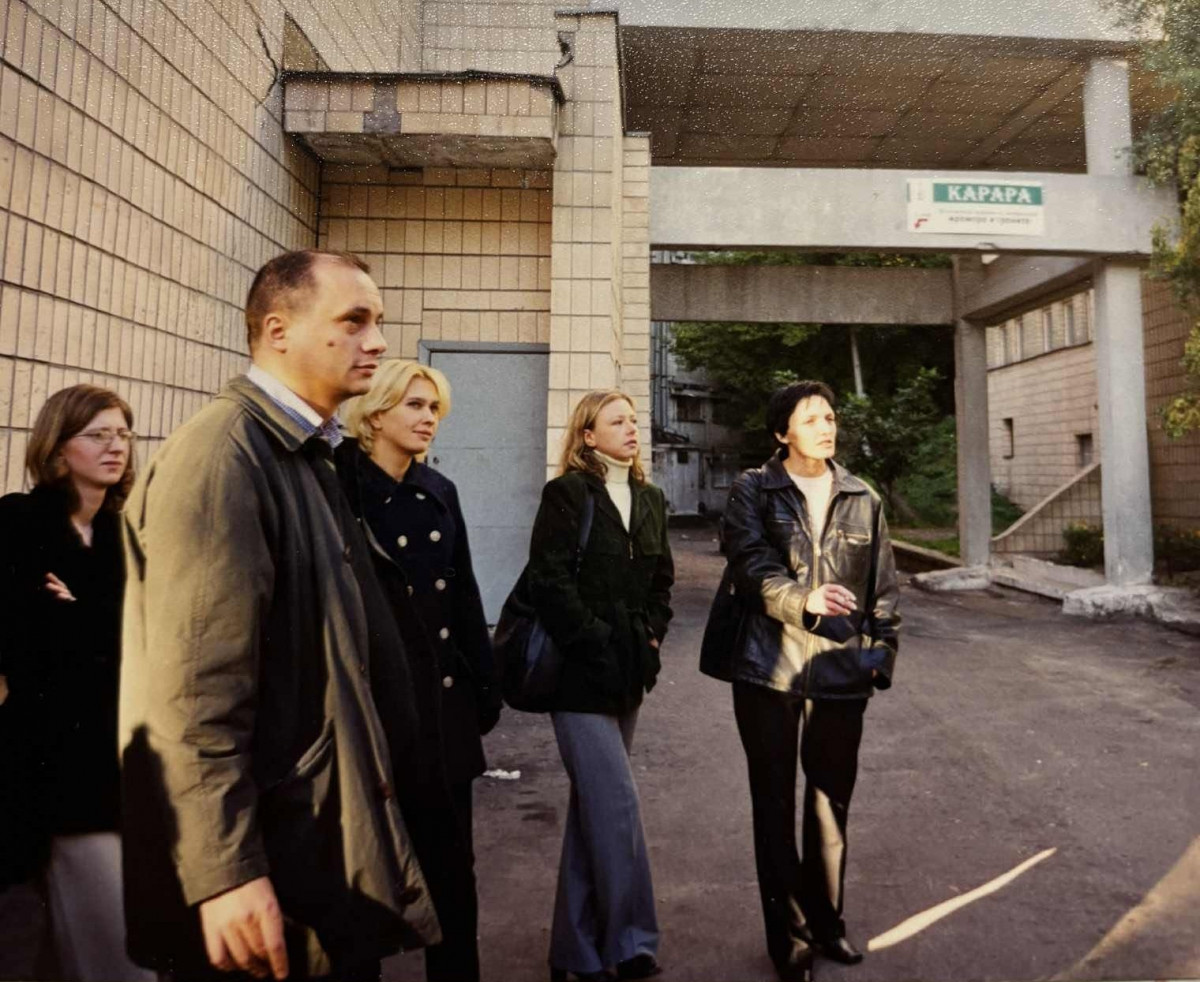
September 24, 2000. On the right — Myroslava Gongadze
I cannot name one specific piece that was decisive for me. Rather, what I remember is the feeling that a platform had emerged where journalists themselves began asking uncomfortable questions about their profession. And that is always a sign of a healthy environment.
— Have there been times when you disagreed with “Detector Media,” its assessments or criticism?
— Of course. And I think that is normal. It would actually be strange to agree with all the assessments of one publication for 25 years. Especially when you yourself run an editorial office, make decisions in real time, and are responsible for them, some external assessments may seem too categorical or fail to take all the circumstances into account. I had such moments while working at Voice of America as well.
But for me, something else is more important: I have never questioned “Detector Media’s” right to criticize. Journalism that demands accountability from the authorities must itself also be prepared for accountability and criticism.
You can argue with a specific assessment. You can debate methodology or context. But the very existence of an independent professional critic makes the media environment stronger.
— Describe “DM” in three words.
Principled. Independent. Resilient.
— How would you like to see “Detector Media” over the next 25 years, and what would you wish for its team?
— I would like “Detector Media” over the next 25 years not to be afraid of changing along with the media environment, but not to change its basic principles.
We are entering a completely different information era. Artificial intelligence, social media, algorithms, disinformation, information operations — the very concept of media is changing very rapidly today. And the question is no longer only how professionally journalists work. The question is how people will distinguish truth from manipulation at all.
Therefore, I would like to see “Detector Media” not only as a critic of traditional media, but as one of Ukraine’s leading centers for understanding the new information environment.
And I wish the team to remain uncomfortable. For the authorities, for media owners, for politicians, and sometimes for journalists themselves. Because when independent media criticism becomes comfortable for everyone — it means that it has stopped doing its job.
— What main character trait of the “DM” team would you single out over these 25 years of work?
— Consistency.
Over these 25 years, Ukraine has seen presidents, governments, television channel owners, technologies, and media platforms change. We have experienced two revolutions, Russian aggression, and a full-scale war. And “Telekrytyka,” and later “Detector Media,” continued to do what they started out doing: ask uncomfortable questions of the media and defend professional standards.
In my opinion, this consistency is your greatest strength.
Photo provided by Myroslava Gongadze