Українською читайте тут.
35 years of Ukraine’s independence is also 35 years of the history of Ukrainian media. During this time, Ukrainian journalists and media outlets have traveled a path from the first private newspapers and television channels, which challenged the state monopoly, to digital platforms, social networks, and artificial intelligence. They endured several waves of censorship, oligarchization, revolutions, war, financial crises, and large-scale market transformations. In the most critical moments, they impressed with their solidarity and ability to defend their freedom, though they did not always bring unifying processes to completion.
Detector Media selected events that show how Ukrainian media changed together with the country from 1991 to 2026. It was impossible to fit everything into 35 events, as there were years when it was impossible to choose only one most important event without neglecting something equally significant. After all, this list can be supplemented by revisiting our earlier overviews of the main events of 2000–2009 and 2010–2020, as well as 15 achievements and 15 losses over 30 years, which we compiled for the previous anniversary.
This is a story not only about media companies, editorial offices, and journalists, but also about the struggle for freedom of speech, national identity, and the right to provide society with complete and truthful information.
1991. The first independent print publication, Ukraina Moloda, appeared. The newspaper was founded in July 1991 as a youth publication of the Central Committee of the Communist Party of Ukraine, but in August it freed itself from party control (just like the entire country). Many well-known journalists worked for the newspaper.
1992. Serhii Kichihin founded the first private newspaper, Kievskie Vedomosti. The editor-in-chief was Oleksandr Shvets. The newspaper ceased publication in 2010.
The first nationwide private television channels, TET and ICTV (International Commercial Television), went on air. Incidentally, the first private regional television channel in the Soviet Union, Tonis, had already appeared in Mykolaiv in 1989.
1993. In April 1993, the first daily issue of UNIAN-News was published, and in May a news feed available only to subscribers was launched. The decision to establish the Ukrainian Independent Information Agency of News (UNIAN) on the basis of the former branch of the all-Union agency Novosti had been made on August 27, 1991, the third day after the declaration of Independence. However, it took two years to formalize the agency legally. In the same year, the editorial office of Interfax-Ukraine, originally created in Kharkiv and then linked through an international holding to the Russian news agency Interfax, moved to Kyiv.
1994. In July, Ukraine held its first-ever televised election debates on the then state-owned channel UT-1 before the second round of the early presidential election. Former Prime Minister Leonid Kuchma and incumbent President Leonid Kravchuk took part. They spoke for almost two hours, after which citizens were able to ask questions. Two television cameras were installed on Independence Square, and people queued for several hours before the broadcast to get a chance to participate.
The same year saw the launch of the newspaper Zerkalo Nedeli (since 2002 also Dzerkalo Tyzhnia, later Dzerkalo Tyzhnia. Ukraina). For more than two decades, it was the leading socio-political media outlet that best captured the pulse of Ukrainian politics. Today it exists only online, but its influence is still felt — for example, in this interview with editor-in-chief Yuliia Mostova.
1995. Programs produced by Studio 1+1 began airing on the state television channel UT-1. Two years later, the company would begin 24-hour broadcasting on the frequency of the state network UT-2. The first broadcast was hosted by television presenters Liudmyla Klepakova and Yurii Makarov.
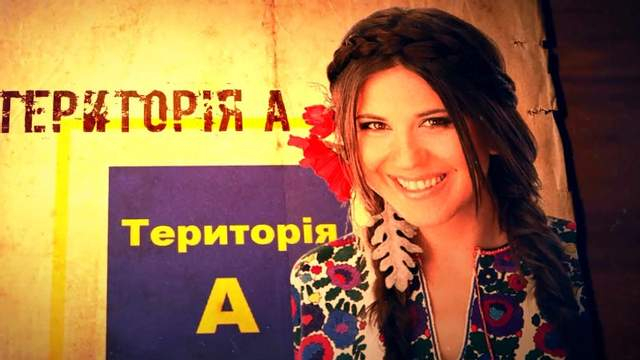
And ICTV launched Territory A with host Anzhelika Rudnytska — the first show to promote contemporary Ukrainian music. Territory A became a launching pad for dozens of Ukrainian music stars. Incidentally, the premiere of the music video for Okean Elzy’s song “Tam de nas nema” also took place on Territory A.
1996. The newly created Russian-language television channel Inter began broadcasting on the frequency of the state UT-3 network. It was intended to replace the familiar central Moscow television — the so-called ORT — for Ukrainian audiences. Its programming was dominated by content produced by the Russian state television company that had co-founded Inter.
On June 28, 1996, the Verkhovna Rada adopted the Constitution of Ukraine. Article 34 guaranteed everyone the right to freedom of thought and speech, the free expression of views and beliefs, as well as the right to collect, store, use, and disseminate information. No less important is Article 15, which explicitly states: “Censorship is prohibited.” The authorities and media owners would repeatedly violate this prohibition, and journalists themselves would have to fight against violations of the Constitution.
In September 1996, the newspaper Den (The Day), associated with Yevhen Marchuk, began publication. Larisa Ivshyna became the newspaper’s editor-in-chief in 1997. During the 1999 presidential election, the newspaper was practically the only opposition liberal print publication. The print version of the newspaper existed until April 30, 2022. It continues to exist online.
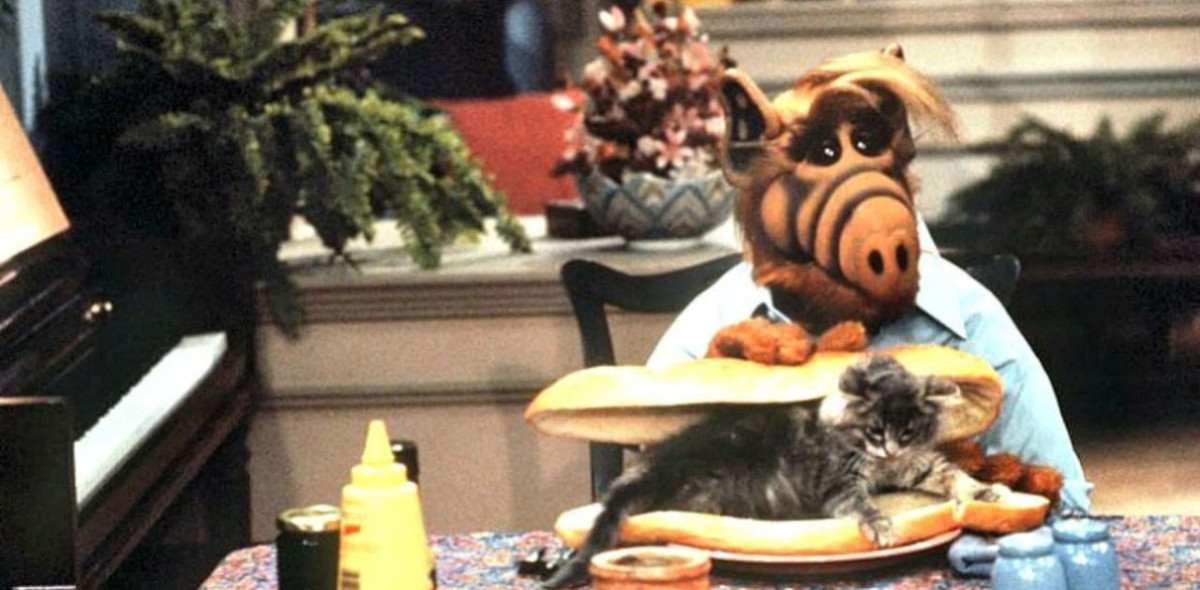
1997. This year, in addition to 1+1 beginning full-scale broadcasting, another television giant of today was launched — STB, co-founded by the International Media Center and Internews Network. But the most memorable event of the year was ICTV’s broadcast of the television series ALF in the cult Ukrainian dubbing created by Oleksa Nehrebetskyi. The whole country was glued to their screens.
1998. Journalist Mykola Veresen’s program Taboo, which had been broadcast on 1+1 since 1997 as a hard-talk show, evolved into the first full-fledged socio-political show in the history of Ukrainian television, although it was not without tabloid elements.
1999. A year of the presidential election campaign, in which non-state media played an important role. So important, in fact, that President Kuchma appeared on a talk show for the first time (it was a special episode of Viacheslav Pikhovshek’s Epicenter-Debates on 1+1 in October), with journalists taking part — among them was Heorhii Gongadze. However, he was the only one who was not in the studio, appearing via a live connection from his office. Kuchma did not dare to face uncomfortable questions from unfriendly journalists a second time.
The series The Bourgeois’ Birthday premiered on 1+1 and became one of the most popular series in the history of Ukrainian television. Filmed in Kyiv and produced by Ukrainians, but in Russian and with Russian actors in the leading roles, it launched a trend for Russian television series and the tradition of producing content “for two countries,” which did not end even after the beginning of Russian aggression.
2000. On September 16, after leaving the home of Olena Prytula, his deputy at the recently established Ukrainska Pravda, journalist Heorhii Gongadze disappeared. On November 2, a decapitated body was found in the town of Tarashcha in the Kyiv region, which Gongadze’s wife, Myroslava, identified as her husband.
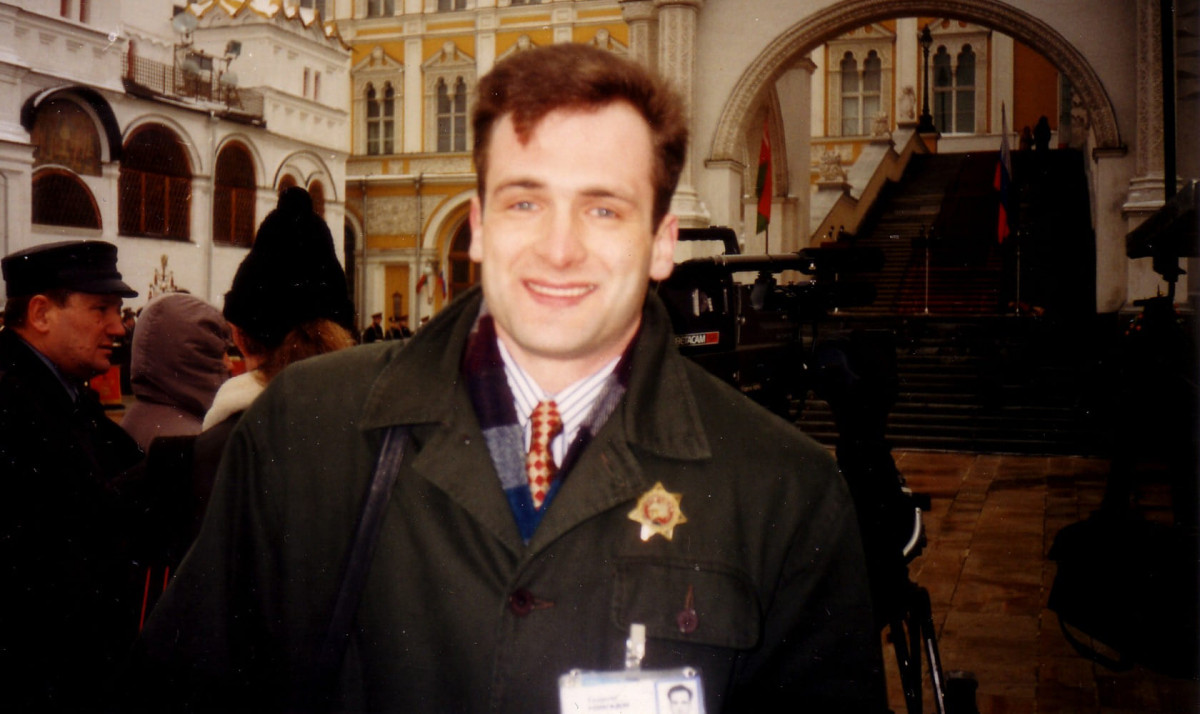
Heorhii’s murder changed society, politics, and journalism. Protests, political debates, opposition resistance, interference by Russian special services, and the introduction of state censorship in the media — the events connected with this crime and the reaction to it eventually led Ukraine to a revolution.
2001. This year, we learned how censorship worked in Ukrainian media and heard the word “temnyk” for the first time. The technology was brought to Ukraine by Russian political consultants who arrived to prepare the authorities for the 2002 parliamentary elections.
As they felt increasing pressure from the authorities, journalists began to unite. In September, at the founding meeting of “Journalists for Clean Elections,” the Commission on Journalistic Ethics was established. The CJE developed the Code of Ethics of the Ukrainian Journalist and continues to operate to this day. Also in September, with a grant from the U.S. Embassy in Ukraine, Nataliia Lygachova founded the online publication Telekrytyka — the first media outlet about media in the countries of the former Soviet Union.
2002. The response to the increasing pressure and censorship was a series of journalists’ protests that led to the creation of the Kyiv Independent Media Trade Union. It was headed by television presenter Andrii Shevchenko, who had been dismissed from Novyi Kanal because of censorship. Later, alongside the KIMTU, the nationwide Independent Media Trade Union of Ukraine was established, headed by Serhii Huz. It was the KIMTU, with the support of civil society organizations, including Telekrytyka, independent media outlets (Ukrainska Pravda, Dzerkalo Tyzhnia, and Channel 5), and under the leadership of Yehor Soboliev at the time, that organized a journalists’ protest against the temnyky in 2004.
2003. Pressure on the media continued to intensify: television channels shut down authorial programs and, instead, launched propaganda projects that smeared the political opponents of the authorities. For the first time, parliamentary hearings on censorship were held in the Verkhovna Rada, during which participants openly spoke about pressure and temnyky. An article on censorship was added to the Law of Ukraine “On Information.”
There was also a positive development: this year, Ukraine participated in the Eurovision Song Contest for the first time. There was no national selection competition yet, so the National Television Company of Ukraine conducted an internal selection and announced that singer Oleksandr Ponomariov would represent Ukraine. In the final of the contest in Riga, Ponomariov came fourteenth. But the following year, Ruslana won the competition with “Wild Dances.”
2004. Ahead of the presidential election, in which the opposition, pro-Western candidate Viktor Yushchenko competed against incumbent Prime Minister Viktor Yanukovych, pressure from the authorities on the media turned into ruthless exploitation. The authorities also resorted to force against editorial offices they could not control: they switched off Radio Free Europe/Radio Liberty’s broadcasts, revoked Channel 5’s license, and so on. These actions prompted journalists’ solidarity protests.
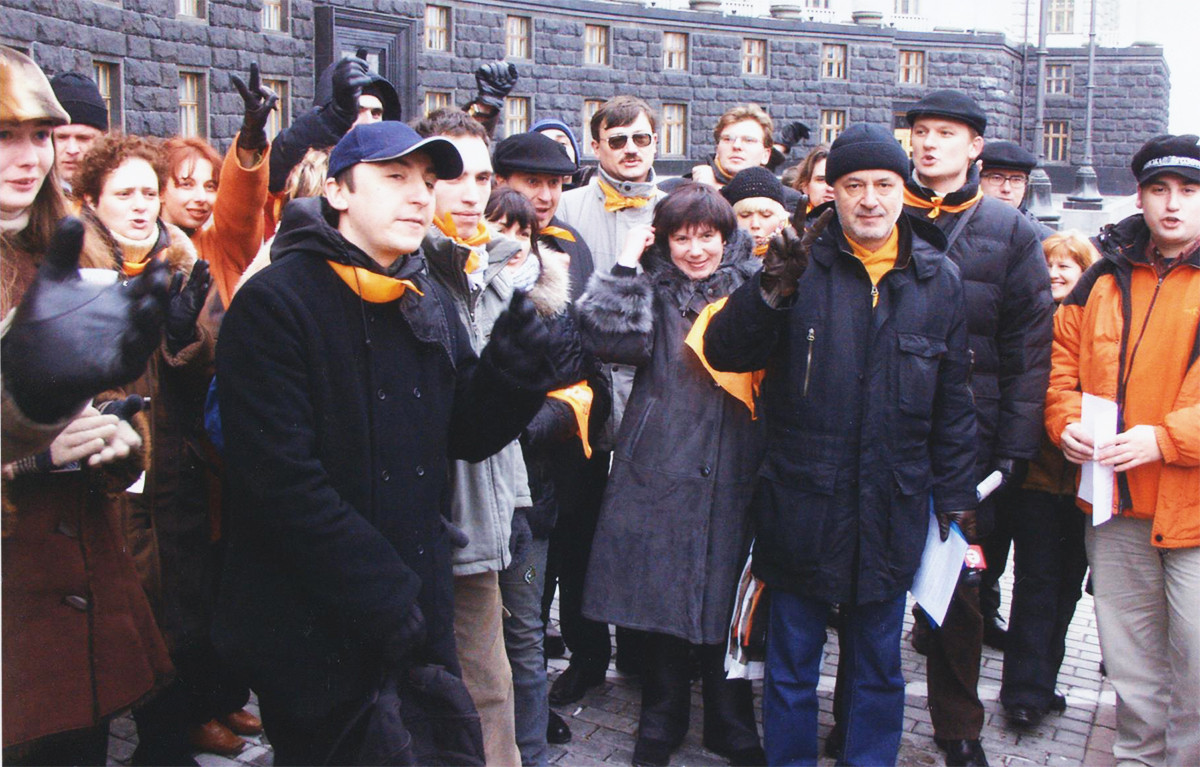
On October 28, journalists from five national television channels — Inter, Novyi Kanal, NTN, TONIS, and ICTV — spoke out about political pressure and refused to follow the temnyky. Within a few days, the statement published on the Telekrytyka website had been signed by 346 journalists from across the country. On the same day, seven journalists from the 1+1 news service — Natalka Fitsych, Yuliia Borysko, Viktor Zablotskyi, Ihor Skliarskyi, Fedir Sydoruk, Halyna Betsko, and Mariana Voronovych — resigned from the channel in protest against censorship. This date is considered the official beginning of the journalists’ revolution that preceded the Orange Revolution.
2005. The political talk show Freedom of Speech with Savik Shuster premiered on ICTV. The format was developed for the Russian television channel NTV, but state censorship was introduced there in 2004. Shuster became one of the most influential figures in Ukraine’s media and political world for several decades, while programs using a format similar to Freedom of Speech gradually appeared on most of the key television channels.
ICTV also aired the first Ukrainian sitcom, Lesia + Roma, starring Irma Vitovska and Dmytro Lalenkov. Although the series was an adaptation of the French-Canadian format Un gars, une fille, which was sold for production in dozens of countries, it became particularly popular in Ukraine: individual episodes were watched by up to two million viewers. The series ran for three years, made the actors playing the lead characters famous, and itself became a classic of the genre.
2006. The liberalization of the media space and the disappearance of state censorship after the Orange Revolution stimulated the development of a new model for influencing public opinion and the political process through the media. Money and hidden advertising — dzhynsa — became the tools of influence. The 2006 parliamentary campaign made the word widely known beyond the journalistic profession. Hidden advertising in news coverage remained an integral feature of election campaigns through the most recent elections, in 2020.
2007. The New Channel launched the first major formatted talent show on Ukrainian television — Star Factory. However, Ihor Kondratiuk would disagree that it was the first, having launched Karaoke on the Maidan in 1999 and Chance in 2003. From then on, the scale of shows based on adapted formats grew steadily, and all of the major first-tier channels gradually entered the competition.
2008. The global financial crisis hit the Ukrainian media market hard after several years of rapid growth. Budgets fell, investors wound down projects, people were laid off, and salaries were delayed. Media outlets that had been founded as commercial enterprises fell into the hands of politicians and became instruments of influence.
The Great Ukrainians project on Inter, hosted by Savik Shuster (after he left ICTV together with the Freedom of Speech project), ended in a major scandal. A few days before the finale of the program, in which viewers were choosing the greatest Ukrainian of all time, Stepan Bandera was leading the vote. However, Yaroslav the Wise unexpectedly won, sharply pulling ahead in the number of votes. A day before the project ended, its editor-in-chief Vakhtang Kipiani claimed that votes for the prince had been artificially inflated, accusing politicians Dmytro Tabachnyk and Vasyl Horbal of organizing it. The channel, which traditionally leaned toward pro-Russian politicians, rejected the accusations, and shortly afterward Savik Shuster moved to another channel, Ukraina, leaving Inter with yet another clone of Freedom of Speech.
2009. Digital terrestrial broadcasting in the MPEG-4 format began in Ukraine. This was an important step in the transition from analog to digital television, although the launch was accompanied by problems involving operators and the regulator. All 10 television channels that won the competition to broadcast in this multiplex turned out to be unprepared to provide the company Ukrainska Tsyfrova Telemerezha with a signal for retransmission, while eight of them suddenly changed their founders.
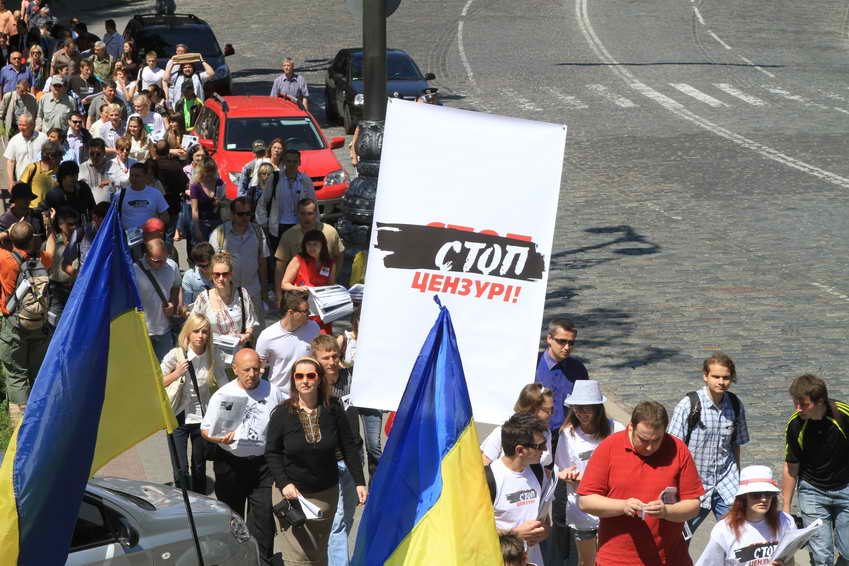
2010. Viktor Yanukovych won the presidential election, and censorship of the pre-revolutionary kind began returning to the media. The first to report censorship interference in his work was 1+1 journalist Myroslav Otkovych: he was not allowed to produce a story about how Viktor Yanukovych interpreted the Holodomor. Both the channel’s owner Ihor Kolomoiskyi and general producer Oleksandr Tkachenko, as well as Hanna Herman, who was responsible for communications in Yanukovych’s team, denied everything. But other journalists began speaking out in support of Otkovych’s statement, and soon STB news journalists also reported censorship. Representatives of several media civil society organizations, including Telekrytyka (now Detector Media), the Institute of Mass Information, the Chesno movement, the Suspilnist Foundation, Internews Ukraine, the Commission on Journalistic Ethics, the Independent Media Trade Union of Ukraine, and journalists from many publications created the Stop Censorship! movement, which defended freedom of speech and played an important role in the Revolution of Dignity.
2011. The Verkhovna Rada adopted the Law “On Access to Public Information,” developed with the participation of civil society organizations, including the Chesno movement. Although uncertainty over the law’s prospects remained until the very last day, it was supported by 408 MPs — everyone except the Communists. Thus, during Yanukovych’s presidency, one of the most progressive laws promoting government transparency was adopted. Although the authorities continue to be reluctant to comply with its requirements.
2012. The first victory over piracy. The Ministry of Internal Affairs shut down ex.ua, the most popular file-sharing and storage service in Ukraine. The reason was the distribution of pirated content. For the first time in Ukrainian history, the fight for copyright protection produced a result felt by millions of people. The website was later restored, but pirated content began to be removed from it, it lost popularity, and eventually shut down.
2013. On November 22, on the eve of the beginning of Euromaidan, Hromadske Television went live online — an initiative of a group of media professionals that played an important role in covering the Revolution of Dignity. Correspondents from Hromadske and Radio Free Europe/Radio Liberty were among the pioneers of online livestreams, which made it possible to see the events on the Maidan live. After Yanukovych fled in February 2014, Hromadske was broadcast on Pershyi Natsionalnyi as an alternative to censored state television. Hromadske Radio, headed by Andrii Kulykov, also began operating during Euromaidan, as did Espreso, a channel created by Mykola Kniazhytskyi.
The popularity of live broadcasts gave a boost to a new format of news broadcasting. Within a few years, newly created and reformatted news channels (112, NewsOne, Pryamyi, etc.) became a significant part of the market — and of the political influence market.
2014. After the victory of the Revolution of Dignity, Ukraine finally launched a reform of state broadcasting: it began transforming it into a public service broadcaster, Suspilne. The movement to create a public service broadcaster in Ukraine had begun back after the Orange Revolution, initiated by 13 civil society organizations, including Telekrytyka. The first attempt to reform state television took place in 2005, but the authorities proved unwilling to give up their influence over the media resource. It was only in 2014 that the Law “On Public Television and Radio Broadcasting of Ukraine” was adopted. The reform process took several years, and Parliament had to amend the law twice more. But ultimately, today Suspilne operates independently of the state and produces high-quality content for Ukrainians.
2015. The process of denationalizing the media began. The Law “On Reforming State and Municipal Print Media” required government bodies and local councils to withdraw from the ownership of print media. Publications that had survived on budget subsidies and served the interests of the authorities were supposed to become private enterprises and build their businesses independently. The reform was far from popular among all participants and was not without problems, but it led to tangible changes in the media landscape. However, some of the “liberated” media outlets soon found other ways of serving the authorities.
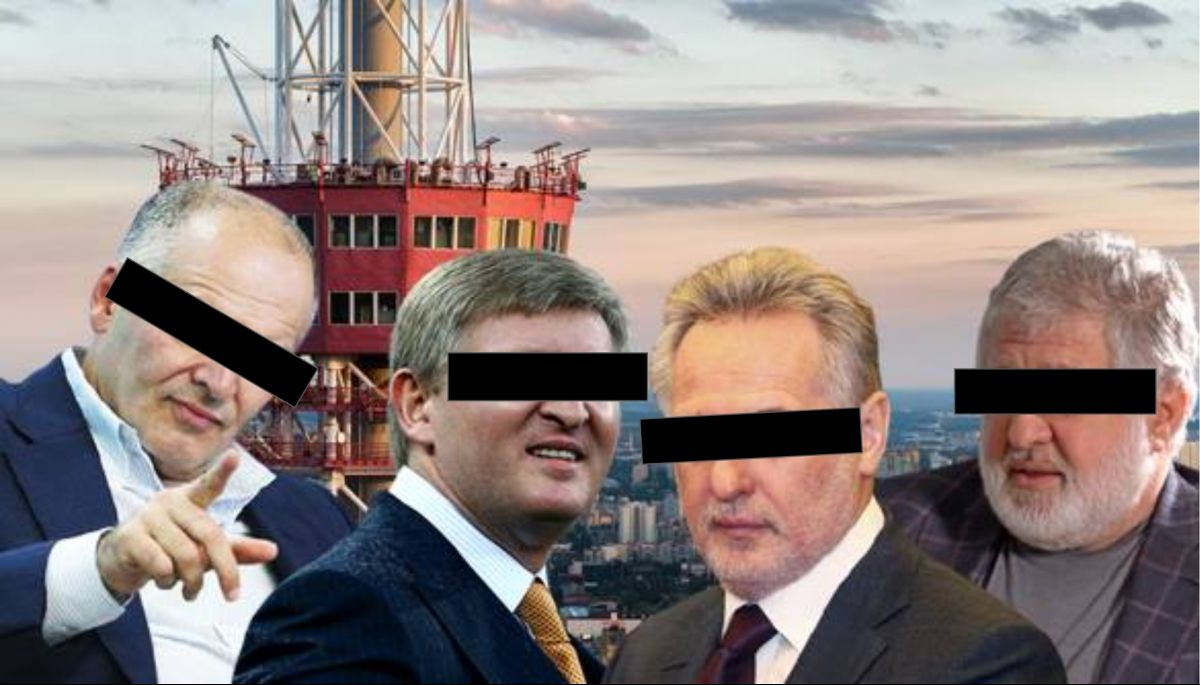
In the same year, a law on media ownership transparency was adopted. After that, we all learned the names of numerous offshore companies behind which the surnames of the real media owners began to emerge.
2016. It is difficult to imagine now, but just ten years ago, a law on language quotas sparked heated debate. It provided for a gradual increase in the share of Ukrainian-language content on television and radio from 35% (!) to 60% over three years. Many argued that producing such an amount of content in Ukrainian was simply unrealistic. In July 2016, President Petro Poroshenko finally signed the law, and it came into force in 2017. A few years later, when significantly stricter restrictions were introduced under the law on the state language, the market accepted — and complied with — them much more calmly.
2017. Ukraine got its first national film award, the Golden Dzyga (even though the country already had more than one influential international film festival, and Ukrainian cinema had received prizes and awards in other countries). The award was established by the Ukrainian Film Academy together with the Odesa International Film Festival. The first statuette went to Taras Tkachenko’s film The Nest of the Turtledove.
2018. On November 19, the television channel Nash began broadcasting. It was founded, along with the Nashi political party, by MP Yevhenii Muraiiev, who sold his previous channel, NewsOne, to Taras Kozak. Unlike the party, the channel lived to see its moment of glory — it became the main hub of pro-Russian propaganda on television after the Medvedchuk channels were shut down in early 2021. It was also destined to become the last legal pro-Russian television channel on Ukrainian airwaves. The National Security and Defense Council imposed sanctions against Muraiiev’s channel only on February 11, 2022. After the start of the full-scale invasion, the channel’s assets disappeared under mysterious circumstances, as did its owner, who later turned up in China.
2019. In the spring of this year, the third and final season of the comedy series Servant of the People aired on 1+1, in which fictional President Vasyl Holoborodko was played by actor Volodymyr Zelenskyy. The final season had little in common with the beginning of the comedy series. In fact, it was the political program of presidential candidate Volodymyr Zelenskyy. The populist program of Holoborodko-Zelenskyy, who promised to repay all loans to international financial institutions, fight corruption, and usher in an era of peace and harmony, made an impression: 73% of voters supported him in the 2019 election. The presidential party was named after the series.
2020. On March 25, a lockdown caused by the coronavirus epidemic began in Ukraine. The quarantine radically changed the conditions in which the media operated and, as it later became clear, did so for a long time. Many media teams abandoned their offices and began working remotely. The advertising market contracted sharply. Having lost advertising revenue, media outlets had to diversify their sources of income: learn to work with grants, collect donations, sell content, or build reader communities.
2021. On February 2, the National Security and Defense Council imposed economic sanctions on MP Taras Kozak and companies associated with him. The sanctions provided for the blocking of assets and a ban on broadcasting the channels 112 Ukraine, NewsOne, and ZIK — the so-called Novyny holding. Kozak was its official owner, while the more widely used name of the holding made its actual owner clear: the “Medvedchuk channels.” The channels were taken off the air the following day, and when the media holding’s team attempted to launch new “independent” channels, those were blocked as well. Economic sanctions proved to be an ingenious solution to a problem that had seemed hopeless: Ukrainian legislation protected freedom of speech so reliably that there were simply no legal ways to stop Russian agents working against Ukraine.
2022. In the first days of the full-scale war, nationwide television channels — STB, ICTV, 1+1, Inter, the parliamentary channel Rada, and later also the public broadcaster’s Pershyi and Ukraina 24 — joined forces to produce a shared broadcast. Thus the United News telethon was born. On March 18, the telethon was given legal backing: the National Security and Defense Council adopted a decision on the “implementation of a unified information policy.” The unified information policy meant that the only nationwide television news broadcast was United News. Soon, three television channels close to the European Solidarity party, which refused to rebroadcast the telethon and did not participate in its production, were deprived of their digital terrestrial frequencies. The need for a joint information broadcast soon disappeared for both broadcasters and society, but it remained for the authorities. That is why United News has now existed for four and a half years, while the state leadership repeatedly calls ending this unpopular, budget-funded project “inexpedient.”
In 2022, the pool of channels co-producing the telethon lost one participant, but a very significant one: Rinat Akhmetov closed his Ukraina media holding. For the first time in the history of Ukrainian television, a major media company that was among the market leaders and had been a powerful instrument of political influence was shut down (rather than sold or relaunched under a new brand). Akhmetov himself explained his decision by citing anti-oligarch legislation, although there was another version — maintaining a media holding during wartime, when there were no elections, was simply not profitable. Three years later, in May 2024, Suspilne left the telethon and now broadcasts its own news marathon on the Pershyi channel.
2023. The Law on Media came into force. Among other things, it expanded the powers of the National Council of Television and Radio Broadcasting and introduced new rules for the media market. The new regulatory system covers not only television and radio but also online media. The law became one of the key steps toward harmonizing Ukrainian legislation with European Union standards. It will take ten years to fully implement the new provisions.
2024. On March 10, documentary filmmaker Mstyslav Chernov, photographer Yevhen Malolietka, and producer Vasylysa Stepanenko took the stage at the Dolby Theatre in Los Angeles to receive Ukraine’s first-ever Oscar for the film 20 Days in Mariupol. Accepting the award in the Best Documentary Feature category for a film made from footage shot in occupied Mariupol during the first weeks of the full-scale invasion, Chernov said that he wished he had never had to make this film or receive the award. That would have been possible if Russia had not attacked Ukraine.
2025. The termination of U.S. government assistance triggered one of the most serious crises in the history of Ukrainian media. After Donald Trump came to power on January 20, 2025, the United States announced a 90-day pause in most foreign assistance, and USAID operations were wound down. A significant portion of the grant projects through which humanitarian projects and media outlets in Ukraine were funded was shut down. For newsrooms, this meant suspending work, reducing staff, and urgently searching for alternative sources of income that would allow them to survive, at least. Regional and small independent media outlets were hit hardest, as it is difficult for them to earn money from content sales or advertising during wartime.
2026. This year has already become the year of the widespread integration of artificial intelligence into media work, while television has finally lost its role as the “main medium” for Ukrainians.
In the first half of 2026, the Institute of Mass Information’s “White List” expanded to 18 online media outlets. They include Suspilne Novyny, Ukrainska Pravda, hromadske, Espreso, NV, Babel, Ukrinform, and others.
Also in the first half of 2026, 305 media outlets joined the IMI and Detector Media Map of Recommended Media — 52 more than a year earlier. It includes online media outlets, television channels, radio stations, and investigative journalism centers from different regions. Thus, quality journalism remains in demand and continues to develop despite the war, economic crisis, loss of grant funding, and fierce competition from digital platforms.
Photo: Shutterstock