
Українською читайте тут.
How Ukraine is living with an expired information security strategy, why the state seeks manual control while avoiding coordination, and what civil society can do. A discussion on the importance of information policy and strategic communications for the resilience of the state at the Kyiv Stratcom Forum 2026.
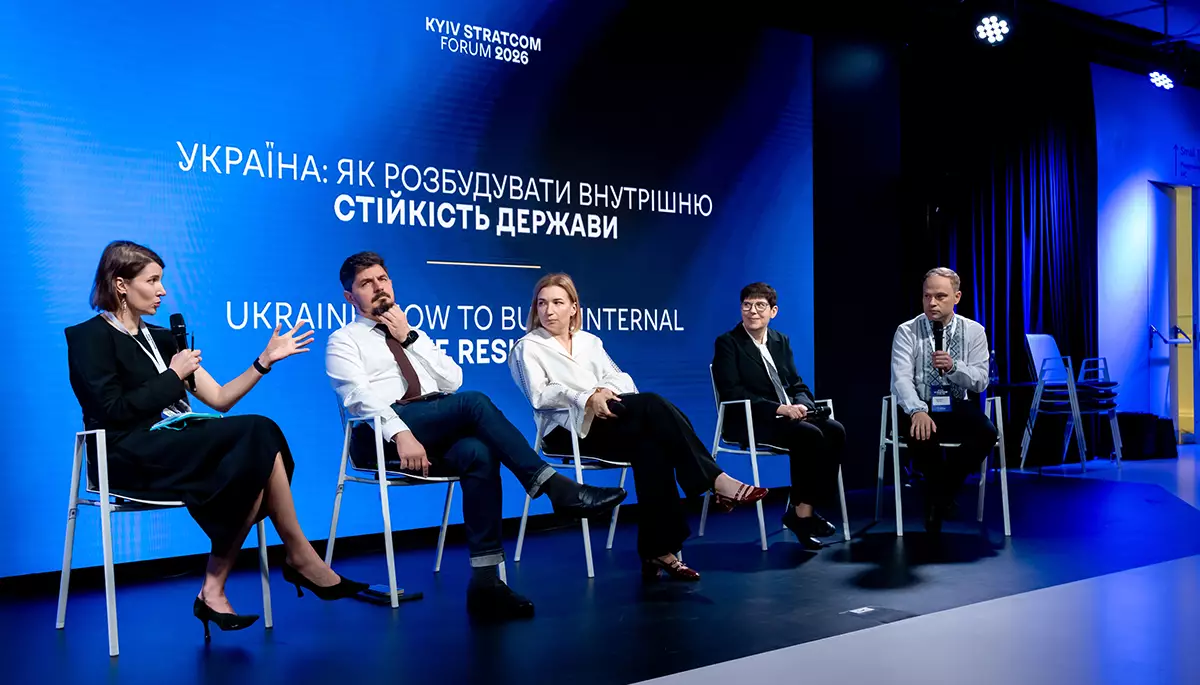
The word “resilience” became the key theme of the fifth international Kyiv Stratcom Forum, held on May 21, 2026. Participants in the discussion “Ukraine: How to Build the State’s Internal Resilience” spoke about the prerequisites for state resilience during wartime while also diagnosing the problems and shortcomings that create vacuums in the security, information, and communications spheres. These dangerous vacuums are eagerly filled by Russia through its information influence operations.
The discussion featured Oleh Shymanskyi, Deputy Minister for Veterans Affairs of Ukraine; Yaroslav Yurchyshyn, Member of Parliament and Chair of the Verkhovna Rada Committee on Freedom of Speech; Olha Aivazovska, Chair of the Board of the Civil Network OPORA; and Nataliia Lygachova, Editor-in-Chief of the online publication Detector Media. The discussion was moderated by Liubov Tsybulska, a strategic communications expert and head of the NGO Join Ukraine. Detector Media recorded the key points of the discussion.
Liubov Tsybulska: I have been hearing the phrase “We have lost the information war” regularly since 2014. The phrase itself is quite dangerous because it is an admission of defeat that demoralizes people. I would like to understand whether we have actually lost and who is responsible for it.
[The moderator invites Olha Aivazovska to reflect on the CAT-UA NGO study “Lines of Division in Ukrainian Society,” presented by the organization’s head, Artem Zakharchenko.]
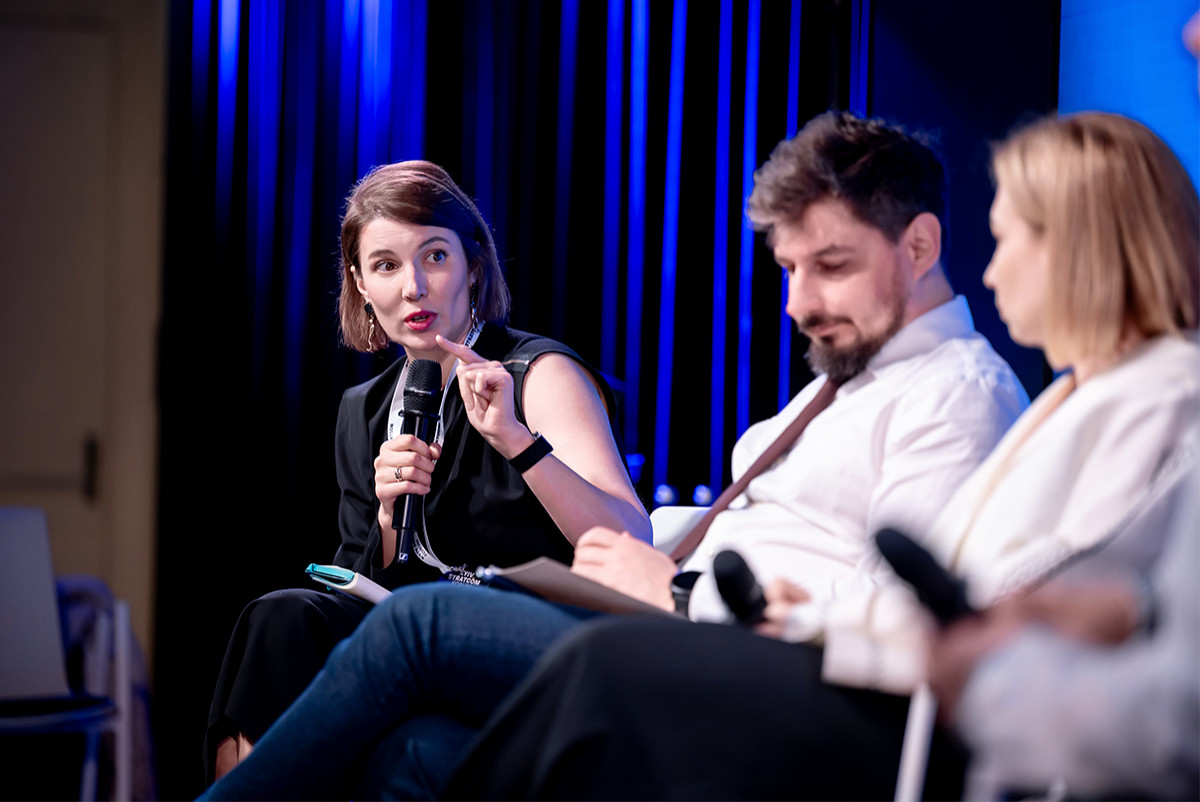
Liubov Tsybulska, Oleh Shymanskyi, Olha Aivazovska
Olha Aivazovska: Since 2023, OPORA has conducted a series of studies on societal polarization. We see trends showing that Russians do not always succeed in their attempts to divide Ukrainians and turn them against one another. In particular, they clearly lost the narrative campaign about the alleged “illegitimacy” of the Ukrainian government, which peaked in 2023 and early 2024. The campaign reached Western partners, but for Western institutions, organizations, and states, the decisive argument is the position of society itself. If the government is regarded as legitimate by society, no political statements or positions of third parties can change that reality.
The study results (CAT-UA NGO — DM) show that changes are taking place. While the issue of mobilization has indeed been largely lost, the emergence of the divide between Ukrainians inside the country and Ukrainians abroad as the leading topic is something new. A couple of years ago, our political class hoped that Ukrainian citizens abroad would participate in elections, so they were considered important and worthy of public discussion. Now, however, hatred has moved to the forefront, and this is dangerous because it undermines our resilience.
The return of Ukrainians who are obtaining education abroad—as qualified professionals or managers during Ukraine’s reconstruction—would be a major achievement for the state. Losing this human capital, on the contrary, would weaken us and serve Russia’s interests.
Why is this happening? At the beginning of the full-scale war, studies showed that most Ukrainians who had left the country remained integrated into Ukraine’s information space. We all lived through the same online battles, shared the same positive messages, and took part in the same mobilization campaigns. Now, however, their voices are no longer present here. People who are enduring the harsh realities of war are directing their negative emotions toward Ukrainians abroad. This is deeply painful because it concerns a large part of our society—one that we will certainly lose if we continue to push it away.
Polarization is not merely about differing views. It is the desire for—and satisfaction derived from—the punishment of another group. We have not yet reached the point of taking collective joy in others’ suffering, but Russia is pushing us in that direction. For example, the dehumanization of migrants who allegedly arrived in Ukraine en masse to work (which is not actually the case) turns us into beasts driven by basic emotions and instincts. Beasts that are easy to manipulate—and this is one of Russia’s key objectives.
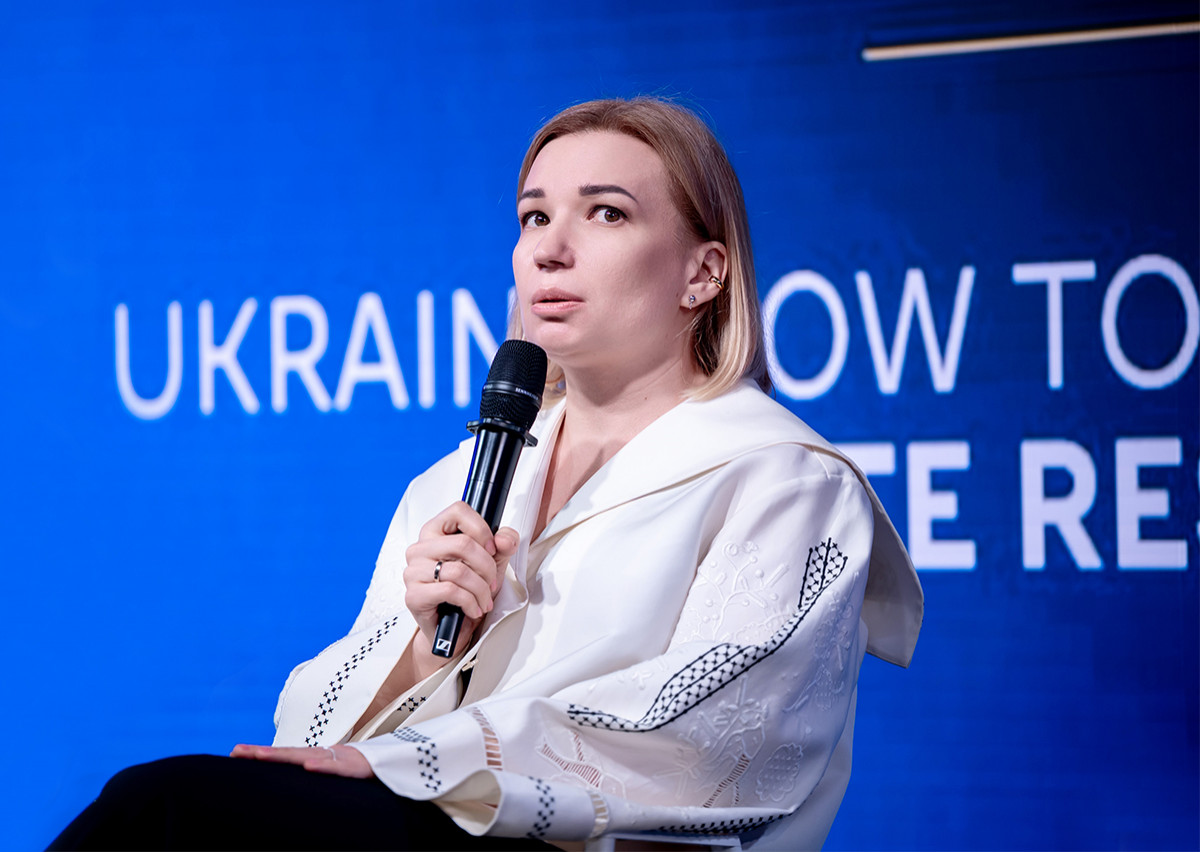
Olha Aivazovska
Liubov Tsybulska: Another divide exists between those who fight and those who do not. My husband has been on the front line for more than two years. Recently, I caught myself thinking: it is unfair that some men have to stay there for an indefinite period while women and children are left on their own, whereas other families remain together. I can imagine the emotions this provokes among people who are not as deeply integrated into the security and defense sphere.
Olha Aivazovska: My husband has also been serving since February 2022, so I experience the same emotions. But these feelings must be worked through. Would I feel satisfaction if I saw people who did not want to join the army being forcibly mobilized? No, because then I would become a beast myself. Do I, as a citizen of Ukraine, demand a fair distribution of responsibilities among Ukrainian citizens? Yes.
The injustice exists, but this is a matter of policy. If Ukraine practices total defence, then everyone must share responsibility while understanding where and how they can be most effective. The state, in turn, must respond honestly to this reality.
Dishonest communication has led to hatred in society even toward military personnel. More than ninety percent of Ukrainians place the greatest trust in the Armed Forces of Ukraine, yet when an ordinary citizen encounters soldiers returning from rotation—who may smell unpleasant or be in poor psychological condition—you often will not see gratitude. Instead, you will see a desire to distance oneself. This is how divisions emerge, and as they deepen, they create a serious threat to society’s resilience.
Liubov Tsybulska: One of the main pillars of a state's cognitive resilience is trust in institutions. In recent years, we have seen the sphere of information policy experience constant and severe turbulence. It is transferred to a separate ministry, then taken away and returned to the Ministry of Culture, then spread thinly across all ministries, then a Ministry of Unity is created… At the same time, there are ongoing attempts to manage information policy manually.
For several years, Yermak tried to do exactly that. I know ministers and deputy ministers who literally trembled when Dasha Zarivna called them on Yermak’s behalf—his influence was that powerful. I also remember the time when Andriy Yermak wanted to dismantle the Center for Strategic Communications. Yet today the Center still exists, while Yermak is collecting donations one coin at a time to post bail.
Nataliia, to what extent does this turbulence affect society’s resilience? Is it merely a storm in a teacup, while our resilience is actually shaped by something else?
Nataliia Lygachova: Ukraine has many state institutions, civil society initiatives, and donor-supported projects working to strengthen the country in the cognitive war. However, the state is not fully fulfilling its role as a coordinator in this sphere. No, the state should not create narratives on its own—we should all do that together. But this work does require coordination.
An important prerequisite for state resilience is that the government should not fear criticism, initiative, competition, or diversity of opinions. On the contrary, it should regard them as strengths. A resilient state is also one that does not allow information vacuums to emerge. Unfortunately, this is another area where we have a problem.
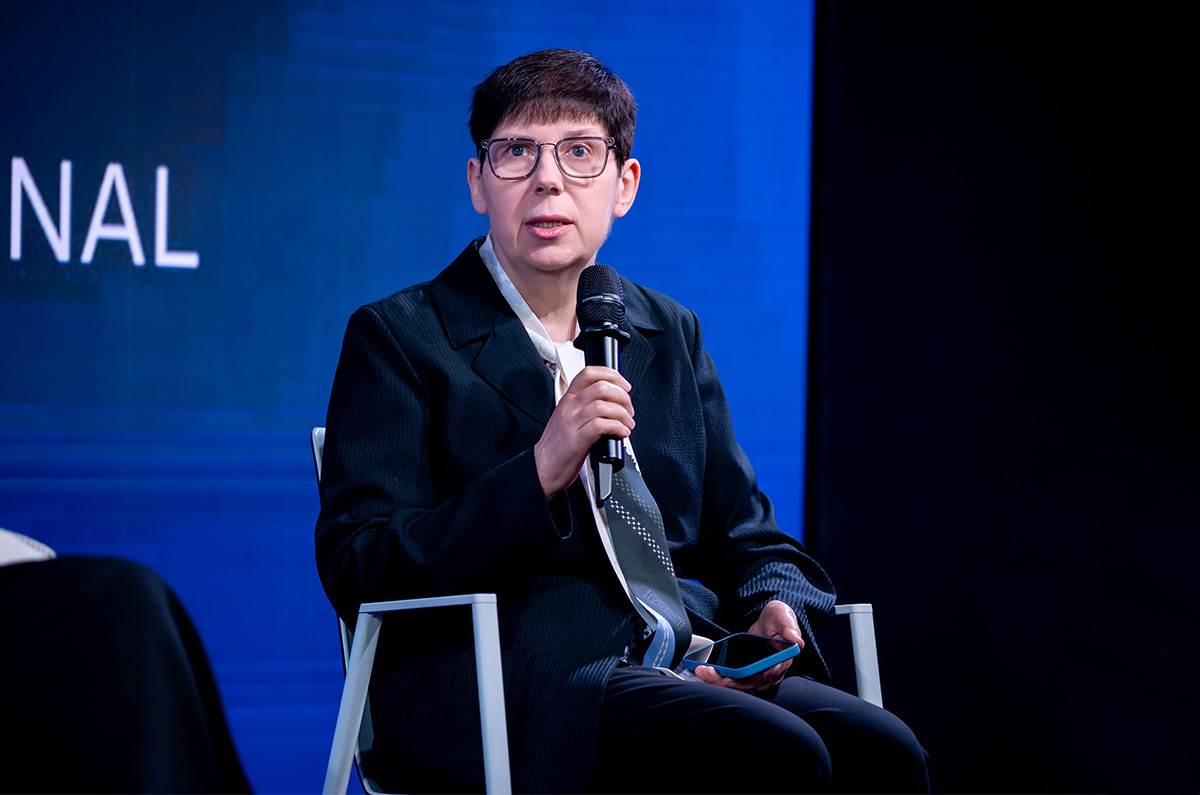
Nataliia Lygachova
One of our studies focuses on the manipulation of the mobilization issue on TikTok. Only 8% of videos on this topic contain constructive messaging. Meanwhile, 38% of the content depicts the use of force, while 26% criticizes the need for mobilization. This is where we see the absence of the state—there is no official communication on TikTok. The authorities now seem to be trying to formulate constructive messages, but you will not find them on TikTok. Silence, however, is not a neutral position; it is a surrender of the information space to the adversary.
There are many examples that could be cited. For instance, working with young people is crucial for resilience. Our research shows that young people do not respond to the current form of official communication. A new policy for engaging with youth and teenagers needs to be developed. There are successful civil society initiatives in this area, but does the state reinforce them? No.
We understand that a significant share of disinformation spreads through social media. Do we have a consistent state policy regarding social media platforms? We see, for example, that Telegram is one of the main communication tools used by government institutions, even though both Ukrainian and Western experts have repeatedly warned about the risks associated with this messenger. It is absurd when intelligence services warn about the dangers of Telegram and Russia’s influence over it, while at the same time senior government officials continue to use it.
Which institution should coordinate information policy? The reality is that, in our country, the Office of the President is responsible for everything. Even the “Thousand Spring” initiative is the President’s personal initiative. Fine—let it be the Office of the President. But it should not operate the way Yermak did. Its role should be to coordinate, not to attempt to manage everything manually.
Liubov Tsybulska: A question for Yaroslav Yurchyshyn. What should the architecture of information policy look like? We see that no one knows where to place it institutionally, while at the same time various actors want to control it. Other countries offer different models—for example, information policy is overseen by parliament in Moldova and by the government in the United Kingdom. Should it be depoliticized?
Yaroslav Yurchyshyn: I would like to take a step back in order to establish clear terminology. The state is the organization of society—that is, of all of us. If we say that the state is failing, it means that we, as a society, are failing. One could instead say that the government—and there are two representatives of the government here today—is failing. The government is capable only to the extent that society is willing to trust it and delegate to it the authority to shape policy.
The state is the organization of society—that is, the organization of all of us. If we say that the state is not coping, then we as a society are not coping. Public authority is merely one component of the organization of society, and therefore one component of the state.
This distinction is extremely important. When we criticize the state, in most cases we are actually criticizing the government. And the government's capacity is determined precisely by the extent to which society is prepared to delegate authority to it, trust it, and shape it.
Why is everything currently managed by the Office of the President? Why could a representative of Yermak’s office in the past—and hopefully this will no longer happen now—call ministers and deputy ministers and say, “We communicate this, but on this issue we remain silent”? Because we, the Ukrainian people, wanted change so badly that we handed the full monopoly of power to a single political force. We knew what we were choosing.
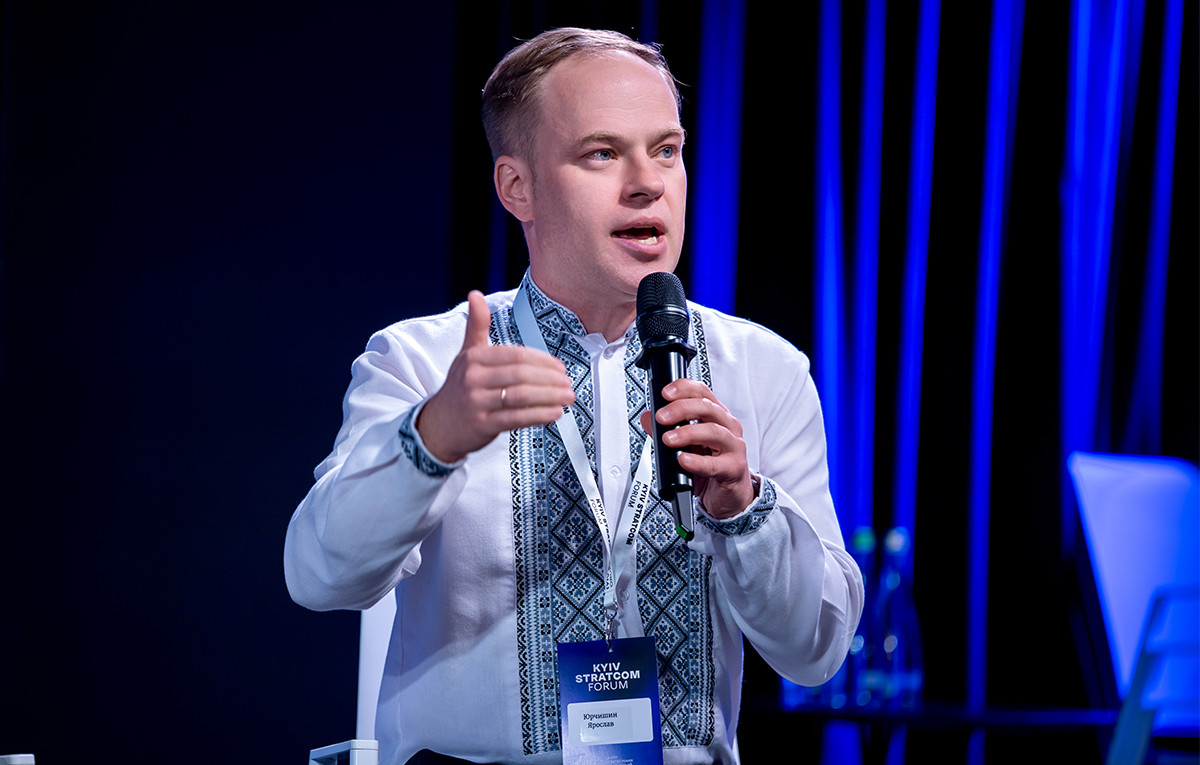
Yaroslav Yurchyshyn
The basic element of any conscious policy is a policy document that describes what we have. Do we have a document that describes a communications strategy? Unfortunately, we do not. In wartime, we should have a national security strategy, because the information space is one of the key fronts of cognitive warfare. But our national security strategy was adopted in 2020. Since then, we have ceremoniously defeated one of the key threats identified in that strategy — Covid-19. At the same time, the other challenges facing us have not even been fully discussed or understood. Right now, we are moving largely intuitively. Many things that the public considers part of a plan are, in fact, improvisations.
The Center for Strategic Communications is one example: a brilliant invention that works extremely well, but the authorities still do not know where to place it institutionally. Why? Because the authorities do not feel they have full control. The Center employs people who have close ties to civil society and the media. They cannot be bent to someone’s will and forced to promote a particular agenda.
Perhaps the only effective mechanism for making effective decisions in Ukraine is the involvement of the public. When the state, cooperating with civil society and drawing on its experience, creates an institutional system.
Who should create an institutional system for information policy? The most logical candidate would seem to be the National Security and Defense Council, which was created as a platform for strategic decision-making. But in the current system of government, the NSDC is an institution where people who have stumbled in the Cabinet of Ministers are sent. Or it is an institution that is activated when a political decision is needed that the Cabinet is not prepared to make.
Recently, however, the NSDC has created a platform for synchronization. Thanks to this, the Security Service of Ukraine, the Ministry of Foreign Affairs, the Ministry of Culture, and other government bodies come together, review current risks, forecast future ones, analyze them, and try to act in some way. Although many important actors are not involved in this process: civil society organizations, businesses, the media, and, ultimately, our Suspilne (Public Broadcaster).
Well, let’s eat the elephant one bite at a time.
Who should coordinate processes in the field of information policy? The NSDC could... but cannot. That leaves the Cabinet of Ministers. The Center for Strategic Communications once operated within the Ministry of Culture and Information Policy, which was later renamed the Ministry of Culture and Strategic Communications.
What is needed here is a significant institutional superstructure, which should be created after information policy is formalized within the national security strategy. This could be a Deputy Prime Minister for Strategic Communications who would coordinate the Ministry of Foreign Affairs (because this is their domain), the Ministry of Culture, and the Ministry of Digital Transformation.
In addition, every ministry has its own communications, without which effective policy in any area is impossible.
Most government officials still believe that information can be controlled. Forget it! In a post-information society, information is a flow that you cannot control. You can fill it; you can forecast it, understand the problem, and develop a response.
I agree with Ms. Nataliia that the function of government is to establish coordination, take responsibility for the most difficult institutional issues, and direct budget funding. And to invite everyone to cooperate — including media outlets and civil society organizations that criticize the authorities.
It is very important to change our understanding: those who criticize the authorities do not want the state to collapse. They want it to be effective. Coordinating with them is a better approach than having to correct mistakes afterward.
People now come to us to learn how to counter cognitive warfare. Everyone is studying our experience. So there is no need to say that we lost the information war. If we had lost it, we would now be sharing our experience from a prison cell in Siberia. We are capable.
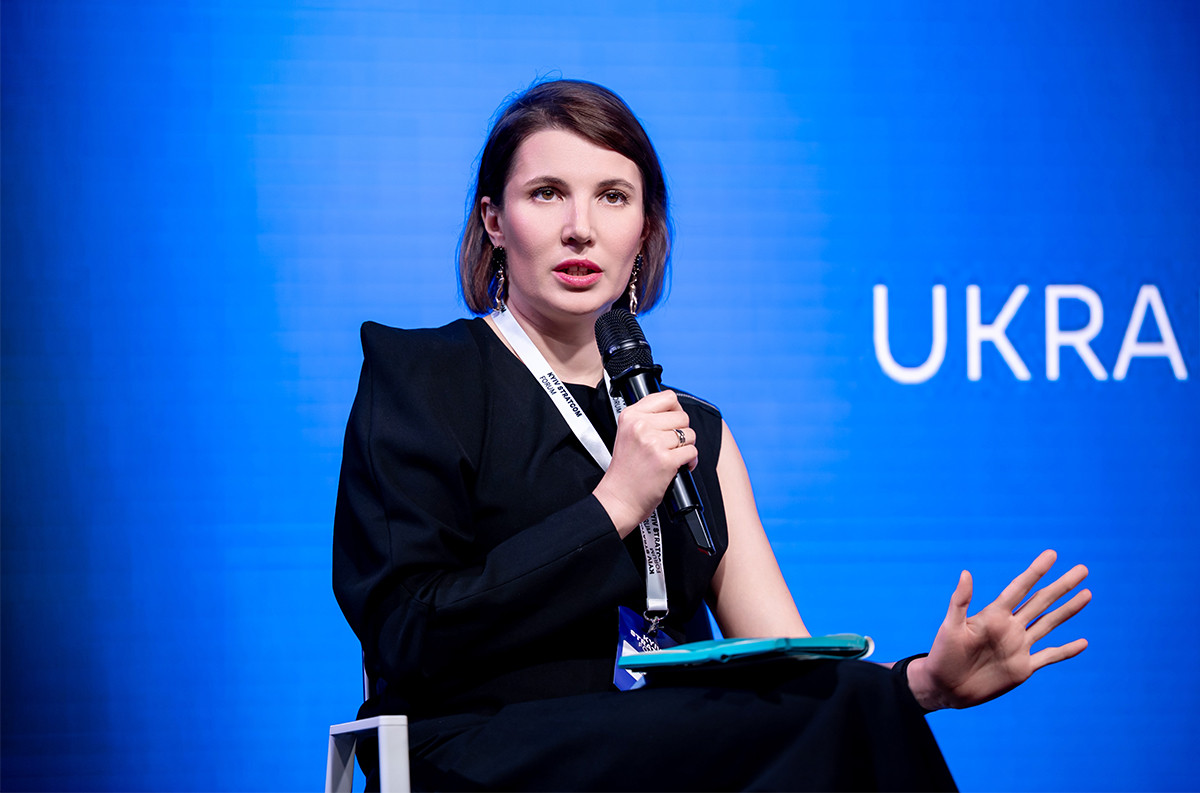
Liubov Tsybulska
Liubov Tsybulska: Indeed, our Western partners come and ask, “How did you manage to do it?” For them, we are an example of a country that succeeded. But we do not know what to answer. We do not have a formula.
Olha Aivazovska: It seems to me that the formula is horizontal diversification. If someone wants to create a Deputy Prime Minister or another institution responsible for everything, it will not work.
Now that we are moving toward European integration, there are deputy ministers for European integration everywhere. The same should apply to strategic communications — not in terms of public relations, but in terms of countering Russian attempts to undermine societal resilience. This function should exist within every institution.
Oleh Shymanskyi: The Ministry of Veterans Affairs has a strategy. One of its key elements is the perception of veterans in society. We are becoming a veteran society. There are already 1.5 million veterans in our registry. Add another two or three family members for each, and we get up to six million people. And that number will continue to grow.
Understanding how to communicate with them is important. Most importantly, we must not set them against society. Veterans are part of society, just like all of us. We need to integrate veterans into every sphere of life as fully as possible. Give them real jobs, opportunities to develop and build careers, and provide support where they need help.
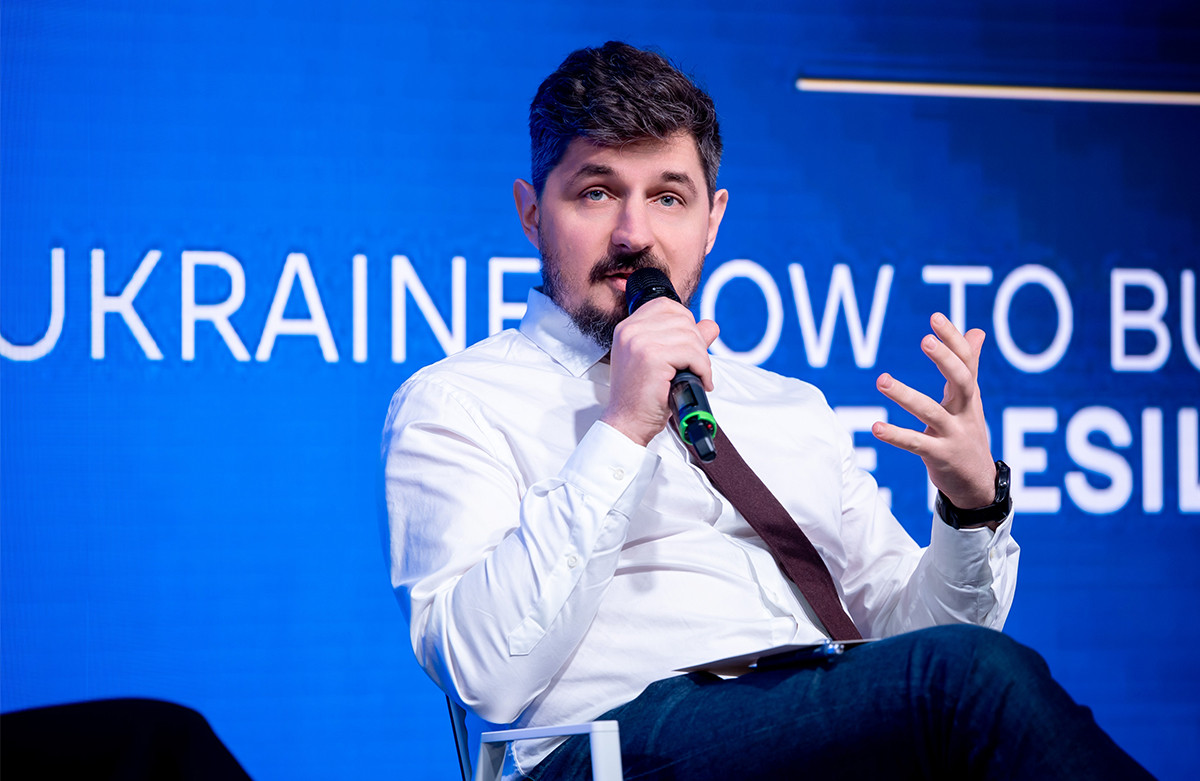
Oleh Shymanskyi
I believe that introducing the school course “Defense of the Country” is an excellent initiative. Involving real people who fought or are fighting for Ukraine to share their experience and teach children is extremely important.
We need to create conditions in which veterans are fully integrated and society understands them and combats stigma.
To achieve this, we must debunk the myth that all veterans supposedly suffer from post-traumatic stress disorder. This is not true. PTSD is a specific diagnosis, and it must be discussed carefully, while people who have this and other disorders need assistance.
[Question from the audience: In Ukraine, we always want more freedoms. Yet at the same time, we say that the state does not coordinate us enough. But if the state starts coordinating, we begin talking about censorship. Where is the golden mean?]
Nataliia Lygachova: We are talking about the state as a coordinator, not a controller. The authorities are currently doing a lot in all spheres, but they rely on manual management, often preventing initiatives from developing. And everything they do not control is considered hostile.
We have already spoken about gaps: communication gaps, research gaps, governance gaps, and so on. Filling these gaps — not through control, but through coordination — should be the function of the state.
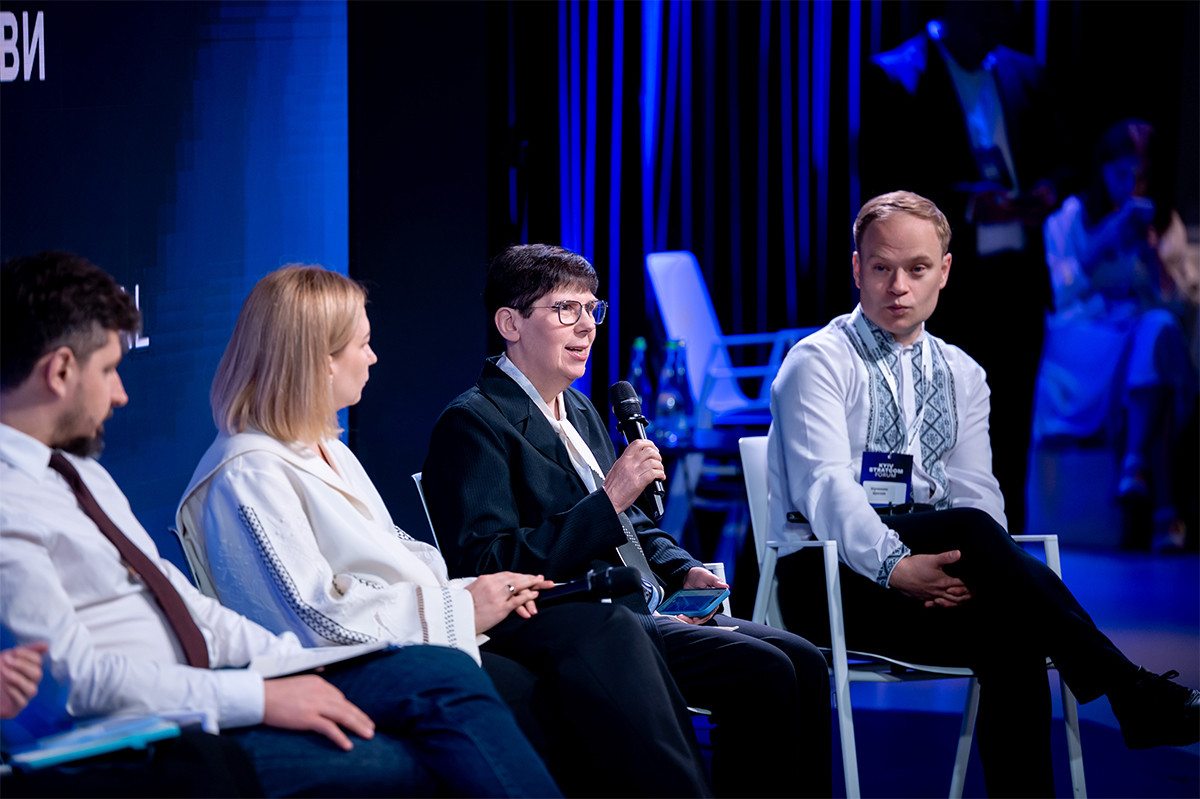
Oleh Shymanskyi, Olha Aivazovska, Nataliia Lygachova, Yaroslav Yurchyshyn
Olha Aivazovska: No one except government institutions has the authority to formulate policy in a particular sphere. There is no other formula if we want to preserve the rule of law, the constitutional order, and so on.
But horizontal structures are what save us. It is a matter of greater synergy among those agencies that have partial mandates to implement the strategies that have already been written. And it is a matter of high-quality implementation.
I would not expect some wise person to arrive, become Deputy Prime Minister, and create policy or coordinate everything correctly. Most likely, they would spend their time attending international conferences, showing the same presentation everywhere — and that would be the end of it.
Yaroslav Yurchyshyn: I agree that there is no magic pill. In this case, what matters is how it is designed: it is a question of balance, priorities, and oversight. The state can monitor the implementation of actions; civil society can monitor the quality of those actions.
Without state institutions, policy will not be sustainable. Without civil society, it will be disconnected from society. Will a Deputy Prime Minister work? Not necessarily. What will work is sitting at the same table, making decisions together, and working together.
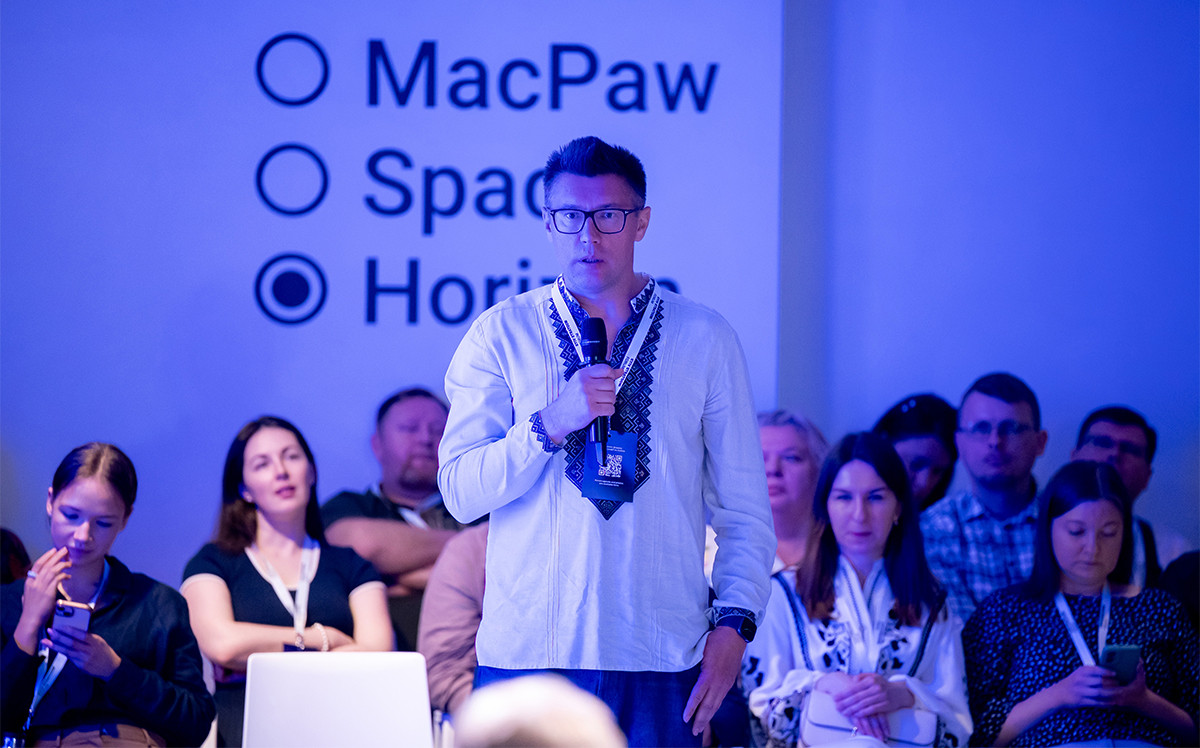
Taras Shevchenko
Taras Shevchenko, Director of Development at the Centre for Democracy and Rule of Law: Based on the key strategic security document — the National Security Strategy adopted in 2020 — the government approved fifteen sectoral strategies. Most of them, including the Information Security Strategy, expired in December 2025 and have not been updated since. In other words, we currently do not have information security at the strategic level.
The Information Security Strategy developed by the Ministry of Culture has been agreed upon by all ministries and is ready to be submitted to a Cabinet meeting. However, there is a feeling that the National Security and Defense Council does not want it to be submitted.
Yaroslav Yurchyshyn: We need to do at least something properly. Each of us, in our own position, can stimulate this process. Society can encourage the authorities to adopt a basic strategy, or at least sectoral ones. The Ministry of Culture can encourage the Cabinet to approve it despite resistance.
I am not convinced that the NSDC is blocking it. On the contrary, the NSDC is probably operating on the logic that the foundational strategy should first be updated so that the two do not later contradict each other.
Liubov Tsybulska: Remember when we felt most resilient and, at the same time, most threatened—in 2022–2023. We were all involved and felt that the survival of the state depended on our participation. Now, in the fifth year of the full-scale war, such spontaneous engagement is no longer possible. It requires policies. It requires trust. This is the most important thing the state, and especially the authorities, should be working on right now.
It would be good if every minister or deputy minister felt greater agency and did not think that everything is determined by the Office of the President. In your positions, you have agency, and much depends on you. When we no longer have this disconnect, we will have the resilience we have been talking about today.
Photos provided by the Center for Strategic Communications