
Українською читайте тут.
By viewing the media solely through the lens of cognitive warfare, we risk overlooking the key functions they perform in building the resilience of the state and society during wartime.
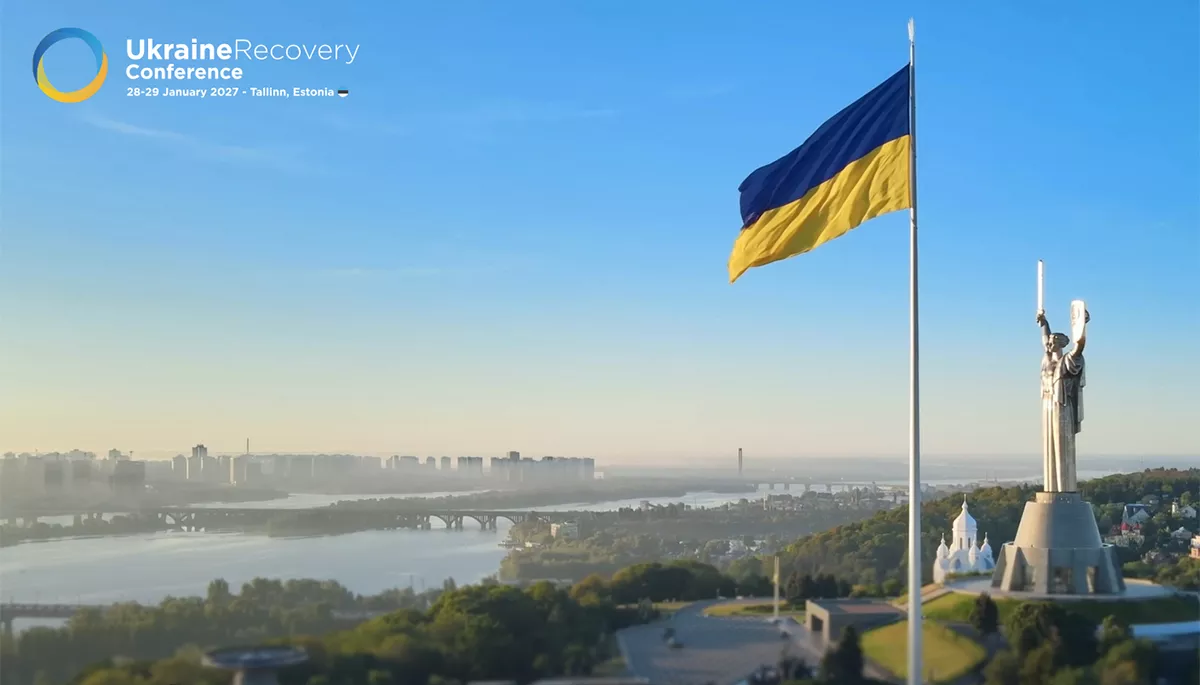
At the Ukraine Recovery Conference 2026 in Gdańsk, we witnessed a new approach to the topic of media: they were discussed in the context of security and defense. Will this approach be maintained at URC 2027, which is set to take place in Tallinn, Estonia? And should it be maintained, at least as the only and unquestioned way of understanding the place and role of the media during wartime?
These were the questions my colleagues and I discussed at a stakeholder meeting organized by the Ministry of Culture last week. Among other things, we talked about how the media should be represented at the upcoming conference. Since the meeting was not public, I would like to share my views with a broader audience.
Let me begin with the positives. Estonia is a country that many military analysts consider the number one potential target of Russian aggression against the European Union. Estonia does not take this threat lightly and has been seriously preparing for years to repel a possible Russian offensive, including in the cognitive domain. Therefore, it is only natural that discussions in Estonia focus on countering information influence operations.
Moreover, it is in the Nordic and Baltic countries that the so-called Swedish model of information resilience has been developed. This model incorporates non-state media into the broader concept of "total defense," in which both military and civilian institutions and instruments play a role. Ukraine is also promoting this approach.
However, in most European and North American countries, the media are regarded as independent institutions that are not part of the defense sector. Their governments draw a clear distinction between these two spheres.
A vivid example is the United Kingdom's strategic communications support programs in Ukraine. Having focused (even when the U.S. Agency for International Development, USAID, was still operating in Ukraine) on information resilience—which, in their understanding, primarily means strategic communications and the ability to withstand hostile influence in cognitive warfare—they have all but ceased supporting media outlets.
This is because, from the perspective of the British government, media represent something entirely different: freedom of expression, human rights, investigative journalism, and independence from the government. A number of international organizations share a similar view, drawing a clear line between the defense sector and the media sector.
Therefore, placing media-related issues exclusively within a defense framework may send a negative signal, discouraging at least some donors and governments from supporting the recovery of Ukraine's media sector.
Therefore, placing media-related issues exclusively within a defense framework may send a negative signal, discouraging at least some donors and governments from supporting the recovery of Ukraine's media sector.
Returning to the concept of "total defense," it is worth noting that this model also does not envision the instrumentalization of private or public service media. No one compels them to follow directives from the military command, the government, or even simply to become part of a so-called "single voice." (An idea that clearly appeals to some Ukrainian politicians and officials, as evidenced by the fact that the United News Telethon has now been operating for a fifth consecutive year.)
The role of the media within this concept is based on the principle of independence as the primary weapon against disinformation. The media provide timely information, verify facts, and maintain well-developed systems of self-regulation. At the same time, the state places strong emphasis on promoting media literacy and critical thinking. Public service broadcasters are well protected from political pressure while also assuming certain responsibilities toward the state within the framework of the national defense strategy.
Therefore, for both the Nordic and Baltic countries with their concept of total defense, as well as for other partners essential to Ukraine's recovery, it would be more appropriate to discuss the media as an infrastructure of societal resilience during wartime, rather than as an instrument of defense.
Likewise, it would be more appropriate for Ukraine to ask its partners to support the resilience of high-quality media, strengthen their capacity to verify facts, deliver reliable information in a timely manner to counter fake news and hostile narratives, help combat corruption within both government and society, and oversee public spending—including foreign recovery assistance. Rather than seeking support for conducting cognitive warfare or promoting Ukrainian narratives, which many potential donors perceive as synonymous with propaganda.
Without question, Ukraine has the right—and indeed the obligation—to wage cognitive warfare (not only to defend itself but also to take offensive action where possible) and to promote its own narratives. Should the media and journalists take part in these efforts? That is an open question. However, the decision to participate in information influence operations or in countering hostile information attacks should rest with media professionals themselves. Forcing them to do so, or creating a model in which participation in propaganda activities becomes a mandatory condition for receiving grant funding (an idea that some officials have put forward), is unacceptable.
The issue of cognitive warfare is certainly relevant to foreign governments, but first and foremost within their own countries, rather than in Ukraine. Ukraine can and should share its experience in this field with them. As a rule, however, this is the responsibility not of media professionals but of specialized government agencies and security institutions. Even here, as we heard from an Estonian representative at the Kyiv Stratcom Forum, Europeans want to "play the right game by the right rules."
In other words, implementing the "total defense" model across society is entirely appropriate, and Ukraine already has experience with this approach. At the same time, it is important to emphasize the importance of independent media within this model as well.
I propose returning to the key messages that Ukrainian organizations first formulated at URC 2024 in Berlin: the media are a critical infrastructure that requires recovery, and without them, Ukraine cannot truly be rebuilt. Supporting high-quality, responsible media is an investment in safeguarding all material and technical assistance provided to Ukraine during the war and in the post-war period, because it is the media that encourage other actors involved in the recovery process to remain transparent, accountable, and responsible.
During our discussion at the Ministry of Culture, Roman Kifliuk, Ukraine Consultant at International Media Support, suggested placing primary emphasis on ensuring the physical protection of Ukrainian media. I agree with him: assistance is needed for editorial offices damaged by Russian shelling, financial support for frontline media outlets, psychological assistance for media professionals, and more.
However, we should also consider:
1. Supporting media self-regulatory and co-regulatory bodies. These organizations are vital to a healthy media environment but cannot seek funding from the private sector, as doing so would jeopardize their independence and impartiality.
2. Supporting media outlets that cover events in the occupied territories and serve audiences there while operating in exile. These outlets have virtually no opportunities to generate commercial revenue, meaning they simply cannot survive without grant funding. Losing these newsrooms would mean severing one of the few remaining links between Ukraine and the hundreds of thousands of its citizens still living under occupation. Donors have already shown interest in this area—for example, the British are implementing a major project focused on the temporarily occupied territories.
3. Supporting high-quality independent media in areas such as fact-checking, digital transformation, expanding their presence on social media and YouTube, integrating artificial intelligence into newsroom operations, developing monetization mechanisms, and more. All of this requires substantial funding. It is about development and about enabling independent media to compete with social media, including on its own playing field. However, attracting private investment for these purposes remains extremely difficult.
4. Supporting the monitoring of media quality and compliance with professional standards, including on new platforms such as YouTube. Without systematic monitoring, donors will lack a reliable benchmark for determining which media outlets deserve support. Likewise, private investors will have no safeguard against media being used as tools for political or commercial promotion.
5. And, of course, supporting programs that promote media literacy and critical thinking to strengthen people's resilience against hostile information influence.
At the same time, the Ukraine Recovery Conference is not only about asking for support—it is also about offering something in return. What the Ukrainian media community could offer potential partners in exchange for their assistance, and what results we could achieve with international support, are questions we should seek to answer together. I invite colleagues who have their own vision of the media agenda—both for URC 2027 and for Ukraine's broader recovery—to join this discussion.
Photo: urc27.org
This material was prepared with the support of the Norwegian Helsinki Committee and funded by the Norwegian Agency for Development Cooperation (NORAD).