
Українською читайте тут.
Since February 24, 2022, Detector Media has been monitoring Ukrainian and foreign social media segments as well as Kremlin-backed media, documenting the chronology of Russian disinformation about the war against Ukraine.
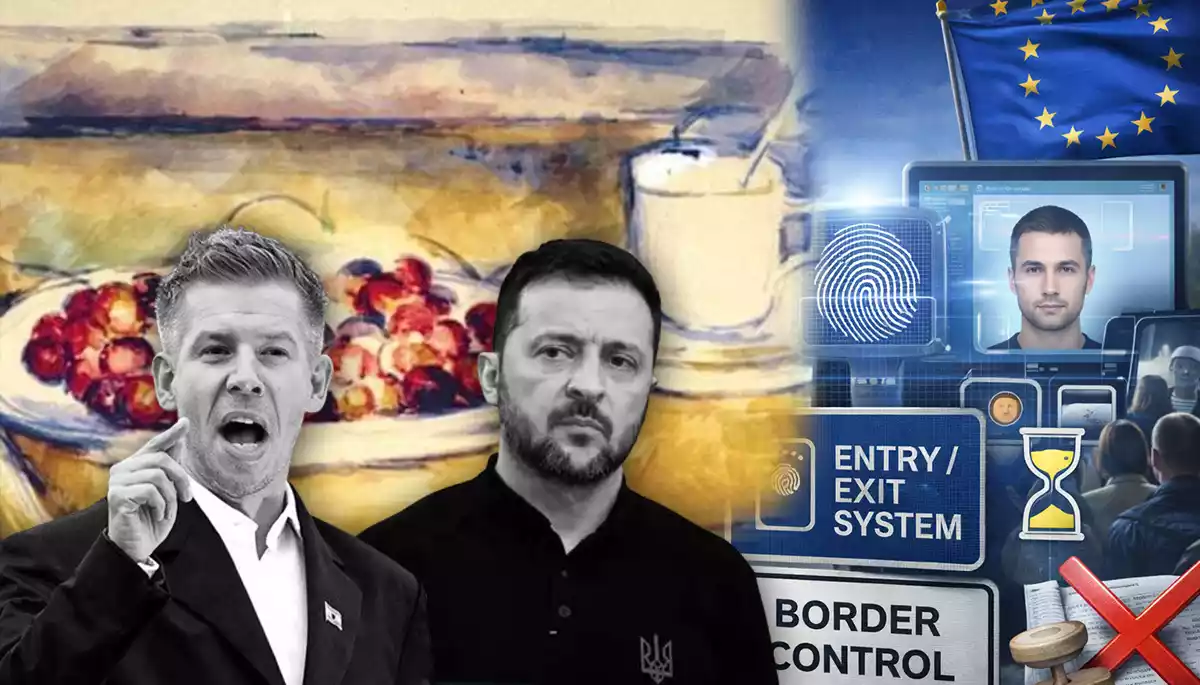
From April 29 to May 5, 2026, Detector Media analysts documented 13 disinformation campaigns. In particular, Russian propagandists spread fake claims about the “mass closure” of schools in Kherson Oblast allegedly due to a lack of funding, circulated fabricated BBC reports about “stolen paintings” in Zelenskyy’s office, and shared staged videos showing alleged “abuse” of employees of Ukraine’s territorial recruitment centers (TCCs).
The analysts also recorded manipulations regarding alleged ultimatums to Ukrainians in Hungary, “total surveillance” in the EU through the EES system, and further attempts to drive a wedge between Ukraine and Poland using outdated photos and distorted crime statistics.
Schools in Kherson Oblast are suspending operations because of Russian shelling, while propagandists blame Ukraine
Propagandists are spreading the false narrative that educational institutions on the right bank of Kherson Oblast are being massively shut down because of Kyiv’s alleged “unwillingness to invest in the region.” This is a distortion of facts.
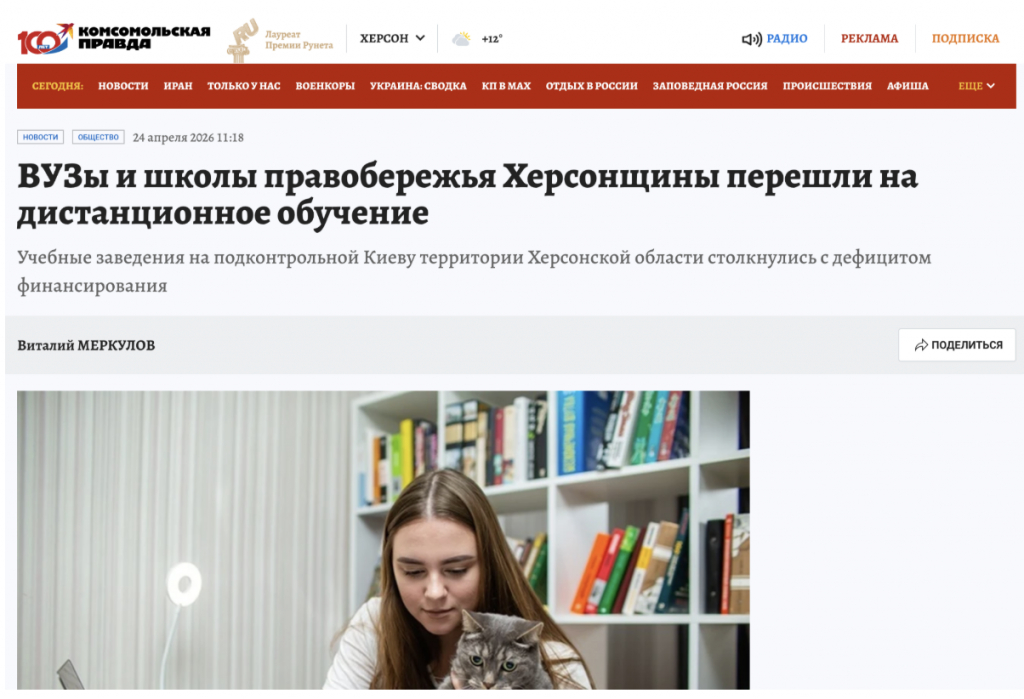
Example of a disinformation message
The Kherson Regional Military Administration did indeed issue an order temporarily suspending the operation of some institutions — 49 kindergartens and 17 schools. However, this is not liquidation but a forced measure caused by constant Russian shelling. Due to the war, the number of students in the community has halved, while the number of preschool children has dropped fourfold.
The main reason is the destruction of infrastructure. Russian occupiers damaged 137 out of 151 educational institutions in the community (90%). Instead of acknowledging these war crimes, propaganda attempts to blame the Ukrainian authorities for alleged “financial incapacity.”
AI-generated “revenge” against a TCC employee
Russian propagandists created a video allegedly showing a man taking revenge on a TCC employee for the mobilization of his brother. According to the video, he tied the employee to a car and dragged him across a field. The footage was accompanied by calls to subscribe to pro-Russian channels.
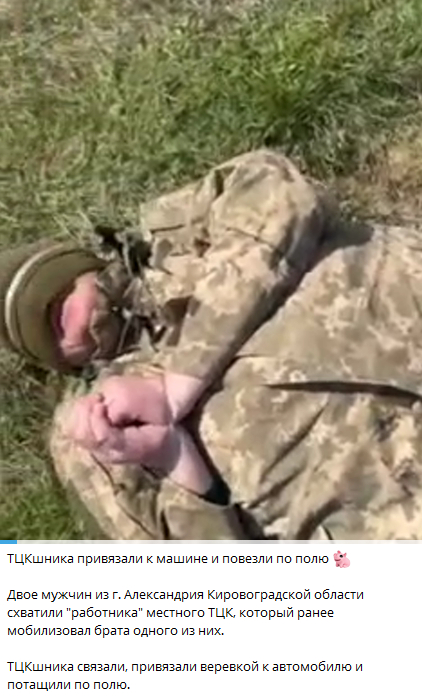
Example of a disinformation message
A fact-check by Ukrinform found that the video was staged. In the Kirovohrad region, where the incident allegedly occurred, no such cases have been recorded. The video contains no identifiable location markers or official confirmation.
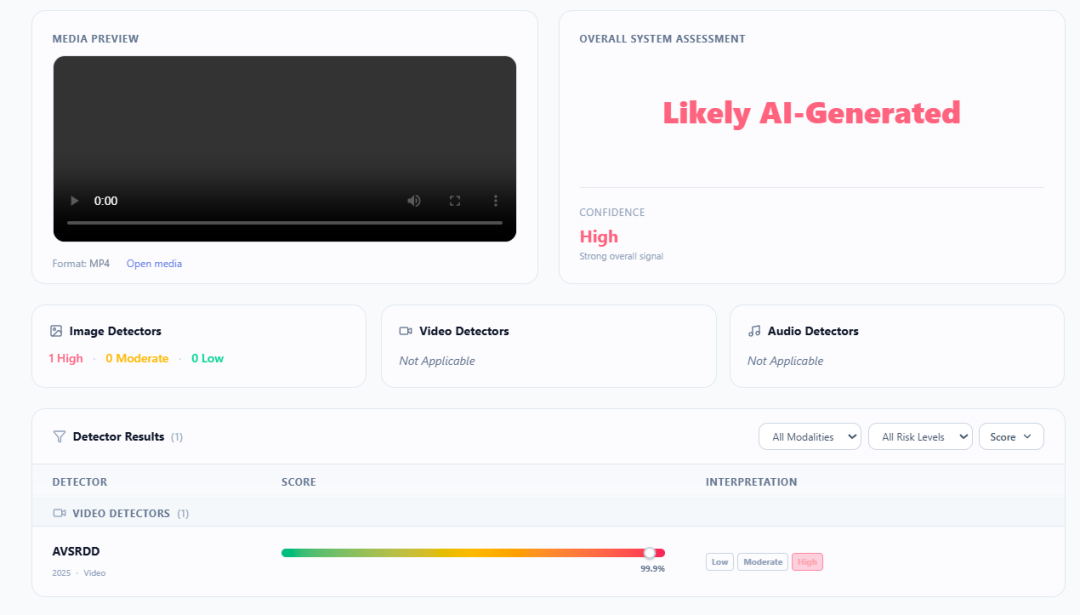
Assessment of the video’s authenticity by DeepFake-O-Meter
An analysis using the DeepFake-O-Meter tool confirmed the use of artificial intelligence with a 99% probability. This is a typical fake aimed at discrediting the military and provoking internal conflicts within society.
A stolen Cézanne painting in “Zelenskyy’s office”
Propagandists circulated a fake BBC News report claiming that Volodymyr Zelenskyy had allegedly accidentally “revealed” a stolen painting by Paul Cézanne, Still Life with Cherries, during one of his video addresses.
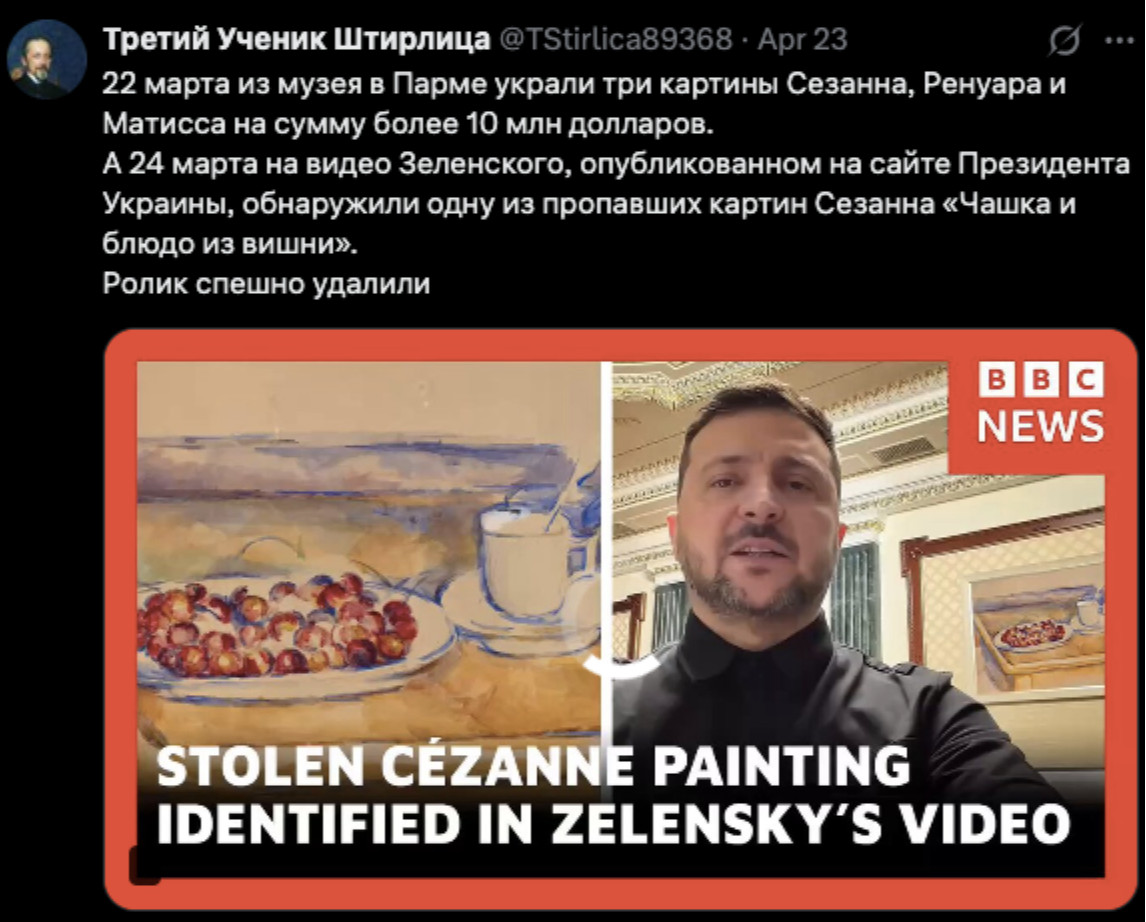
Example of a disinformation message
The BBC never published such a report. The perpetrators obtained a real address associated with the president and altered the background using video editing. In the original footage, the wall features a work by Ukrainian artist Andrii Chebotaru depicting a Crimean landscape.
The fake builds on a real story about a villa robbery in Italy, which adds a sense of “plausibility” to the disinformation.
This is far from the first attempt by Russian propaganda to portray the Ukrainian leadership as immoral and corrupt figures spending money on luxury items during wartime. Volodymyr Zelenskyy, as one of the most public representatives of Ukraine’s leadership, remains a frequent target of such attacks.
Péter Magyar allegedly demands that Ukrainians leave Hungary before the summer
At the end of April, Facebook posts circulated claiming that Hungarian election winner Péter Magyar had allegedly ordered Ukrainians to leave the country by June 1, threatening them with deportation.
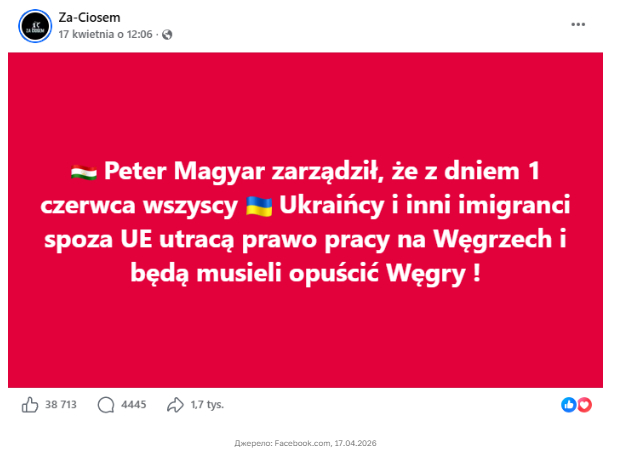
Example of a disinformation message from the Polish media space
This message is manipulative clickbait. First, Magyar was referring to June 2026 in the context of his election program. Second, he does not have the authority to issue such orders, as he has not been elected prime minister. Third, his statement concerned the recruitment of new labor migrants, not the deportation of people already under Hungary’s protection.
Ukrainians in Hungary are protected by an EU directive that cannot be revoked by an internal decision of a single party. The fake is designed to spread fear among refugees and destabilize public sentiment.
New Schengen rules: “digital surveillance” or modernization?
Russian media outlets claim that the EU is introducing “total surveillance” of Ukrainians through the new Entry/Exit System (EES), which came into force in April 2026.
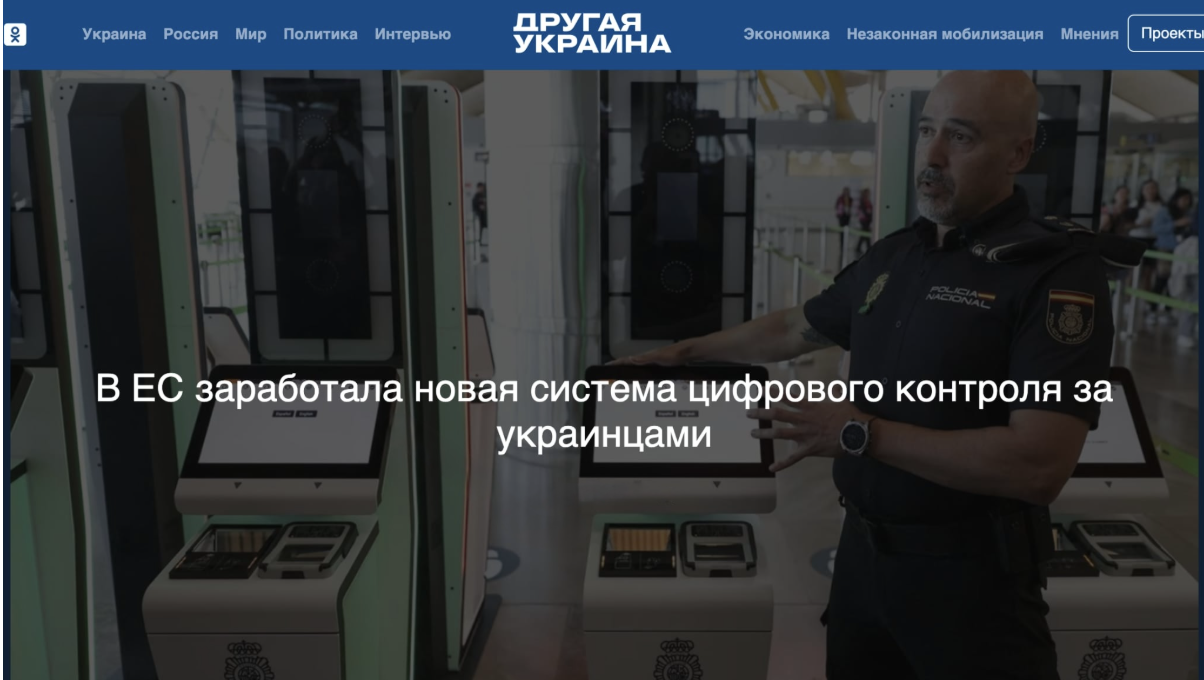
Example of a disinformation message
In reality, the EES is an automated system for all non-EU citizens, not just Ukrainians. It replaces manual passport stamping with the collection of biometric data (photos and fingerprints), which is already a standard procedure in many countries around the world.
The system is designed to simplify border crossings: holders of biometric passports will be able to use self-service terminals during border checks. There is no “special surveillance” targeting Ukrainians—this is simply a technical modernization of security procedures at the borders of the Schengen Area.