
Українською читайте тут.
When commercial interests get in the way of EU sanctions.
For the Kremlin, disinformation and media manipulation are full-fledged instruments of war. In response to Russia’s full-scale invasion of Ukraine in 2022, the European Union significantly expanded its sanctions against Russia, adding several Russian media outlets and individuals involved in spreading propaganda and legitimising Russian aggression to its sanctions lists.
The EU justified these measures as a necessary response to the use of propaganda as a tool of aggression, as well as a means to strengthen member states’ capacity to counter hybrid threats, including disinformation. The question remains, however: how effectively are these sanctions being implemented across EU member states, who is monitoring their enforcement, and by what methods do Russian media continue to circumvent them?
Detector Media has previously reported on the extensive network of pro-Russian activists, politicians, and media outlets that continue to operate in France despite all sanctions and bans (see our investigations here and here). This piece focuses on the institutional and legal challenges France faces in countering Russian disinformation and propaganda, and on the shortcomings of its sanctions enforcement mechanisms.
Political Crisis and the Decline of Trust in Traditional Media
Due to political upheaval in recent years, media consumption trends in France have shifted significantly. According to the Digital News Report 2025, published by the Reuters Institute, France ranks among the lowest in terms of news trust across all surveyed markets — tied 41st out of 48 countries, with a trust score of just 29%. Television news consumption has fallen four percentage points compared to 2024, now standing at 59%.
Social media are becoming an increasingly dominant source of information: Instagram, TikTok, and YouTube have each grown by 3–5%, driven primarily by younger audiences. The share of people consuming news in video format via social media has risen from 52% in 2020 to 65% in 2025.
Local newspapers and public broadcasters command relatively higher trust, while commercial channels CNews and BFM are regarded as biased by a significant portion of their audience — distrusted by 35% and 38% of respondents respectively.
Notably, media literacy in France is the lowest of any surveyed country: only 11% of French people have undergone any training or coursework in critical media consumption. Meanwhile, YouTube commentators who explain current events in accessible terms are gaining popularity. One in five French people under 35 regularly follows HugoDécrypte, the channel of YouTuber Hugo Travers — who has interviewed both President Macron and President Zelensky — with 3.65 million subscribers. Public discourse in France is growing increasingly polarised.
The Evolution of French Media Regulators and Their Powers
Until 2022, audiovisual media in France were regulated by the Conseil supérieur de l’audiovisuel (CSA), an independent administrative body established in 1989. The Council oversaw the exercise of freedom of audiovisual communication in France under the conditions set by the Law of 30 September 1986 on Freedom of Communication (Loi n° 86-1067, also known as the Loi Léotard).
The law enshrines freedom of audiovisual communication, which may be restricted only in cases provided for by law: to protect human dignity, the rights and freedoms of others, pluralism of opinion, the welfare of children and adolescents, public order, national defence, and public service requirements. It also enabled the privatisation of channel TF1 in April 1987 and formally established the coexistence of public and private sectors in audiovisual communication, with the private sector’s share growing steadily thereafter. This laid the foundation for private media in their modern form and effectively created the corresponding market.
Transformations in the audiovisual and digital landscape, combined with the growing scale of disinformation threats, necessitated an overhaul of the regulatory model. In October 2021, the French parliament adopted legislation merging the CSA and HADOPI (Haute Autorité pour la diffusion des œuvres et la protection des droits sur internet — the High Authority for the Dissemination of Works and Protection of Rights on the Internet, established in 2009) into a new body: the Autorité de régulation de la communication audiovisuelle et numérique ARCOM — the Regulatory Authority for Audiovisual and Digital Communications. Before its merger into ARCOM, HADOPI had been responsible for combating online piracy and protecting copyright, sending users warnings for illegal downloads and referring cases to the courts where necessary.
ARCOM was granted broader powers than its predecessors. Unlike the CSA and HADOPI, the new regulator has a wider mandate and more modern tools. It simultaneously oversees copyright compliance, regulates media and audiovisual content, combats online piracy, disinformation, and hate speech, and has the authority to impose sanctions on online platforms and require transparency in their algorithms. Financial penalties of up to €20 million, or up to 6% of a platform’s annual turnover, are among the tools at its disposal. ARCOM also has expanded powers regarding the protection of minors — including through media literacy initiatives such as developing educational materials, promoting critical thinking, and raising awareness of copyright and responsible use of the internet and social media — as well as tools to counter disinformation and hate speech online.
From 1 January 2022, ARCOM assumed all functions previously belonging to the CSA, while also taking on responsibility for the systematic regulation and supervision of online platforms and digital services, the safeguarding of media pluralism, the promotion of audiovisual content creation and distribution, and the regulation of technical and economic players in the audiovisual market.
The new institutional structure also established two new directorates: the Directorate for Online Platforms (direction des plateformes en ligne), responsible inter alia for developing methods to assess platforms’ compliance with applicable national law, and the Directorate for Creativity (direction de la création), tasked with financing and protecting the creative industries.
Article 42 of the Law on Freedom of Communication grants ARCOM the right to issue warnings to satellite network operators regarding the prohibition of broadcasting content subject to EU decisions. This empowers the regulator to enforce European Union sanctions under Article 215 of the Treaty on the Functioning of the European Union (TFEU).
ARCOM’s activities are governed by the SREN Act (Loi n° 2024-449 of 21 May 2024 on Securing and Regulating the Digital Space), one of the key pieces of French legislation in the field of media regulation. The law rests on three pillars: protecting citizens, protecting minors, and protecting businesses and communities. It also transposes two key EU regulations into French law — the Digital Services Act (DSA) and the Digital Markets Act (DMA). ARCOM has been designated as France’s Digital Services Coordinator, responsible for the consistent application of these rules to platforms registered in France.
The Commission nationale de l’Informatique et des Libertés (CNIL) oversees personal data protection, while the Direction générale de la concurrence, de la consommation et de la répression des fraudes (DGCCRF) monitors compliance by marketplace operators. The DGCCRF may participate in EU investigations at the request of the European Commission or launch its own investigations in coordination with it.
A further step came on 23 October 2023, when the President of ARCOM and the European Commission’s Director-General for Communications Networks, Content and Technology signed a cooperation agreement strengthening operational ties between their institutions in the field of online platform regulation. This was prompted by the worsening problem of hate speech and disinformation on online platforms — particularly in connection with the war in Ukraine and in the Middle East, as well as terrorist attacks in France and Belgium, according to ARCOM.
ARCOM and the Implementation of EU Sanctions Against Russian Propagandists
The legal basis for restricting the activities of RT and Sputnik in France was the EU sanctions regulations of March 2022, which imposed a complete ban on broadcasting and distributing RT/Russia Today and Sputnik content across EU member states, to remain in force until Russia ends its aggression. In France, ARCOM applied these decisions immediately, leading to the suspension of Sputnik and RT France broadcasts in the country in early March 2022.
Despite the broadcasting ban across the EU, RT France did not cease operations entirely. The outlet continued to produce content from its Paris office and distribute it in countries where the ban did not apply, particularly in French-speaking regions of Africa. EU sanctions, however, also provide for the freezing of assets and economic resources, including a prohibition on providing means of transmission. In January 2023, the French State Treasury froze RT France’s assets, leading to the company’s full liquidation.
Since the start of Russia’s full-scale invasion, ARCOM has also required the French satellite operator Eutelsat to cease transmitting several Russian television channels, including NTV Mir, Rossiya 1, Perviy Kanal, and NTV, after their coverage of the conflict in Ukraine was found to contain incitement to hatred and violence, as well as violations of the principles of accuracy and fairness.
The enforcement mechanism works as follows: once the EU Council adopts a sanctions decision, the national regulator ARCOM is obliged to ensure its implementation. It issues orders to operators and digital platforms to cease retransmitting banned channels and, in the event of non-compliance, applies sanctions — including financial fines or licence revocation. It was through this mechanism that RT and Sputnik were promptly taken off air in 2022, and that the channels STS and Channel 5 — linked to JSC National Media Group — were suspended in 2025. The group’s assets are frozen under the EU Council Regulation of 17 March 2014, which also prohibits the retransmission of its content. Eutelsat and industry sources described the financial impact of disconnecting the group’s channels as “limited” — approximately €16 million per year.
National Media Group is a Russian media holding controlling 28 enterprises, including Perviy Kanal, Channel 5, REN TV, STS, 78.ru, the national newspaper Izvestia, Delovoy Petersburg, and other publications. It is owned by Rossiya Bank, whose principal shareholder is Yuri Kovalchuk — a long-standing friend of President Putin. The Chairwoman of the National Media Group Board is Alina Kabaeva. Ukraine placed the holding on its sanctions register in 2022.
Continuing its efforts against disinformation and propaganda, in July 2025 ARCOM ordered the blocking and removal from search engines of 19 official websites of Russian media subject to direct or indirect EU sanctions. The regulator also issued formal orders to one streaming site and three Russian online platforms to cease distributing content from sanctioned outlets, while five further streaming services received warning letters for hosting such content. ARCOM stated it would continue to use all available tools to curtail the spread of sanctioned Russian media in France. As of early March 2026, however, no publicly documented cases of fines being imposed for broadcasting sanctioned Russian channels in France have been recorded.
On 26 February 2026, ARCOM announced a further set of measures against Russian media operating in France. The regulator requested that internet service providers, DNS resolution providers, and search engines block and deindex 35 official websites of Russian media subject to EU sanctions. Search engines were additionally required to deindex the pages of four streaming platforms providing access to sanctioned Russian television and radio services.
According to Le Figaro, the blocked sites include sputniknews.lat, rtenfrancais.tv, news-front.su, southfront.press, and strategic-culture.su.
Despite the formal ban, Russian media continue to find ways to remain accessible to French audiences — primarily through digital platforms, mirror sites, and alternative distribution channels. These circumvention mechanisms represent the central challenge for France’s media regulation system.
The Gaps in ARCOM’s Sanctions Shield
Despite the regulator’s efforts, websites and streaming services belonging to sanctioned Russian-language channels remain easily accessible via a range of platforms, even after the ban in France. Neither internet service providers nor search engines consistently block them. A few clicks are sufficient to access freely streaming Russian propaganda.
VIGINUM, France’s monitoring and protection service against foreign digital interference, is an analytical agency established in 2021. It can identify suspicious accounts, harmful content, and anomalous or coordinated behaviour on digital platforms. However, it has no authority to remove content or block accounts, and so cannot be compared with the regulatory bodies that govern France’s media space. Public notifications of detected influence operations are typically issued only after the informational damage has already been done. Decisions on content removal rest either with the courts or with the platforms themselves — X, Facebook, TikTok, and others.
Since 2022, France has been the target of a large-scale Russian information interference operation known as Doppelganger, which involved the creation of near-perfect imitations of prominent French news websites, including Le Monde, Le Figaro, Le Parisien, and 20 Minutes. Researchers subsequently identified a further Russian operation, dubbed Matriochka, in which fake accounts contacted newsrooms directly, requesting that they “fact-check” fabricated stories. Agence France-Presse documented how a single profile using the pseudonym “Käthe” sent dozens of French media outlets, within the space of a few hours, a video falsely claiming that “a Ukrainian artist had sawed the Eiffel Tower in half.”
In an opinion piece published in Le Monde on 14 May 2025, a coalition of French associations called for urgent regulatory intervention, noting that despite ongoing diplomatic efforts, Russian aggression against Ukraine continues unabated, and that Russian state propagandists such as Margarita Simonyan and Vladimir Soloviev continue to describe documented Russian war crimes as “Ukrainian staging.” The authors warn that France is not short of voices willing to amplify these manipulative and hateful narratives.
Experts point to a lack of diligence on the part of ARCOM, which they argue has failed to take adequate steps to enforce the existing restrictions. Despite European sanctions against Russian media, French operators are effectively circumventing them. RT France, for instance, remains present in the French information space.
One of the organisations that has been alerting ARCOM to these circumventions is the Denis Diderot Committee (Le Comité Denis Diderot) — a network of academics, experts and media professionals. Founded in 2022 at the initiative of André Lange, a researcher in information and communication sciences, an expert on the European audiovisual space, former division head at the European Audiovisual Observatory (Council of Europe), and research associate at the Department of Media, Culture and Communications at the University of Liège. Since 2023, the Committee has been campaigning for the effective implementation of European sanctions by French operators. As the organisation's representative told Detector Media, sanctions enforcement varies considerably depending on the type of platform or resource involved.
Regarding the non-implementation of sanctions by French operators, the situation is somewhat complex and depends on the type of sites and platforms, explained André Lange.
Some progress has nonetheless been made. "In July, following our actions, ARCOM approached operators with a demand to block the websites of sanctioned TV channels, and this proved fairly effective — the vast majority of those resources have been blocked," says Lange, noting that one RT website in French remains an exception.
"In September last year, we submitted a new list to ARCOM covering sanctioned sites that are not television channels. In December, the regulator’s Director-General assured us during a meeting that the necessary steps had been taken with respect to operators. We are now verifying this — and it appears that, as of now, nothing has changed," noted André Lange.
The issues of Telegram accounts, IPTV platforms, and Russian social networks remain unresolved. "Free IPTV platforms with no legal registration details, presumably operating out of Russia, which retransmit the live broadcasts of sanctioned channels — theoretically ARCOM could demand their blocking, but most of them continue to operate. Accounts of sanctioned channels on official Russian platforms such as VK, OK, Dzen, and Rutube, which ARCOM could also seek to block — no changes have occurred," states Lange.
A separate concern involves sanctions against Russian satellite operators. In July 2025, the Diderot Committee expressed regret that the EU had still not added the Russian Satellite Communications Company (RSCC) to its sanctions list, nor the two pay-TV platforms NTV Plus and JSC National Satellite Company (Tricolor). In May 2024, Ukraine imposed 10-year sanctions on NTV Plus. All three companies facilitate the transmission and distribution of propaganda channels not only across Russia, but also in the temporarily occupied and annexed territories of Ukraine. Until the EU imposes sanctions on them, ARCOM cannot compel Eutelsat — a French-registered company and Europe’s competitor to Elon Musk’s Starlink — to cease carrying their signals.
Due to EU sanctions in 2022, OneWeb — in which Eutelsat holds a 22.9% stake — was forced to suspend six planned launches from the Baikonur Cosmodrome in the first half of 2022. OneWeb subsequently reached agreements with SpaceX and New Space India, enabling it to complete the final satellite launches for its orbital constellation in 2023.
Eutelsat leases the Russian satellite Express-AMU1 (launched in 2015), owned by RSCC. The leased capacity is marketed under the name Eutelsat 36C and is located at the orbital slot 36° East. On its website, Eutelsat describes the 36° East position as home to more than 1,100 television channels serving millions of households — a key slot for broadcasters. Two satellites occupy this position — Eutelsat 36C and Eutelsat 36D — together serving “several major clients.” Eutelsat still maintains two subsidiaries in Russia. According to its 2022 financial report, Russian clients accounted for approximately 6–7% of group revenue.
"Launched in March 2024, the Eutelsat 36D satellite — built by Airbus and operated by the Eutelsat group — is a technological centrepiece of France. Eutelsat has two clients in Russia: the pay-TV platforms NTV Plus and Tricolor. They transmit hundreds of channels via four satellites: Eutelsat 36D and three Russian satellites partially managed by Eutelsat. Some of these channels are already under EU sanctions; others are not. Who monitors compliance with the law and with sanctions? Certainly not Eutelsat!" notes André Lange.
Through the French satellite Eutelsat 36D, Russian armed forces are conducting military recruitment. Regional and entertainment television channels broadcast recruitment advertisements for the Russian armed forces, encouraging young people to enlist. These channels are transmitted via the Eutelsat 36D satellite to Russia and to the illegally occupied and annexed territories of Ukraine.
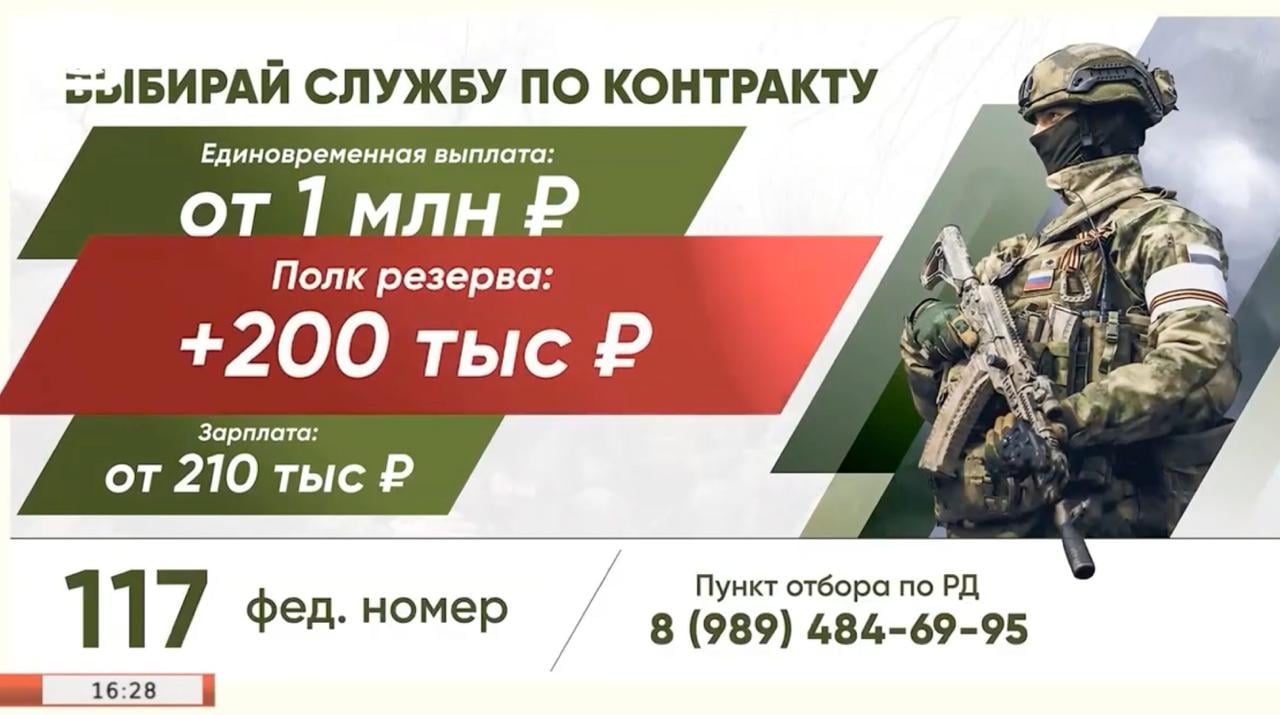
This recruitment advertisement of the Russian Armed Forces was broadcast on 24 December 2024 by the RGVK Dagestan channel, transmitted via the Eutelsat 36D satellite by operator Tricolor.
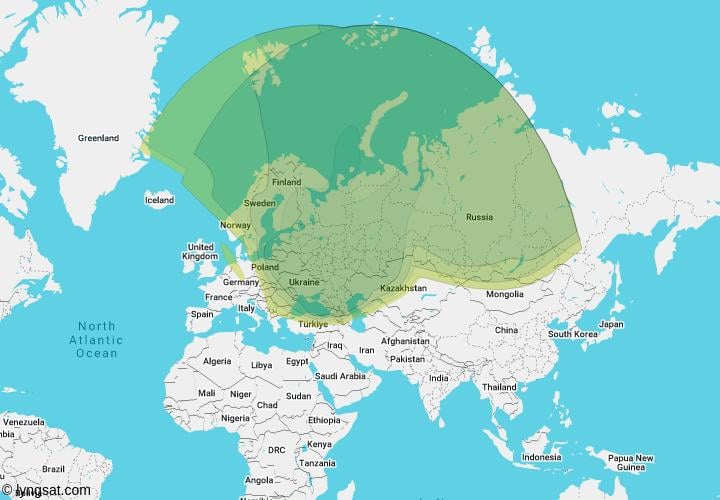
Broadcast data for the RGVK Dagestan channel (Tricolor) as of February 2026.
In a video published on 17 May 2025, the Committee documents examples of such military recruitment advertising on Russian regional television and examines the issue in detail.
"ARCOM cannot, of course, monitor more than 6,500 channels transmitted by Eutelsat every day. But since 21 May 2024, the law has given it the power to ensure compliance with European sanctions with respect to television channels and media companies — including Russian ones subject to EU sanctions. ARCOM is largely dependent on reports from civil society," says André Lange.
On 21 May 2025, the Committee, together with other organisations, held a demonstration outside ARCOM’s Paris offices, demanding the immediate implementation of European sanctions against Russian media.
Against this backdrop, the question of commercial accountability takes on particular urgency.
"Several associations and experts, including the Diderot Committee, have for months been urging the European Commission to add RSCC to the list of sanctioned companies. However, RSCC is Eutelsat’s main partner in Russia, and France has presumably once again blocked sanctions against RSCC to protect Eutelsat’s commercial interests there," reads a statement on the organisation’s website.
Should there be no real progress, the Committee says it is prepared to escalate. "We will return to ARCOM to take stock, and if the situation does not improve, we will launch a new campaign — informing the press and the politicians who are closely following our work," it warns. "This process has already partially begun."
Despite RSCC’s evident role in the infrastructure of Russian propaganda, the company does not appear on any official sanctions list — not in the EU, not in the United States, and not in Ukraine. Eutelsat has stated that it has not applied sanctions against Russian companies in the absence of clear regulatory guidance. This means that the operator — whose principal shareholder is the French state, with approximately 30% of capital since late 2025 — continues to carry to Russia and the occupied territories of Ukraine channels that spread calls to violence, justify aggression, and promote what Ukraine and numerous governments have recognised as the genocide of the Ukrainian people.
Dr Anatolii Marushchak, Doctor of Legal Science, Professor and Strategic Adviser to the International Information Academy, told Detector Media that the promotion of Russian narratives through IPTV platforms and social networks accessible in France is not merely a question of technical access to content. It is an element of Russia’s systemic information warfare, which uses digital infrastructure as an instrument of hybrid influence.
"Legally, the French regulator ARCOM has the authority to initiate the blocking of services that retransmit sanctioned channels. However, in practice, enforcement mechanisms lag behind the speed of digital content dissemination. As a result, IPTV platforms of Russian origin and accounts of sanctioned broadcasters on social media continue to operate, creating serious information risks for a democratic society," explains Marushchak.
He also notes that Ukraine has already navigated comparable challenges. In 2021, the International Information Academy conducted expert legal analysis and provided recommendations on blocking the channels of Medvedchuk on social media — advising on the balance between national security measures and international freedom of expression standards as applied to private US-based platforms.
Anatolii Marushchak separately highlights the risks posed by artificial intelligence: "The current situation is further complicated by the rapid development of artificial intelligence technologies, which significantly enhance the scalability, speed, and personalisation of disinformation campaigns. This means that traditional legal tools must be supplemented by international coordination and technological mechanisms for detecting Russian disinformation." Specific examples of practical steps in this direction are outlined in his academic paper on countering AI-driven disinformation.
"At the same time, the active engagement of civil society is of paramount importance. It is precisely civic organisations, expert communities, and Ukrainians abroad who can help initiate complaints to national regulators such as ARCOM, draw attention to specific instances of sanctioned content, and trigger formal legal response procedures. Democratic mechanisms function far more effectively when society actively exercises its rights to petition, appeal, and civic initiative," says Marushchak.
"Recently, EU Executive Vice-President for Technological Sovereignty, Security and Democracy Henna Virkkunen publicly stated the need to build the EU’s offensive capabilities in the field of cybersecurity. The key task today in defending democratic values against Russian disinformation is not merely to declare sanctions, but to ensure their implementation by EU member state regulators — with civil society as the driving force," he adds.
The regulator’s institutional limitations, its dependence on EU-level decisions regarding which entities are sanctioned, its slow response times, and the commercial interests of certain operators all create grey zones that allow Russian media to maintain access to audiences through mirror sites, streaming services, social networks, and satellite infrastructure.
The central challenge is not the absence of sanctions as such, but the uneven and fragmented nature of their enforcement, above all in the field of satellite broadcasting and on platforms operating outside EU jurisdiction. Contrary to the claims of Xenia Fedorova, the propagandist and former head of RT France, the legal foundation for European sanctions is solid. It was upheld by the Court of Justice of the European Union as early as July 2022. As Russia continues to intensify its hybrid warfare, propaganda, and disinformation operations, it is essential that French operators and ARCOM assume their responsibilities.