
Українською читайте тут.
Ivan Bembekli on the challenges and experiences of sharing stories about Ukraine with foreign audiences on social media, as well as Crimea and the political context in the US.
On X (Twitter) and TikTok, accounts under the nickname Eurovanya stand out among those that actively support Ukraine. There you can find English-language materials about Russian aggression, stories of its victims, and appeals to the international community. The most popular video on this TikTok profile has garnered 15 million views and nearly 2 million likes, and its tweets about Ukraine have been reposted by such prominent people as US Congresswoman Alexandria Ocasio-Cortez, Austrian politician Günter Felinger, and American historian Timothy Snyder. Eurovanya's accounts have more than 255,000 followers on TikTok and nearly 19,000 on X.
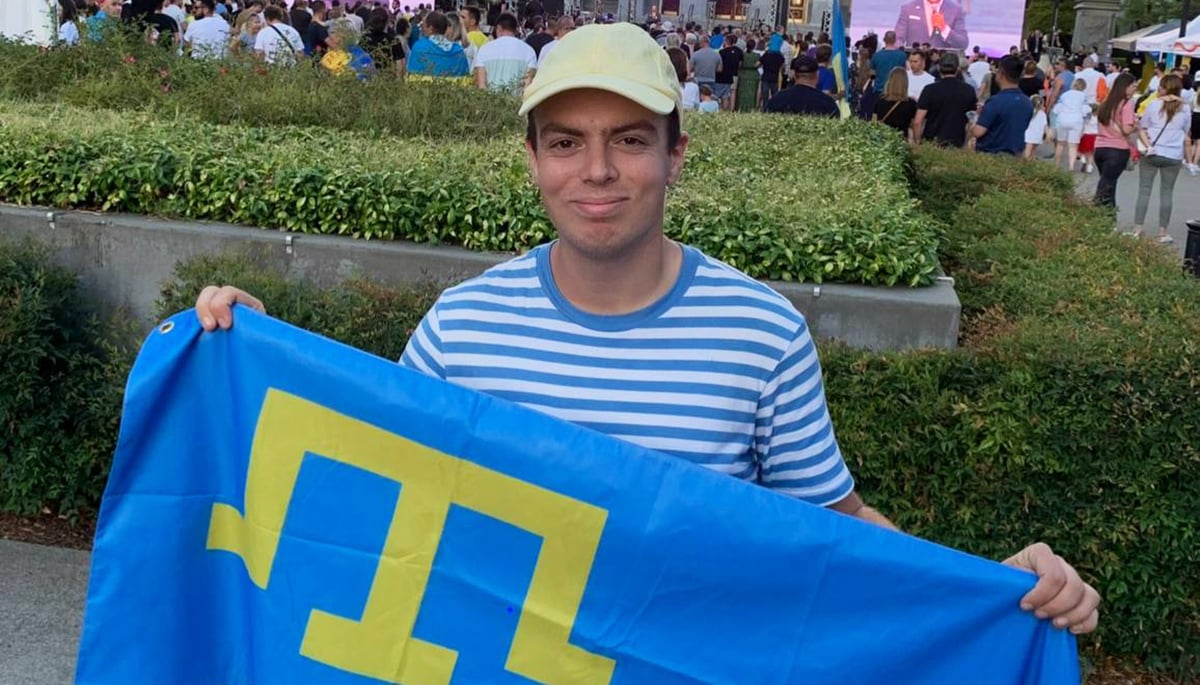
A person behind them is Ivan Bembekli, a 25-year-old Ukrainian born in Crimea who moved with his family to Sacramento, California, after Russia annexed the peninsula in 2014. In this interview with Detector Media, Ivan discusses the peculiarities of working with Ukraine-related topics on social media, how he attracts the attention of foreigners to them, and, of course, Crimea.
- How did you start posting on X, TikTok, and other social media platforms? Did you come with an interest in foreign media first or the Ukrainian media landscape?
- I started using social media back in 2021, during Eurovision. At that time, Kateryna Pavlenko and the band Go_A were representing Ukraine, and I made her photo my profile pic. At the time, I thought it was cool to be part of this global media space, to see how Ukrainian culture and music resonated abroad. It turns out that I came because of my interest in foreign content first, but also Ukrainian content.
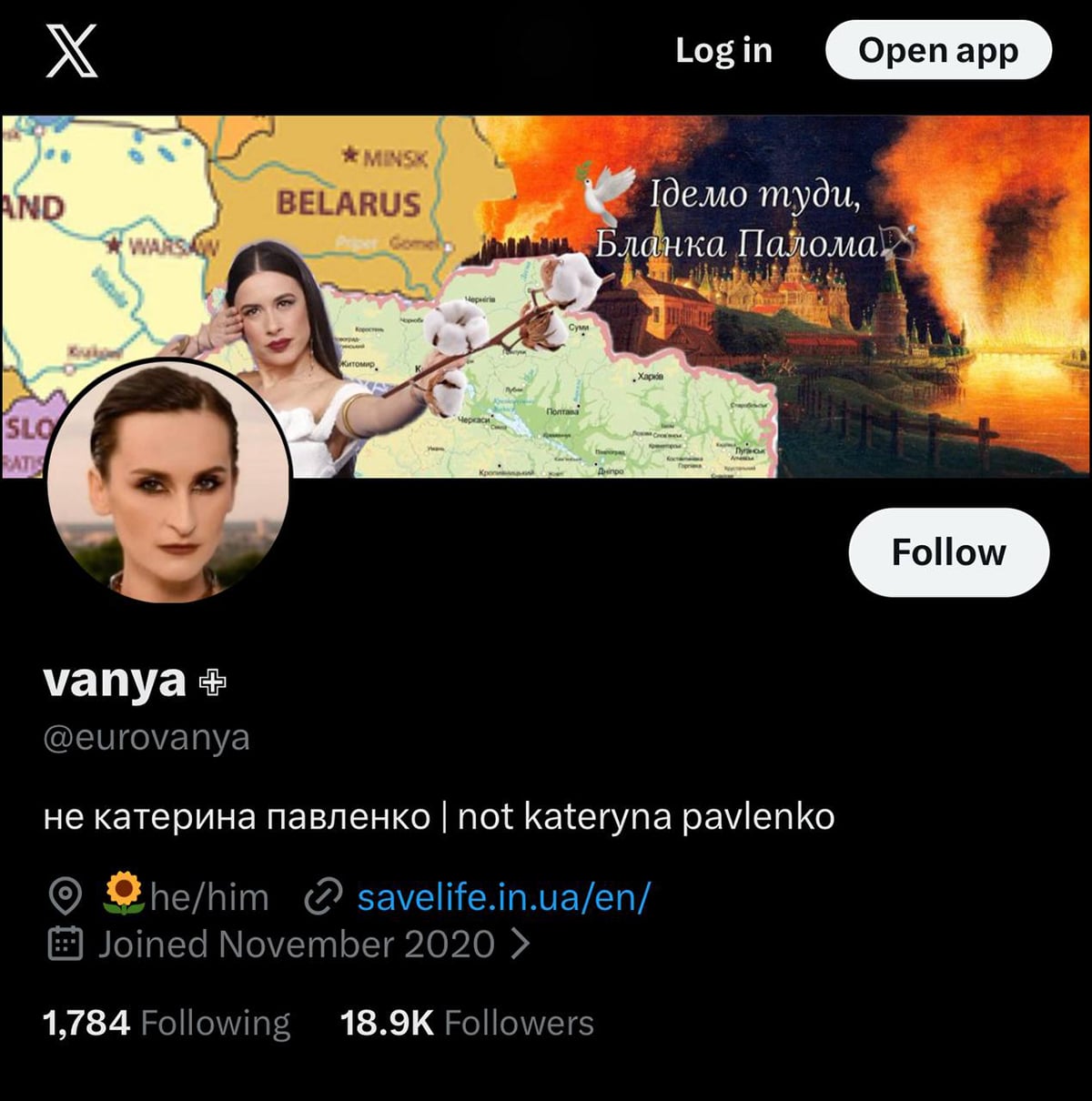
A screenshot from Eurovanya’s profile on X
- As I understand it, you are very interested in Eurovision. What attracted you to this contest? How do you assess the situation there now in light of all the scandals?
For me, Eurovision has never been “just a contest.” My first Eurovision, which I remember well, was in 2009, when it was being held in Moscow. I was still a child back then, but even at that age, I felt the falseness of all the “neutrality” claims. Tanks on stage during the t.A.T.u.'s performance, Georgia's disqualification because of the “We Don't Wanna Put In” entry after the events in Abkhazia, the atmosphere of the “victory madness” by the “grand power” — today it looks cringe, but it is very telling. Many of today's problems did not appear in a vacuum.
My favorite contest in an organizational aspect was the 2023 one, when Ukraine and the United Kingdom co-hosted. That was when I truly felt the slogan “United By Music” for the first time, not as a marketing ploy, but as an idea: cultural presence instead of imposing power. The opening of the show with Ukrainian music from different years, Ivasiuk performed by Maria Yaremchuk, the duet of Olena Topolia with Rebecca Ferguson, the chemistry between Yulia Sanina and Hannah Weddingham — it was a moment of dignity.
Today, Eurovision is once again in crisis — the scandals have only emphasized that the contest is trying to feign neutrality where there is no neutrality. By allowing Israel to remain in Eurovision, the EBU is making the contest even more political. Now every post about it is full of controversy. Are we really “united by music” when five countries — Iceland, Spain, the Netherlands, Slovenia, and Ireland — are leaving the contest because of the actions of one country in Asia, which is not even in Europe? Culture has always been political, and the question is not whether there is politics in Eurovision, but whether the organizers are honest about their values of “unity.”
- How did you end up in the United States?
My grandfather has been living in Sacramento since 2011, and he invited us to come. After the events in Crimea and Sevastopol in 2014, we decided to move to the US permanently. It wasn't easy, but at the same time, the feeling of new opportunities and freedom helped us adapt.
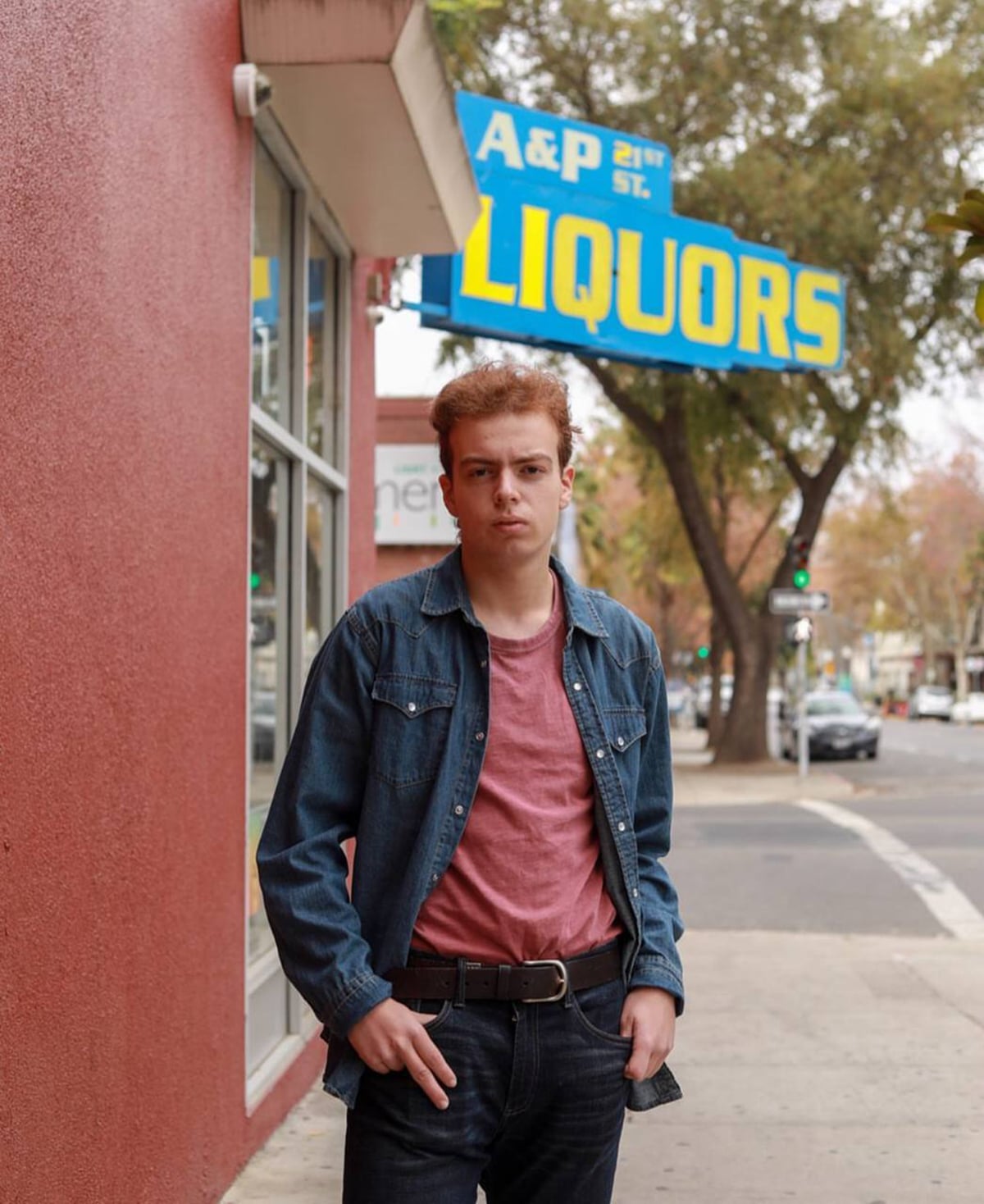
Ivan Bembekli
- Can you tell us more about the challenges you faced when moving to the US? Do many Americans you and your family have met since 2014, both then and now, understand everything that has been happening in Ukraine?
It was not only a physical move, but also a psychological one — a different language, a different culture, a feeling of losing home.
In 2014, very few Americans understood what was happening. Many people simply did not care and did not pay attention to anything beyond their own noses. For most, it was a story “somewhere far away.” Even now, many people confuse the whole context. The difference is that after 2022, there was a demand for explanations — people began to ask questions instead of just distancing themselves, and that's important.
- What trends do you notice in the US, particularly among Californians, in terms of interest in what is happening in Ukraine right now? What changes have you observed compared to 2022?
At the beginning of the full-scale invasion in 2022, everyone was very interested. Everyone was reposting, sharing news, and supporting Ukraine. Now, attention has waned somewhat due to news from other countries, but people who are genuinely interested in geopolitics, and of course Ukrainians, continue to follow the topic. In California, Americans, especially those with liberal views, love content about people, culture, and Crimea — they want to understand the stories and thoughts of ordinary people, not just the numbers and dry facts that the news media provides.
- And how is the topic of Ukraine reflected in local state politics and national domestic politics in the US? Was there any particular tension during the 2024 presidential campaign?
In California, support for Ukraine is generally higher than in a number of other states, especially among liberal audiences. Stores sell candles with Zelenskyi's image for prayers, and when the No Kings protests took place here, people came out to protest with Ukrainian flags.
During the 2024 presidential campaign, tensions were high — Ukraine was increasingly used as an argument in discussions about money, borders, and “war fatigue.” This is a dangerous moment, because people's stories are getting blurred behind politicians' slogans.
- In Ukraine, there is a perception that Democrats allegedly do not need Ukraine, that they actually want peace with Russia. However, for example, Alexandria Ocasio-Cortez still expresses her views on Ukraine partly based on your arguments and materials. Does this not debunk this myth? Or is it more complicated than it seems?
The reality is more complex. Democrats are not a monolith. Her example shows that there are strong voices within the party that support Ukraine, primarily from a humanitarian and values-based perspective.
The problem is not that some Democrats “don't need Ukraine,” although pro-Russian politicians and useful idiots who play along with the Kremlin’s line always spread such rhetoric. The fact is that Ukraine needs to be constantly explained. Support is not automatic — it must be earned through communication, stories, and actions.
- How do you attract the attention of US and European politicians to your content? Why is this important to you?
Through social media, reposts, and messages. I do this so that important issues related to Ukraine reach the decision-makers. This helps build support on a real level. For example, when politicians see specific stories of people or infographics, it resonates more than just news.
- There is an ethical dilemma in the Ukrainian media industry — on the one hand, the world needs to see the full tragedy of Ukrainians unfiltered, but on the other hand, there is an impression that the world has already lost its sensitivity from such content and that such a strategy could be traumatic for those directly involved in this tragedy (in a broad sense). As someone who works primarily in the foreign media landscape, what approach do you think is more appropriate in this case, and how (if at all possible) can a proper balance be struck between these nuances?
I believe that endless shock tactics gradually become less effective. The world is getting used to them. Moreover, it can be traumatic for Ukrainians themselves.
For foreign audiences, personal stories, context, culture, and explanations are more effective. Not just “what happened,” but why it matters. The balance lies in humanity, not horrifying images.
- Your posts cover Crimea a lot. What is your personal connection to the peninsula? How do you attempt to draw attention to the situation there in a way that makes it stand out amid the current information noise?
Crimea is a very personal topic for me. It is where I spent my childhood, where my family is, where my memories are. I really like the words Jamala said during the promotion of her incredible album QIRIM. She said that Crimea is not about resorts and snacks. I want people to mentally reclaim Crimea — its history of the Scythians, Tauri, Cimmerians, the Khan's Palace, and Chersonesos. Arsenii Chuhui, a historian from Simferopol who now lives in Kyiv, and I worked on designs for the coat of arms of a future de-occupied Crimea with pro-Ukrainian symbols for a map with historical city names, as an example of how to maintain a connection with home.
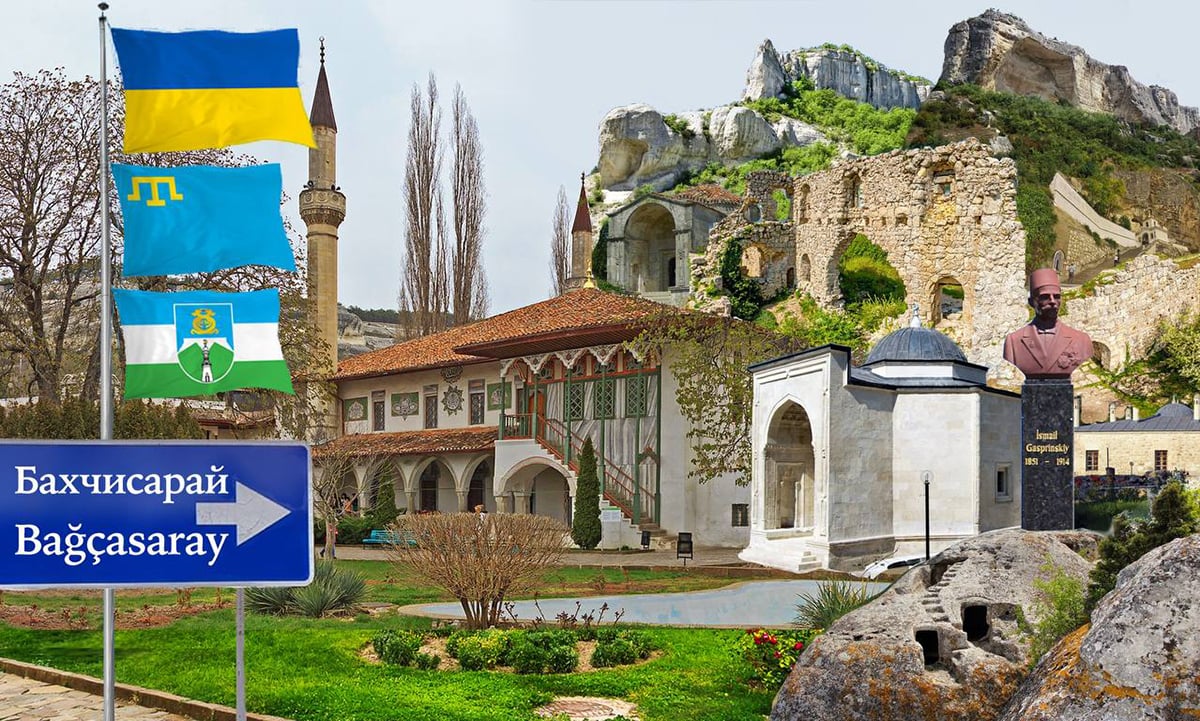
We should show Crimea through its history, culture, and architecture so that people understand that it is not just a random point on a map, but a place where people live and have lived. On social media, it is important to do this emotionally and visually so that this topic stands out in the white noise.
- What are the peculiarities of working with Western audiences, especially in the US? Are there any differences between users of all these social media in the US and other European countries? What resonates most with Americans, and what doesn't work?
Americans value simplicity and specificity. They are interested in personal stories, short videos, and memes. In Europe, people love memes, but they read more analytics and delve deeper into historical context. What works well with Americans often does not work in Europe. Long texts, names of leaders, and complex political details also do not work.
- We talked earlier about Eurovision, and it is well known that it has a rich queer history — Conchita Wurst, Nemo, and Verka Serduchka are, in one way or another, an important part of it. What is the peculiarity of trying to convey the truth about the situation in Ukraine to such an audience? Russia is trying to prove abroad that Ukraine is not a progressive, tolerant country, and is instead a pretty conservative one. Some Ukrainian citizens, unfortunately, reinforce these messages in various ways. Do you work with this message at all, and do American gays, jokingly speaking, care about the situation in Ukraine?
The American queer audience needs to see that Ukraine is a living country that is changing during the war. And yes, many American LGBT people care about Ukraine if you speak to them in a language of solidarity, not propaganda. I am grateful to queer influencers such as Frank Wild from Germany, journalist Kaylin Robertson, and, of course, the LGBTQ+ soldiers on the front lines.
- In your posts, you often draw attention to topics that are overlooked in official communications from Ukrainian institutions — for example, Zelenskyi's recent statements on Palestine. Do you do this deliberately (for example, as part of a strategy to fill these gaps), or is it more because it is relevant to the American audience?
I do this on purpose. I think it's important to fill in these gaps — to show what doesn't always make it into official reports. As practice shows, if something doesn't make it into the mainstream, it means I have something more to say. This often overlaps with what is of interest for the American audience — they want to see a broader context.
- Based on your experience, what would you advise Ukrainian media professionals and other relevant stakeholders to pay attention to when communicating with American audiences?
First of all, make the content simple and understandable. Use people's stories, not just politics. There is a lot said about the president, but few stories about ordinary people. Ukraine is something more than just one person. It is important to interact with opinion leaders and social media platforms — this helps to cut through the information noise.
- In your opinion, how should content about Ukraine be optimized on TikTok, Instagram, and other platforms to reach foreign audiences? What mistakes should be avoided?
For TikTok – short, emotional videos. For X – clear facts and retweets. Mistakes: overly complex language, long texts, and ignorance of the cultural context of the audience.
- Talking about the cultural context - how to describe it, if we talk about the American audience in this case? Should we take into account the differences between, for example, residents of California and Texas?
The Californian audience is more responsive to topics such as culture, identity, and human rights. Democracy and progressive politics resonate here. In Texas, for example, the talk is about the destruction of churches, old traditions, and values.
- How do you find out about current affairs and Ukrainian politics? Where do you identify yourself in the informational landscapes - in the American or the Ukrainian one?
I constantly live between these two. Ukrainian sources provide emotion, context, and a sense of reality. American sources show how these events are interpreted externally.
I need to see the gap between what we know in Ukraine and what reaches Western audiences. It is in this gap that I work.
- You studied at an American university. Could you please tell us more about that experience? Does that education help you in your social media activities?
You can congratulate me — this year I graduated with a BA in political science from Sacramento State University, and I also have a background in communications and social sciences.
This education is very helpful, especially in understanding how the US political system, media, lobbying, and public diplomacy work. Social networks such as X and TikTok are also a form of political communication. The university taught me to formulate messages not “for the echo chamber,” but for a specific audience, taking into account its values, fears, and “blind spots.”
I am also incredibly grateful for my experience as a communications intern at Global Ties Sacramento, where I supported international exchange programs, conducted national-level research, and created high-performing communications content. This role strengthened my skills in storytelling, design, and data utilization, while allowing me to contribute to diplomacy-related activities. One of the most memorable moments was meeting with the US ambassador Erin Elizabeth McKee and representatives of Nova Ukraine, an organization involved in humanitarian aid and advocacy for Ukraine. Initiatives such as this, as well as the Sunflower Society, provide large-scale medical and humanitarian support while mobilizing communities in California and Sacramento through donations, fundraising campaigns, and ongoing advocacy on issues important to Ukraine.
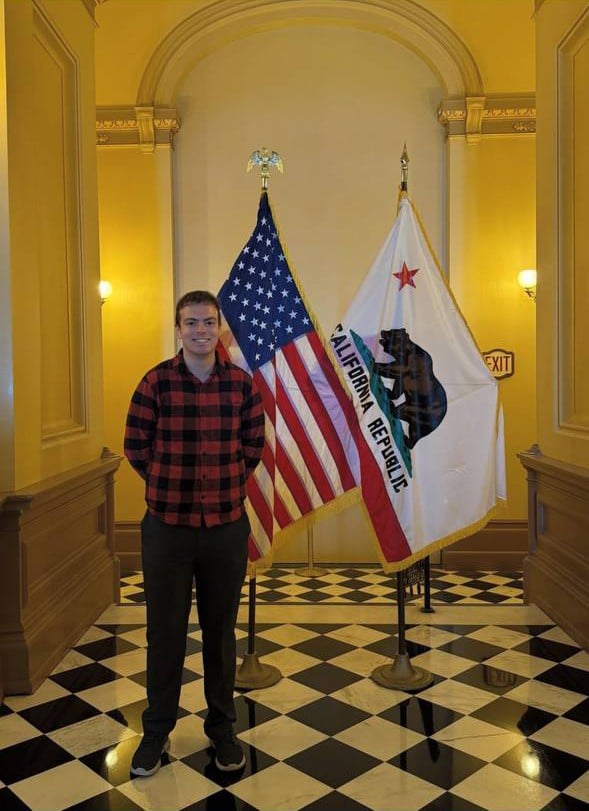
Ivan in the Sacramento City Hall, source: eurovanya on Instagram
- Do you feel a disconnect between Ukrainians abroad and Ukrainians within the country? Does this affect your social media activity in any way?
Yes, I do. Ukrainians abroad focus on a global audience and want to explain Ukraine to the world. Ukrainians inside the country are focused on domestic issues. I try to strike a balance between conveying the truth and adapting content for foreigners so that it is understandable and interesting.
- Do you see yourself in Ukraine in the future?
Yes. My life is now connected with the US, but Ukraine and Crimea are not something abstract for me. It's not a question of “where” but “why.” If Ukraine needs my experience and skills, I see myself there. I know that believing in the return of Crimea is very difficult and painful for all of us, but I will not let anyone lose hope for its return.