Українською читайте тут.
Zelenskyy's adviser explains how the President's evening addresses are created, which ministers are the most difficult to communicate with, and which topics the President prefers not to discuss.
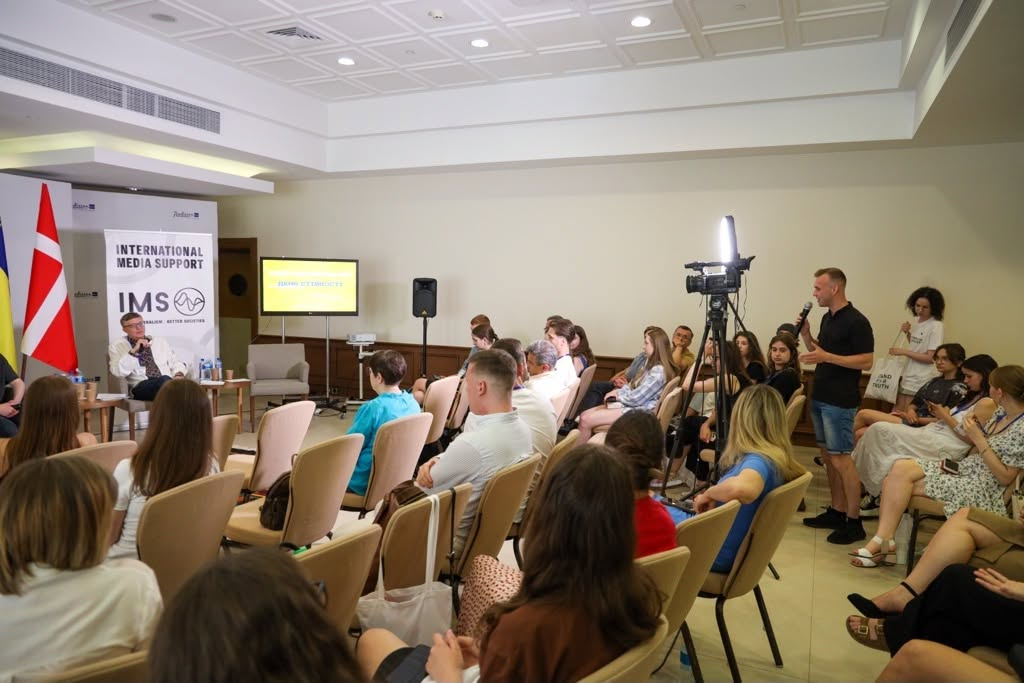
On June 28, during the conference "Wartime Media Challenges 2026: Security," a discussion in the format of a "friendly circle" took place with Dmytro Lytvyn, Communications Adviser to the President of Ukraine.
The event was held with the support of International Media Support (IMS) and with the assistance of private donors.
During the discussion, forum participants talked about the evolution of Volodymyr Zelenskyy's communication, the work of the President's team, interaction with the media, international diplomacy, and the role of communication in achieving political and security objectives. Detector Media is publishing the full transcript of the meeting.
In the first part of the discussion, Taras Petriv, President of the Suspilnist Foundation, read out questions that forum participants had prepared in advance.
Taras Petriv: We collected the questions you sent us. The first one concerns the evolution of the President's speeches. If we compare Volodymyr Zelenskyy's speeches, in 2022, they were emotional and full of appeals, whereas today they are more pragmatic. Why has the underlying philosophy changed? Was it a deliberate goal, or has the situation simply changed?
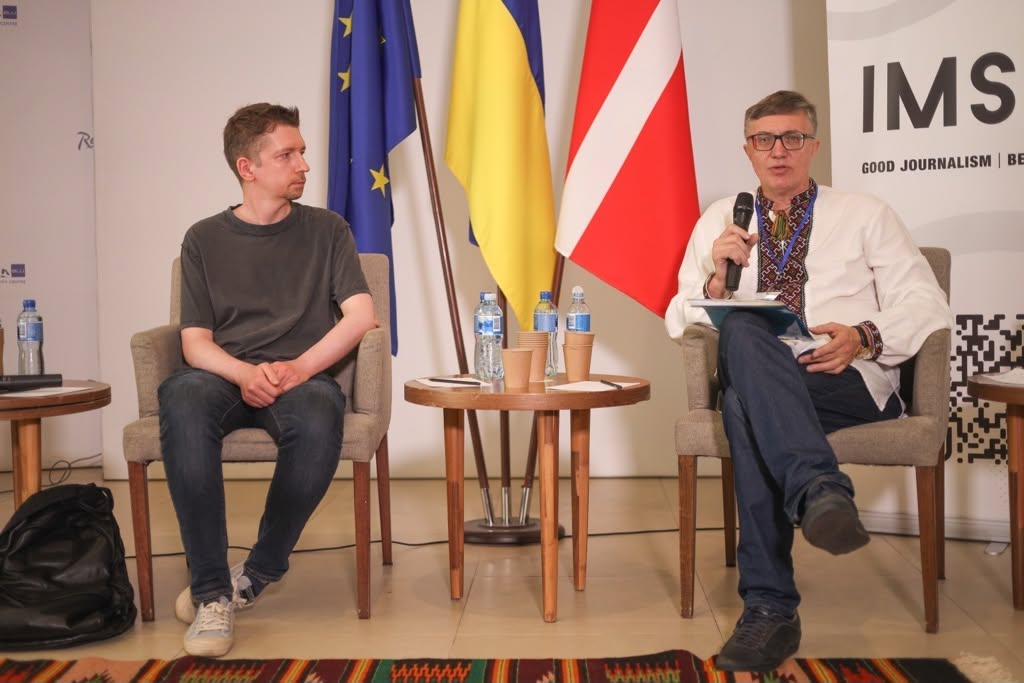
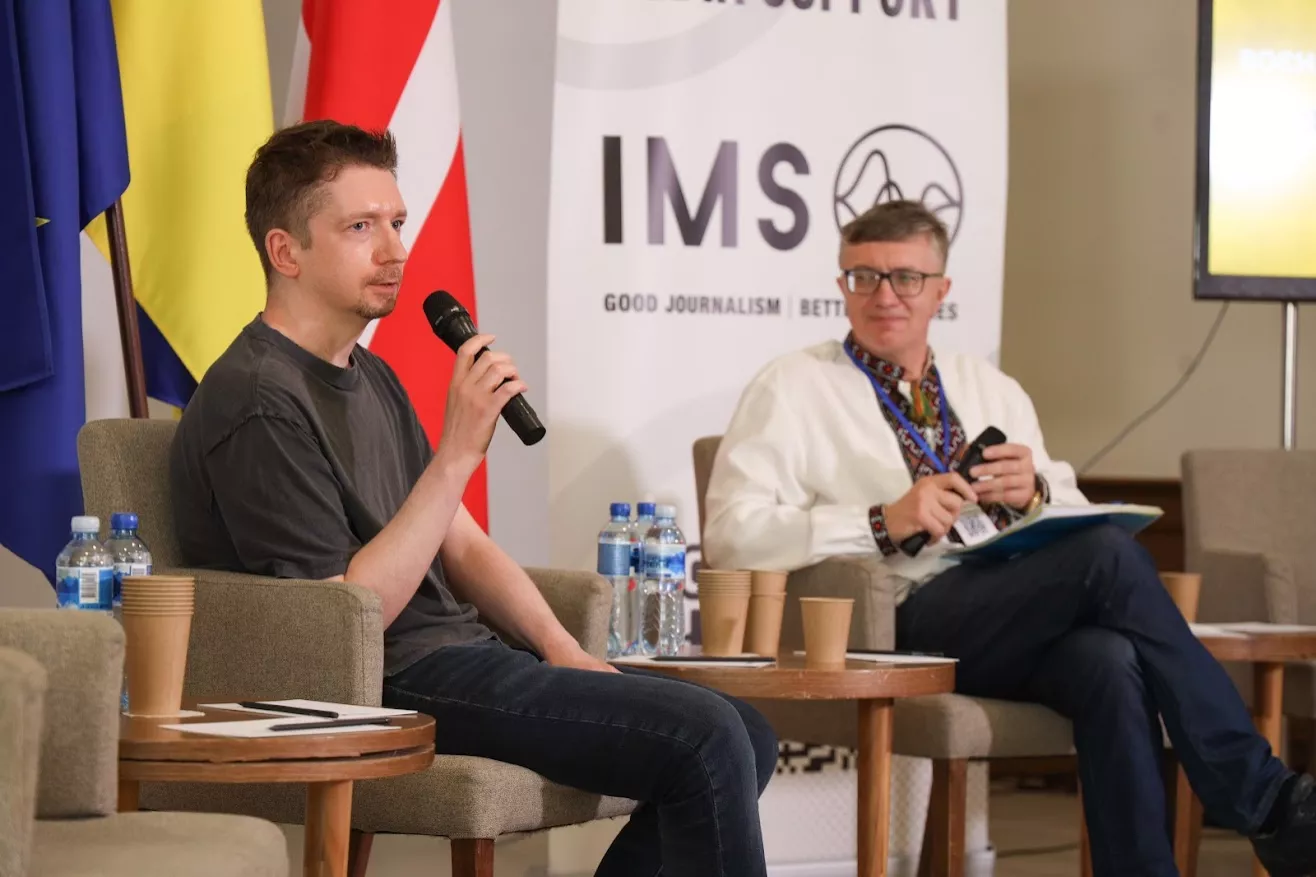
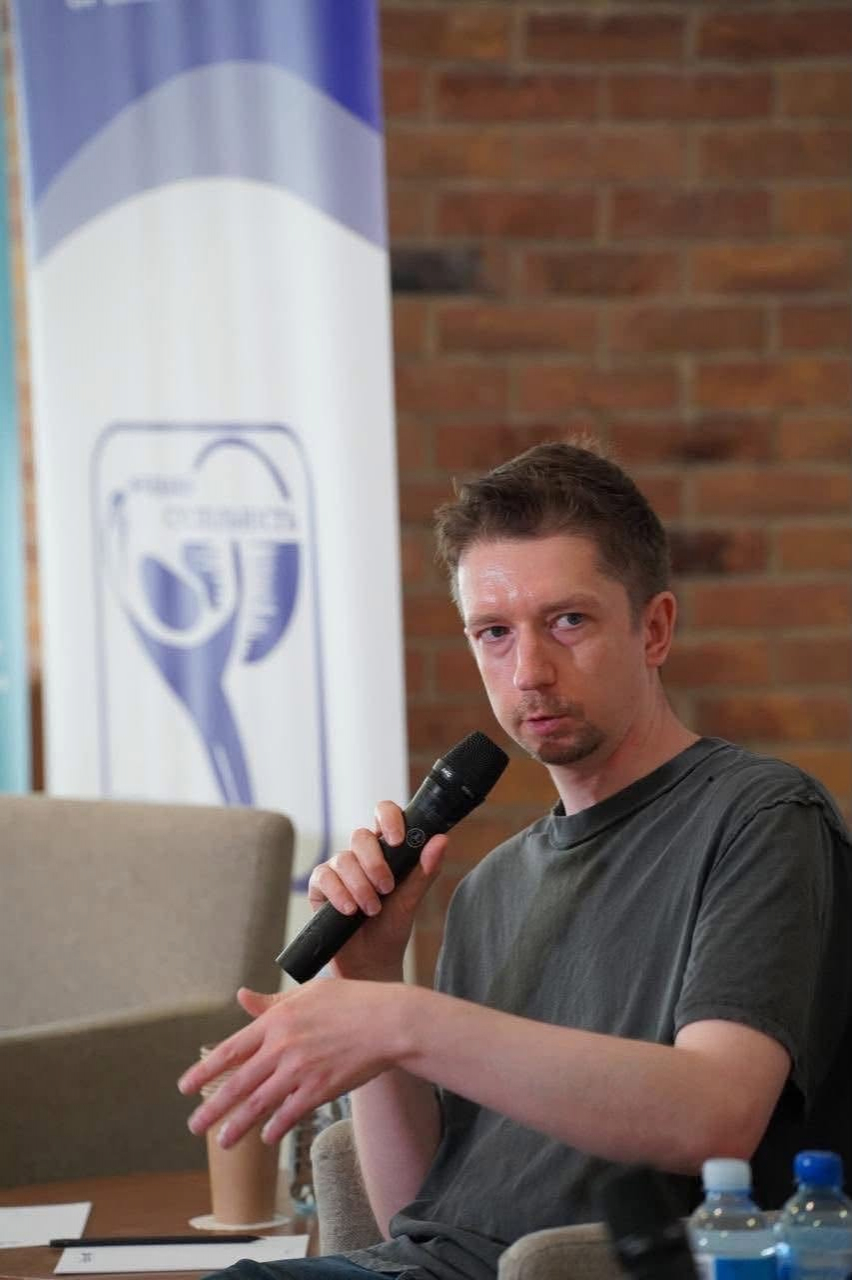
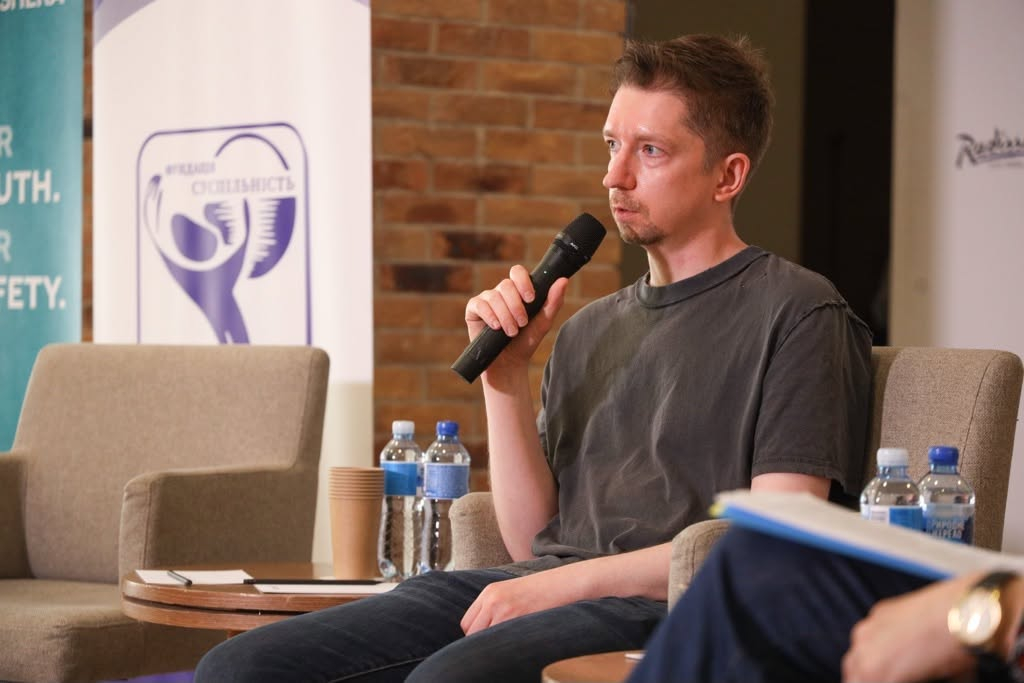
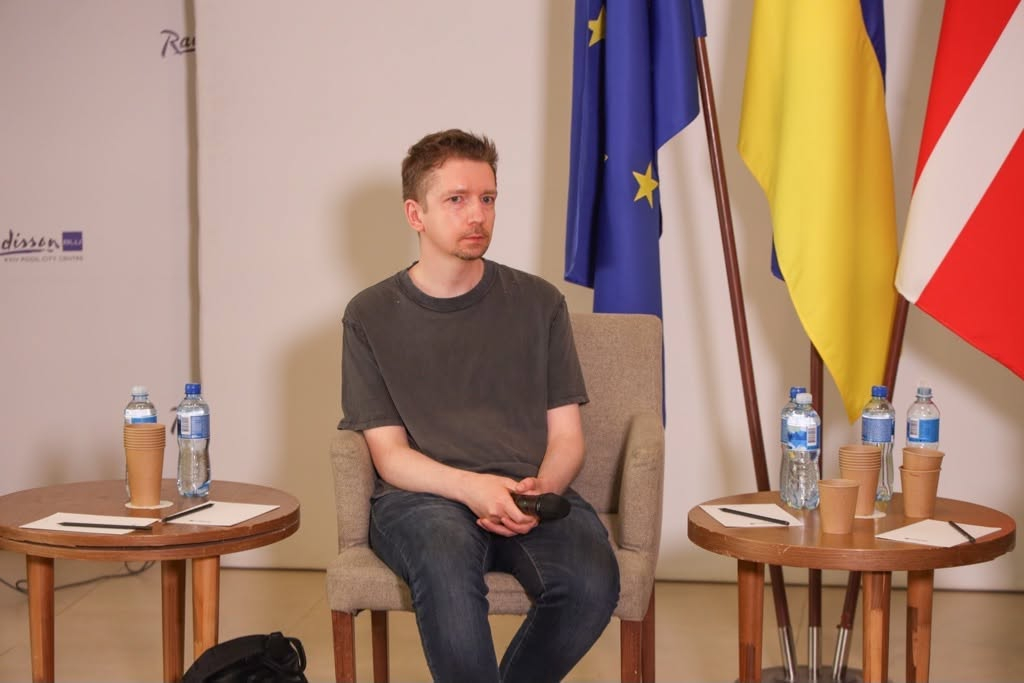
Dmytro Lytvyn and Taras Petriv
Dmytro Lytvyn: The situation has changed, of course. You know, there are no speeches for the sake of speeches. At one point, the main thing is to sustain people's morale, while at another, the main thing is to achieve a political objective. Today, for example, most of the President's speeches—or rather, I would even call them communication steps—are aimed at achieving something concrete. For instance, he knows that a certain operation is going to take place, and it needs informational support. Or he knows that something needs to be achieved from our partners, and that's how the communication is built.
For example, we know that we need certain missiles at a particular moment, and we need to put a little pressure on our partners. The President comes up with ways to apply that pressure. Or he knows that certain partners may be about to take some undesirable steps with Russia, and we need to prevent that, and an information strategy is designed around that as well.
In other words, everything that happens is driven by specific reasons. There is no communication for the sake of communication, at least not in our case.
For example, in 2022 it was important for people to understand that we were not surrendering, that we were united, that we were fighting. Yes, we had little weaponry, but we had great spirit, and we would find the weapons.
Today, we want to obtain certain answers from Russia regarding how they see this war, when they intend to end it, and by what means. For example, we know that Putin is going to hold his economic forum in St. Petersburg.
The President knows that something is going to burn there at the beginning of the forum. And we need to make Putin react to whatever burns. In principle, he could choose not to react. But if you make a public move that guarantees a response—for example, by writing him a letter—then you have to do it in such a way, at such a moment, that he will certainly say what is really on his mind.
Not what he tells partners, not what he tells people around him, but what he genuinely thinks. There were many illusions among certain actors that Ukraine was somehow to blame, while Putin supposedly wanted negotiations and wanted to end everything.
Such a move reveals Putin's true message—that he is determined to continue the war. Then those who were trying to put pressure on Ukraine lose their arguments.
Essentially, all communication can be broken down into concrete situations that exist for a reason, about something, and in order to achieve something.
Taras Petriv reads the next question: Who writes the President's evening addresses and speeches? Does the President come up with ideas which are then developed by an entire team?
Dmytro Lytvyn: We all write them together, of course. It depends on the type of address, if we're talking specifically about the evening address.
There are days filled with meetings, briefings, and reports. From these, a certain narrative is formed, so to speak. Intelligence briefings are always interesting. Or diplomatic reports. Or sometimes there is simply a message that needs to be communicated about sanctions or something else. So, first and foremost, it depends on the events of the day.
Sometimes the President has an idea or sets a task, and then something simply has to be done technically. Sometimes we work on it together. By the way, the President now occasionally skips the evening address if it has been an ordinary day. But everyone keeps wondering whether there will be an address or not. We do not want it to become something routine that loses its meaning. If there is no purpose, then perhaps an address is not needed.
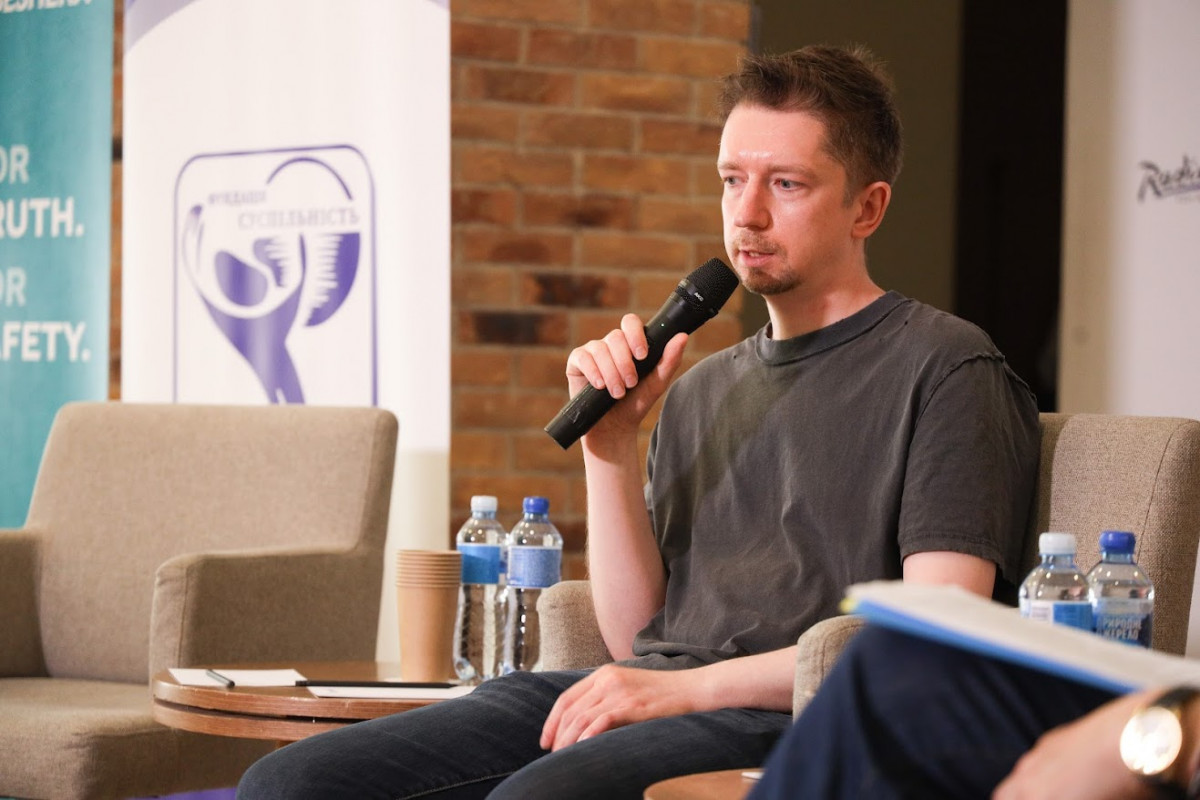
Dmytro Lytvyn
Taras Petriv: But sometimes it has a therapeutic effect, because people say they feel calmer when there is a presidential address. Have you noticed that the President, in a way, reassures people?
Dmytro Lytvyn: If you've noticed, the President's social media now features many videos about Ukraine's long-range strikes. On the one hand, this is part of our international effort, so that the world can see what Ukraine is doing. On the other hand, it is also therapeutic work, allowing our people to see that Ukraine is achieving results.
In terms of communication, the President is not just a public official—he is the largest Ukrainian media platform embodied in one person. People listen to him, hear him, he has influence, and he reaches a larger audience than all Ukrainian media combined.
People wake up in the morning and see that something has burned very successfully in Russia—or is burning right now. And that genuinely lifts people's spirits.
These therapeutic elements matter—not only the evening addresses, but communication itself. When we take a video from the Security Service of Ukraine or the Armed Forces showing what they accomplished overnight and turn it into a post, that post helps sustain morale.
The addresses in 2022 were even more important. Starting with the message, "I'm here, we're all here," and continuing with the evening addresses that reassured people that the state exists, the government exists, everyone is working, things are happening, results are being achieved, and certain messages have been delivered.
This is also very important for our military. It always matters to them when their achievements are recognized. Sometimes specific brigades that have accomplished something are mentioned, or individual people—rescuers, for example. It is difficult to describe in just a few minutes what has been happening every single day for the past four years.
Taras Petriv: How large is the communications team working for the President? And do you use materials prepared by other government agencies?
Dmytro Lytvyn: The President is his own communications team. He is an exceptionally talented communicator. If you've ever spoken with him personally, you've probably noticed that he reacts very quickly to people's emotions.
He reads emotions and communicates in a way that establishes an emotional connection with the other person. That is, in principle, a very good foundation, because he often understands better than anyone else what needs to be said—and what should not be said. Essentially, everyone on the team complements him in some way. There are many people responsible for photography, video, and social media.
As for speechwriting, there are just two of us: Yurii Kostiuk and I. Yurii has worked with the President since before the full-scale war. Today, he focuses more on ceremonial and commemorative speeches, although we still work on them together. I am more political, while he is more human-centered. Political matters require a more pragmatic approach, whereas he is more romantic in style. That works better for holidays and commemorative occasions. For example, the President's speech at the Kyiv Pechersk Lavra was prepared by Kostiuk together with the President.
By the way, if we take that speech at the Lavra... You asked what these speeches are for. Today, a bust of Ivan Mazepa was unveiled at the Lavra. This is the first monument of its kind to Ivan Mazepa in Kyiv, even though he did so much for the city. Because of our complicated history, nothing like this existed before.
And this is not merely about historical memory. Russia struck the Lavra with drones. How do we respond? One response is that a bust of Mazepa has now been unveiled at the Lavra. In the best possible sense, it is a middle finger to Russia. But it is also an affirmation of our own history.
It is an act of communication, but also a political, historical, cultural, and diplomatic act. It strengthens the spirit of those who respect Ukrainian history and have long expected to see more of Ukraine represented in the Ukrainian Lavra. Ukrainian prayers are now heard there, and that is important for many people. There is now a bust of Mazepa, and people are told the story of what Mazepa did for the Lavra. There is much more than communication contained in that communication. This is a good example of what we actually do.
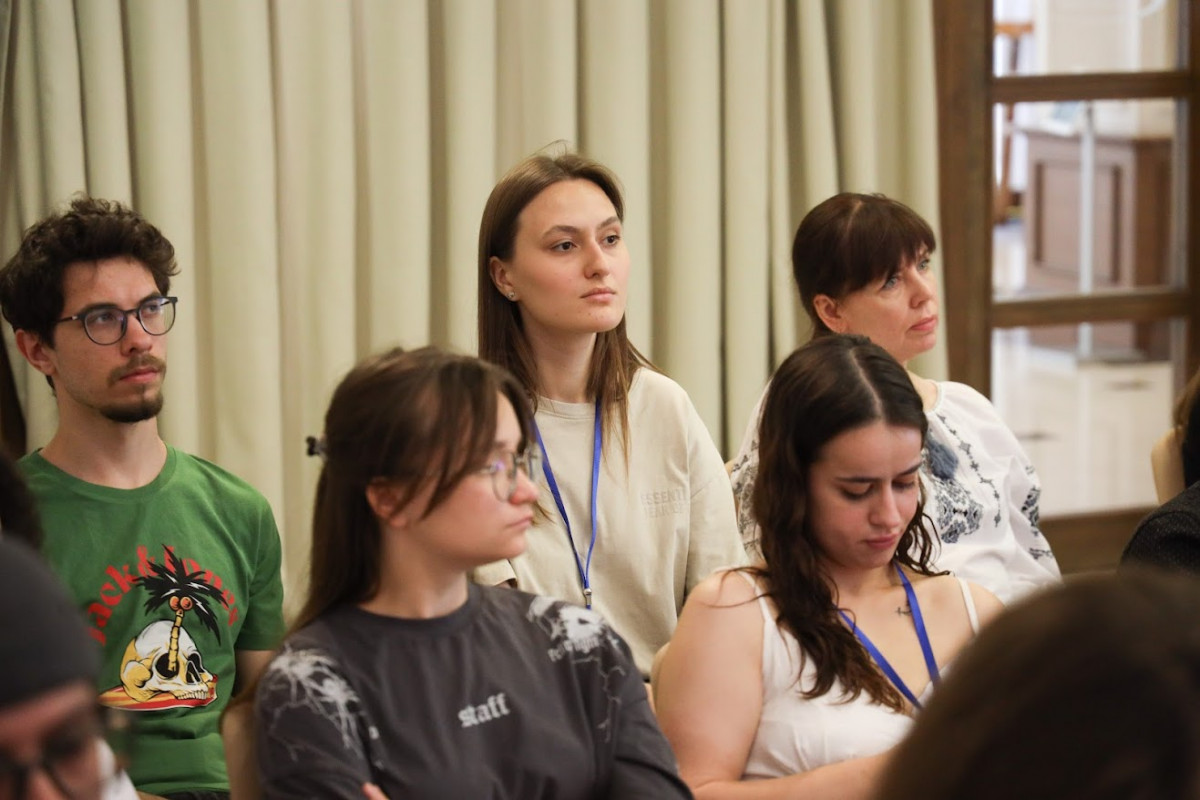
Audience of the discussion
Taras Petriv: Does the President and his communications team prepare separately for meetings with Donald Trump? I'm not even sure whether it is possible to prepare for that.
Dmytro Lytvyn: Actually, it is always an improvisation. Yes, the President prepares separately for meetings with Donald Trump. Not from a communications perspective, but from the perspective of the political conversation.
Donald Trump is a unique person, everyone understands that. A great deal depends on him for Ukraine—his personal views, decisions, and instructions. Therefore, we cannot approach this lightly. But, you know, you also cannot overprepare.
You have to react to President Trump's mood on that particular day, what he is focused on, and whom he spoke with beforehand. The same is often true of other leaders, not just him.
What is important is that the President has built personal relationships with many world leaders. Even if the leader is as complicated as President Trump, or someone like Emmanuel Macron, whose decisions have enormous influence in Europe, it is naturally much more difficult for someone who has just entered office or who has not shared a certain history with that leader to achieve results.
As Ukraine, we are now achieving results with the United States despite everything that happened in the Oval Office. If you compare President Trump's current conversations with the President, there is now much greater respect for Ukraine and for Ukrainians.
President Trump always notes how courageously Ukrainians are fighting and speaks about how to support Ukraine rather than how Ukraine should surrender. That is a tremendous distance to have covered in the course of a year.
Of course, there is preparation, a great deal of political work, and a lot of personal work by the President with these leaders.
Taras Petriv: President Zelenskyy hugged Marco Rubio in Évian. Should such moments be shown publicly? After all, the Russians also see how the attitude of the American side is changing. Was that planned, or was it simply spontaneous?
Dmytro Lytvyn: Actually, I would like more moments like that to be shown, because so many personal interactions remain behind the scenes. And not only involving the President. Take Yuliia Svyrydenko, the Prime Minister. She is very open, approachable, and has excellent relationships with many international figures.
Naturally, it is better to show relationships that are easy, cheerful, and emotional than simply formal meetings where a president or prime minister achieves something behind closed doors. And this produces results.
The larger the audience for these posts and videos, the easier it becomes for other leaders to demonstrate their connection with Ukraine when they see that doing so also resonates positively with their own audiences.
Anything purely official tends to perform less well. Anything personal, cheerful, and emotional performs better. That encourages leaders to maintain closer ties with Ukraine, to show those ties more openly, and ultimately to provide greater support.
The President has one rule: every meeting and every visit must bring something to Ukraine. Somewhere it is missiles; somewhere it is money. There are no meaningless visits. Accordingly, if another leader or partner wants to have a meeting, they have to come with something.
If they come empty-handed, the meeting most likely will not happen. If they come bringing something, then it is useful for the country. That is why anything that encourages others to stay engaged with Ukraine is unquestionably beneficial for us during wartime.
Taras Petriv: Yuliia Svyrydenko once attended one of our forums. At that time, she was still Deputy Prime Minister. One of the questions raised was whether the President should communicate jointly with his Prime Minister—for example, by holding joint press conferences. Should this happen more often? We know that Yuliia herself is actually a very modest person.
Dmytro Lytvyn: Yes, and that's a problem. I don't really believe in the press conference format. I've found that closed-door formats work much better.
A press conference assumes that the speaker has to say something that sounds correct, and that is not always interesting or even truthful. Meanwhile, the person asking the question is sometimes more interested in making a statement than actually asking a question.
That's why closed formats can be more effective. You gather, for example, journalists from 20 different media outlets, and they spend an hour and a half with the speaker.
That can be far more productive than spending the same hour and a half with the same journalists at an open press conference. More can be discussed, and if there are afterwards quotes from an off-the-record conversation—which is sometimes criticized—those quotes often become more informative precisely because being off the record removes unnecessary emotions, politicization, and similar distractions.
Off-the-record meetings not only allow journalists to ask questions, they also allow the speaker to understand the real mood of the people attending.
There are public officials who are not naturally very open and who do not respond well to criticism. In an open event, this often pushes them to become defensive, withdraw, or occasionally respond inappropriately. Different things can happen.
But when it is a closed meeting with journalists from different outlets—including critical and uncomfortable ones—it becomes easier for that person to understand that these are not simply loaded questions or politically motivated attacks. They realize that people genuinely think this way and genuinely have these concerns. Sometimes that helps them adjust their own perspective.
Over the past few years, the number of off-the-record meetings has increased, and I think the people who attend them now have a much better understanding of what is actually happening.
Taras Petriv: The President has an extremely demanding schedule with high-level travel and meetings. Doesn't this affect his ability to communicate? Doesn't he become exhausted?
Dmytro Lytvyn: Of course, he gets tired. But what choice does he have? You understand the pace at which he lives.
There are times when intelligence reports that a massive strike will take place over the next four days. There is a fairly good understanding of approximately where the Russians intend to strike, what they are planning, and what they are preparing.
He understands that if cruise missiles are involved, there are still ways to deal with them. But if ballistic missiles are coming, then we urgently need a certain package of interceptor missiles—one that may have become stuck somewhere, failed to arrive, been delayed because someone made a decision, or simply needs to be redeployed. So he constantly operates in a rhythm where he is searching for additional resources.
You see, perhaps we urgently need fifteen Patriot missiles by the day after tomorrow. Or perhaps we urgently need a financial package within the next two months. Or we know that Ukraine desperately wants to open another cluster of negotiations with the European Union, but there are two leaders who strongly oppose it. That obstacle has to be removed.
He lives in an extremely practical rhythm, and naturally he becomes tired. But he leaves his exhaustion for some time in the future. The same is true for everyone on the team, not just him.
Our society has a somewhat complicated attitude toward Commander-in-Chief Oleksandr Syrskyi. But he is doing extraordinarily difficult work, sleeping very little, and having to take countless factors into account. The same applies to Kyrylo Budanov, other military commanders, the Minister of Foreign Affairs, and Yuliia Svyrydenko.
Sometimes people do not see the purpose behind the work of a particular individual—or even the entire system—but we are living through a full-scale war.
The state has never delayed pension payments, for example. People take that for granted, but money always has to be found to make those payments. Money must also always be found to pay military salaries and to maintain our energy reserves. This is the result of the tremendous work of many people who are genuinely exhausted. But if they allow themselves to stop because of that exhaustion, Ukraine will fail to receive something it desperately needs. So they do not allow themselves to stop, even though they are, in fact, tired.
Taras Petriv: Are there four or five politicians in Europe or elsewhere with whom the President has particularly close and friendly relationships?
Dmytro Lytvyn: He has many excellent relationships. For example, he has a very personal relationship with Emmanuel Macron. They speak frequently and call each other often.
There is also Finnish President Alexander Stubb. The President has even spoken publicly about this. They often work out in the morning and then call each other afterward to coordinate: what is happening now, what deserves attention, where one leader will be, where another will be, and what messages should be delivered. Giorgia Meloni is wonderful as well. She is very emotional, cheerful, and lively. So is Mette Frederiksen, Prime Minister of Denmark. There are many others.
If we talk about what helps everyone endure these difficult times—besides communication, negotiations, and political work—it is precisely these friendships that have developed with world leaders.
I once read on Twitter that after one of the President's speeches in Britain, there were many memes about his meetings with the King. And it is true: very few leaders enjoy the privilege of meeting the King so frequently. The President, however, effectively does. Likewise, when the new Pope was inaugurated, one of his very first meetings—perhaps even the first—was with the President.
Of course, this reflects respect for Ukraine, for Ukrainians, and for everything we are going through. But it also reflects the President's personal ability to build relationships and guide them in ways that ultimately bring additional support to Ukraine.
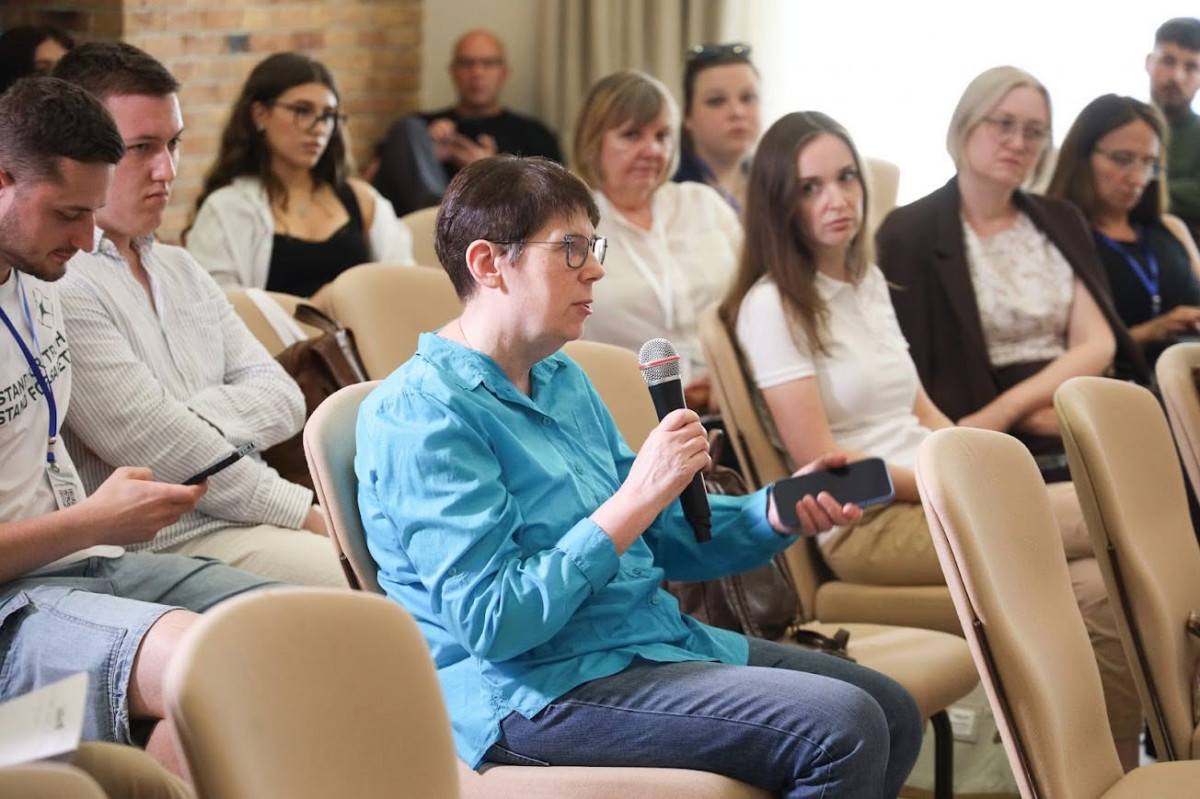
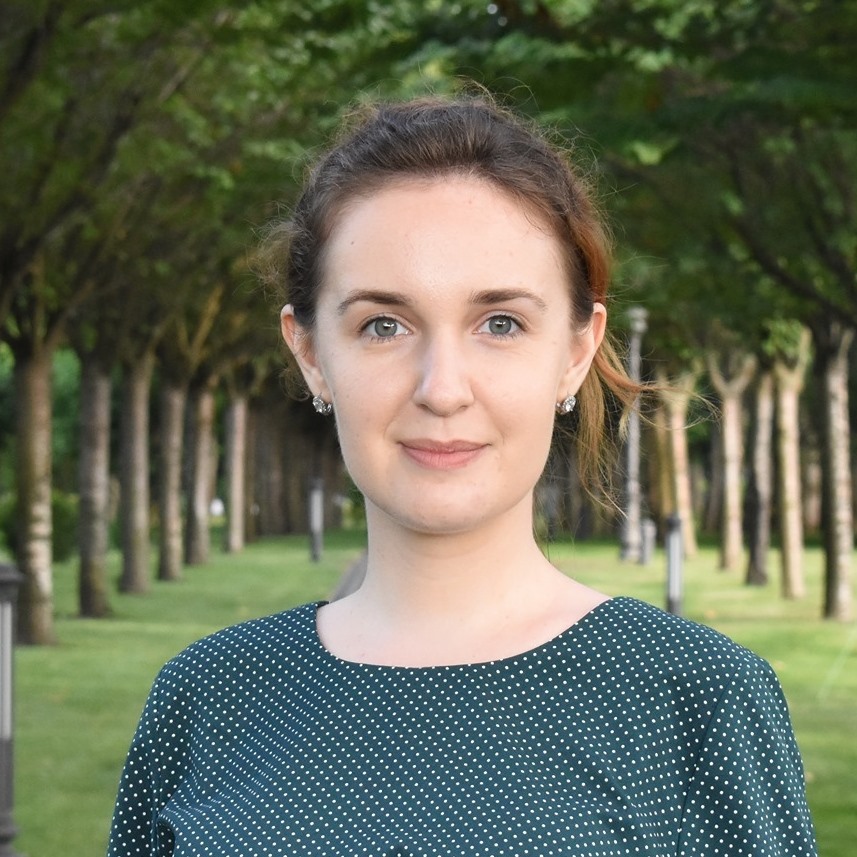
Nataliia Lygachova
Nataliia Lygachova, Editor-in-Chief of Detector Media: Which members of the American team does the President have the best relationship with? I don't mean Trump.
Dmytro Lytvyn: The American team is complicated, that's true. Both the President and a group of people work with them.
Without going into details, I'll say that there are certain elements within that team, and each element is covered by a corresponding element of Ukraine's communication with them. So there are no particular problems with them. The problem lies in how the United States currently sees the future of Europe and its relations with Russia. Accordingly, that shapes how they view Ukraine.
Ukraine's task in this context is to make the case that Ukraine's importance is such that any constructive, normal relations and an overall peaceful situation here in Europe are impossible without Ukraine. Because Ukraine is that security element on which everything will, one way or another, rest. This idea is gradually getting through, and not only to the American team. The relationships are constructive.
Taras Petriv: Can our President play golf? Maybe he should occasionally play with Trump?
Dmytro Lytvyn: I don't think he has that much time to play golf. He really loves sports and all kinds of physical activities—they help him stay in shape, and that's normal. But golf takes a lot of time.
Taras Petriv: How does the President cope with disappointment? Does he cope with it?
Dmytro Lytvyn: What choice does he have? Not cope with it?
Actually, it's an important topic. Maybe one day he'll talk about it himself—that would be the appropriate way, if he chose to tell that story. There have indeed been many expectations and many disappointments over this period. And disappointment in people is often very painful for him and very difficult.
But he has a goal—to endure this war and reach the peace that Ukraine needs. That's why he has to limit himself in many ways, including in giving in to disappointment, emotions, and certain ordinary aspects of life that the rest of us don't usually have to restrain ourselves in.
Taras Petriv: Does the communications team use the First Lady in certain communication efforts?
Dmytro Lytvyn: That's quite a frightening way to put it—"use the First Lady."
The First Lady is very well received by many audiences. That's true. But she never abuses her ability to be a public figure. The First Lady has specific areas she focuses on: Ukrainian studies, Ukrainian culture and language, accessibility, and various educational projects.
She works on these very successfully. If necessary—for example, in certain difficult international situations, where the First Lady can help the President a little by adding emotional depth or helping build the right kind of relationship with a particular leader—then, of course, she helps. But she approaches this very carefully, and as you can see, she is not overly present in the public space.
Taras Petriv: You weren't very visible alongside the President for quite some time, but now you occasionally appear during foreign trips and can be seen in videos. Has something changed?
Dmytro Lytvyn: Well, that's some kind of disgrace on the part of our video team, because I don't try to appear. I'll have a word with them.
Taras Petriv: Do you simply have more information now because you're traveling with the President, or is it not necessary to travel with him?
Dmytro Lytvyn: I've been traveling with him all along; I just asked not to be shown.
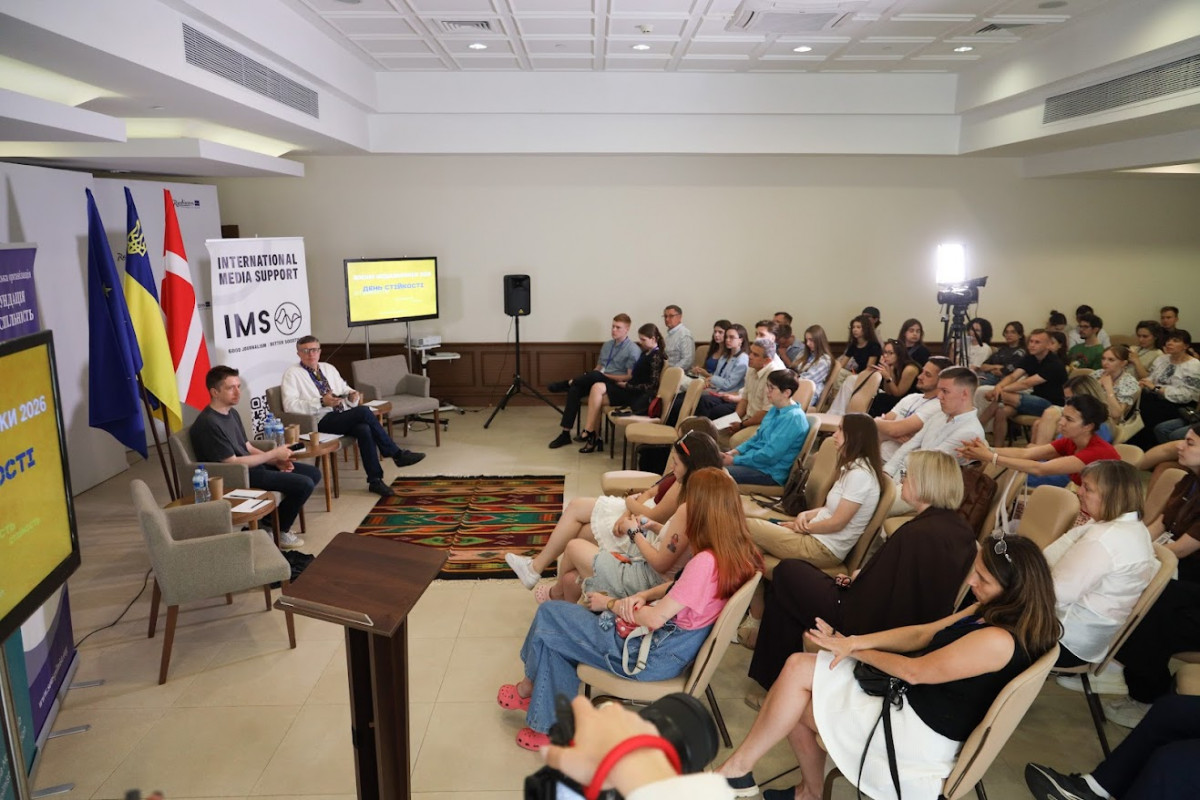
The "Friendly Circle" Audience
After Taras Petriv had read out all the submitted questions, forum participants in the audience had the opportunity to ask the President's adviser questions directly.
Nataliia Lygachova: Do you still use the chat with journalists the way you used to, showing it to the President so that he also takes media sentiment into account?
Dmytro Lytvyn: Of course. He follows that chat very actively. I don't think everyone knows that there's a large group of journalists who ask questions to the Office of the President. There are around 400–500 people there. They can ask questions, and the President responds from time to time. All the content produced by the Office of the President is also shared there.
Of course, the President sees all of this. He also actively consumes information from many different sources and follows social media himself. Naturally, many people simply send him screenshots whenever something appears that requires some kind of response.
Nataliia Lygachova: What changed in communications after Budanov came in? Quite a few people appointed by Yermak remained on the President's team at the adviser level. How does Budanov communicate with them—with Leshchenko, Kovalska?
Dmytro Lytvyn: Mr. Kyrylo has a principle: he comes in and works with the people who are already there. For him, it's a professional challenge. If he can't get the team working effectively, then what kind of manager is he? He succeeded in organizing the team's work, and everyone cooperates with him in a completely constructive way.
Budanov, of course, has a different personality than Yermak and a different approach to work, but everyone has more or less found common ground. As for what has changed—you could say that everything started moving faster.
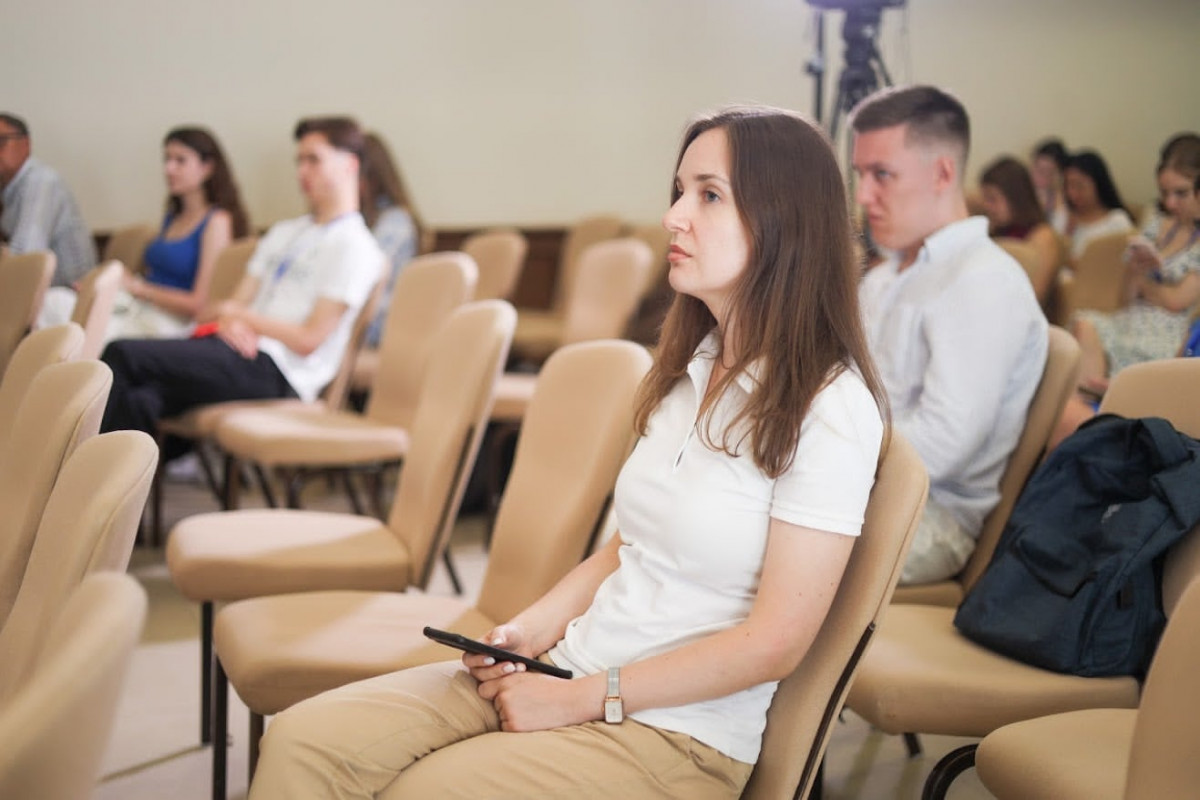
Iryna Semenyuta
Nataliia Lygachova: And what role does Budanov play in what you described—the process of defining the objective before any address is delivered? Does Budanov take part in that?
Dmytro Lytvyn: Kyrylo has his own area of responsibility. But the President's addresses are the President's work, and he himself decides what they will contain. This may sound a bit blunt, but no one else's direct assistance is particularly needed when it comes to his addresses. The President sees the political direction—that is his role as the speaker.
If, for example, it's necessary to consult someone working on the American track, or someone from intelligence, or from the Armed Forces, or on the economy, he always checks with that person on how best to phrase something, what is better to say, and what should be emphasized. Sometimes part of the team works through specific issues. With the Americans, for example: what the current status is, when meetings are taking place, certain contacts, what is happening with the documents.
Right now there's the drone track, which Umerov is responsible for. There is also the ongoing work on air defense and missile procurement. So it's always necessary to verify what is happening and with whom. If it's an area that Kyrylo is responsible for, then of course they consult with him. If it's someone else's area, then they consult with that person instead. There are many people on the team who are each responsible for something, and they are always in direct contact.
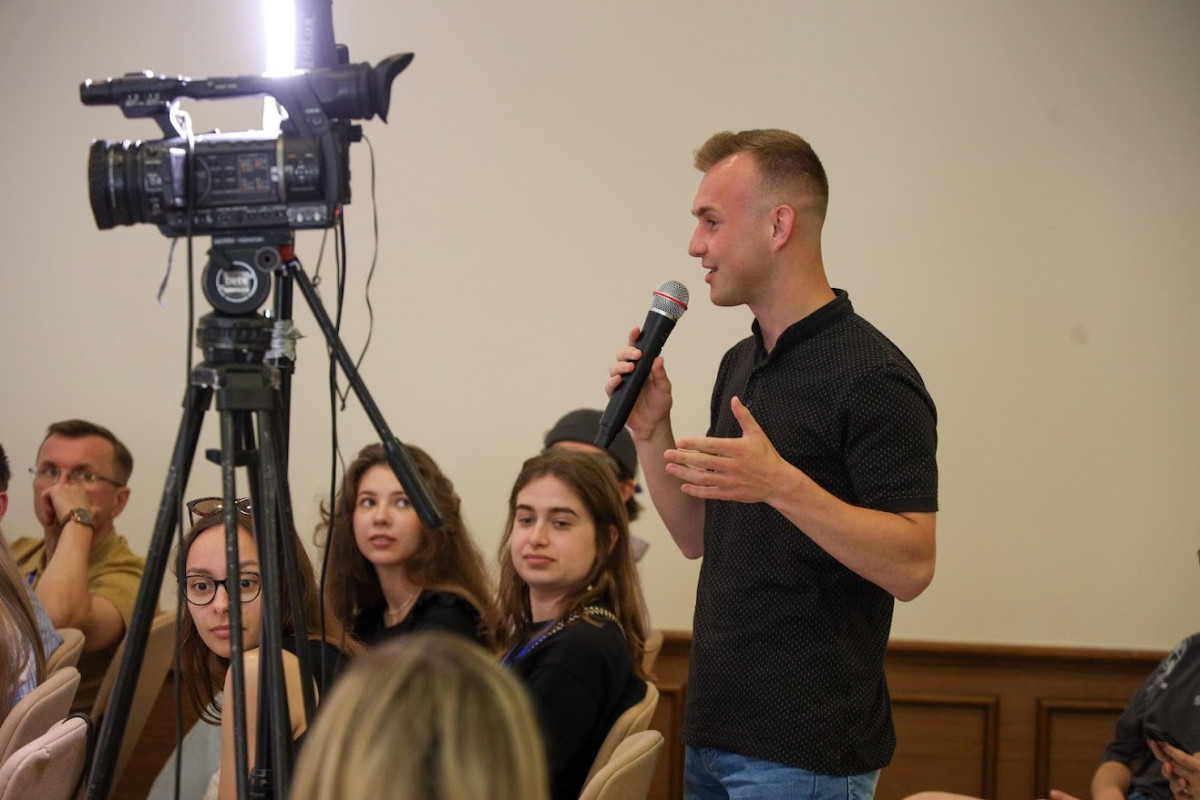
A forum participant asks a question
Forum participant: A meme has emerged on X saying that whenever there's a problem that needs attention, people tag you so that you'll pass the information on to the President. Does that actually work?
Dmytro Lytvyn: I do pass it on. Yes, it really works.
The same participant: More generally, how important is the fact that communication-related issues are trending on social media when it comes to setting priorities? In other words, is there sensitivity to the publicity generated by media waves, and does that affect how problems are prioritized?
Dmytro Lytvyn: Yes and no. Yes—of course, if a wave of public emotion arises, you have to respond to it. No—because problems are still problems. They need to be solved regardless of whether they're being discussed on social media.
What makes Twitter valuable? Besides the fact that it's home to a large international community of foreign journalists, politicians, and many others, it has become the platform in Ukraine used by a particular group of military personnel and people around them—those I would call the vanguard of military thinking. Sometimes you can see a problem developing on Twitter two or three days before it fully emerges. If you're able to respond in time, then of course that's very useful.
Most audiences are on Telegram, and everyone pays attention to what's circulating there—or not circulating there. But it's also simply a means of mass communication. So if there's a problem that objectively requires a solution, it should be solved regardless of where it surfaced—or even if it hasn't surfaced yet. If something is spreading very rapidly, then you need to respond very quickly, and that's exactly what we try to do.
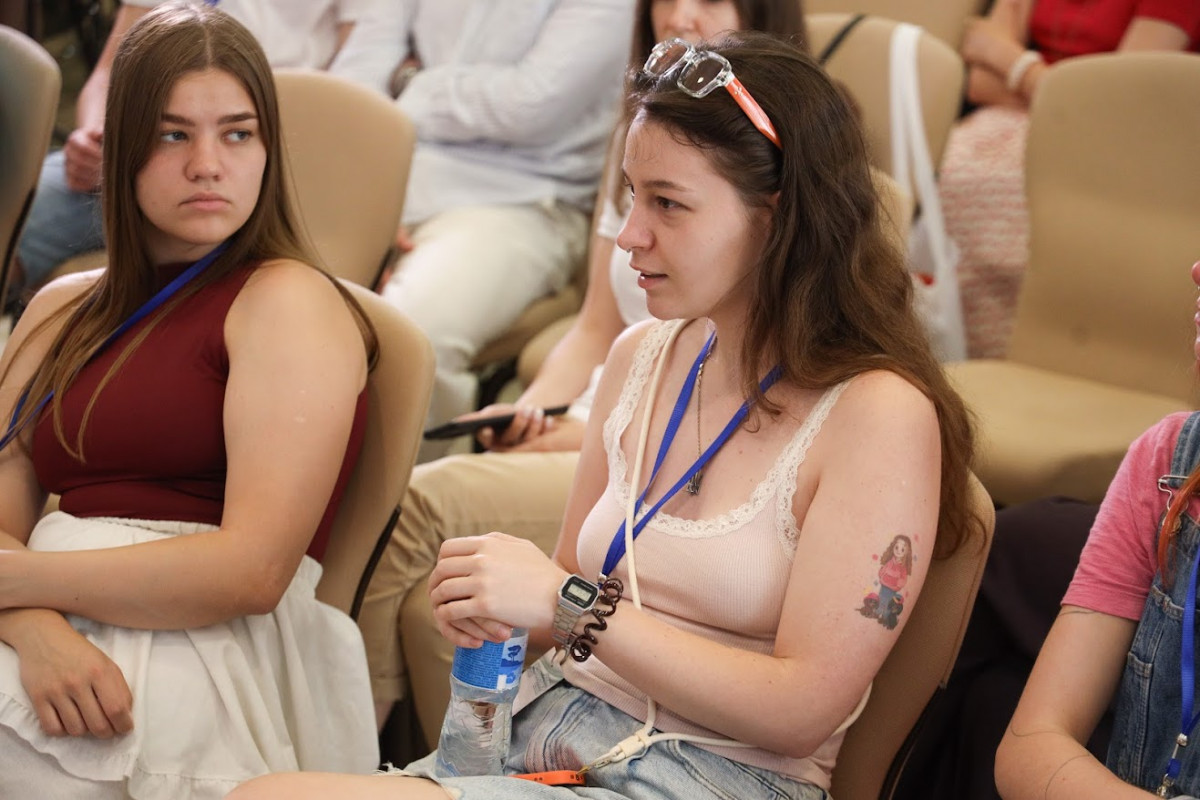
A forum participant asking a question
Forum participant: Since the beginning of Volodymyr Zelenskyy's presidency, his communication has been quite personal and down-to-earth. At the start of the war, this changed somewhat, but now I see that this approachable, people-centered style of communication is returning: the jokes, the occasions when he allows himself to speak less diplomatically. Is this a strategy, or has he simply grown tired of the traditional role of a politician that is expected during wartime?
Dmytro Lytvyn: It's not as if he sits there thinking, "Oh, how should I communicate this now?" Sometimes a reaction comes naturally. Sometimes you have to do something very political that, in principle, isn't particularly close to the audience, but you need to be political so that the politicians you're expecting something from understand you correctly.
But yes, he tries to remain human, to always communicate in a way that adds something, helping as many people as possible understand him. Perhaps the situation previously required something different, whereas now it allows a little more.
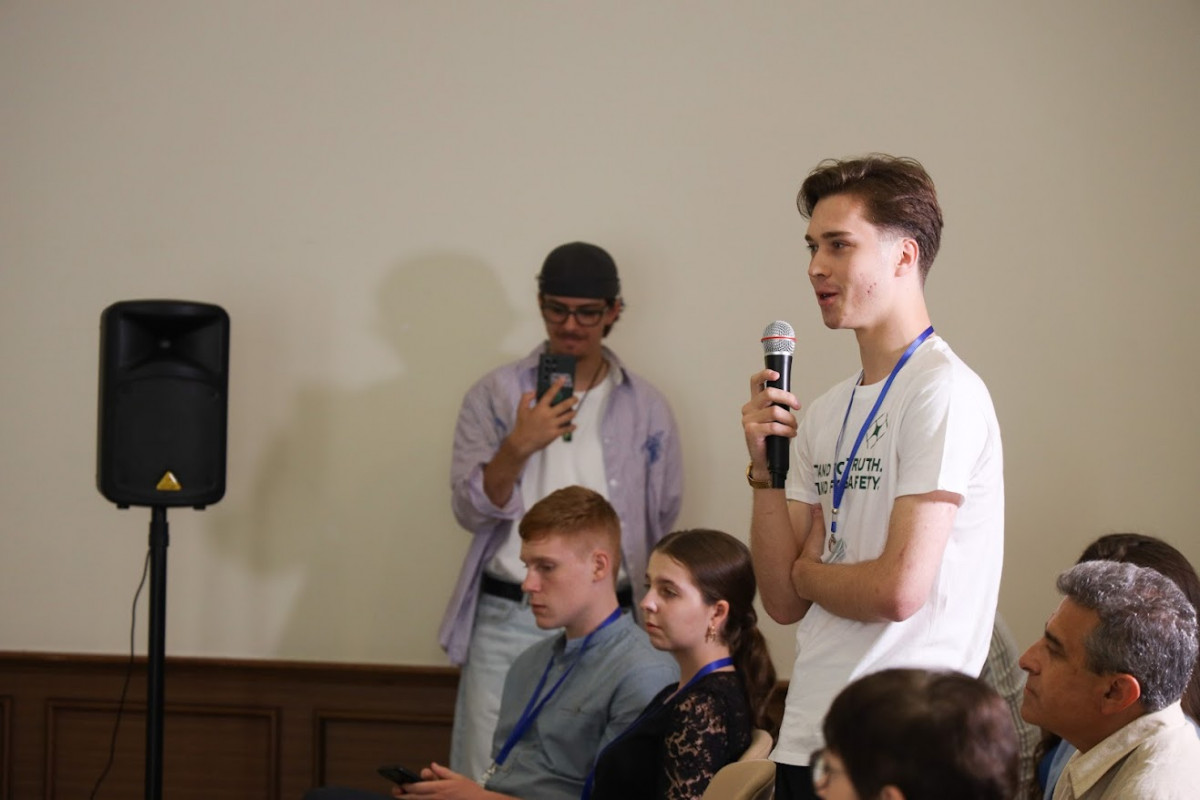
Ihor Yushchenko
Ihor Yushchenko, hromadske: You mentioned the President's human-centered communication style. I remember the first briefings and press conferences at the beginning of his presidency, in 2019–2021. After the start of the full-scale war, this became less evident, particularly in his interactions with investigative journalists. His exchanges with Mykhailo Tkach, his interactions with Radio Free Europe/Radio Liberty. I don't want to make value judgments, but I think you remember those scandals when the President confronted Tkach, saying: "Why are you so obsessed with Yermak? Why are you so obsessed with the people I vacationed with at the dacha, the people I traveled to Truskavets with?" Then there was the remark about Tatatov and Yermak "killing Chechens" in Kyiv on Maidan.
How do you assess that kind of communication? Has it changed over the years? Has it evolved? And in general, if investigative journalists were to come to the President today with tough questions, what kind of answer or reaction should we expect?
Dmytro Lytvyn: That was a long time ago. I don't remember the emotional context of those interactions with the investigative journalists you mentioned. My position is this: a person has the right to any emotional reaction. He is not only the President—he is also a human being. Of course, judging by your question, that style of communication probably didn't work for you personally. It probably didn't work for some others either, while perhaps it did work for someone else.
I don't think communication always has to be smooth and tailored to an imagined audience in every situation. If a person is irritated, they have the right to be irritated. If a person rejects something, that also says something about the individual and, to some extent, about the situation itself.
Sometimes a person responds irritably while keeping something in mind that they simply cannot say out loud because they know more than those who are present. Or it may involve information that cannot be disclosed at that moment. There are all kinds of situations. I wouldn't put all such cases involving investigative journalists into the same box.
Take, for example, what I said about off-the-record briefings. Or our approach to leaders visiting Ukraine. There are journalists there, there are questions, there are different media outlets. Some ask tough questions, some don't—that's just how it goes. But the main thing is that people understand where the country is heading overall.
And all communication—this may sound a little grandiose—but all communication should, one way or another, be built around achieving a particular goal. It's not simply about one person talking to another, someone answering someone else, or someone picking on somebody. Communication should be built in a way that helps move things forward. If that's happening, then it's working. If it isn't, then something needs to change.
Anna Vlasenko
Anna Vlasenko, The Globe and Mail: Is it true that after Yermak's dismissal, you took over some of his administrative responsibilities?
Dmytro Lytvyn: No, that's not true. Besides, if you've ever seen Kyrylo Budanov, try taking something away from him.
Anastasiia Izvoshchikova, Suspilne: Are the President's less-than-diplomatic posts always coordinated with the communications team? Or are they often not coordinated? Do disagreements ever arise within the team?
Dmytro Lytvyn: Which posts do you mean? The one saying "Putin is a dumbass"? He came up with that himself, and it's his Twitter account. The communications team's role, essentially, is just to post it.
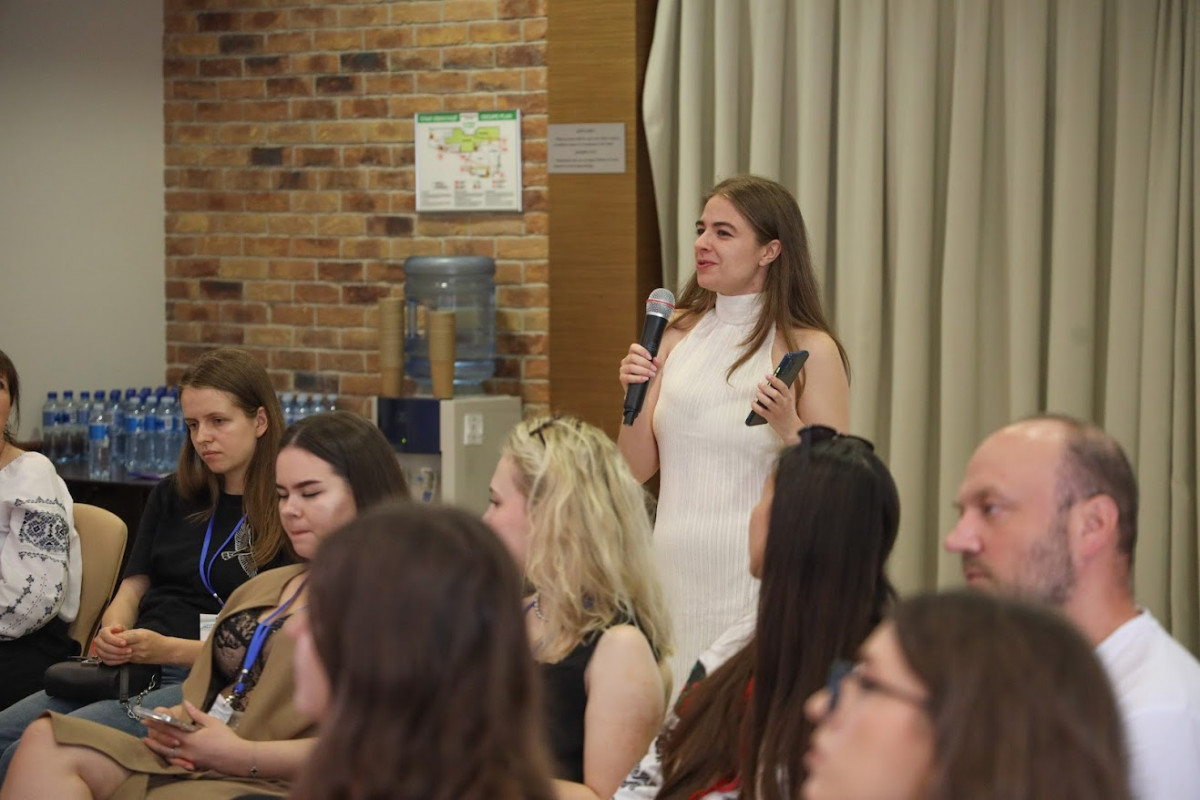
Anastasiia Izvoshchikova
Anastasiia Izvoshchikova: Can there ever be a reaction where the communications team is unhappy and says, "Well, that's a bit too harsh"?
Dmytro Lytvyn: On the contrary—we support it.
Forum participant: How does the President generally respond to criticism? For example, if you advise him to do something, but it doesn't align with his own views?
Dmytro Lytvyn: Sometimes easily, sometimes not. It's like with any person. Sometimes someone is very convinced they're right, while another approach might actually work better. Sometimes he doesn't accept it. But unlike some others in our immediate circle, he is capable of changing his mind, his point of view, and even his decision. The President is open to that—but he has to see why the alternative is the right one.
Forum participant: What topics or issues does the President try not to comment on—or comment on less—to avoid provoking a certain reaction? And do you, as an adviser, ever tell him, "Volodymyr Oleksandrovych, it's better not to talk about this today"?
Dmytro Lytvyn: That does happen. We all live in the same country, but in different realities. It's one thing when we're sitting here in Kyiv in a comfortable setting. It's another when people are in Kharkiv, Kramatorsk, or on the front line. There are situations where you could create a major public uproar or even make a strong, popular decision that would appeal to part of society. But at the same time, it could undermine the motivation of the people on whom so much currently depends. And when we take that into account, sometimes it's better to remain silent than to make a move that may benefit you politically but leaves someone with a sense of injustice, unfairness, negativity, or something similar. It doesn't always work out that way, of course, but sometimes it's better to hold back than to do something dramatic.
The same participant: Are there any specific topics that the President does not comment on or tries to comment on less?
Dmytro Lytvyn: Generally, he comments on everything. It's just that the formats differ. As Nataliia Lvivna (Lygachova — Detector Media) has probably noticed, we've had fewer large press conferences, but many more different formats—including the President's messages in the journalists' chat.
We've divided our responses according to the type of information. Some things the President addresses in interviews with Western journalists. At this point, that's not just communication—it's also policy, because it's all about influence, achieving certain objectives, and conveying key messages.
Some things he discusses with journalists over the phone. It's not always public, but nevertheless there are information operations carried out through particular influential journalists, which are then reflected in the media space. Sometimes it's simply a message in the journalists' chat when something urgent needs to be said, and the President records a voice message.
There are also issues that are high-profile and unpleasant, and that we may not want to comment on immediately. But those comments will come later, because we live in an open society, and sooner or later someone will ask about them. We have to treat that as normal and think carefully about how that communication should take place.
Iryna Semeniuta, Detector Media: Does the investigation into the "Skelia" Regiment fall into the category of topics that Volodymyr Zelenskyy does not comment on? Or is he not commenting because there has not yet been a decision?
Dmytro Lytvyn: It's a very difficult topic, as are many military-related issues in general. I think he will comment on it when he feels the need to do so.
Ihor Yushchenko, hromadske: Regarding media events and media engagements—do you invite representatives of Ukrainska Pravda and Radio Free Europe/Radio Liberty? And in general, what kind of communication do you have with Ukrainska Pravda?
Dmytro Lytvyn: We invite media outlets in a way that allows us to reach every segment of the audience.
The audience is not homogeneous. Some people read Grunt, others read The Kyiv Independent, NV, Radio Free Europe/Radio Liberty, Ukrainska Pravda, or Liga.net. Sometimes we may choose not to invite a particular outlet so that the conversation is calmer, more constructive, and more substantive, but there will still be another media outlet that reaches the same audience segment.
For example, if Ukrainska Pravda is not present, then someone from NV, Liga.net, Grunt, or another similar outlet that reaches the same audience will be there. If Radio Free Europe/Radio Liberty is not invited, then someone from the BBC or another international outlet certainly will be.
When people ask me why one media outlet is present, and another is not, they're usually referring to highly recognizable, influential Kyiv-based media organizations. I always say that, regardless of the format, our overall media representation is comprehensive. And I think all media outlets deserve respect, even if they are not as prominent a brand as the one you're asking about.
Taras Petriv read another question submitted in writing by a participant: What is your relationship with the President's Press Secretary, Serhii Nykyforov?
Dmytro Lytvyn: A working relationship.
Taras Petriv: Which media outlets does the President read?
Dmytro Lytvyn: Quite a lot, actually. He tries to keep track of the overall information landscape. Of course, different media outlets shape that landscape in different ways, and he sees that. For security reasons, he personally does not have Telegram or some other social media apps on his phone, but we still find ways to ensure that he sees what is happening there. I wouldn't say there are any major stories or media outlets that escape his attention. He is always well informed through a variety of sources.
Dmytro Tuzov
Dmytro Tuzov: From a communications perspective, do you think the reform of the Defense Forces—and the differing visions of Defense Minister Fedorov and Commander-in-Chief Syrskyi—is a problem? I mean that there appear to be some differences, and Minister Fedorov himself said, off the record, that in fact only the Ministry of Defense has the actual concept, although it is obvious that the Commander-in-Chief also influences the process.
Dmytro Lytvyn: I haven't been in government structures for very long, but I have yet to meet anyone who says, "We don't have the concept." Everyone believes the concept belongs to them.
But when it comes to Ukraine's Defense and Security Forces, the key decisions are generally made either by the Supreme Commander-in-Chief's Staff or during various meetings attended by the President and other officials. It's not a situation where one person single-handedly and arbitrarily decides everything for everyone else. Mykhailo certainly has his own conceptual approaches. They are strong in some respects, and perhaps they need to be strengthened in others. The important thing is that they all communicate with one another. They have long, heated, and sometimes more straightforward discussions during Staff meetings and other meetings, but in the end they arrive at joint decisions.
A number of changes for the Defense Forces have recently begun to be implemented. Some of them are working well, while others still need adjustment. There are also changes that have already had a significant impact but have gone largely unnoticed. For example, since the end of last year, brigades have been receiving guaranteed personnel reinforcements. Previously, it was very difficult: some brigades received more replacements, others fewer, and some received none at all. There was a great deal of criticism over this.
How did this change come about? Whenever the President visits the front line, he doesn't speak only with brigade commanders. There is a special format in which he also meets with battalion commanders and commanders of other units. They tell him objectively what they are lacking.
Many of them spoke about brigades not receiving enough personnel. For example, one brigade might receive 13 new soldiers while sustaining 40 wounded over the same period. I'm using hypothetical numbers, of course. But that decision emerged directly from communication that is not particularly visible to the public, yet nevertheless exists.
The same happened with the decision on direct funding for brigades, whereby each brigade receives a designated amount of funding for each combat battalion so they can independently purchase drones and other equipment. That decision also emerged from exactly the same kind of communication.
People in our country often think that communication consists only of public activities—press conferences, tough questions from journalists, and sharp or restrained answers. But when it comes to public administration, there is far more communication that directly influences decision-making. Most of that communication is never seen by the public. Yet it exists. The communications team must constantly develop new formats, new opportunities, and new ways of ensuring that this communication takes place and does not get lost before it reaches the decision-making stage.
Here's another small but important example. Not long ago, the President visited Slavutych. At first glance, it seemed like an ordinary regional visit. The usual format involved heads of local communities from Kyiv and Chernihiv regions speaking with government officials through the mediation of the President.
While in Slavutych, the President heard from a local community leader about the situation at the Chornobyl Nuclear Power Plant. Although the plant is no longer operational, it is still a nuclear facility. There are other nuclear power plants, and an unfair situation had developed: employees at Chornobyl were earning lower salaries than workers at other nuclear power plants. As a result, the workforce was shrinking. People faced many challenges, including the proximity of Belarus and the difficulty of commuting.
Naturally, the President raised the issue with government officials. Prime Minister Shmyhal promised it would be resolved, and it was: budget amendments were adopted. But why did it happen? Because communication finally took place between the head of the local community and government officials—a conversation that previously had not produced results.
There are many examples like this where dialogue itself makes the difference. You asked about Mykhailo, Syrskyi, and the others. Sometimes their views do not coincide, but there are formats for discussion through which those different perspectives are ultimately reconciled.
Roman Kifliuk
Roman Kifliuk, IMS National Adviser for Ukraine: During the communications panel, it was mentioned that while the President communicates issues and challenges extremely effectively, he is not all-powerful, and it is difficult to fit every issue into short messages. Isn't it time to broaden the range of official spokespersons?
Don't you think it is somewhat unhealthy that people feel they have to tag the President on X to solve a problem, when there are ministers and other responsible officials whose job it is to solve those problems? They shouldn't have to wait until the President issues an instruction.
This applies both domestically and internationally. There are truly strategic issues where the President should be the one communicating, but there are also many smaller issues where many other officials could and should be involved.
Nataliia Lihachova: We discussed the idea that strategic communications should be coordinated by the government. It has now been transferred to the State Committee for Television and Radio Broadcasting, where the function is being established. I believe that, in reality, strategic communication in Ukraine is largely carried out through the President, including through the journalists' chat we mentioned, at least when it comes to media relations. However, the other panelists argued that strategic communications should primarily be the government's responsibility and that ministers should play a much more active role.
Dmytro Lytvyn: I agree. A great deal of energy is spent simply trying to persuade someone to respond. I can only agree with that.
Dmytro Tuzov: Maybe they're afraid?
Dmytro Lytvyn: It's not exactly fear. It depends on the person. Sometimes people simply fail to notice a problem for various reasons. Some consume information less actively, don't spend time on social media, and therefore react more slowly. Others react more quickly. Mykhailo Fedorov, for example, has built a very effective system for monitoring social media. He sees how public sentiment is changing and responds very quickly.
As for whether the government should have a strategic communications unit, the reality is that there are many different people within the government, each with their own communication style. There is Mykhailo Fedorov, Ihor Klymenko from the Ministry of Internal Affairs, Denys Shmyhal with his own approach, and Yuliia Svyrydenko with hers.
These different approaches do not always come together into a single communications platform functioning as one coordinated unit. Sometimes that may be a weakness, but at other times it may actually be an advantage because they compete with one another in one way or another.
For example, people often say that I have some sort of issue with the Minister of Health. That's because healthcare involves constant interaction with people and an enormous number of problems. Sometimes there are genuinely serious situations, such as what recently happened at Kyiv's emergency hospital, or similar issues to which the Ministry responds, to put it mildly, rather slowly. And those are not merely communication problems—they are substantive problems.
In other words, we see growing public dissatisfaction while the ministry stays "inside its shell" and fails to respond. Quite often, you have to shake a government institution a little to get it moving. Some people respond quickly, others slowly. There are different approaches to governance.
Roman Kifliuk: My next question concerns the civil service. Not everyone who criticizes you is against you. The people who criticize often do so because they care. If a particular institution is failing, perhaps it should be staffed by people who genuinely care and are capable of working effectively within the same system.
Dmytro Lytvyn: I agree. But in discussions like this, we always have to be specific. Everyone agrees that the system should function properly, and everyone agrees that people sometimes need to be replaced. But sometimes it's more productive to motivate people and get them moving than to replace them.
Olena Leptuha
Olena Leptuha, Nakypilo: You hold off-the-record briefings for national media. When you come to Kharkiv, can we expect to have an opportunity to share the problems facing our region with you? And when?
Dmytro Lytvyn: I think so. But for security reasons, we don't disclose the President's visits in advance.
One of the biggest challenges is that meetings such as the Coalition of the Willing gatherings, where participants spend three hours discussing issues, regional security meetings, military meetings, and Supreme Commander-in-Chief's Staff meetings are generally held behind closed doors. The reason is obvious: they involve a great deal of sensitive security information. At the same time, it would help tremendously if people could simply see these discussions. There would be far fewer misunderstandings if people heard how the participants actually spoke to one another and what they were saying.
The challenge is that we haven't yet found a way to make such discussions visible without compromising security. So if anyone has ideas, we're open to them. And yes, when we're in Kharkiv, we can certainly meet with local media.
Olena Leptuha: In fact, this could be organized within a closed circle of responsible media outlets. I think it's important because, with all due respect to Oleh Syniehubov, he cannot comment on everything regarding the defense of Kharkiv region, nor is he authorized to do so.
We're always pleased when he participates in both closed and open meetings specifically with the media. These conversations are especially important in the regions, particularly in Kharkiv, because there are issues that need to be discussed.
Taras Petriv: Our forum represents the whole of Ukraine, and one of our participants submitted a simple question: "Will the President ever come to our forum?" Is he willing to talk to us?
Dmytro Lytvyn: I think so. You just haven't invited him yet.
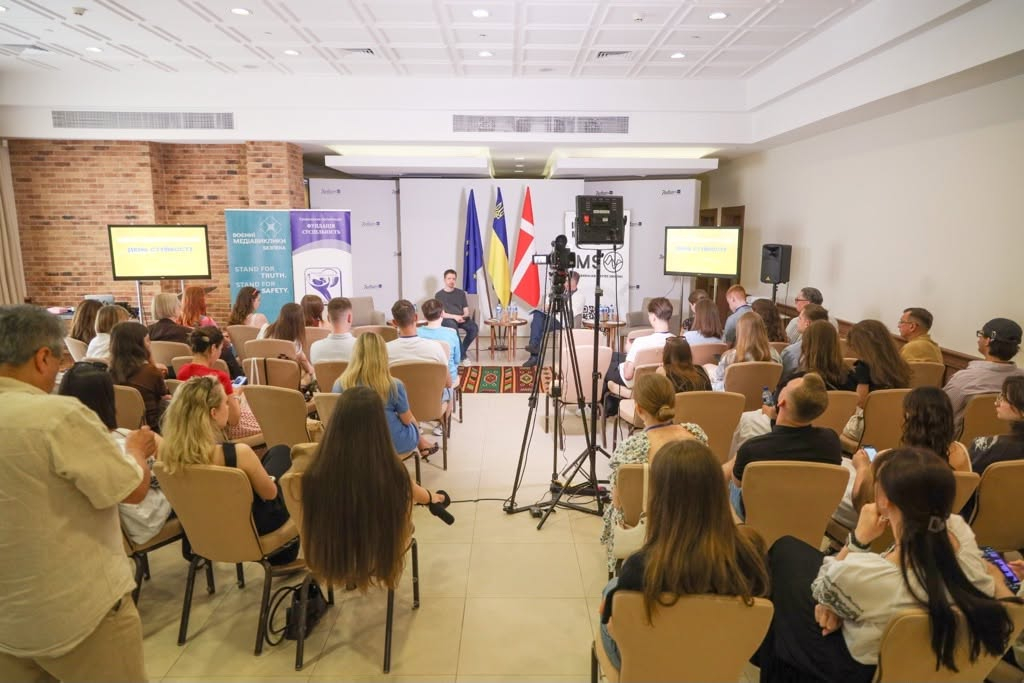
Photo: Ihor Vasyliev