Read the original article here.
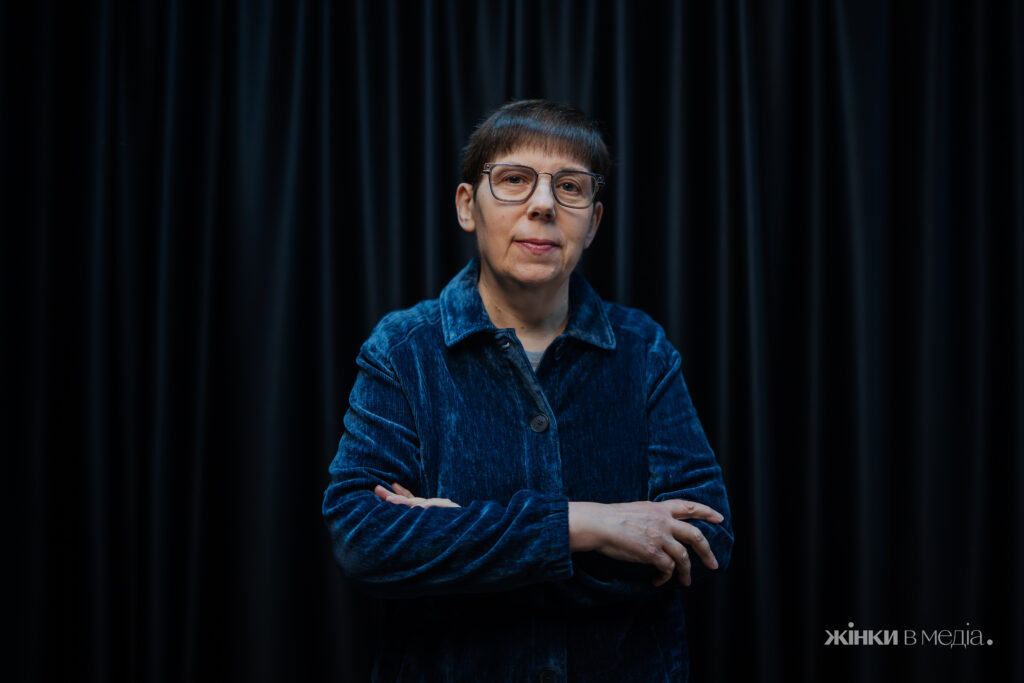
Nataliia Lygachova is one of the key figures in Ukrainian media criticism. With nearly 40 years in the field, she not only analyzes the market but also forecasts where it is headed — against the country’s current social and political backdrop.
She began her career in 1984, assigned after graduating from Kyiv State University’s Department of Journalism to the sociological research department of the then-State Committee for Television and Radio Broadcasting. In late 1986, Valentyna Chelnokova, editor-in-chief of the then-Main Editorial Office for Film Programs, took an interest in Nataliia’s audience research on UT-1’s film programs and invited her to join the office as a journalist and editor for shows such as Everything About Cinema (Vse pro Kino), Cinema Unstaged (Kino bez Hry), and others. From there she moved on to the newspapers Kievskiye Vedomosti and Zerkalo Nedeli and the magazine Natali. In 1996, she joined the newspaper Den.
Her experience with sociological research and television work helped Nataliia Lygachova, in 1997 — at the invitation of Den editor-in-chief Larysa Ivshyna — effectively launch media criticism as a genre in independent Ukraine’s journalism.
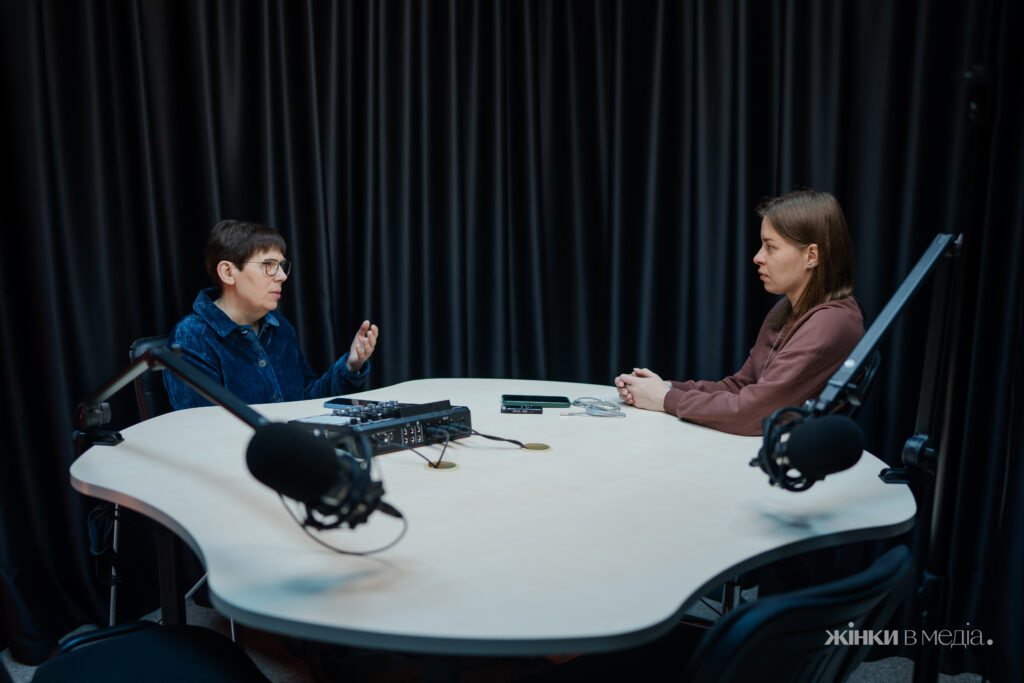
In an interview with Women in Media, Nataliia Lygachova discusses the transformations Ukrainian media have undergone since independence, the most pressing problems in the media sector today, and the attacks she has faced because of her professional work.
You have been working in Ukrainian media for many years — from Soviet television to the digital era. What transformations of the Ukrainian media sector do you consider the most defining over this period?
I remember our class at university — 100 people, half women and half men, because the intake at the time was very carefully balanced. The “Radio and Television” specialization began in the second year. There was a competitive selection for both radio and television. Working in television and radio was considered prestigious back then, and salaries there were higher too. Of course, the Soviet print press was also well developed.
I think the first transformation of the media came after perestroika, in 1985. I lived through all of it. Our film programs could now feature Roman Balayan, for example, who had been blacklisted for a time after his film Flights in Dreams and in Reality. We could start talking about Viacheslav Chornovil, about Vasyl Stus. Vechirnii Kyiv had a print run of 600,000–700,000 copies — something unheard of before perestroika.
Then came Ukraine’s independence in 1991. Ukrainian periodicals made another major leap: Molod Ukrainy, Ukraina Moloda, the Russian-language Komsomolskoe Znamya, which employed journalists like Olha Herasymyuk and Olha Musafirova. In 1992, the first non-state newspaper, Kievskiye Vedomosti, appeared, and many well-known journalists came out of it. The first news agencies emerged — Serhii Naboka’s UNIAR, UNIAN… It was a period of values-driven, ideological development. Everything was being rebuilt. On television, the youth studio Gart became hugely popular — it had been founded in the late 1980s, and my classmate Vadym Boiko was its promoter and lead host.
Ukraine’s first analytical publications were born in 1995 and 1996, respectively — Zerkalo Nedeli and Den. They actually became a training ground for staff at many other outlets. Studio 1+1, the first Ukraine-centric TV station, launched in 1995, and other private Ukrainian channels followed.
I think it’s worth noting the role of Western donors, particularly Internews, which came to Ukraine and began training journalists to work to professional standards. That was when the idea took hold that media is not just a free-for-all where anything goes. More and more journalists and newsrooms internalized professional standards. This was around the late 1990s. The understanding emerged that informational journalism requires balance of viewpoints, separation of facts from commentary, and so on. That was transformation of some kind.
In 2000, Ukrainska Pravda was launched. The murder by the authorities of its co-founder, Georgiy Gongadze, in 2000, and the journalists’ protests against the censorship the Kuchma administration was rolling out under Medvedchuk’s hand, led to the founding of the Kyiv Independent Media Trade Union. The KIMTU later went nationwide, and with the active involvement of its members, the Journalists’ Revolution of 2004 took place, preceding the Orange Revolution. In 2001, journalists set up the first self-regulatory body, the Commission on Journalism Ethics.
Every revolution gave journalism some kind of push: the Revolution on Granite, the Orange Revolution, then the Revolution of Dignity. After the Orange Revolution, in 2005, there was also a surge of free speech. Savik Shuster appeared with his talk show; even oligarchic channels became pluralistic. Gone were the days when certain people were banned from the airwaves. But on the other hand, the “dogfights” began: the boom of corrupt practices, where whoever paid got on air. That was the Yushchenko era. Then Yanukovych came in, and the space for free speech started to shrink again. The Stop Censorship! movement emerged, and it too gave Ukrainian journalism a great deal. It united those who wanted to work to standards. Investigative journalism began to develop. The Revolution of Dignity brought us live streams from Radio Liberty and Hromadske. Hromadske Radio appeared. After the Revolution of Dignity, it finally became possible, in 2017, to set up the public broadcaster — something we had been fighting for since the mid-1990s.
What followed was more technological change. Television is now digital; analog draws less and less attention. But it is migrating to other platforms, OTT and streaming services. National print media has been losing ground, but I think regional press still matters to many people. The online era began in the mid-2000s. When Telekrytyka was created in 2001, we were one of the first Ukrainian websites, alongside Ukrainska Pravda, UNIAN, and a few others. By 2010, there were already plenty of online outlets.
Now another era is arriving. The understanding of standards remains, as does the understanding of media independence. The war is, of course, making its own corrections — we understand we have to weigh our desire to report everything against security considerations. The development of war journalism is a separate, important milestone. At the same time, the war creates difficulties: relocations of newsrooms, fatigue, the loss of colleagues at the front. Let’s not forget the COVID-19 pandemic, which started the tradition of remote work. That, too, is changing journalism dramatically. And the impact of AI is reshaping media radically before our very eyes.
So if I had to sum it up in terms of meaning, we have been fighting all this time for the independence of journalism. First, from the Soviet state and the canons of Soviet propaganda. Then from the oligarchic state that, unfortunately, took shape in Ukraine during Leonid Kuchma’s presidency. And, as part of that same fight — from Russian influence.
Sadly, Russian influence remained mainstream in Ukraine’s information space right up until 2014, under every president. Either directly through the Moscow political technologists who worked here, including at some TV channels under Kuchma and Yanukovych. Or indirectly through co-produced TV series and the like.
There has also been a constant fight for journalistic independence from market censorship, which is just as lethal to independent journalism. Earlier, this meant censorship through advertisers and paid placements; today it is censorship driven, above all, by the social-media platforms that traditional media have become dependent on. The threats keep changing form, but the essence stays the same: defending high-quality, independent journalism. And that is constantly accompanied by the work of teaching how to do it responsibly, on democratic standards, and in a way that can compete with low-quality media for an audience.
You essentially launched systemic media criticism in Ukraine.Do you feel today that the market has become more receptive to criticism — or, on the contrary, less ready for self-reflection?
I started doing media criticism at Den, with the encouragement of editor-in-chief Larysa Ivshyna. Then in 2001 I founded my own outlet, Telekrytyka, with support from the U.S. Embassy in Ukraine, and in 2016, for various reasons, we transformed into Detector Media. DM has expanded so much, with so many themed sites, that it’s now far from focused only on media criticism.
Sometimes I even miss the kind of media criticism we used to do. There’s a shortage of qualified people — it’s not an easy genre, and it’s expensive, because only highly professional experts who command the respect of their audience can do it. And after the U.S. stopped supporting media here, it has become much harder to find funding specifically for outlets like us — “media about media” — and for media criticism in particular. On top of that, the volume of content has grown enormously. Audiences are moving to YouTube, Telegram; there are many, many projects.
Meanwhile, our political and investigative journalism is clearly missing an outside perspective right now. That has produced a sense of “untouchability,” in which any criticism is taken too sharply, and the importance of the topic becomes a “shield” against any remarks about quality. That doesn’t help — least of all the formats themselves. Healthy debate is always a stimulus for growth. “Either say something good or say nothing” — that’s about the dead, after all.
I have never analyzed media products solely for, say, adherence to information journalism standards. We’ve had a monitoring of news programs running for that since 2003 — we were the first to launch it, thanks to its author, Ihor Kulias. In my columns I might write something about balance, separating facts from commentary, or completeness of information, but I wrote more about meaning — about how far journalists are working not to their owners’ orders but in the public interest, how pointed their questions to politicians are, whether they are raising socially significant topics. It was a kind of opinion-writing on the boundary between media criticism and political journalism. Hanna Sherman, who worked with me in Telekrytyka’s early days, wrote in the same vein. Otar Dovzhenko was close to that style, too, although he always insisted he was not a columnist.
Today it’s very hard to find people who can carry on that style. People who want to — and know how to — use media criticism to raise what I’d call values-based, ethical, political, even worldview questions. With the war on top of that, some of the authors who could write that way have been mobilized. So that part is hard. And we’re badly missing media criticism not just of specific products but of trends — analysis, forecasting, even early warnings about certain processes.
Preparing for our interview, I looked back over my own articles on the website. Even the headlines of many of them were broad generalizations like that. “Journalism Shot Dead”, for example, was about how television was used during the 2002 parliamentary elections. The use, I should say, because there was no TV then independent of either authorities or oligarchs. Or the article The “Interization” of the Whole Country, from March 2010. I think I was the first to use the slogan “It Will All Be Donbas,” meaning what Yanukovych — who had just become president — was going to build. The phrase later turned into a meme. But reading that text now, I’m even surprised at how accurately I forecast all the negative processes that would unfold in media under his presidency, including, by the way, Russian influence.
The Stop Censorship! movement was still a couple of months away. Or MediaOBOZ or MediaAVANGARD from 2015 — about the need for a revolution of dignity in Ukrainian journalism, too. And so on. I think our texts, not just our organizing efforts, played some part in giving rise to journalistic resistance to censorship and paid placements, as well as in media self-regulation, which is also extremely important.
The way criticism is received by those it targets has stayed roughly the same: there’s the adequate kind, where people agree with some of it and disagree with the rest, but without taking it personally — and there’s the inadequate kind, of course. But because there used to be fewer media, criticism resonated more, especially among media people themselves. In 2001, when we were starting out, it was a challenge for me. At Den, I was one of the most-read writers. We had an annual readers’ poll, and I came in second or third after political columnist Tetiana Korobova.
When I moved online, it was psychologically hard for a while: I didn’t see the response to my pieces — how many people had read them, how many had shared, how my views were landing. Then it turned out that absolutely all the TV people were reading me. Mykola Kniazhytskyi told me: “I realized Telekrytyka had an impact when I walked into the open-plan office and saw that this site was every workstation’s home page.” He was at ICTV at the time.
That was a shift in focus for me. Whereas at Den I had been writing primarily for a wide audience, at Telekrytyka I had to recalibrate, recognizing that our main audience was media people themselves. So it was them, above all, that we began to see as our interlocutors in the discussion about quality of media output — or, for example, as people we were arming for their own arguments with the owners of oligarchic channels, when they were defending working to standards, without paid placements, and so on.
My first piece for Telekrytyka came out right after the 9/11 terrorist attacks in 2001. It was actually our very first text — we launched the project a little earlier than planned because of the news. It was called TV for Grown-Ups. And it was a fairly sharp criticism of our TV channels, including Novyi Kanal’s coverage of the attacks and everything else that happened that day in the U.S. and around the world. The newsroom at Novyi Kanal was run by Ihor Kulias at the time. Ihor took the criticism very hard. But in 2003, Kulias became our regular monitoring author. A landmark moment was the reaction to my piece FONit, in which I wrote that Viacheslav Pikhovshek, while letting the journalists on his analytical program Epicenter produce stories to standard, was then using his own lead-ins and outros to draw entirely manipulative conclusions from those stories — effectively using the journalists, making them the background (“fon”) for his manipulations, while keeping himself looking detached from them.
Then 1+1 aired a story or a film, I don’t remember which, about presidential candidate Yanukovych, by Lesia Sakada, a very good journalist. The piece said nothing about Yanukovych’s prior convictions. We at Telekrytyka decided to call Lesia and ask: how could that be? And suddenly, Lesia not only took Hanna Sherman’s call but almost burst into tears, saying she had been manipulated by the same Pikhovshek, and now her own family was reproaching her, citing my FONit piece. We ended up publishing that conversation with Lesia, and all of it was bricks in what the media community would build into the Journalists’ Revolution of 2004, which preceded the Orange Revolution.
There’s a great deal one could recall about the influence our analysis, criticism, and monitoring had on what was happening in the Ukrainian media sector and in the journalism community. The protests against temnyky (secret censorship instructions) in 2002–2003, the Journalists’ Revolution, the Stop Censorship! movement, the fight against paid placements, manipulation, and disinformation in media — there’s a share of media criticism as a genre in all of that.
Of course, the reaction was often very negative — from the same Pikhovshek, or, for example, from Natasha Vlashchenko, whom I had criticized for her work on Viktor Medvedchuk’s channels. She blocked me on Facebook long ago, but even now, people sometimes send me posts of hers demanding “Lygachova be banned.” One of the latest vivid examples of impact is the reaction to our criticism of the Dizel Show on the Antonina site. Or to the Yedynyi Kvartal show.
And the National Council, by the way, has more than once acted on our appeals after our publications.
The biggest audience on our website right now goes, hands down, to media and film criticism, and to Lena Chichenina’s TV-series criticism. That’s a real pleasure to see. More broadly, media criticism is shifting to YouTube and social media — that’s part of why we recently launched the YouTube channel, Housewife Antonina.
There are also projects by Oksana Moroz, Maryna Danyliuk-Yarmolaeva, and Tania Mykytenko. But yes — social media has radically changed the picture. We seem to be coming back to the period when, at Den, I was writing primarily for the audience of media, not for media people themselves. Today everyone is, if not a journalist, then a blogger. And that single, almost family-like media community, where everyone knew everyone else and reacted accordingly, is gone.
So this is another shift in our work: now, once again, we are influencing public opinion more, so that the public can then influence the media — managers, journalists, owners. And bloggers now too — we’re starting to analyze YouTube projects, for instance.
Has the role of media criticism changed during the full-scale war?
We do take into account that there is a war on, that there are limits on what can be reported and what information can be shared. War is a challenge for journalists working in the field, where you have to lower the bar in some respects, including on adherence to standards, because there are objective constraints tied to security and martial law.
Investigative journalists put corruption investigations on hold for a while when the full-scale war began, then went back to them. We did the same: for a time, we did less media criticism and more praise. Now we’re back to criticizing more. Even patriotic content that gets produced — if it’s clunky, we say so. Or, for example, when a kind of content has accumulated in volume and is all cut from the same template — that’s not okay either.
This is now the fifth year of the great war. Naturally, everyone is becoming more relaxed, including in what they do — in social and political journalism as much as in anti-corruption work.
Do you get criticized often? How do you respond?
Quite often. Sometimes it’s criticism — like, for example, from anchor Vadym Karpiak, who made some private remarks to me, and I took some of it on board and rejected the rest, but it was criticism in the proper sense. And sometimes it’s something beyond criticism. Whatever is constructive I take in completely calmly. My own colleagues at DM sometimes reproach me: every other manager defends their team, and you often back the criticism of us. I tell them that anyone who criticizes others should be doubly tolerant of criticism of themselves.
But how often does criticism cross that line and turn into online attacks? And how do you respond to those situations?
More often it isn’t criticism, it’s a smear campaign. That’s what people like Vova Petrov did, or various anonymous Telegram channels. I used to react in some way, sometimes publicly. Then I realized it’s better not to feed the trolls. Now I practically don’t react to that kind of content when it isn’t reasoned criticism. If it’s reasoned, constructive, and free of hate, I can engage in a discussion.
Have you been in situations where you had to go to court to refute that kind of falsehood?
The late Oles Buzyna once wrote sheer fabrications about me — every sentence was a lie. Yurko Lukanov tipped me off, asking me, did you really cry when Brezhnev died? The piece said that when Brezhnev died, I sobbed and everyone looked at me as though I were mad. I asked, where did you get this? And Yura said, you mean you haven’t seen Buzyna’s article about you?
So I read it. I actually remember that moment perfectly. We were all living in the same dorm. This was still our student years. I stepped into the dorm corridor, a classmate came toward me and said, turn the TV on. I went into the room and said, girls, let’s switch it on — I was sharing the room with Larysa Ivshyna, now editor-in-chief of Den. We turned on the TV; they announced Brezhnev’s death. We watched and that was that. I certainly couldn’t have been sobbing somewhere on campus — that was a lie. As was everything else in Buzyna’s piece.
I had an immediate impulse to sue. I called Natalia Petrova, a very well-known media lawyer who taught all our media lawyers, and said: Natalia, let’s file a suit. She replied: “Here’s my advice — never sue journalists, especially if you are a journalist yourself. There will be more downside than upside for you.” I have followed that advice ever since.
I don’t sue, but others sue us, and me. For example, in summer 2025, MP Maksym Buzhanskyi from Servant of the People filed a defamation suit against Detector Media. The court denied his claim, so he appealed. Valia Telychenko, a well-known attorney, is helping us through these proceedings.
I’m aware that in the AI era, leaving a lie unchallenged is bad. Detector Media has previously faced attempts to interfere with our Wikipedia entry to damage the outlet’s reputation. People tried to add a section to the article about DM on the supposed dissemination of fakes by our outlet. Yes, we once published a news item with an error — only on social media, not on the website — but we quickly took the post down and apologized to readers. That single example was used to add a “dissemination of fakes” section to our Wikipedia article. The information was added, but on review the Wikipedia editors removed it. Then someone added it again; this happened several times. Eventually the attack ended.
In the AI era, everything changes: every lie spread about you can matter, because that lie can be propagated further unless you refute it in time. That may force me to change my own response tactics. But honestly, there is neither the strength nor the time.
I often say: people who don’t have as much work as we do can afford to spread lies and hate. We have so much going on that sometimes we don’t even have time to write a rebuttal.
Do these attacks often pull in resources with pro-Russian roots?
I’d say it’s less about pro-Russian sources and more about Telegram channels close to the President’s Office. At least it was, when Andrii Yermak still headed the Office. For example, when the story with Vova Petrov broke, the attack drew on lots of Telegram channels of the Trukha, Joker, Batalion Monaco type. I don’t know who was coordinating them, but it was a powerful, coordinated attack. It came after I had criticized Petrov at a National Media Talk conference. We described all the details of that story, and of attacks on independent media via Telegram in general, in a piece on our website, and shared it with Western embassy representatives. Detector Media and IMI issued a joint statement, and the Media Movement put out one too. There were bomb and mining threats; we have long been blocked by Roskomnadzor — basically the same picture as for most Ukrainian media.
What is the main problem in Ukrainian media today — the one everyone knows about but doesn’t talk about?
I think it’s self-censorship, driven, of course, by the war. At the same time, there’s also a lot of self-censorship triggered by the fact that we have a president who raises plenty of questions, as does his political force. There is corruption that media report on. But I observe that even so, journalists fairly often don’t take on every topic. Sometimes there’s a hesitation, especially at the regional level.
There are topics tied to fear of indirect threats. You won’t be jailed or killed, or, as Larysa Ivshyna once put it, have your fingers slammed in a door. But you can be cut off from sources, not invited to briefings or off-the-record meetings. You can be struck off the list for trips, denied permission to leave the country for conferences abroad. That’s not censorship. Journalists aren’t being told outright not to do something — apart from the United News telethon, the owners of certain oligarchic channels or outlets. But it is, undeniably, a form of pressure. So there is a certain set of issues, topics, or angles that, for various reasons, go unsaid.
At the same time, journalists may not respond to certain news hooks because they don’t want to play into the enemy’s hands, which is entirely understandable. So we sometimes hold back. We understand that the enemy can use it and twist it badly. And until the war ends, that kind of self-censorship will remain.
At the start of our conversation, when you spoke about your student days, you mentioned the 50/50 quota for boys and girls. When I studied at the Institute of Journalism in Kyiv, our class had maybe five boys, the rest girls. Even then, they were saying that journalism was becoming a more female profession. How do you assess this dynamic?
Right now everything is changing dramatically because so many men are being mobilized. I was at a media event recently where the panel speakers were all women. A diplomat who was there reacted very positively, from the standpoint of how good it is that women’s voices are being amplified. But we were looking at it and understanding that the panel was female because the men are at the front.
Yes, journalism is becoming an increasingly female profession, and to my mind, that is not a great thing. Donors sometimes still don’t catch this; they are still fighting for gender balance, meaning, above all, the representation of women. That problem does remain — for example, when we talk about leadership positions in media. Or about politics, business, and the so-called “VIPs” in those spheres. The gender balance among on-air guests is also still tilted toward men. We regularly monitor the United News telethon and Suspilne broadcasts, and we see the problem still exists, especially on the telethon.
But when it comes to journalists themselves, the problem of underrepresenting women is no longer there. In many countries at peace, by the way, journalism is also becoming a more female profession. And yet certain pressing issues — sexual harassment, for instance — often remain purely women’s concerns.
Does greater representation of women in media mean women have also gained more influence?
I think there is a trend toward growing influence, yes. But more time has to pass; more women have to take leadership roles in media. We already know there is Ukrainska Pravda, headed by Olena Prytula and now Sevgil Musaieva; LB.ua, with editor-in-chief Sonia Koshkina; NV, headed by Yulia McGuffie; and The Kyiv Independent, with editor-in-chief Olha Rudenko. We have many outlets led by women. Greater representation of women in leadership is an unstoppable process.
As a leader, do you see a difference in management styles between men and women in media — and is that even a relevant lens today?
Hard to say. On the whole, it depends on the people, not the gender. Women are probably a bit more emotional, which can sometimes get in the way. And other times it’s the opposite — it helps when you need more empathy. Men, I think, can sometimes be more dismissive, can underestimate what others are capable of. That can show up in women too, no doubt.
In my own team, by the way, people sometimes scold me for rarely praising people. I’m just that kind of person: I can value someone, but I don’t say so very often. I’m trying to learn it now from my grandson, because I didn’t learn it with my daughter — I criticized her more often, too. But I have a lot of empathy. Often, I’m guided by feeling sorry for someone and wanting to help. I may not say what a fine person you are, what a fine worker, but when help is needed I’m always ready. I haven’t always seen that readiness in men. They can think differently, perceive the world differently.
We do differ from men in some things, of course. As people in general differ from one another. So I’m inclined to think there are different management styles depending on the character of a given person, regardless of whether that person is a man or a woman. Personality leaves a very strong imprint on management style.
Have you encountered pressure over your years in journalism — political, business, professional? How did you respond? And what about sexism?
I don’t think I’ve had a sexist experience. There was harassment, for example, but not from supervisors — from colleagues. And it didn’t escalate to violence.
As for political pressure — there was some, but nothing scary. For instance, an almost comical episode: in 2002 we ran a piece about a TV channel, and the channel’s PR head told us privately that they wouldn’t be giving us any more information about their work. It was tied to the channel’s political positioning. Publicly, she made the point in an open letter to me, which we published.
The coordinated attacks via Telegram channels I mentioned earlier — that’s political pressure too. It was tied to the fact that I had criticized the ruling political force for working with black PR operatives like the aforementioned Vova Petrov.
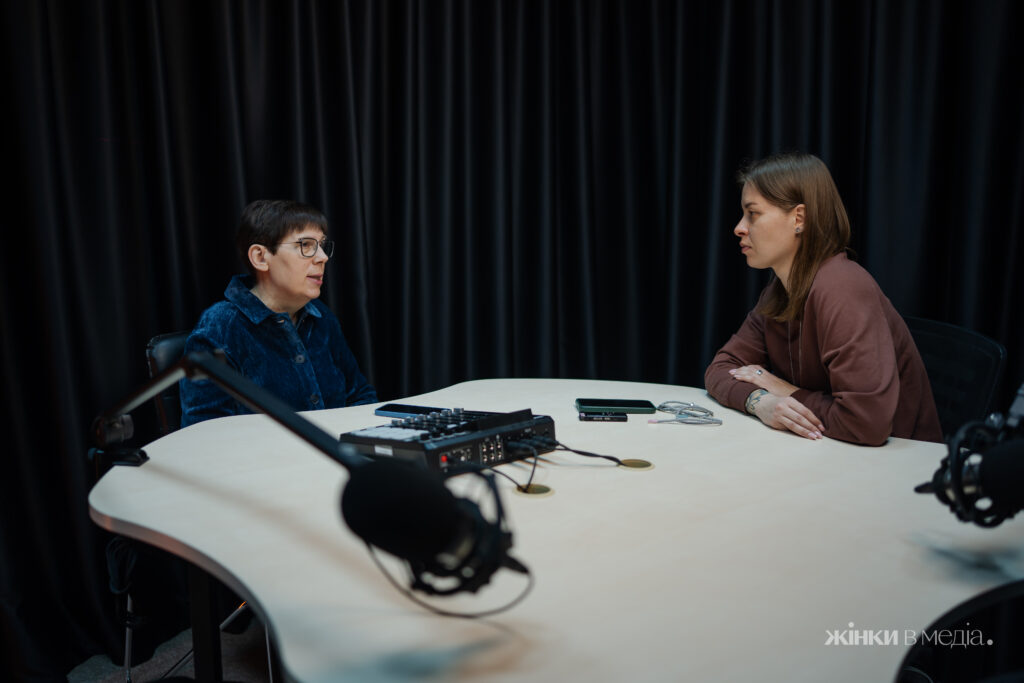
Under Yanukovych I once had my email hacked, and we wrote about it. I even know whose people did it — Serhii Arbuzov’s, who was acting prime minister and first deputy prime minister in Mykola Azarov’s government. We had run a piece about the situation at the then-NTCU, including some financial issues. NTCU’s finances at the time were run by Arbuzov’s team, while editorial policy was steered by oligarch Dmytro Firtash’s team. Thanks to the friction between those two teams, we’d been able to get information from one of them about the other, and we published it.
So, my email and that of the person who had given us the information were both hacked. He and I both received similar messages. I wrote to a contact in the Arbuzov staff and was given an apology, with the line that this had been done by a different group. But it was, of course, pressure too.
Under Yanukovych and Serhii Kurchenko, and even more so under Yushchenko, there were no anonymous Telegram channels yet — they fought differently. Sometimes journalists were beaten, as in 2013, when 5 Channel journalist Olha Snitsarchuk was beaten up by Vadym Titushko.
It always seemed to me that, on one hand, what helped was being public-facing, and on the other, having very close ties with Western embassies. For example, when then-U.S. Secretary of State Hillary Clinton came to Ukraine in 2010, she had a small meeting with a circle of experts that included now-MP Viktoria Siumar — at the time at an NGO — sociologist Iryna Bekeshkina, Oleksandr Sushko, others, and me. When we took a group photo, I remember Vika Siumar saying: “This will be like an insurance policy.” I think that protection, that closeness to Western embassies that we had at the time, did serve as a deterrent for those who might have come after us.
The story of Georgiy Gongadze taught many people something. Thank God Ukrainian journalism has long been free of killings and physical reprisals at the hands of Ukrainian law enforcement and the like.
Have there been moments in your career when you thought of leaving the media field? What kept you?
I never had thoughts like that. But there’s a big fatigue. Sometimes I wake up now and think: when will this end? You’re glued to your phone the whole time, replying to messages. But this is the profession I love, my way of life, my life’s work. I’m very glad of it.
Journalism is a very hard profession. People who aren’t ready to work a lot shouldn’t go into it. People more interested in money should go into PR, not journalism. Journalism isn’t about money. It’s about fame, yes — you can be well known. But I don’t know any journalists who earn fortunes. Maybe a handful of TV anchors, at least in the past.
When I was just starting out, a friend asked me what role I dreamed of finishing my career in. I said, editor of some big outlet. She asked, “What, no higher than that?” — she thought I had more potential. I said no, that suited me. I never wanted to go into politics, for example. Journalism is about influence, which has always been interesting to me, but it’s also about freedom. There are no constraints like in politics, no party loyalties, and so on. And, when you don’t want to, you can usually stay out of corrupt schemes, which in politics and business is, unfortunately, often simply impossible.
Right now I combine the duties of head of the NGO and editor-in-chief. In the first role, what I most enjoy is strategy; micromanagement, for example, is absolutely not my thing. So we have a director, Halyna Petrenko, and a program director, Vadym Miskyi, who handle middle and micro-level management. The financial side isn’t mine either — I leave it to colleagues and only check on the most essential things. I trust the people I work with.
What I most enjoy, though, is sitting down and reading a good text. I can make small content or stylistic edits, suggest what to add, point to a source to consult. That’s what gives me the greatest satisfaction.
Author: Oleksandra Horchynska, Women in Media
Photo: Valya Polishchuk, Women in Media