
Українською читайте тут.
Since February 24, 2022, Detector Media has been monitoring the Ukrainian segment of social media and Kremlin media, documenting on a daily basis the chronology of Russian disinformation about Russia’s war against Ukraine.
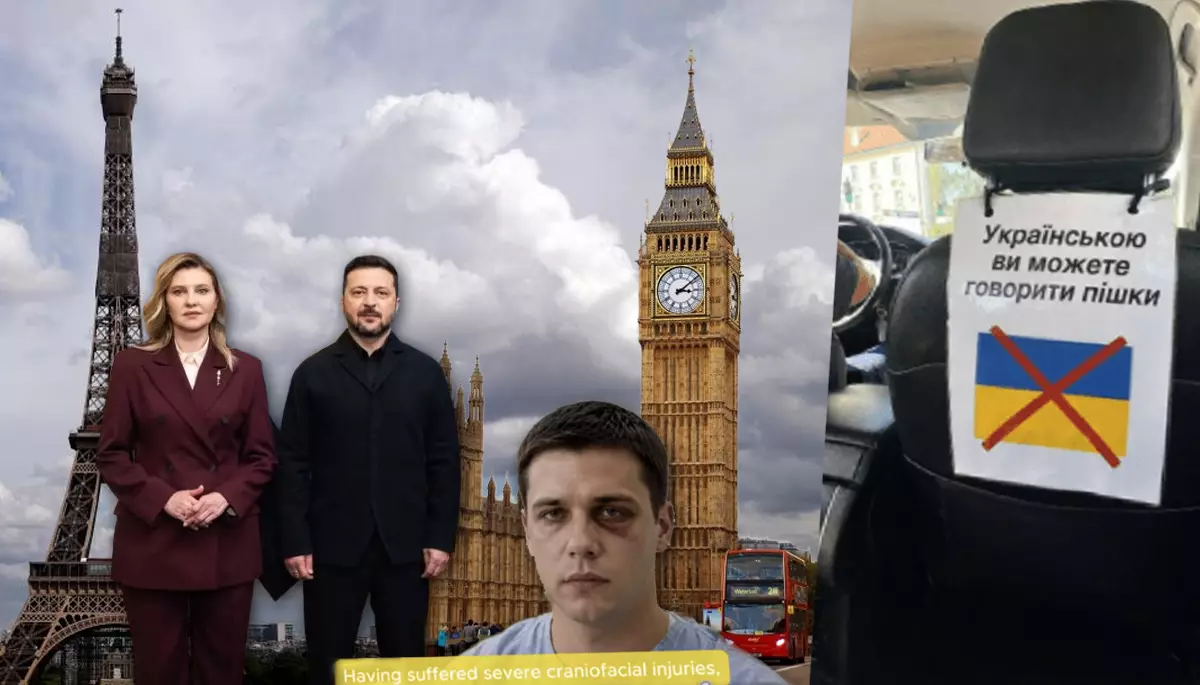
From August 12 to 18, 2026, Detector Media analysts documented 13 disinformation campaigns. In particular, Russian propagandists spread fakes about alleged widespread “Ukrainian criminality” and acts of sabotage in Poland, circulated AI-generated images of fake signs in Warsaw taxis with a “ban” on the Ukrainian language, fabricated disinformation about an alleged attack by the President’s daughter Oleksandra Zelenska on a waiter at a London restaurant, and also circulated a fake BBC video report about a “stolen pendant” belonging to Olena Zelenska.
Manipulative compilation about “crimes and acts of sabotage by Ukrainians” in Poland
A list of offenses allegedly committed by Ukrainians gained traction in the Polish-language segment of Facebook. Among them were arson attacks on shopping centers, the mining of railways, and even the spread of diseases. The post containing the list was published by Krzysztof Wozniak, an aide to far-right Polish politician Grzegorz Braun. The post received thousands of reactions and shares. It also triggered a surge in hate speech.
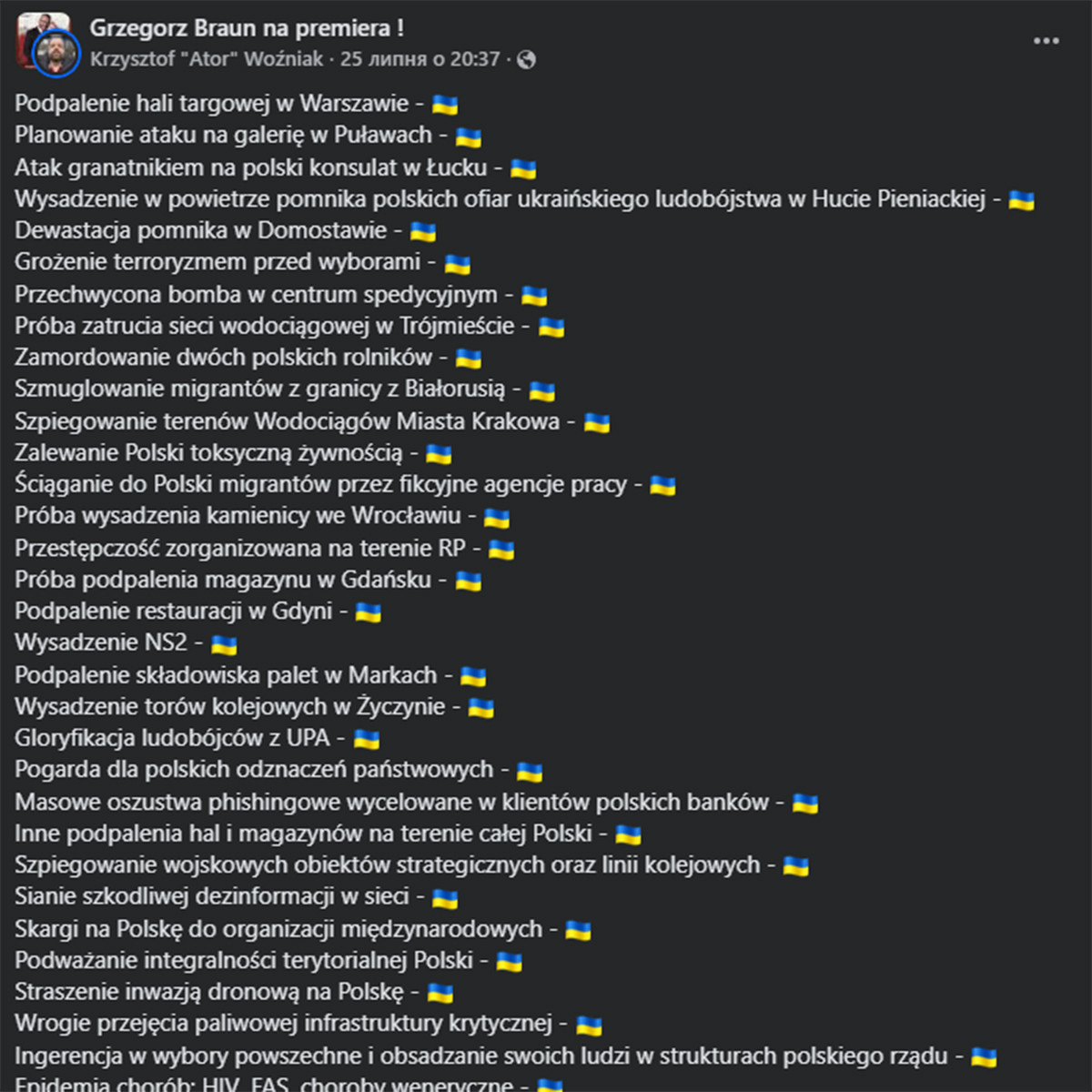
Image of Krzysztof Wozniak’s post
Polish fact-checkers from the Demagog project exposed a number of manipulations in the list. The authors mixed together events from many different years. For example, the 2017 shelling of a consulate was presented as a recent crime committed by refugees from Ukraine. The publication also failed to mention that Russian intelligence services were behind the acts of sabotage and mining in which Ukrainians were involved.
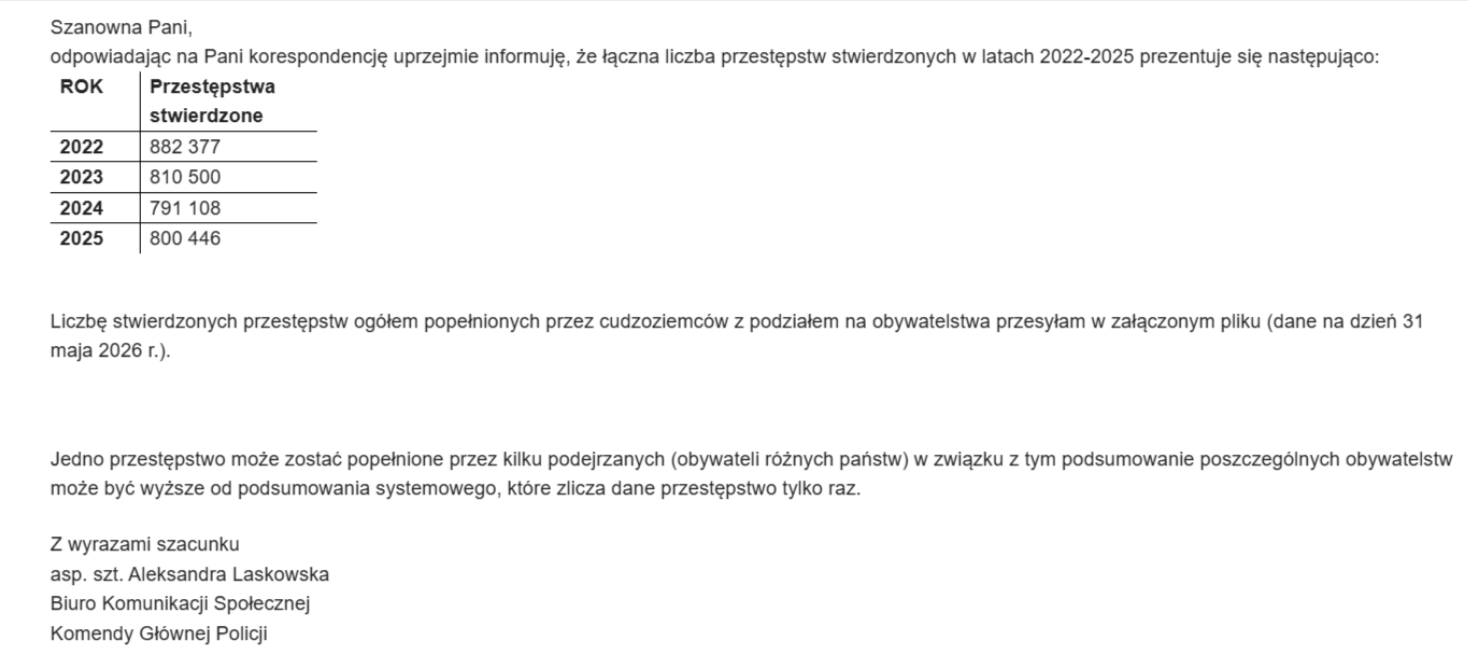
Official statistics from the Polish police completely refute the narrative of “Ukrainian criminality.” The share of offenses committed by Ukrainians in 2022–2025 amounted to only about 2% of the total number. The publication was also accompanied by memes aimed at undermining trust in leading Polish media outlets, which allegedly “hide the truth.”
Propaganda spreads AI-generated image of a sign banning the Ukrainian language in Warsaw taxis
An image allegedly showing the interior of a Warsaw taxi circulated online, with a sign placed on the passenger seat featuring a crossed-out Ukrainian flag and the text: “You can speak Ukrainian on foot.” The fake was intended to convince Ukrainians that they face systematic discrimination and aggression from Polish society.
The image contained a SynthID marker, indicating that it had been generated using generative artificial intelligence.
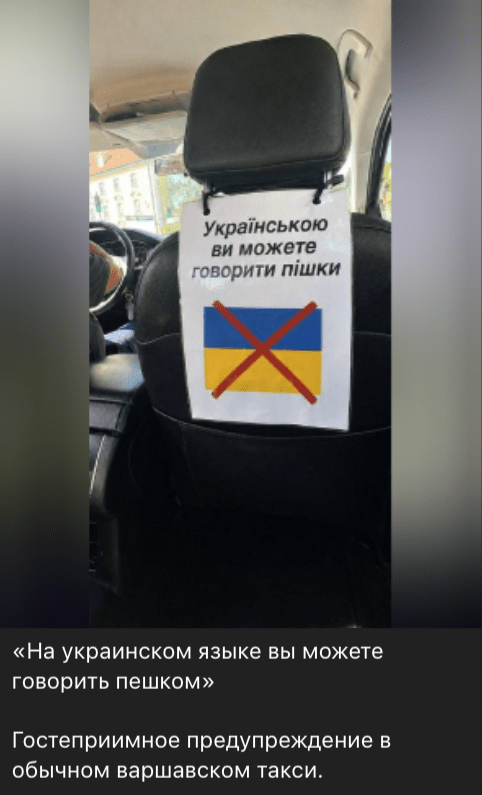
Example of a disinformation message
There is no evidence that such signs or similar rules exist in Poland. However, isolated everyday conflicts between individual Poles and Ukrainians who have sought refuge in Poland do occur. Those responsible for such incidents face criminal and administrative proceedings initiated by Polish law enforcement, as well as condemnation from Ukrainian diplomats.
Fabrication that Zelenskyy’s daughter and her security detail allegedly beat up a waiter in London
Pro-Russian sources circulated a fake news story claiming that Ukrainian President’s daughter Oleksandra Zelenska allegedly caused a scandal at The Ledbury restaurant in London. Her security detail, they claimed, brutally beat up a waiter. As evidence, they included a photo of the “victim” with a disfigured face.
The original source of the fabrication was the pro-Kremlin “Foundation to Battle Injustice,” founded by Yevgeny Prigozhin. In response to an inquiry from StopFake, the management of the upscale London restaurant The Ledbury stated that no such incident had occurred and that Zelenska’s daughter had not visited their establishment.
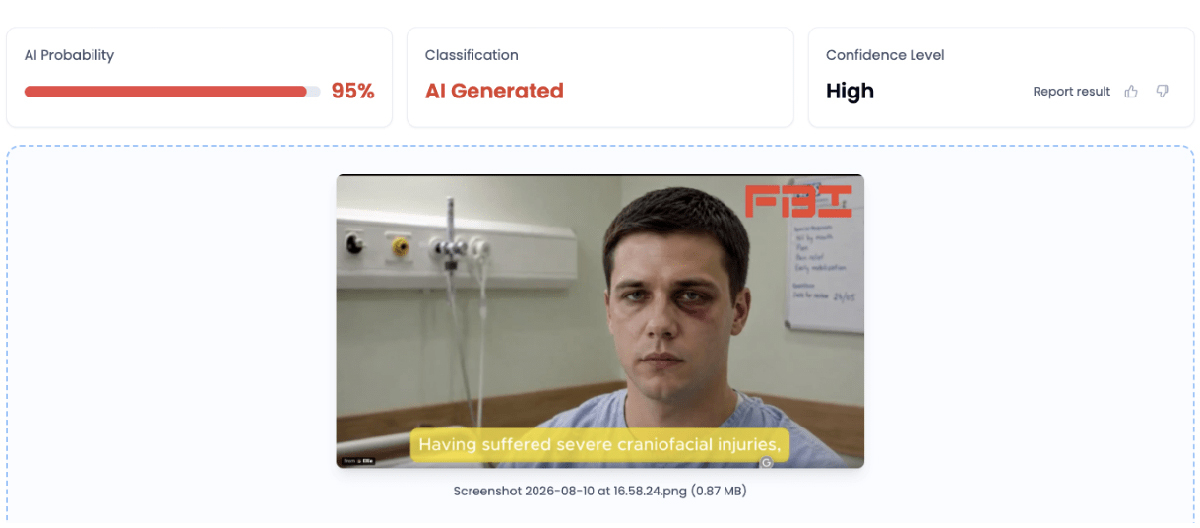
Results of the image authenticity check
An analysis of the photo of the “injured waiter” to determine its authenticity confirmed that the face was entirely generated by a neural network.
Fake claiming that Olena Zelenska wore a pendant stolen from a French museum to a reception in Paris
A video bearing the branding of the British public broadcaster BBC circulated in the Bulgarian-language segment of social media. The “report” claimed that Ukraine’s First Lady Olena Zelenska wore an expensive “Woman Dragonfly” pendant worth €800,000 during a visit to Paris. The pendant was allegedly stolen from the Lalique Museum in France on July 5.
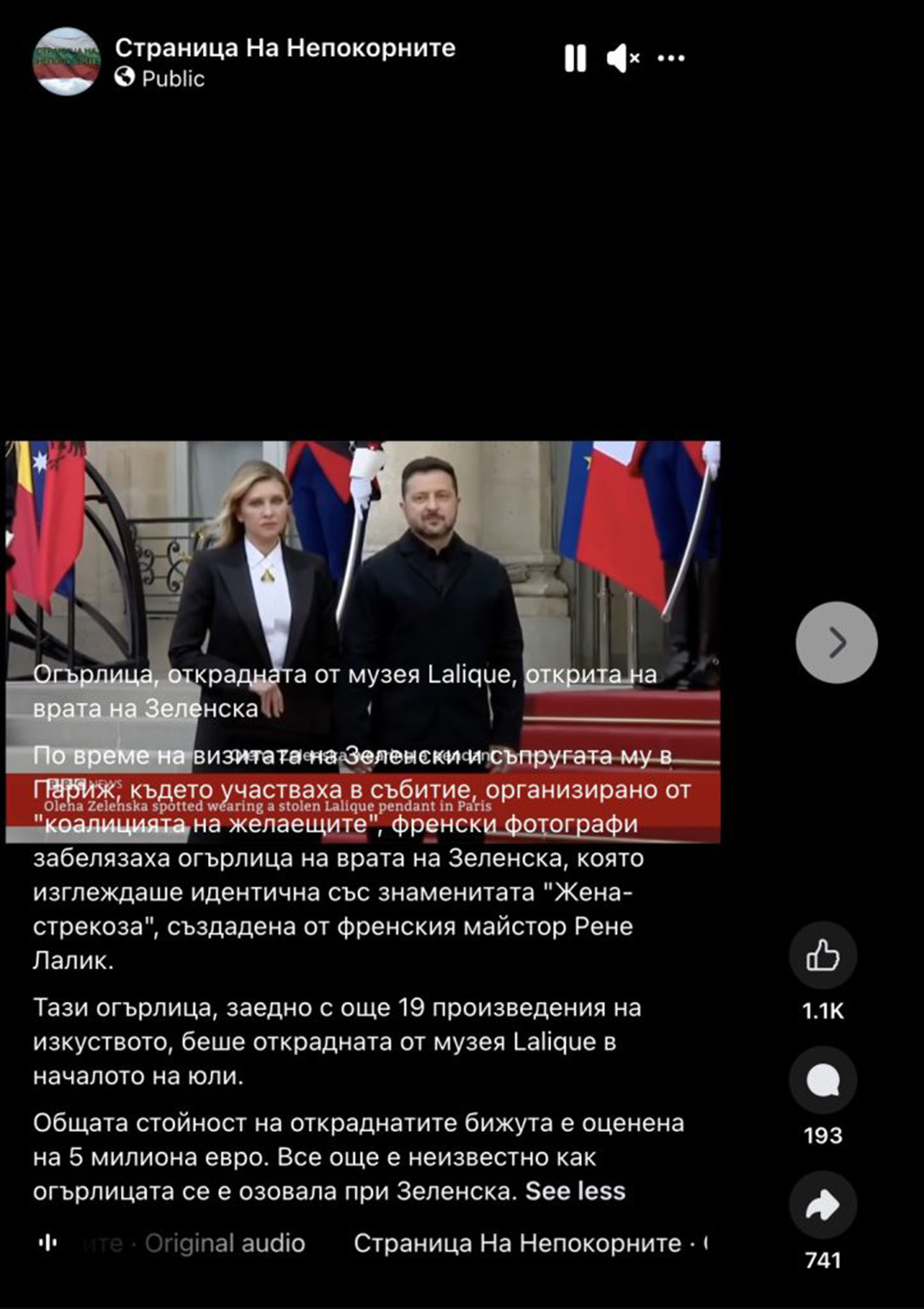
Example of a disinformation message
A fact-check by Factcheck.bg confirmed that the BBC had not produced such a report. Hive Moderation and Hiya tools determined with a probability of more than 95% that the English-language narrator’s voice was a deepfake (AI-generated).
The video footage also turned out to be fake. To fuel propaganda about the “luxurious life” of Ukraine’s leadership during the war, the fabricators used genuine footage of the Zelenskyy couple arriving at the Élysée Palace on July 13 and, using a photo editor, superimposed an image of the museum pendant onto Olena Zelenska’s neck.