


Українською читайте тут.
The focus of the current protests and their discussion on social media, unlike last year’s rallies, was on personalities rather than processes or institutions.
Key findings
- The July–August 2026 protests became the second cycle of mass street rallies in Ukraine since the beginning of the full-scale war. In both cases, the most notable feature was the network-based mobilization of participants in circumstances where the right to protest is restricted for certain people (for example, military personnel), while democratic legal and institutional mechanisms, such as elections, are temporarily impossible.
- The discussion on social media focused on former Defense Minister Mykhailo Fedorov. Of the 3,777 publications analyzed on X, Threads, TikTok, and Bluesky, only 1.6% mentioned the resignation of the entire Cabinet of Ministers as such; instead, 42% of the publications called for Mykhailo Fedorov to return as head of Ukraine’s Ministry of Defense. The validity or justification of Fedorov’s dismissal, institutional reforms, or civilian control was discussed in only about 10% of the publications that expressed support for the protests.
- Criticism of Zelenskyy was significant, but not the dominant topic. The president was criticized in 18% of all analyzed publications, but only 19% of posts supporting the protests also contained criticism of Zelenskyy. The main reason cited in critical publications was a lack of communication and explanations regarding a number of personnel decisions.
Introduction and context
On July 12, 2026, President Volodymyr Zelenskyy announced his intention to reshuffle the Cabinet of Ministers and proposed that Prime Minister Yuliia Svyrydenko take another position, which effectively started the process of the government’s resignation. On July 14, the Verkhovna Rada supported her dismissal as prime minister. On the evening of July 15, following the government’s resignation, Defense Minister Mykhailo Fedorov, who had headed the ministry since January 2026, published a list of what his team had accomplished over the previous six months.
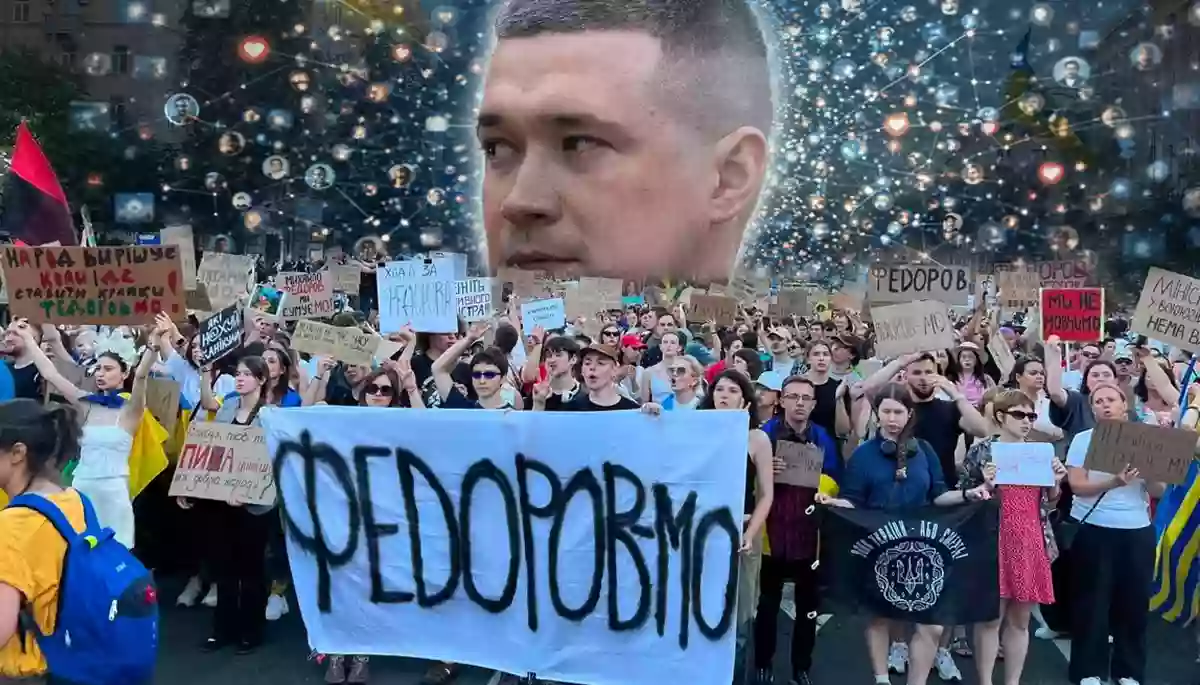
Already on Thursday, July 16, street protests began at Ivan Franko Square near the Office of the President in Kyiv and in the vast majority of regional centers across Ukraine. Participants reacted negatively to Fedorov’s dismissal. Protesters came out with handmade cardboard signs, as they had in July 2025, when protests were held against restrictions on the independence of the anti-corruption institutions NABU and SAPO. Those protests were later called the “cardboard Maidan”, while the protesters were referred to as “people with cardboard signs”.
At first, protesters called for Fedorov to be returned as defense minister, and shortly afterward a demand for the resignation of Commander-in-Chief of the Armed Forces of Ukraine Oleksandr Syrskyi was added. On July 21, Zelenskyy dismissed Oleksandr Syrskyi, and on July 22 appointed Major General Mykhailo Drapatyi in his place. During the vote on the composition of the new government on July 16, headed by Serhii Koretskyi, the Verkhovna Rada did not vote on candidates for the positions of foreign minister and defense minister, which under the Constitution must be submitted, but the president had not submitted them for parliament’s consideration.
In light of this, some protesters took to the streets with the key demand of returning Fedorov to the Ministry of Defense. On July 27, in an interview with Sky News, Volodymyr Zelenskyy said that personnel decisions in the defense sector were aimed at addressing problems in cooperation between the Ministry of Defense and the command of the Armed Forces of Ukraine (AFU), as well as ensuring unity in addressing key tasks during the war. “With all due respect to Syrskyi and Fedorov, they had to work together.”
On July 31, the “For Dialogue and Reforms” march took place — DW estimated that at least several thousand people participated. In Kyiv, the route ran from the Taras Shevchenko monument through Khreshchatyk to Ivan Franko Square. On the same day, according to NV, protest marches also took place in Lviv, Vinnytsia, Rivne, Kharkiv, Dnipro, Chernivtsi, Zaporizhzhia, Kropyvnytskyi, and Odesa. The former minister himself posted a message of thanks to participants in the rallies on Threads that same day: “I will not betray you. Thank you.”
On the evening of August 18, Mykhailo Fedorov published a video address in which he said that “democracy cannot be held hostage by Russia,” called for finding a “legal, safe, and realistic mechanism” to restore elections even in the event of a prolonged war, and voiced broader criticism of the system for making personnel decisions during wartime. On August 19, 2026, the Verkhovna Rada of Ukraine, following a submission by President Volodymyr Zelenskyy, appointed Yevhenii Khmara as the new head of the Ministry of Defense with 312 votes.
Fedorov’s remarks about the need for elections sparked a wave of criticism from experts, activists, and politicians. On August 23, President Volodymyr Zelenskyy commented on the possibility of holding elections. He said that he had repeatedly been urged to hold elections during hostilities, while he had asked partners to help create the conditions for holding them. However, according to Zelenskyy, no security guarantees had been provided for holding elections or for enabling military personnel, Ukrainians in frontline areas, and Ukrainians abroad to vote. “Elections right now would be a tsunami for the state that would split Ukraine. Therefore, my strategy is to bring the country to the end of the war and preserve an independent and sovereign state,” Volodymyr Zelenskyy said.
On the evening of August 19, one of the organizers of the protest in Kyiv, veteran Dmytro Koziatynskyi, wrote on X that in his view the protests “were precisely about dialogue and reforms, not personalities,” although communication between the authorities and society had failed to improve. He identified the dismissal of former Commander-in-Chief of the Armed Forces of Ukraine Oleksandr Syrskyi as the main achievement and wished success to the new defense minister, Yevhenii Khmara. Organizers and active participants of protests in other cities, for example in Dnipro, also said on X that the protests should not continue.
This is already the second cycle of mass street protests in Ukraine since the beginning of the full-scale war. The first took place in July 2025 against restrictions on the independence of NABU and SAPO. At their peak, on July 23, according to estimates by Texty.org.ua, 10,000–16,000 people took to the streets in Kyiv alone, while the rallies spread to at least 20 regions. In both cases, this was not mobilization around a political party, but a response by society under martial law to changes in government and, in particular, the dismissal of the defense minister, at a time when legal and institutional mechanisms that are customary in peacetime, such as elections, are temporarily unavailable.
Without the possibility of holding a procedure for changing the government, as KSE Rector Tymofii Brik said, and in the absence of formalized rotations and communication from the authorities regarding personnel decisions (or the lack thereof), street protests and reactions on social media are the limited mechanisms and channels available for responding to government actions and methods of creating public pressure. From this perspective, the protests of both 2025 and 2026 can be viewed as an example of how mechanisms of democratic civic participation operate in Ukraine in the absence of elections during wartime.
Research methodology
The source base for the study was a dataset of 3,777 publications on X (formerly Twitter), Threads, Bluesky, and TikTok created by users with 1,000 or more followers from midnight on July 12 to 10 a.m. on August 3, 2026. It also included publications on these platforms by users with fewer followers, but whose individual posts that matched the search query criteria received 1,000 or more views or reactions. This approach to the criteria ensured the analysis of prominent and potentially most influential publications on the social networks under study.
The search query in the YouScan analytics system was formed using two pairs of keywords: “Fedorov / minister” and “Fedorov / protest.” The semantics of the search query in YouScan makes it possible to specify the position and placement of individual words in relation to one another within a sentence or post. In each case, the results included publications in which the keywords from each group were located one to three words apart. This focus on Mykhailo Fedorov reflects the key arguments put forward by the organizers and participants of the protests.
According to the study’s authors, this formulation of the search query makes it possible, compared with broader and more detached search queries, to better fulfill the purpose of the study: to analyze the representation of the July–August 2026 protests, one of the longest and largest-scale mobilizations of Ukrainian society during wartime. It also complements other analyses of the protests, including sociological ones.
Purpose of the study: to analyze the digital representation and forms of protest potential of Ukrainian society during wartime based on content from Threads, TikTok, Bluesky, and X concerning the dismissal of Mykhailo Fedorov.
The 3,777 publications included in the dataset account for 1% of all publications that matched the search query parameters and were displayed in the YouScan system during the specified data collection period (July 12–August 3, 2026). The dataset included 39% of all publications by users on the social networks covered by the study who had more than 1,000 followers. The remaining 61% of the data consisted of publications from profiles with fewer than 1,000 followers but which received 1,000 or more views and/or reactions.
Among the accounts on different platforms whose posts were included in the dataset were accounts belonging to online media outlets, bloggers or opinion leaders, as well as ordinary users; there was no special selection or filtering based on this criterion. The analysis focused on the texts of posts, without analyzing the comments below them.
Distribution of publications by social network. Among the 3,777 messages from Bluesky, Threads, TikTok, and X containing the keywords “minister,” “Fedorov,” and “protest.” The data covers the period from July 12 to August 3, 2026, and was provided by YouScan.
The initial processing of the data was carried out using the Gemma 4 large language model with 26 billion parameters. We formulated 20 categories for data analysis, which primarily contained binary answers to questions (yes / no) and concerned mentions of the resignation of the Cabinet of Ministers of Ukraine alongside the resignation of the defense minister, mentions of protests, discussion of support for and opposition to Mykhailo Fedorov’s dismissal and attitudes toward his return to office, the presence of criticism of Volodymyr Zelenskyy in publications, the presence of information campaigns for and against the protests, the “sponsors” or organizers of the protests, and the structuring of arguments in support of and against the protests. We then verified the results and reviewed the social media messages to clarify inaccuracies in the large language model’s initial processing of the data.
Limitations of the study. The YouScan platform does not provide access to Facebook publications without additional configuration. And using another source could have affected the validity of the results. This ultimately determined the study’s focus on “microblogging platforms”: Bluesky, Threads, X, and the video platform TikTok.
The study does not include other social networks and platforms besides the four listed above, such as Telegram, Facebook, or YouTube, where discussions of personnel changes also took place. Accordingly, it does not claim to provide an exhaustive picture of the online discussion about the protests. However, it makes it possible to describe the visible segment of the discussion about the protests among young people. According to Kyiv School of Economics Rector Tymofii Brik, young people accounted for around 60% of protest participants. According to data from the Uamaster advertising agency, as of 2025, TikTok, Instagram, and Threads had a relatively larger share (around 50–58%) of audiences aged 18–34 in Ukraine compared with YouTube or Facebook (21–24%).
Features and differences in content across the analyzed social networks
The distribution of publications across platforms is uneven and in itself affects the nature of the content in the analyzed dataset. Almost 2,943 of the 3,777 publications in the sample came from X (formerly Twitter), or about 78% of all posts, so it can be described as a hub for mobilizing users ready to participate in or discuss the protests.
The most common form of user interaction with content on X is reposting, and this platform also recorded the relatively highest share of statements critical of Fedorov (13%, compared with 2–3% on Threads and TikTok and no cases of criticism on Bluesky). On TikTok, despite the relatively small number of posts (246), the share of publications directly addressing the course of the protests was the highest among all four networks — 71%, compared with 59% on Threads and 55% on X. This is consistent with the format of short videos, which are more focused on calls to action and mobilization for specific protest rallies. Bluesky was represented by only 28 publications and is more of a space for individual influential voices, military experts, or foreign commentators, so the study contains a limited number of interpretations of content from this platform.
What opinion polls say about the protests and their participants
The broader social context in which the current protest mobilization took place should also be taken into account: Ukrainians’ willingness to criticize the authorities during the war has tended to increase over time. According to a KIIS poll conducted in October 2025 (1,008 respondents were interviewed by telephone, with a margin of error of 4.1% and a 0.95 confidence level), the share of respondents who believe that the authorities’ actions can or should be criticized increased from 81% in 2024 to 90% in 2025, while the share of those who believe that the authorities should not be criticized at all during the war fell from 13% to 8%. At the same time, a majority of respondents (58% of those 90%), surveyed by KIIS in autumn 2025, believed that criticism should be “balanced and constructive so as not to destabilize the situation in the country.” The extent to which there is a sustained demand for citizen engagement in democratic processes is also demonstrated by earlier nationwide polls: despite the war, 63.9% of respondents identified democracy as the most desirable form of government for the country (Democratic Initiatives Foundation, 2023, 2,024 respondents surveyed face-to-face, with a margin of error of 2.3%).
The resonance of the protests that took place in July–August 2026 is also confirmed by current public opinion polls. In surveys conducted by various polling organizations, between 62.5% (Socis, July–August, 2,000 respondents, personal interviews using tablets, with a margin of error of 2.6%) and 72% (the Rating Group, July 20–21, 1,000 respondents surveyed using computer-assisted telephone interviewing, with a margin of error of 3.1%) of respondents did not support Fedorov’s dismissal, while more than 57% supported the protests against the decision.
Both the 2025 and 2026 protests were formed not “from above,” through political parties or civil society organizations, but “from below,” through social networks. According to an interview-based survey of protesters at Ivan Franko Square on July 30, 2025, conducted by the KSE Center for Sociological Research among nearly 400 participants, half of those surveyed (50.3%) came to the rally after public calls from bloggers and media publications, while another 30.4% were influenced by posts from acquaintances on social media. In other words, social networks play a dual role: as a channel for covering events and as a tool for mobilization and the formulation of demands by participants.
The KSE survey conducted in July 2026 is valuable because it makes it possible to compare the “profile” of people who directly participated in the protests, at least in Kyiv, with the figures from the previous study conducted in 2025. Our own study does not contain social media data from 2025 and does not analyze the events of that summer, but the mobilization patterns of the two waves are similar, so comparing the profiles and motivations of their participants provides important context for interpreting the 2026 protests.
In 2025, an in-person survey of 387 participants at Ivan Franko Square (conducted on July 30, on the eve of the parliamentary vote on bills to restore the independence of NABU and SAPO) recorded a median participant age of 27, 56.7% women, 74.9% employed people, and 27.4% students. The idea of a “student” protest in 2025 proved to be somewhat exaggerated. The agenda at the time did not focus on a single issue. The most frequently mentioned answers to the open-ended question about the purpose of participation were: securing the independence of NABU and SAPO (21.4%). Other motivations included the desire to demonstrate presence and solidarity (15.8%), express an active civic position (14.2%), and prevent authoritarianism (11.3%).
The July 2026 survey (around 250 respondents, interviewed remotely through questionnaires distributed in Telegram and Facebook groups) has not yet been published in full, but KSE Rector Tymofii Brik described its results. It records certain changes among rally participants, at least in Kyiv. The protest “got younger”: the share of people aged 18–24 increased from approximately 40% to 60%, with the typical participant being 20–25 years old. The share of women also increased — to 65%, compared with 55% in 2025 — while 65% of those surveyed were people who had participated in protests before. The employment rate remained high at 73%, contradicting the claim cited by Brik about the image of “unemployed” protesters in both 2025 and 2026.
However, the key difference is not demographic but motivational. While in 2025 none of the five roughly equally significant motivations for participating in the protest accounted for more than a quarter of responses, in 2026, 40% of respondents named the return of Mykhailo Fedorov as defense minister as their main goal, 37% said they wanted to “show the authorities the position of society,” and 20% demanded the resignation of Commander-in-Chief of the Armed Forces of Ukraine Oleksandr Syrskyi. 80% of those surveyed in 2026 said they would stop protesting if Fedorov were returned to office. According to Brik, these figures are consistent with nationwide polls. Brik also describes this phenomenon as a recurrence of the “personality trap,” in which each new generation of protesters mobilizes “for” or “against” a specific person (for example, Yushchenko and Yanukovych in 2004), rather than around institutional changes. As the KSE researchers themselves note, this survey has a methodological limitation: the questionnaire was answered predominantly by the most active participants, that is, “activists among activists,” rather than protesters as a whole.
“Bring Fedorov back!” as the protesters’ key demand, which overshadowed the government’s resignation
The comment phrased as “Bring Fedorov back!” received the most likes under a post by the former minister on Threads, which said: “I will not betray you. Thank you” following the protesters’ march on July 31. In the analyzed publications, mentions of the government’s resignation served as a backdrop for discussions of Fedorov’s own dismissal and the protests. Mentions of the resignation of the entire Cabinet of Ministers of Ukraine, rather than Fedorov alone, accounted for only 1.6% of the publications analyzed on X, Threads, Bluesky, and TikTok. When the government’s resignation was mentioned in the analyzed publications, it was usually mentioned together with Fedorov, in formulations such as: “The dismissal of Minister Fedorov as part of the change of the entire Ukrainian government,” “The Rada plans to vote on the new Cabinet of Ministers on July 16, Zelenskyy will not submit Mykhailo Fedorov’s candidacy for the position of defense minister,” “For the second day in a row, Lviv is holding a rally against President Volodymyr Zelenskyy’s decision not to submit Mykhailo Fedorov’s candidacy for the post of defense minister following the resignation of the Ukrainian government,” and so on.
Number and weight of posts by key analysis categories in each of the analyzed social networks (X, TikTok, Threads, Bluesky), according to YouScan data. Visualization — Claude
The authors of the analyzed publications focused primarily on discussing the protests and arguing that Fedorov should not be dismissed or should be returned as defense minister. Protests as such were mentioned in 1,663 (or slightly more than 56%) of the 3,777 publications analyzed. Arguments against Fedorov’s dismissal or in favor of returning him as defense minister appeared in 1,589 publications, or 42% of the analyzed posts.
In messages criticizing Mykhailo Fedorov’s dismissal, the dominant argument was that his dismissal would lead to a deterioration in Ukraine’s defense capabilities. In particular, on Bluesky, military commentator Gustav Gressel shared a publication by Ukrainska Pravda with the following comment: “This is how wars are lost. Zelenskyy will not nominate Fedorov as defense minister [in the new government].”
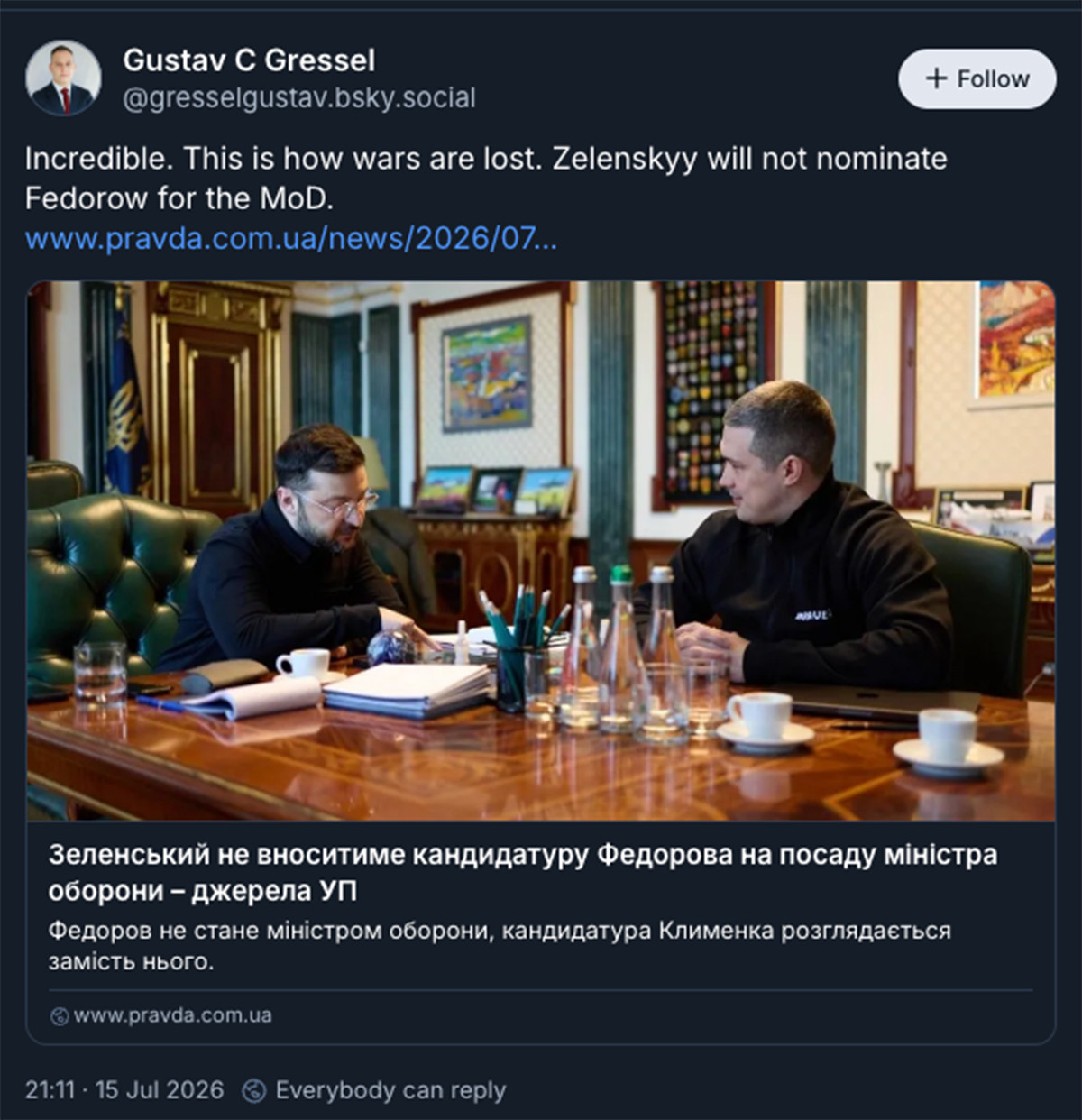
Gustav Gressel’s publication on Bluesky from July 15, 2026
Opposition to Mykhailo Fedorov’s dismissal was expressed in 1,313 publications, accounting for 34.5% of the analyzed dataset. The arguments and claims in support of Fedorov can be grouped into five clusters. The largest includes claims that Fedorov was an effective minister and calls to “not destroy what works.” Such calls were expressed in various forms 1,145 times in the analyzed dataset. Calls to return Fedorov or not dismiss him as defense minister appeared in 540 publications. Another 206 publications described Fedorov’s presence as defense minister as a guarantee of reforms at the Ministry of Defense and the implementation of innovations, while 24 portrayed him as a fighter against corruption.
Clusters of arguments in support of Mykhailo Fedorov in 1,313 posts out of 3,777 publications on X, TikTok, Threads, and Bluesky, according to YouScan. Visualization by Claude
Criticism of Fedorov
Criticism of Mykhailo Fedorov appeared in 407 publications (10% of all publications), which were thematically difficult to group into the defined categories, so after verification by the researchers, most messages containing criticism were classified as “no clear category” (see the infographic below). Among the substantive arguments criticizing the former minister were accusations that Fedorov was unsuited for the position of defense minister. The arguments cited in 49 posts included that Fedorov had no military experience, was allegedly corrupt, had failed to reform the mobilization process during his time as defense minister, and that his initiatives were “repackaged” versions of other people’s ideas. In 30 publications, Fedorov was accused of failing to fulfill promises regarding mobilization reform or of being responsible for violations of people’s rights by employees of the Territorial Recruitment and Social Support Centers (TCCs and SP). Another 38 publications accused Fedorov of being too slow to use his connections with Elon Musk to block Russians’ access to the Starlink satellite internet system and of being responsible for spending state funds on unconvincing artificial intelligence projects such as “Diia.AI.” In 8 publications, Fedorov was described as a “Western puppet” in the vein of Russian propaganda narratives about “external governance” of Ukraine.
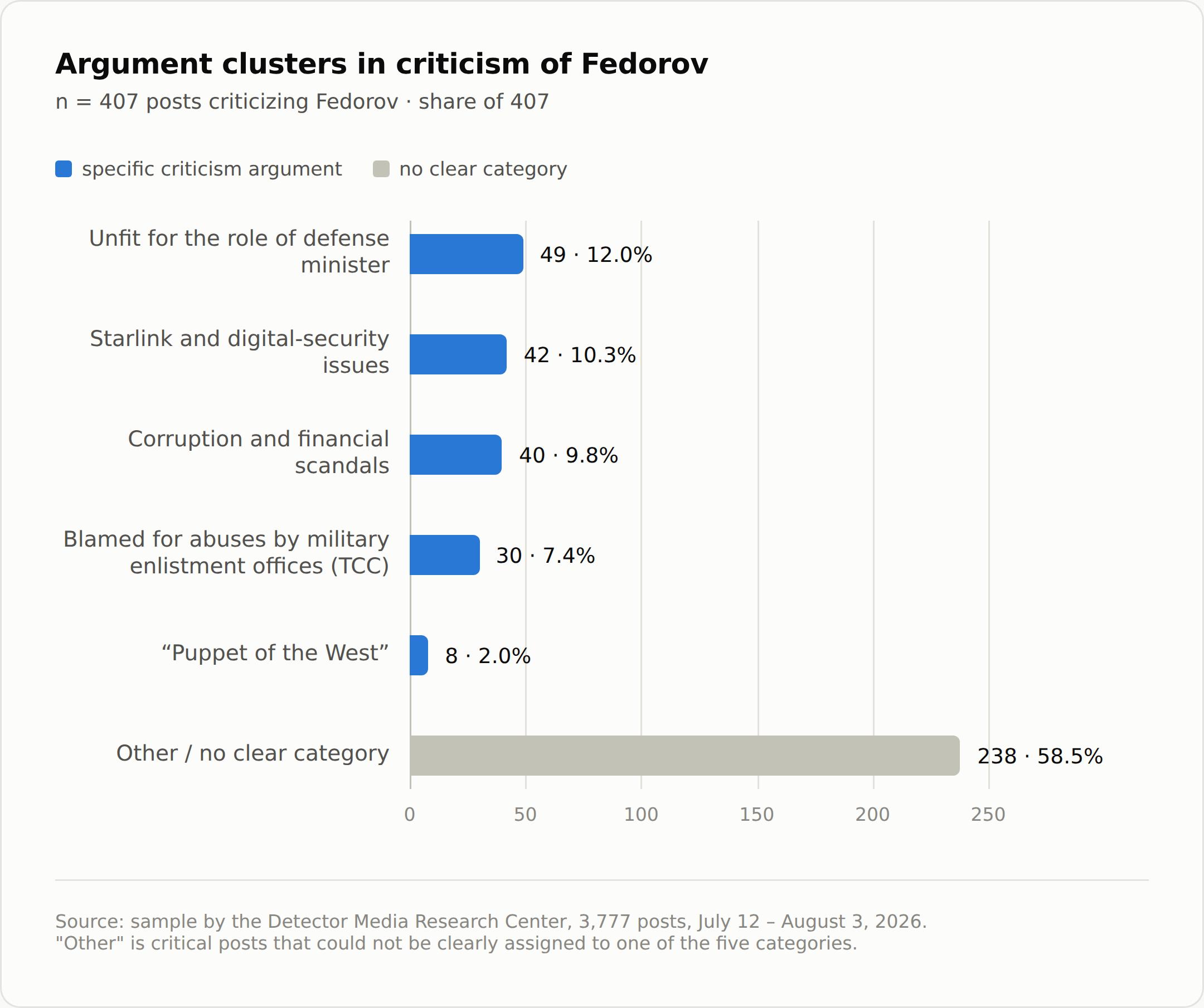
Clusters of arguments in Mykhailo Fedorov’s criticism across 407 posts from a dataset of 3,777 posts on X, TikTok, Threads, and Bluesky, according to YouScan. Visualization by Claude
When comparing the arguments in support of Fedorov with those of his critics, the main difference is that the arguments in support of Fedorov are ideological and filled with hope, while those against him are “compromising” in nature. Fedorov’s remaining in or returning to office is associated with reforms in the defense system and Ukraine’s chances of bringing the war with Russia to a worthy conclusion. Criticism of Fedorov, meanwhile, is based on interpretations of facts from his biography. Fedorov’s supporters wrote that he was an effective and innovative minister who fought corruption. His opponents, by contrast, pointed out that he had never been a member of the military, had been part of the government since 2019, and before joining the government had been more involved in internet marketing than in IT. The intensity with which arguments in support of or against Fedorov were circulated generated social media posts claiming that an information campaign for and against Fedorov was being conducted with financial backing from various groups of influence. Publications supportive of Fedorov said that he was backed by broad segments of society, including young people, military personnel, volunteers, veterans, conscious citizens, and civil society.
Those who criticized the former minister more often named the people allegedly contributing to Fedorov’s information support and mentioned businessmen Oleh Horokhovskyi and Oleksandr Konotopskyi, volunteer Mariia Berlinska, veteran and one of the initiators of the “cardboard protests” against an attempt to curtail the powers of NABU and SAPO in 2025, Dmytro Koziatynskyi, who actively coordinated the protests this time, volunteers and Fedorov’s former deputies Serhii Sternenko and Serhii Beskrestnov (Flash), as well as media personalities Nataliia Moseichuk, Ramina Eskhakhzai, Olena Mandziuk, Vasyl Tymoshenko, and Oleksii Durniev.
Among Fedorov’s supporters, the possible opponents or sponsors of the information campaign against Fedorov were narrowed down to the “Trukha Ukraine” Telegram channel. Blogger and former Fedorov adviser at the Ministry of Defense Serhii Sternenko mentioned it in his posts. Other Fedorov supporters named those who allegedly paid this Telegram channel to discredit Fedorov using vague formulations such as “owners from two political forces,” “internal actors,” “the old guard,” “pro-government resources,” “Moscow,” and so on.
Posts by opponents of Fedorov’s resignation and supporters of the protests also contained criticism of Volodymyr Zelenskyy in nearly 18% of the posts analyzed.
Criticism of Zelenskyy
In the dataset of 3,777 posts analyzed, criticism of the president was recorded in 669 publications, or nearly 18%. At the same time, this category should not automatically be equated with the position of the protesters. Of the 669 critical posts, 321 mentioned the protests, while 212 explicitly supported them. Nineteen percent of the 1,102 publications supporting the protests contained explicit criticism of the president. Thus, the protest discourse was not purely anti-presidential: some supporters of the rallies focused on supporting Mykhailo Fedorov, calling for the dismissal of Oleksandr Syrskyi, or describing the protests themselves, without moving on to assessments of Zelenskyy. At the same time, in that part of the discussion where the president became the target of criticism, the personnel decision was presented as a manifestation of much deeper problems in relations between the government and society.
Of the 669 publications critical of Zelenskyy, 474 were reposts, while another 55 were reposts supplemented with the reposter’s own thoughts. Thus, 79% of the critical publications consisted of the repeated dissemination of already formulated arguments. This explains the high visibility of several identical arguments and gives rise to assumptions about their coordinated dissemination.
The data make it possible to reconstruct, rather, the dominant arguments that participants in the online discussion used to explain Zelenskyy’s decision to dismiss the Cabinet, the consequences of Fedorov’s dismissal, or the conflict between Fedorov and Syrskyi.
The peak of critical messages came on the day the protests began, July 16, when 184 of the 669 such posts were published. This indicates the predominantly reactive, but also lightning-fast, nature of the initial discussion: it emerged in response to the event and had not yet had time to transform into a detailed action plan or deeper reflections on the personnel changes, but it had already prompted social media users to act.
The most prominent theme in posts by supporters of the protests was the lack of a clear explanation for the personnel decision and proper communication with society. Repeated formulations said that the president “continues to ignore his people,” that the lack of communication itself had caused the crisis, and that as a result the state appeared disoriented. This criticism was concentrated in the short protest slogan “Zelenskyy — explain!”. Its target was not the government, parliament, or Ministry of Defense, but the president, who was held responsible both for the decision itself and for the obligation to explain or reverse it. The lack of an official explanation left an information gap that users filled with speculation about Zelenskyy’s personal motives, his unwillingness to “back down,” his dependence on his inner circle, the conflict between Fedorov and Syrskyi, or his desire to retain control over financial flows.
Thus, in one post, the unwillingness to return the minister was explained by the president’s character and his reluctance to admit a mistake, while in another, it was attributed to a possible desire to restore direct control over the defense budget. In the absence of a generally accepted explanation of the reasons for and procedure behind the decision, versions of events were constructed through personal preferences, character traits, or interests.
A telling example is a post published on August 1 by one of the organizers of the protests, veteran Dmytro Koziatynskyi. In a post, Koziatynskyi summed up the first peaceful march held on July 31 and called the lack of communication an “institutional problem.” At the same time, he repeated the argument that, to end the protests, Zelenskyy needed to take a specific personnel-related step — return Fedorov to the Ministry of Defense.
This reveals a key feature of the protest argumentation: its diagnosis was often systemic, while its solution remained personalized. The claim that “the president created this crisis and must resolve it” further personalized responsibility: the conflict was described not as a consequence of an opaque decision-making procedure, weak parliamentary oversight, or the absence of a consultation mechanism, but as one person’s mistake, which that same person should correct.
This is where the protests that took place in July 2025 and July–August 2026 were both similar and different. In 2025, most of the responsibility and the proposed solution to the crisis were placed on the Verkhovna Rada, which was expected to repeal legislative changes undermining the independence of anti-corruption institutions. This time, both responsibility and the solutions proposed by protesters were tied to the personalities of the president and the former defense minister.
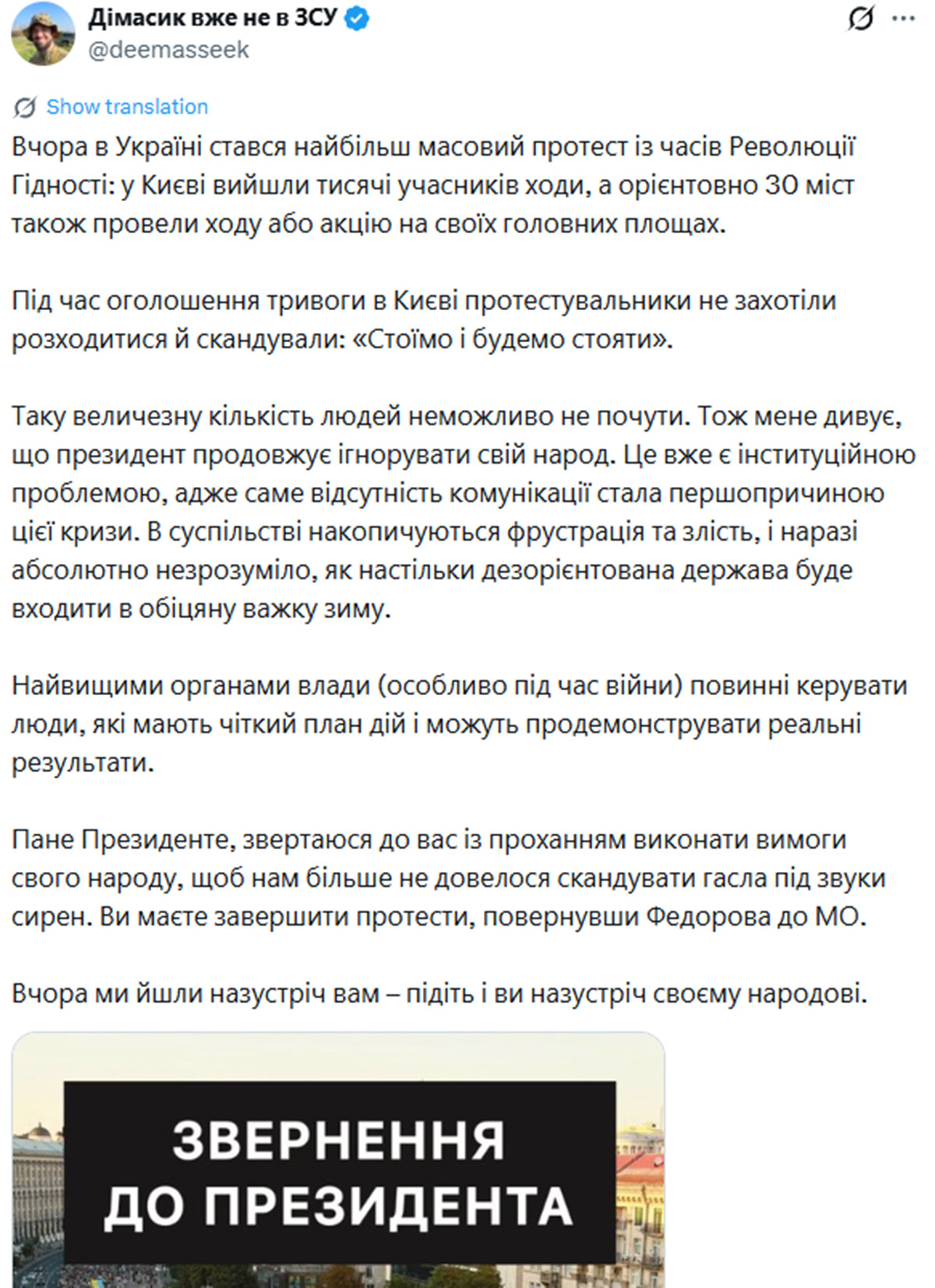
Post by Dmytro Kozyatynsky, August 1, 2026
The second block of criticism concerned the lack of transparency and inconsistency of personnel policy. Authors of the posts emphasized the suddenness of Fedorov’s removal, the absence of publicly understandable grounds for the decision, and the danger of constantly replacing government officials during wartime. In the publications, the decision was described as having been made “behind closed doors,” while the authorities were accused of replacing effective ministers with convenient and loyal appointees.
In a TikTok post by MP Viktoriia Siumar in support of the protests, the personnel decision was directly linked to the constitutional principle that the people are the source of power: Siumar called on Bankova to “listen to society,” rather than simply informing it about reshuffles that had already been decided. In a message from the “Grunt” publication circulated by X users, it was claimed that the president had removed a popular minister without preparation, “yielded to the demands of the ‘old guard,’” and violated the “unspoken social contract.” In this tweet, Fedorov personified innovation and forward movement, while his opponents represented a return to a conservative model of governance.
The third group of arguments framed the conflict between Syrskyi and Fedorov as a choice between two models for developing the Defense Forces. Fedorov was portrayed as a technological reformer capable of advancing unmanned systems, digitalization, new approaches to procurement, and cooperation with Western partners. Syrskyi, by contrast, was associated by some authors with a “Soviet” management culture, the closed nature of the military leadership, and resistance to change. Zelenskyy’s decision was therefore presented not simply as the dismissal of a minister, but as the president’s choice in favor of the “old guard” or the “collective ‘Rock.’” This framework made it possible to interpret the personnel conflict as a struggle over the future of the army, but at the same time reduced it to a confrontation between two officials. This personalization was most clearly manifested in the combination of slogans “Syrskyi out” and “Fedorov — yes.”
Even after the dismissal of Oleksandr Syrskyi as Commander-in-Chief of the Armed Forces of Ukraine, the institutional problem was not reformulated by protesters or social media authors into demands for, for example, a different model for dividing powers between the Ministry of Defense and the General Staff, stronger civilian or parliamentary oversight of the Armed Forces, or guarantees that the reforms Fedorov had begun during his six months in office would be irreversible.
Instead, reposts of Dmytro Koziatynskyi’s post about Syrskyi’s dismissal, which were shared by X users (presumably military personnel), argued that after Syrskyi’s removal, the conflict between the ministry and the General Staff had disappeared, and therefore Fedorov should be returned. The formula “The Ministry needs reforms” ended with a repeated call to appoint a specific person, rather than a list of rules or mechanisms that would ensure those reforms regardless of the minister’s name.
The fourth group of arguments in the block of publications criticizing Volodymyr Zelenskyy linked Mykhailo Fedorov’s dismissal to corrupt interests and a struggle for control over the Ministry of Defense’s resources and procurement. Some publications suggested that Fedorov’s reforms had affected the interests of unscrupulous suppliers, their political patrons, and representatives of the military leadership. Zelenskyy was accused not merely of making a mistake or communicating poorly, but of siding with forces interested in restoring direct control over the defense budget. For example, in one X post, the slogan “Corruption kills” was combined with the claim that the motive for the dismissal could have been a return to monopolistic control over defense procurement funds.
Finally, some critics incorporated Fedorov’s dismissal into a broader narrative about centralized control, the prioritization of loyalty over professionalism, the weakening of institutions, and disregard for public opinion. In the most radical posts, the protests were described no longer as rallies in support of an individual minister, but as a protest against the concentration of power, arbitrariness by law enforcement agencies, and the closed nature of state governance.
However, such messages should not be regarded as representing the position of the entire protest movement. Of the 669 publications criticizing Zelenskyy, 177 also contained criticism of Fedorov, 48 expressed a negative attitude toward the protests, and a significant portion did not express support for the rallies at all. Thus, long-standing opponents of the president also mobilized around the protests, using the personnel changes to revive broader grievances against the authorities.
Why criticism of the protests on social media focused on personalities
Of the 1,102 posts supporting the protests, 952, or 86%, simultaneously contained a call not to dismiss Fedorov or to return him to office. Of the 1,052 publications in the dataset that were categorized as defining the framework or nature of the protest, 975 mentioned Fedorov, 350 mentioned Syrskyi, and 985 mentioned at least one specific official other than Fedorov or Syrskyi. An additional analysis of the posts for vocabulary related to reforms, systemic change, transparency, procedures, and civilian oversight found such terms in only 114 of the 1,102 posts supporting the rallies, or 10%.
This analysis clearly demonstrates the difference between frequent personnel-related demands and much rarer calls to change the rules governing the work of institutions themselves. A characteristic example of this combination is a list of protest slogans in which the demand for transparent communication appears alongside the personalized formulations “Fedorov — defense minister” and “Bring Fedorov back.”
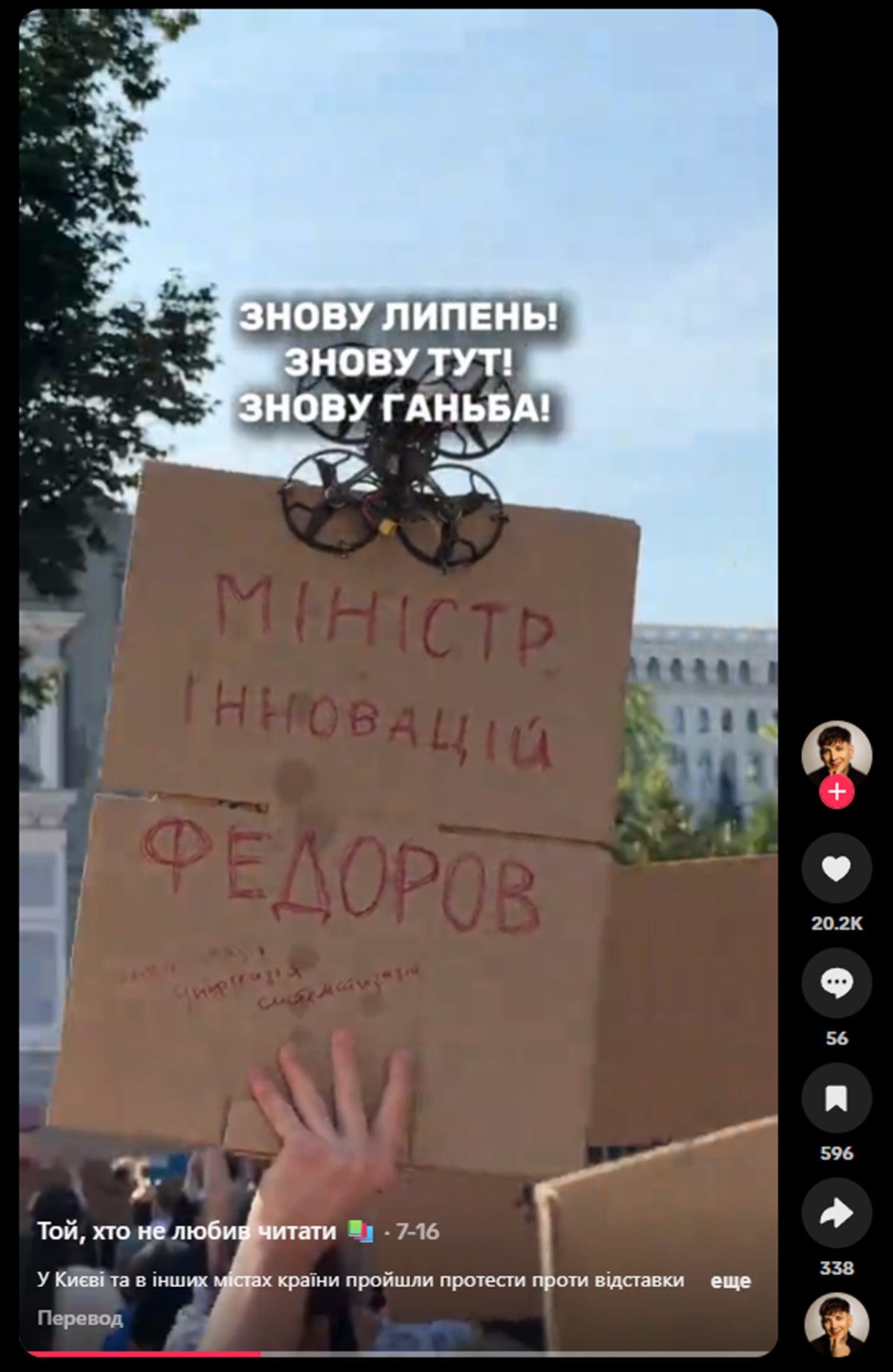
Screenshot from a TikTok video by rudnitskyi_ua
The personalization of the demands was primarily determined by the very reason that prompted the protesters to become active. Unlike the protests in July 2025, the current protest emerged as a reaction to the dismissal of a specific minister, so the most obvious and easiest demand to communicate was to reverse that decision.
Looking at the history of Ukrainian protests, the protests of July–August 2026 are perhaps the first case when Ukrainians took to the streets not for the dismissal, but for the return of a specific minister to his position. Fedorov’s return serves as a clear criterion for the success of the protests. By contrast, demands to ensure continuity of defense policy, accountability of the military command, or a transparent procedure for personnel changes would have required a shared vision among protesters and, likely, prolonged protests during wartime, when legal mechanisms of interaction with the authorities such as elections are unavailable. In conditions of wartime urgency, a simple personnel decision is perceived by social media users as a way to quickly prevent reforms from being halted.
At the same time, criticism was directed toward the center that the participants in the discussion themselves believed had the actual capacity to change the situation. In posts, the decision to dismiss Fedorov was almost always personally linked to Zelenskyy, while the government and parliament appeared mainly as secondary or dependent actors. Therefore, the direct appeal to the president by veteran Dmytro Koziatynskyi after the July 31 march, mentioned above, corresponded to protesters’ understanding of the mechanisms of political decision-making: if personnel policy depends on the will of one person, pressure is also directed at that person. Personalized criticism in this sense reflects a personalized perception of power itself.
An additional factor was Mykhailo Fedorov’s personal brand and image. In posts mentioning reforms at the Ministry of Defense, these reforms were poorly separated from their leading figure: technological advancement, speed, openness to innovation, and the fight against corrupt practices were described as personal qualities of the minister and his team. In a “Grunt Media” tweet that was reposted 25 times in the analyzed dataset and published on the very first day of the protests, July 16, Fedorov was associated with innovation, moving forward, and a technological breakthrough.
In another retweet, an X user shared an assessment of Mykhailo Fedorov’s press conference on July 16, which received more than 1.2 million views on Suspilne’s YouTube channel, emphasizing that it was specifically “his team” that had launched systemic changes at the ministry. As a result, publications defending Fedorov and supporting his return to office served to signal an entire package of expectations regarding change. This identification does not necessarily indicate an uncritical cult of personality. It may point to a lack of trust in the ability of an inertial and hierarchical institution such as the Ministry of Defense to continue reforms after a change in leadership: if the changes expected by protest participants are associated with and perceived as the personal project of a particular minister, his dismissal automatically means a threat that this project will be rolled back.
It is also important to add the characteristics of algorithms and typical forms of communication on the four social networks selected for the study. Short-form content and posts are characteristic of the microblogging platforms X, Threads, and Bluesky. Personalized videos on TikTok and the focus on the conflict between Fedorov and Syrskyi contributed to the spread of calls to join the protests. The predominance of reposts was also indicative of the reproduction of slogans used at the protests — “Bring Fedorov back,” “Dismiss Syrskyi,” “Zelenskyy, explain” — while also reflecting the typical nature of communication on X (formerly Twitter), whose posts make up the majority of the analyzed data.
At the same time, even in short messages, several topics constantly overlapped. For example, an NV tweet from July 27 about the rally in Lviv simultaneously addressed the issue of Zelenskyy’s failure to adequately communicate the personnel decisions and mentioned the protesters’ key demand (“Fedorov — defense minister!”).
The right to protest and the limits of exercising it under martial law
The reaction to the dismissal of Mykhailo Fedorov in the form of street protests and social media posts also raises a broader question: whether, and how, Ukrainian citizens can exercise their right to protest during wartime. This requires looking not only at what people write on social media, but also at the legal and institutional framework within which the right to protest is exercised at all.
This framework differs significantly from that in peacetime. Article 39 of the Constitution of Ukraine (Article 39) guarantees citizens the right to peaceful assembly and to hold rallies through a notification mechanism for informing the authorities, rather than through a permit-based procedure. At the same time, Article 64 of the Constitution allows this right to be restricted under martial law, while the Law of Ukraine “On the Legal Regime of Martial Law” (clause 8, part 1, Article 8) gives military command and military administrations the authority to prohibit peaceful assemblies, rallies, marches, and demonstrations.
As stated in a study by the Opora Network, in practice this provision is applied unevenly: decisions to ban or restrict public gatherings are made by regional military administrations, and as of 2025 some regions had introduced a blanket ban on mass events, some had imposed restrictions, while others had not adopted any specific decisions at all. Opora documented official decisions or legal justifications for a blanket ban on mass events in Donetsk, Odesa, Ivano-Frankivsk, and Kherson regions, while partial restrictions were in place in Kyiv, Zhytomyr, Zaporizhzhia, Sumy, Kharkiv, and Ternopil regions, where specific rules had been established. These included, for example, limits on the number of participants or bans on holding rallies on certain days.
In August 2025, already after the previous wave of rallies, the Cabinet of Ministers issued a short-term temporary instruction requiring mass events to be coordinated with military administrations. However, this instruction did not apply specifically to rallies and protests. Martial law itself is not permanent but is periodically renewed: the Verkhovna Rada extends it every 90 days through a separate law following a presidential submission. The latest extension at the time of publication of this study was approved on July 14, 2026; martial law and mobilization will remain in effect at least until October 31, 2026. This means that the very possibility of holding protests under ordinary conditions depends, among other things, on decisions by authorities whose personnel decisions protesters often seek to challenge.
A separate and sensitive aspect of the institutional and legal framework governing the right to protest during wartime is the participation of active-duty military personnel in protests. Article 17 of the Law of Ukraine “On the Armed Forces of Ukraine” suspends military personnel’s membership in political parties and trade unions for the duration of their service: “military personnel may not organize or participate in strikes. Military personnel and employees of the Armed Forces of Ukraine may be restricted in … their right to collect, use, and disseminate information in accordance with the law. Employees of the Ministry of Defence suspend their membership in political parties for the period of their service in the Armed Forces of Ukraine.”
On August 7, MP Inna Sovsun published on her Facebook page an official clarification from the General Staff and the Ministry of Defence in response to her inquiry. It states that military personnel may not be members of political parties, organizations, or movements, nor may they organize or participate in strikes. However, this does not apply to participation in protests during their off-duty time.
The General Staff’s response states that there have been no additional orders or instructions, including regarding the monitoring of or pressure on participants in the protests. The disclosure of classified official information is also prohibited, but beyond that, military personnel have the right to express their civic and political positions.
According to a survey of protest participants in July 2026 conducted by the KSE Center for Sociological Research, the results of which were presented by Tymofii Brik, military personnel were indeed present at the rallies, but accounted for only about 1% of those surveyed. At the same time, in the social media dataset analyzed in this study, reposts and comments from accounts that likely belong to active-duty military personnel appear considerably more frequently — particularly in discussions about the conflict between the Ministry of Defence and the General Staff (see the section above on criticism of Zelensky).
On July 18, volunteer and former adviser to ex-Defence Minister Mykhailo Fedorov Serhii Sternenko wrote on his Telegram channel, posting screenshots of conversations with military personnel, that, according to his information, brigade commanders had received orders to record video addresses in support of then-Commander-in-Chief of the Armed Forces of Ukraine Oleksandr Syrskyi. The existence of such an instruction was confirmed by sources among military personnel who spoke to Ukrainska Pravda.
In practice, there are at least several cases that differ from the official clarifications issued by the General Staff and the Ministry of Defence and published by Inna Sovsun. A serviceman from the 427th Separate Unmanned Systems Brigade “Rarog,” who uses the social media handle yavor_rarog, reported that after attending one of the first protests on July 18, his unit reported him as being absent without leave (AWOL), although, according to his account posted on Threads, he had returned on time and was present at formation. Anastasiia Shyrchenko, a press officer for Rarog, responded to the serviceman’s actions and statements on Threads, writing that he had left his place of service without notifying anyone. The serviceman’s official status was unknown at the time of writing, but he continues to maintain his social media accounts.
Another case concerns the story of the administrator of the “Protest” chat, which had around 770 members and coordinated rallies in support of Fedorov. The story was reported by the Zmina Human Rights Center. On August 7, 2026, police stopped Vitalii Kamka in Kyiv for a traffic violation and discovered that he was listed as being AWOL. The “Protest” chat disappeared from Telegram that same day, while the administrator claims that he did not write the farewell message or delete the chat himself. Kyiv police spokesperson Anna Strashko confirmed the fact of his detention but denied that his phone had been confiscated or that force had been used. It is currently impossible to establish conclusively who posted the farewell message on behalf of the administrator or deleted the chat.
Characterisation of the protests in the research data
There were 1,102 publications supporting the protests across the four social networks analysed, accounting for slightly more than 29% of all publications in the dataset. Criticism or condemnation of the protests appeared in 127 posts in the sample, or just over 3% of the analysed publications.
Calls that began with a demand for an explanation quickly turned into a set of personalised slogans: “Zelenskyy, explain,” “Syrskyi out,” “Fedorov — yes.” A virtual gallery created by designer Artem Sakh of posters and cardboard signs carried by participants in the protests, “Voices from the Square. Cardboards”, shows which words were most frequently used on protest signs in different Ukrainian cities and also confirms that the current protests focused on individuals rather than processes and institutions.
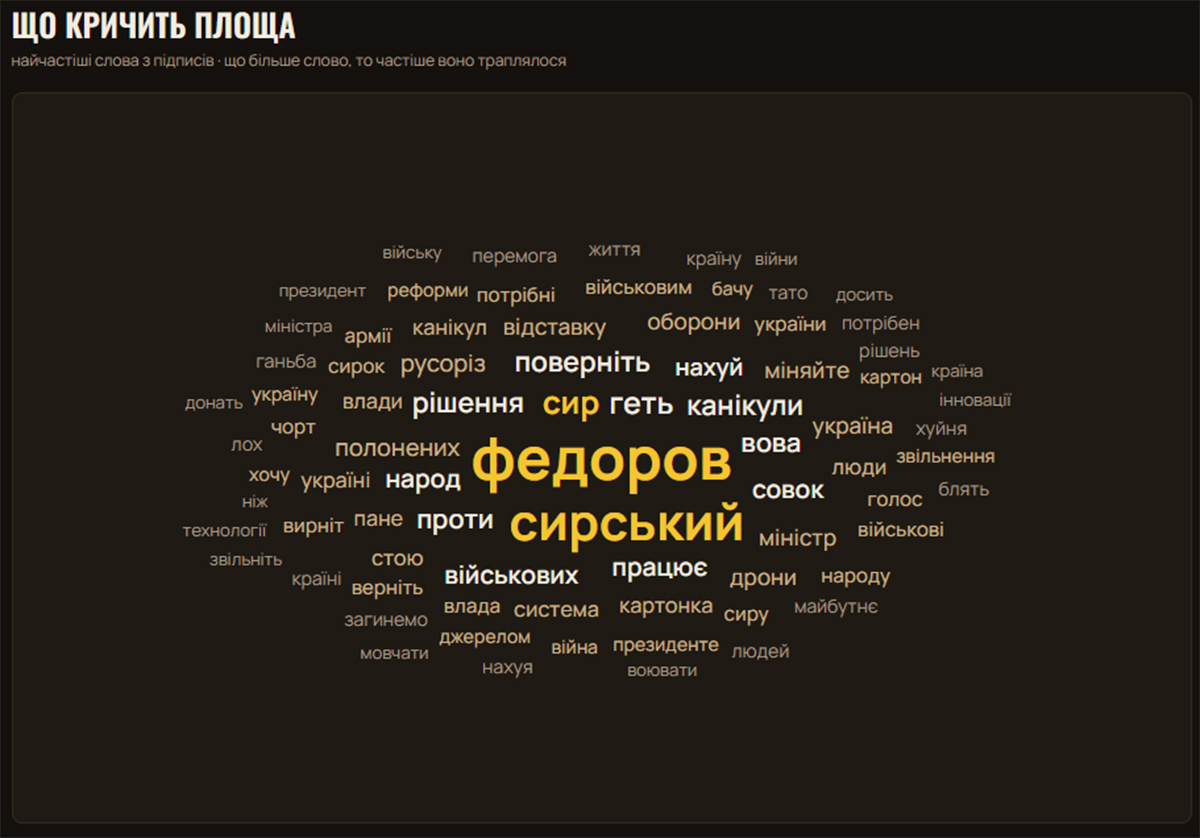
Word cloud of the words most frequently used by protesters on cardboard signs and posters. Source: “Voices from the Square. Cardboards”
The institutional substance of personalised protests
Despite the dominance of names in slogans at the protests and on social media, the protest movement was not devoid of institutional substance. Behind the demand to return Fedorov to office was, rather, concern about the irreversibility of the reforms launched or announced by his team, the transparency of defence procurement, future personnel policy, and the integrity of communication between the state and society. In some posts, this agenda was articulated quite explicitly. For example, participants in a protest march demanded transparent government communication from the president and effective approaches to managing the defence sector. Another post called for systemic changes in the army, transparent communication about personnel decisions, and the need to restore the Verkhovna Rada’s agency. A demand was also circulated not to replace effective government officials without proper public explanations.
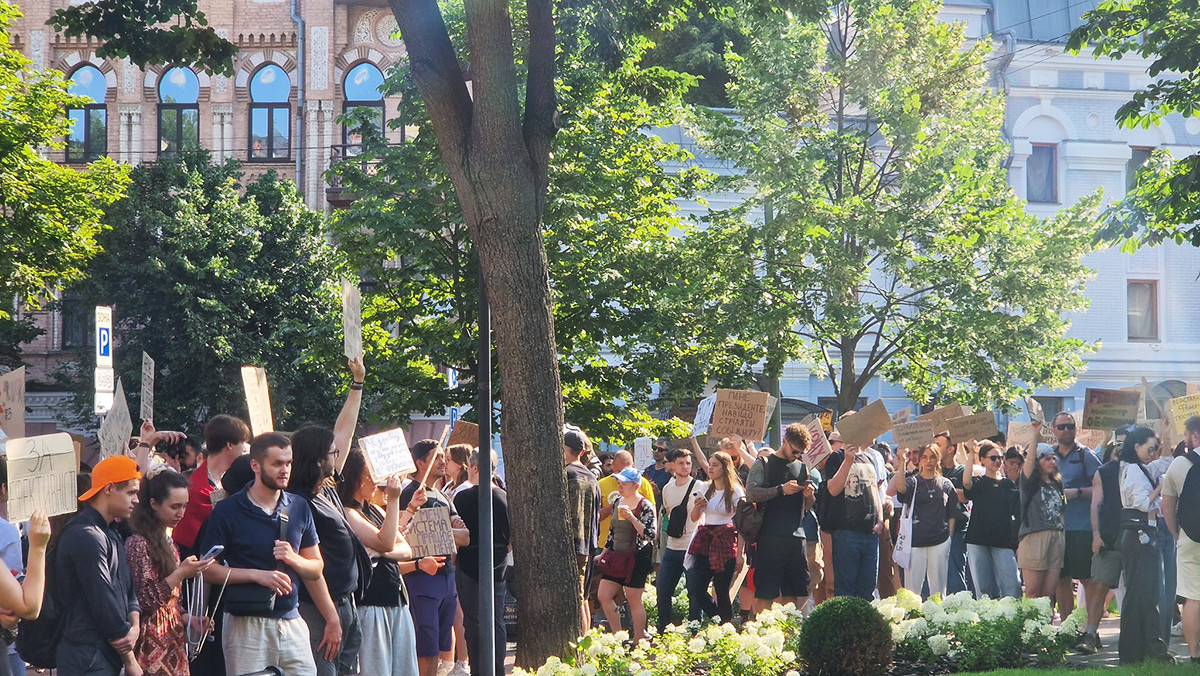
Photo from the Grunt X account
These issues largely remained justifications for the personnel-related demand put forward by the protesters and did not develop into independent demands during the period of the protests. For example, a TikTok video about the need to preserve the changes that had begun in the military, or a Threads post addressed to lawmakers, still ended with calls to keep Mykhailo Fedorov in office.
Protesters feared that the reforms would be rolled back, but they rarely articulated mechanisms for ensuring their continuity. TikToks discussing the influence of the military leadership on Zelenskyy’s personnel decisions expressed concern about Ukraine losing its technological advantage in the war, but did not propose, for example, improving or changing the model of civilian democratic control over the military.
A retweet by journalist Christopher Miller is telling: he wrote that “with Syrskyi’s dismissal, the conflict between the General Staff and the Ministry has disappeared,” and that the purported communication-related obstacle to Fedorov’s return had therefore also disappeared. But here again, the discussion centred on individuals rather than mechanisms that would guarantee the continuation of reforms under any future head of the Ministry of Defence.
Extended conclusions
The main characteristic of protest communication on social media was that it articulated a crisis of institutional trust in the authorities solely through the language of personal responsibility. Fedorov became a symbol of the reforms people wanted, Syrskyi a symbol of resistance to them, while Zelenskyy became the addressee of public discontent. The trend of the “cardboard protests” of July 2025 continued into 2026, but this time not as a protest in support of institutions, but in support of a specific name.
Sociologists from the Kyiv School of Economics, who compared the profiles of participants in the 2025 and 2026 protests, point to the phenomenon of the “personality trap” throughout Ukraine’s political history, when each new generation of protesters mobilises “for” or “against” a particular political figure (Yushchenko vs. Yanukovych, Tymoshenko vs. Yanukovych, etc.). In 2026, this “personality trap” (Fedorov vs. Syrskyi) was more pronounced than in 2025: then there were approximately five equally significant reasons why participants took to the streets. This year, 60% of participants supported the dual demand to return former minister Fedorov and dismiss Commander-in-Chief Syrskyi, while 80% of surveyed protesters said they would stop protesting if Fedorov were returned as head of the Ministry of Defence. This means that, in the eyes of the majority of participants, the success or failure of the protest is measured primarily by specific, targeted personnel decisions. Much less often did they call for the continuation of reforms, such as those initiated by the former minister’s team during his six months in office.
Another dimension is the contradiction between the normative and practical state of the right to protest for active-duty military personnel. The General Staff and the Ministry of Defence officially confirm that military personnel may attend protests during their off-duty time and express their civic position, with the exceptions of membership in political parties, participation in strikes, and disclosure of restricted information, all of which are expressly prohibited by law. However, several publicly known cases, such as that of the “Rarog” serviceman, who was accused of being AWOL after participating in a protest, and the detention of the administrator of the Telegram chat “Protest,” whose AWOL status was discovered by police during a routine check unrelated to the protests, may point to instances of a gap between the normative framework and actual practice. None of these cases has been conclusively shown to involve deliberate pressure. The public visibility of such cases, together with the relatively frequent appearance of reposts and comments by active-duty service members in the analysed data (particularly on X), indicates that military personnel are interested in and engaged in the public discussion surrounding personnel decisions in the defence sector.
On 18 August, on the eve of the Verkhovna Rada vote on the appointment of Yevhen Khmara as the new defence minister, Fedorov published a video address calling for a “legal and realistic mechanism” for holding elections in the event of a protracted war and offering an extensive critique of the personnel decision-making system and corruption during wartime. For the issue of democratic participation by citizens during wartime, this is a fundamentally important statement, which came after the period covered by the analysed dataset. Public reactions to this shift, following five weeks of protests, are gradually developing into a discussion about the feasibility and possibility (or impossibility) of restoring the electoral process altogether, an issue that requires further research.
The fragility of state structures amid growing public frustration and declining trust in the authorities, combined with the likely exhaustion of the potential of street protests as a form of communication between society and the authorities, carries risks during the ongoing war.
Since the same social groups that previously had protest potential but have now joined the Defence Forces or been co-opted into the state apparatus may find themselves on opposite sides of the socio-political debate, maintaining channels of communication between different segments of society appears crucial for preserving at least a minimal social consensus.
Of the 3,777 publications analysed in the study on X, Threads, TikTok and Bluesky, only 1.6% mentioned the resignation of the Cabinet of Ministers as such, while 42% contained calls not to dismiss Fedorov or to return him to office, and 34.5% explicitly expressed personal support for him. Institutional vocabulary — transparency of personnel procedures, civilian control over the military, guarantees for the continuation of reforms — appeared in only about 10% of publications supporting the protests. And almost always it appeared alongside a justification for the demand to return a specific person, rather than, for example, simply continuing the reforms of “Fedorov’s team.”
The data show not merely a pronounced shift in the discussion toward specific names: almost every second publication measures the very success or failure of the protests in relation to a specific personnel decision by President Zelenskyy. Much less attention was paid to the condition of the institutions affected by this decision (the Ministry of Defence), the course of the fighting, or the rights of participation in protests.
Ultimately, the events surrounding Mykhailo Fedorov’s dismissal are an example of how Ukrainian society responds under conditions in which elections cannot be held during wartime. Ukrainians quickly channel demands for government accountability through social media and street protests. How long this form of participation will continue, and whether it will become a lasting bridge toward more systemic mechanisms of democratic participation, is extremely difficult to predict. Given the inertia of an institution such as parliament, the answer will most likely be determined by the success and results of this cycle of personnel decisions by Volodymyr Zelenskyy.
Recommendations
For the media:
- distinguish between objective coverage of the growth in trust ratings for Mykhailo Fedorov and promoting or fuelling his political campaign.
For the civil society sector:
- emphasise the importance of continuing reforms in the security and defence sector and preventing their “rollback”; strengthen mechanisms of civilian and parliamentary oversight of the Ministry of Defence and the General Staff;
- verify and document cases of pressure on military personnel participating in protests, while adhering to standards of evidence;
- serve as a bridge for dialogue between the most active protest groups and other segments of society and the military;
- raise public awareness of the legal framework governing the right to peaceful assembly under martial law and maintain communication with local military administrations.
For the authorities:
- communicate personnel decisions proactively and substantively. The data show that it was the lack of explanation, rather than the dismissal itself, that became the basis for criticism of the authorities’ decisions and fuelled the protest movement;
- in the absence of elections and other forms of democratic participation during wartime, provide institutional guarantees for the continuity of reforms regardless of who holds particular positions.