Українською читайте тут.
As always, the two telethons placed different emphasis and devoted different amounts of time to one of the main events of the week.
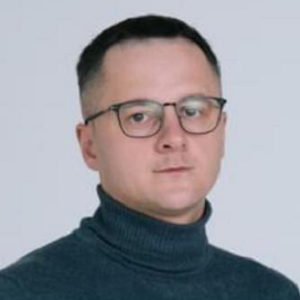
The address to Ukrainians by former Defense Minister Mykhailo Fedorov, in which he, among other things, called for elections to be held, did not go unnoticed on either telethon. On Suspilne, the topic became one of the main ones, while on United News, the former government official’s words were quoted more than once, but considerably more attention was devoted to the situation at the front, as well as in the parliamentary chamber, where MPs were voting for new heads of the Ministry of Defense and the Ministry of Foreign Affairs.
United News: briefly about the main points
In the news and studio programs of the United News telethon, the video address by former Defense Minister Mykhailo Fedorov was mentioned less frequently and in less detail than by their colleagues at Suspilne. The aforementioned topics of voting in the Verkhovna Rada and the exchange of prisoners dominated here, while much was also said about the situation at the front.
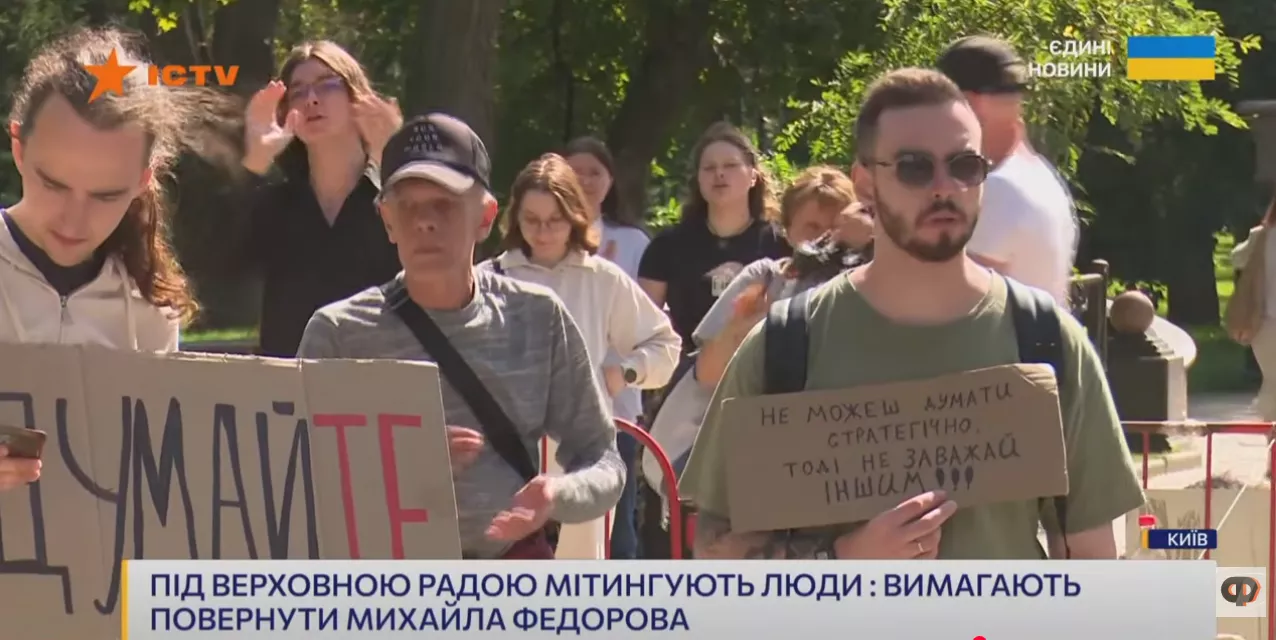
In the morning slot on August 19, the ICTV channel team was on air. In the 7:30 a.m. news, anchor Tetiana Vysotska told viewers what the former government official had spoken about, after which an excerpt from his direct speech was aired. At 10 a.m., Oksana Hutsait repeated similar information in a news bulletin, mentioning the protests that accompanied first Fedorov’s resignation and then the protest that took place during the session of the Ukrainian parliament, where MPs were voting on the appointment of new ministers.
A little later, ICTV anchor Olena Froliak asked political scientist Ihor Reiterovych to comment on the former minister’s words in the studio. He called Fedorov’s address an attempt to communicate with the protesters. In his words, after Yevhen Khmara’s candidacy was submitted to parliament, the former government official finally realized that he would not return to the Defense Ministry and “had to move on.” And the main message of the speech, Reiterovych believes, was the desire to “change the entire system” of Ukrainian government. Although, the guest said, the protesters had been expecting a different response from Fedorov.
Later, Suspilne’s most frequently quoted guest on this topic also joined the broadcast: Olha Aivazovska, chairwoman of the board of the civil network Opora. The civic activist joined the discussion in the ICTV studio earlier than she did on the public broadcaster, but voiced similar points.
In particular, she said that while heading the Defense Ministry, Mykhailo Fedorov had ignored public communication about preparations for postwar elections, while now, allegedly, he was proposing voting during the war. At the same time, he did not specify how they could be held under such conditions. However, Aivazovska considers the July personnel reshuffles, during which Fedorov also lost his position, to have been “the president’s mistake.”
After 4 p.m., when representatives of the “We Are Ukraine” TV channel were broadcasting on the telethon, anchor Liudmyla Dobrovolska told viewers about the rally that accompanied the current parliamentary votes. The broadcast also included the opinions of participants in the gathering, who said they considered Mykhailo Fedorov an effective government official and therefore viewed his dismissal negatively. An hour later, the same material was shown in the news broadcast. “We Are Ukraine” anchor Oleh Paniuta mentioned the rally in central Kyiv once again in the 7 p.m. news.
Suspilne: all the pros and cons of Fedorov
The video address by former Ukrainian Defense Minister Mykhailo Fedorov, which he published on the evening of August 18, predictably did not go unnoticed by society and the media, including the international media. In his monologue, the former government official, among other things, mentioned the importance of combating corruption among the country’s leadership. He also expressed the view that elections in Ukraine could be held during the war. Because, as he put it, it is not for Russia to tell us when and what to do.
Thus, on August 19, Fedorov was the defining theme in Suspilne’s news broadcasts and studios. The topic became one of the central ones, on a par with coverage of the vote on candidates for the positions of heads of the Defense and Foreign Ministries, the NABU and SAPO operations codenamed “Forrest Gump” and the subsequent dismissal of one of the potential figures involved, Deputy Head of the Presidential Office Iryna Mudra, and even another prisoner exchange, after which 103 of our defenders returned home.
Already at 7 a.m., when Suspilne began a new news day, news anchor Andrii Pohorylyi quoted excerpts from Fedorov’s speech, adding the speaker’s direct words. At 7:10 a.m., Olha Herych and Maksym Romaniuk picked up the topic on the “Suspilne Studio” program. At the same time, they reminded viewers that elections during wartime are prohibited under Ukrainian legislation. Political scientist Serhii Nazarenko joined the discussion. According to him, the address indicates that Mykhailo Fedorov has “set sail on his own” as a politician, since he already has a rating. As for the idea of holding elections during the war, the guest believes that there is public demand for them, but the law does not allow them to be held. This view was repeated several times later in the broadcast.
Subsequently, the topic was mentioned not every hour, but regularly, both in the news and in the studio. Members of the Ukrainian parliament were among those who actively commented on it. Nina Yuzhanina of “European Solidarity” believes that Fedorov is popular with people as a technocrat. But in the video, he avoided specifics, particularly regarding corruption in government. As for the elections, the opposition politician echoed some of the other guests who commented on the topic throughout the news day: holding elections during wartime, she said, is very difficult.
Later, MPs from the mono-majority also commented on the former government official’s words. Bohdan Kytsak, in particular, said that Ukraine does not have a working mechanism for holding a vote during hostilities, while electronic voting is a debatable issue. His fellow party member Mykyta Poturaiev, who in July even submitted a statement on resigning his parliamentary mandate because of Fedorov’s dismissal, now also says that he does not support the Cabinet dismissals at the time. And in Fedorov’s statement, he saw “many correct things,” although he considers the words about elections to be mistaken. Poturaiev also said that one should not expect some kind of unified comment from government representatives regarding the former minister’s statements, because anyone who wishes can “give their own assessment” of what they heard.
The record holder for the number of times a comment was repeated in subsequent broadcasts was Olha Aivazovska, chairwoman of the board of the civil network Opora. The guest said that in this way Mykhailo Fedorov had moved into opposition to the current government and was therefore trying to “stimulate the electoral process.” At the same time, the head of Opora said that while serving as defense minister, Mykhailo Fedorov did not provide much assistance to the efforts of the parliamentary working group working on preparations for postwar elections. Overall, Aivazovska continued, there is a crisis in government, but it is impossible to hold elections, especially during wartime, without preparation. Therefore, politicians, she said, should also be held accountable for their words.
The fact that Mykhailo Fedorov, by publishing the video, had effectively moved into opposition to the current government was also mentioned in comments by political scientists Liudmyla Pokrovshchuk and Anna Bilivitina. The former assumes that the ex-minister will soon form his own party. The latter believes that he will “compete for ratings.” Bilivitina also said that people are chasing new faces in politics because they want a “magic pill” for all their problems, although no such pill exists.
Political technologist Taras Zahorodnii, who is usually sympathetic to the government, was quite critical of Fedorov’s video address. He called the speaker’s demands “childish” and his words manipulative. According to the guest, those who mostly talk about elections during the war are “Ukraine’s enemies.” The topic was also commented on by former (Andrii Mahera) and current (Serhii Dubovyk) deputy heads of the Central Election Commission. Both similarly reminded the audience that, under current legislation, elections are impossible during martial law. The parliamentary working group mentioned earlier by Olha Aivazovska is working on preparations for postwar elections.
Suspilne’s broadcasts also discussed protests, one of which took place during the vote on the candidacies of Yevhenii Khmara and Andrii Sybiha. At 5:30 p.m., one of the organizers of the rallies that began after Mykhailo Fedorov’s dismissal, veteran Dmytro Koziatynskyi, joined the broadcast. The activist said that the protests were apolitical and were not being held for particular individuals, but for reforms and dialogue with the government. As for Fedorov’s idea of holding elections during the war, the activist called such a view destructive.
At times, studio guests, while answering questions, strayed so far from the topic that the anchors had to stop them. This happened during a live appearance by opposition political scientist Valerii Dymov. He began talking about how President Zelenskyy and parliament speaker Stefanchuk had been the first to talk about elections several years ago, when the country’s leadership was “waging a war against Zaluzhnyi.” Anchor Borys Ivanov stopped the guest, reminding him that the question concerned Fedorov, not the political figures mentioned. Meanwhile, Viacheslav Potapenko, deputy director of the National Institute for Strategic Studies, who joined the broadcast at the same time, expressed the view that Fedorov is currently “in the top tier for the presidency,” but elections cannot be held, and online voting does not have public support.
Public sentiment regarding potential elections was commented on by Anton Hrushetskyi, executive director of the Kyiv International Institute of Sociology, drawing on the company’s latest research. According to the findings, there is no public demand for elections during martial law. Ninety percent of respondents, the guest said, want a renewal of the government, but after the hostilities end. At the same time, 60% of respondents oppose online voting and prefer the traditional practice of visiting polling stations.
The 8 p.m. news included a live report from correspondent Snizhana Mazur at the protest, which was still underway in the capital at the time. According to the journalist’s estimate, about 50 people had gathered for the rally, and such gatherings are planned to be held daily. The current agenda includes, in particular, demands to dismiss Vitalii Kim from the position of minister for veterans’ affairs, as the government official lacks relevant experience.
Later in the studio, political scientist Ihor Chalenko said that Mykhailo Fedorov’s address was an attempt to “privatize the protest campaign” and show that the protesters had taken to the streets specifically for him. The topic of elections, he said, is emerging in society because of distrust in the government.