The original publication on Ukrainska Pravda's website is available here.
Occupation does not end where the tanks stop. After seizing a territory, Russia begins to rebuild the entire environment in which people live: the functioning of courts and schools, religious communities, relationships between people, and children’s perceptions of their own future.
When this year we at "Detector Media" initiated a separate special nomination of the "Honor of the Profession" award for materials about the lives of Ukrainians under temporary occupation, it was important for us to draw attention specifically to this experience. The five journalistic works selected by the jury as finalists tell the stories of different people and different manifestations of occupation. However, together they show much more—the system Russia uses in an attempt not only to seize territory but also to subjugate life there for a long time.
First come the Russian military. Then come torture chambers, filtration procedures, criminal cases, and occupation courts. Later come new school curricula, militarized youth organizations, control over religious communities, and propaganda that gradually pushes Ukrainian identity out.
The abduction of employees of the Zaporizhzhia Nuclear Power Plant, the use of civilians as forced labor, the deportation and militarization of children, the persecution of religious communities—these are not isolated stories. Together, they show how Russia seeks to control not only territory but also people’s everyday lives, their connections, beliefs, and future.
This logic is best illustrated by Oleksandr Nosok’s report for the "Pershyi Zaporizkyi" outlet, which became the winner of the special nomination "Best material on the topic of the lives of Ukrainians under temporary occupation" at the "Honor of the Profession" award. Its protagonists are employees of the Zaporizhzhia Nuclear Power Plant, for whom the occupation began not with new laws, but with fear.
After seizing Enerhodar, the Russian military could not force tens of thousands of people to support the new authorities. Instead, they created an atmosphere in which any manifestation of disloyalty became dangerous. ZNPP employees were abducted without explanation—at home, on their way to work, simply in the middle of the city. Relatives did not know for weeks where they were. A person could disappear without an official detention, without charges, and without contact with the outside world.
Each such abduction was directed not only against a specific victim. Thousands of other residents saw it. The city quickly learned the new rules: talk less on the phone, do not ask unnecessary questions, do not trust even people you know, avoid any public manifestations of a pro-Ukrainian position.
Fear became not a side effect of occupation, but its instrument. But fear alone cannot sustain an occupation for years. It merely paves the way for the next stage—transforming violence into an everyday system of governance.
After fear comes "the law"
This system begins with fear. If fear forces a person to remain silent, Russia then seeks to make violence part of the new order. This is particularly evident when the five journalistic works that made it to the final of the special nomination "Best material on the topic of the lives of Ukrainians under temporary occupation" are read together. Together, they show not individual crimes, but the architecture of occupation.
After the Russian military come FSB officers, police, occupation courts, administrations, schools, and propagandists. Occupation gradually ceases to be merely a military presence and becomes a new model of life.
Oleksandr Nosok's report about Enerhodar clearly shows how this process unfolded around the Zaporizhzhia Nuclear Power Plant. First, people were abducted; then fabricated criminal cases appeared, along with accusations of "terrorism" or "extremism," court proceedings, and years-long sentences. Lawlessness gradually took on the appearance of legality.
ZNPP engineer Serhii Poting was sentenced by a Russian court to 19 years in a penal colony. His wife, Iryna, was detained solely to force her, under torture, to disclose her husband's whereabouts. Another plant employee, Serhii Spartesnyi, was sentenced to 12 years in a maximum-security penal colony after being tortured. In this way, repression ceases to be a temporary act of violence and becomes an institution.
Another dimension of this system is shown in Elina Sulima's (ZMINA) report about Olena Yahupova. After her abduction, the occupiers told her relatives that the woman would allegedly be deported to territory controlled by Ukraine. In reality, it was a staged operation. Together with other civilians, she was handed over to Russian soldiers, who used people as unpaid labor. Men were forced to dig trenches and build defensive fortifications. Women cleaned, did laundry, and cooked for the soldiers. Olena was subjected to sexual violence.
Formally, these people did not exist. They were not prisoners of war, did not go through court proceedings, and were not included in official lists. They were simply used for as long as they were needed. Particularly telling is how this story ended. The people were released neither during an exchange nor thanks to international missions. Russian police officers came to the place of detention, said that there had been no lawful "deportation," allowed them to return home, and ordered them to remain silent.
After returning to territory controlled by Ukraine, Yahupova succeeded in having investigators document all instances of forced labor. She became the first person in Zaporizhzhia to receive official victim status for human trafficking due to crimes committed during the occupation.
Another feature of the Russian model seems particularly telling to me. It creates a system of crimes, while Ukraine is forced to simultaneously create a system for documenting them.
However, occupation does not end with the people who have been abducted. If torture chambers are needed to subjugate the present, then schools are needed to control the future.
The longest occupation project—children
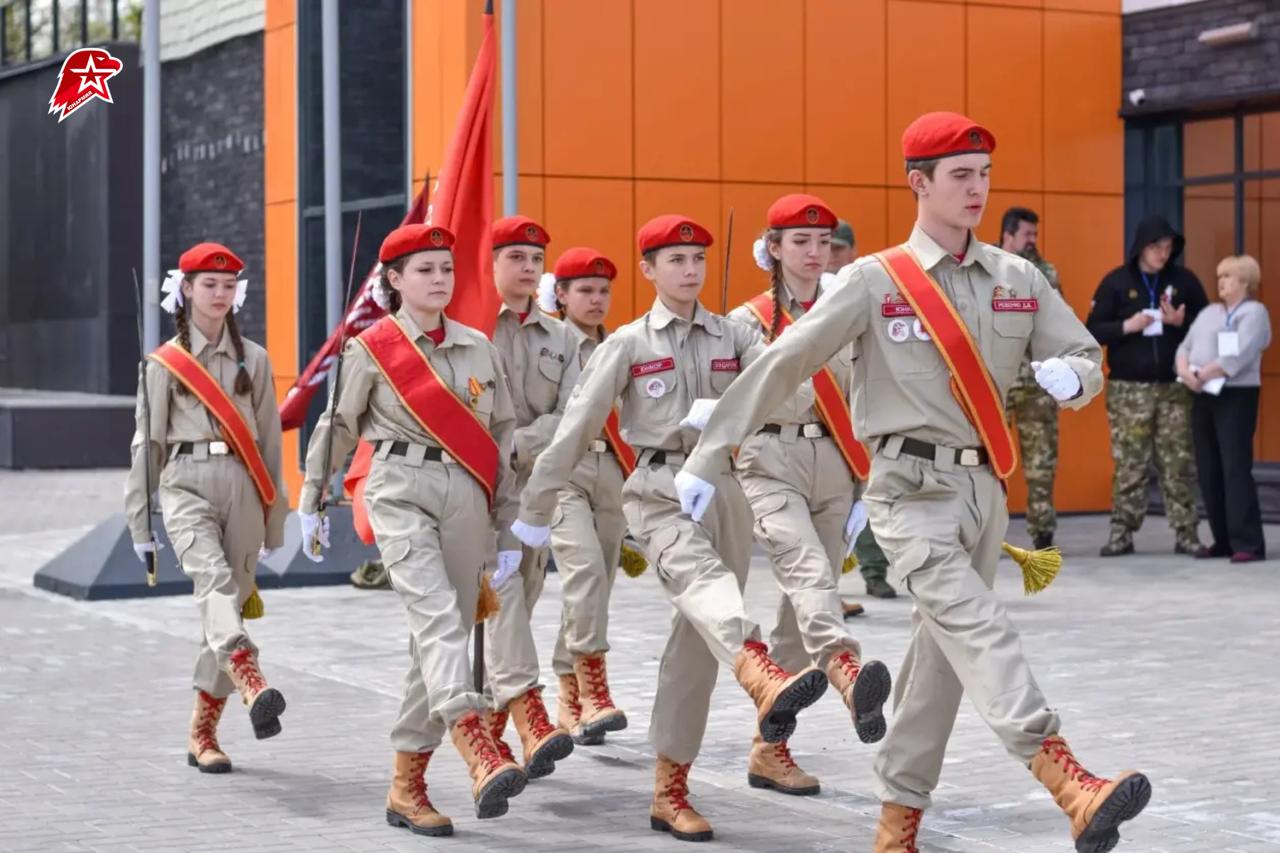
This link in the occupation system is documented by two materials — an investigation by Inna Hadzynska and Tymofii Kramariv for texty.org.ua about two cadets and a report by Zhanna Bezpyatchuk and Maryana Matveychuk for BBC News Ukraine about "Yunarmiya."
The protagonists of the first are Ukrainian orphans Stas Balytskyi and Kolya Siedykh. As children, they grew up in orphanages in occupied Donetsk, which were regularly visited by Russian military personnel, militants, and representatives of the occupation authorities. They brought food, gifts, and flags and told stories about the "heroes of Donbas." For children deprived of parental care, a person in military uniform became not an occupier but an adult who brought food and attention.
Later, the Ukrainian flags disappeared. They were replaced by Russian symbols, "lessons of courage," cadet classes, "Yunarmiya," and a cult of war. After the full-scale invasion began, both boys were taken to Russia. There, they graduated from the cadet corps. Today, one serves as a private in the Russian army, while the other is studying at the Moscow Higher Military Command School.
It is easy to call them traitors. But the investigation raises a more difficult question: at what point does a child stop being a victim and become an instrument of a crime?
The answer is partly provided by the second material—the BBC report about "Yunarmiya." Twelve-year-old Serhii, who attended school in the occupied Kherson region, refused to join the organization. He clearly remembers how every day he saw the difference between himself and the Yunarmiya members. Members of the movement had a separate table in the cafeteria, gifts, medals, trips, and the teachers' favor. Others got a bun with tea and a constant feeling that they belonged to a less privileged group. This is a different type of violence. There are no torture chambers here. Instead, a child is shown every day that loyalty is rewarded. At the same time, they are taught to disassemble an assault rifle, operate drones, undergo tactical training, and are told in lessons that Ukraine is a "historical mistake" and that the Russian army is supposedly continuing its fight against "Nazism."
According to BBC estimates, in the first eight months of 2025 alone, "Yunarmiya" held more than 1,200 events in the occupied Donetsk region, most of which were directly related to military training.
The stories of Serhii, Kolya, and Stas describe different stages of the same process. First, a child's environment is changed. Then their system of values. And after reaching adulthood, they may end up in the army of the state that occupied their home.
Even faith comes under control
If torture chambers subjugate a person through fear and schools shape new loyalty, religious communities pose a different problem for the occupation authorities. They are a space of trust that the authorities do not control. That is why, after seizing territories, Russia begins to put pressure on independent churches. The documentary film by Danylo Mokryk and Kostyantyn Nechyporenko for The Kyiv Independent, "There Shall Be No God But Theirs" shows how this happened in occupied Melitopol.
Its protagonists are Pentecostal church bishop Dmytro Bodyu, presbyter Mykhailo Brytsyn, pastor Ihor Ivashchuk, and Greek Catholic priest Oleksandr Bohomaz. They are all united by the same story: abduction, interrogations, bans on their communities, confiscation of church property, or forced departure.
The occupation authorities justified the persecution with their usual accusations—extremism, cooperation with Western structures, and illegal activity.
Just as ZNPP employees were labeled spies and civilians were labeled terrorists, independent religious communities were turned into a "dangerous element." It was not only about freedom of religion. Before the occupation, Melitopol's Protestant communities were among the centers of mutual assistance. They supported families, engaged in charity, and brought together people who trusted one another more than they trusted state institutions. It is precisely these horizontal ties that pose a threat to any occupation regime.
The history of the Baptist church "Blahodat" is particularly telling. Its building had already been confiscated by the Soviet authorities in the 20th century, and the community was accused of espionage. After Ukraine regained independence, the church was returned. After the Russian occupation, it was taken away for the second time. The familiar logic is easy to recognize here. Russia does not invent a new model for governing occupied territories. It reproduces practices that were already used by the Soviet Union: criminalizing those deemed disloyal, subordinating independent institutions, and leaving only those organizations that are willing to work for the state.
That is why the persecution of churches is not a separate story about religious freedom. It serves the same function as torture chambers, courts, or "Yunarmiya": to deprive people of environments where they can trust one another more than they trust the occupation authorities.
The system that remains
Russia does not simply hold occupied territories by force. It consistently restructures the environment in which people live.
First comes fear. Abductions, torture chambers, and demonstrative repression force people to remain silent.
Then violence takes on the appearance of law. Occupation courts, criminal cases, and penal colonies create the illusion of legality around what began as lawlessness.
At the same time, Russia works with the future. Through schools, "Yunarmiya," cadet corps, children's camps, and propaganda, it shapes a generation for whom service in the Russian army is meant to seem natural.
And finally, it subordinates the spaces where people can preserve their independence: churches, communities, local connections, and any centers of trust.
The abduction of a ZNPP employee, the story of Olena Yahupova, the fates of Kolya Siedykh and Stas Balytskyi, the school cafeteria of twelve-year-old Serhii, and the persecution of Christian communities in Melitopol are not five different stories. They are five ways of showing the same system. In each of these stories, Russia uses different tools—fear, coercion, propaganda, reward, or control. But the goal remains the same: to make a person lose the ability to live outside the rules imposed by the occupation authorities.
That is why all these stories should be read together. Not only as documentation of individual war crimes, but also as an explanation of what actually happens after occupation. Tanks can seize a city. But they cannot hold it. To do that, Russia builds an entire system—and it is precisely this system that journalists documented in these five works.
The material was prepared based on five journalistic works that made it to the final of the special nomination "Best material on the topic of the lives of Ukrainians under temporary occupation" of the "Honor of the Profession" award, initiated by the NGO "Detector Media" and the Partnership for a Strong Ukraine Fund, financed by the governments of the United Kingdom, Estonia, Canada, Norway, Finland, Switzerland, and Sweden.
Main photo from the Yunarmiya Telegram channel.